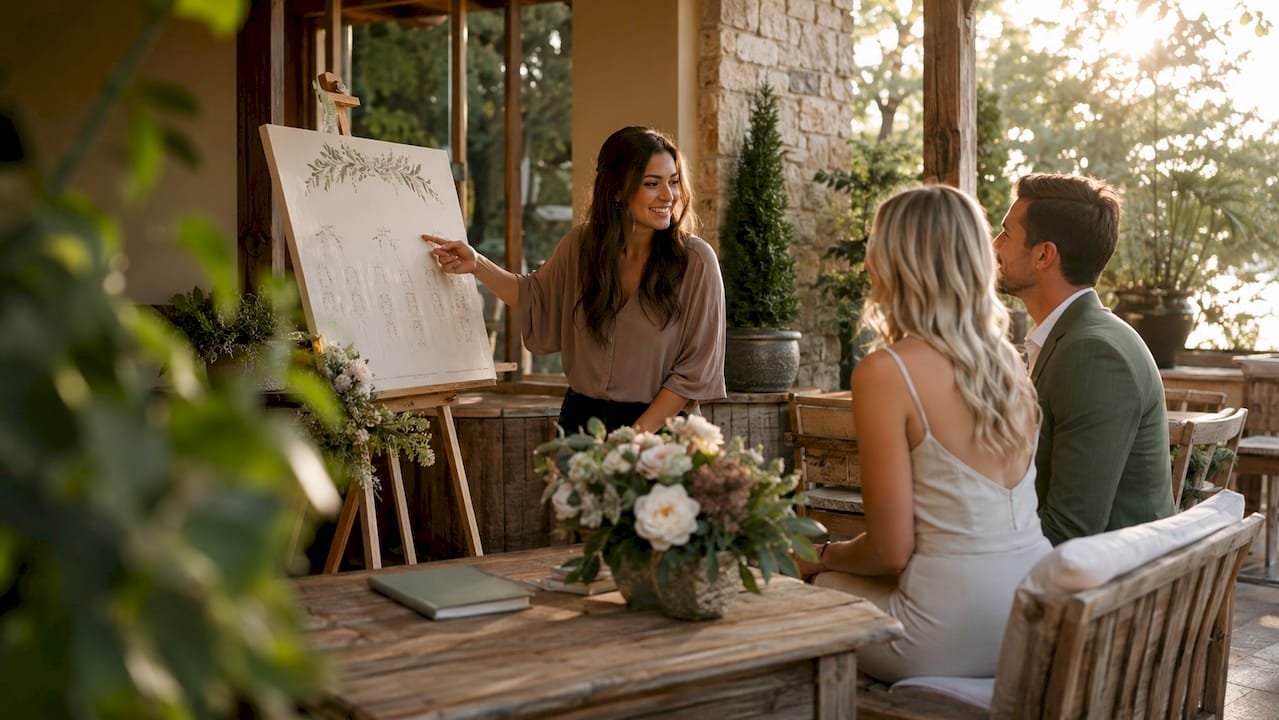
Boutique venues are defined by their intimate scale and the genuinely attentive service that scale makes possible. At a large ballroom hosting 300 guests, staff follow scripts and standardized procedures. At a boutique venue, the team knows your name, your dietary needs, and the fact that your grandmother needs a chair near the aisle. That difference is not a marketing claim. It is a direct result of how smaller operations work. This article breaks down exactly why boutique venues offer personalized service, what that means for your wedding day, and how to use that knowledge when choosing a venue.
Why boutique venues offer personalized service
Personalized service in hospitality means staff anticipate and respond to individual needs without being asked twice. EHL’s boutique-hospitality analysis makes the operational logic clear: it is far easier to remember the preferences of 10 guests than 1,000. That gap in scale is the single biggest reason boutique venues deliver a different quality of attention.
Large venues must standardize. When a team manages hundreds of guests across multiple events, they rely on scripted checklists and rigid procedures. Boutique venues replace those checklists with something more effective: staff memory. The team tracks what you want, how you want it, and when, without you having to repeat yourself.
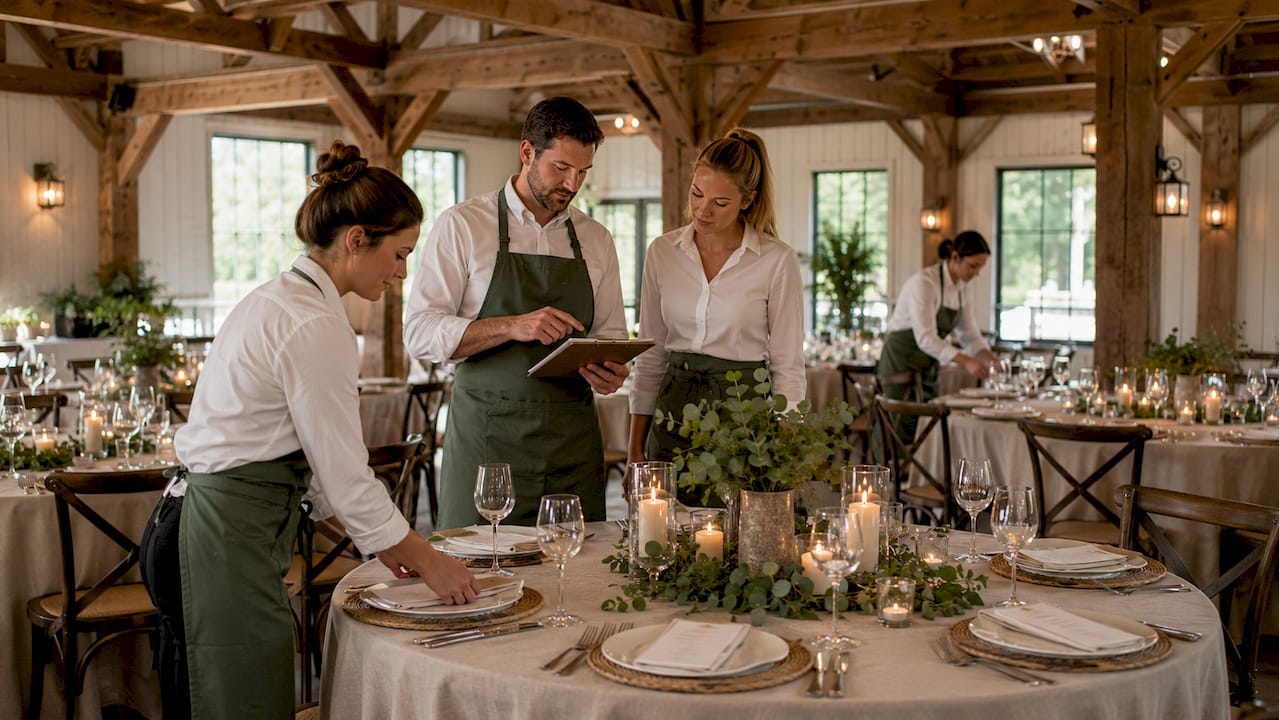
This is not just a comfort benefit. Personalized hospitality is driven by operational scale, not by brand prestige or interior design. A venue can have stunning architecture and still deliver impersonal service if the team is stretched too thin. The intimate venue model solves that problem structurally, not cosmetically.
What “personalization” actually means in practice
Personalization covers three layers at a boutique wedding venue. The first is preference memory: staff know your dietary restrictions, your photography timeline, and your accessibility needs before the day begins. The second is flexibility: the team can adjust pacing, room layout, and vendor coordination in real time. The third is atmosphere: because the venue hosts one event at a time, every detail of the space reflects your wedding, not a generic setup shared with another couple down the hall.
Pro Tip: Ask any venue you tour how many events they host simultaneously. If the answer is more than one, ask specifically how they separate staff attention. The answer tells you everything about the quality of personalized service you will actually receive.
How does scale affect service quality at weddings?
The math is straightforward. A boutique venue hosting 50 guests with a dedicated team of 8 gives you a very different staff-to-guest ratio than a convention-style venue hosting 400 with a team of 20. More staff per guest means faster responses, fewer errors, and a team that has the mental bandwidth to notice details.
Exclusive boutique event spaces direct every staff member’s focus entirely toward your event. That focus enables immediate adaptation to requests, whether that means moving a table, adjusting the lighting, or pausing the timeline because the photographer needs five more minutes at sunset. At a large venue, that kind of real-time flexibility is rare because the team is managing too many moving parts at once.
Boutique venues also benefit from what hospitality researchers call informal preference memory systems. Staff remember details like accessibility needs, photography preferences, and dietary constraints without relying on a printed sheet handed off between shifts. That continuity of knowledge produces a noticeably warmer, more attentive experience.
The contrast with larger venues is not about effort. Large venue teams often work just as hard. The difference is structural capacity. When you are responsible for 10 couples’ needs instead of 100, you can actually deliver on the promise of personalized service.
Why does personalized service matter for your wedding day?
Personalization reduces friction. Attributes like room selection, early check-in, and curated local experiences give couples direct control over their experience and remove the logistical hassles that create stress. On a wedding day, that translates to fewer coordination gaps, smoother transitions, and a team that handles problems before you notice them.
Research from the event industry shows that 45% of event attendees prefer customizable experiences and are more likely to engage fully when they can shape what happens. For a wedding, that preference is even stronger. You are not attending someone else’s event. You are creating your own, and every detail carries emotional weight.
Personalized service also matters across the full planning arc, not just on the wedding day itself. Personalization must flow across the entire attendee journey, from the first planning call through the ceremony, reception, and follow-up. Boutique venues are built to deliver that continuity because their teams stay consistent throughout the process.
Here is what that looks like in practical terms for couples:
- Pre-wedding planning calls where the venue coordinator remembers your conversation from two months ago without needing notes.
- Day-of timeline flexibility so the ceremony can start 10 minutes late without throwing off the entire reception schedule.
- Dietary accommodations handled without a separate conversation at every meal service.
- Guest flow adjustments made in real time if a family member needs a different seating arrangement.
- Vendor coordination managed by venue staff so you are not playing phone tag between your florist and your caterer.
Pro Tip: When you visit a boutique venue, bring a list of three specific requests that matter to you, such as a gluten-free menu option, a specific ceremony start time, or a room reserved for getting ready. How the venue responds tells you exactly how personalized their service will be.
Boutique venues vs. large venues: a direct comparison
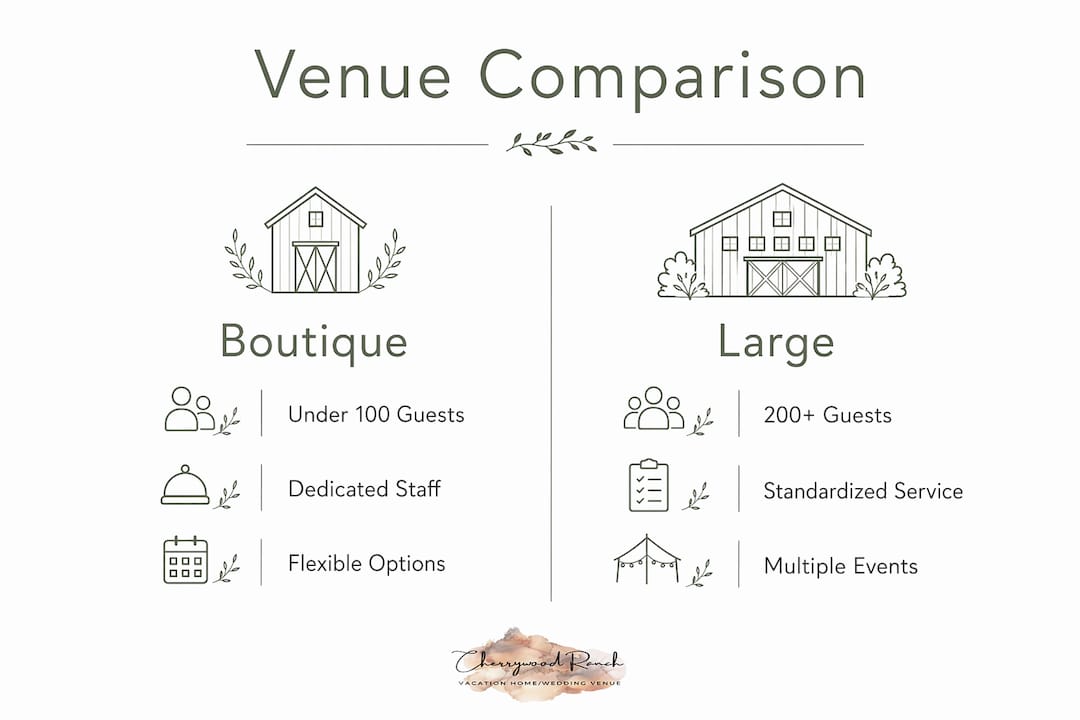
The differences between boutique and large venues show up most clearly when you compare them side by side.
| Feature | Boutique venues | Large venues |
|---|---|---|
| Guest count | Typically under 100 | Often 200 or more |
| Staff focus | Dedicated to one event | Split across multiple events |
| Service approach | Informal preference memory | Scripted checklists |
| Layout flexibility | High, adjusted in real time | Low, set in advance |
| Catering options | Flexible, often artisan or local | Standardized packages |
| Atmosphere | Exclusive, reflects your wedding | Shared or generic |
| Personalization depth | Deep, consistent across all phases | Surface level or transactional |
Large venues are not without strengths. They often have more infrastructure, larger catering teams, and established vendor networks. Some large venues do attempt personalization through dedicated event coordinators. But that coordinator is typically managing multiple events simultaneously, which limits how deeply they can focus on yours.
Boutique venues offer more flexible catering options and event formats than traditional large venues, including artisan suppliers and formats that become part of the event atmosphere rather than just a service function. That flexibility is a direct product of smaller scale and fewer operational constraints.
For couples who want a personalized multi-day wedding experience, boutique venues are the clear choice. Large venues rarely accommodate the kind of extended, relaxed timeline that makes a wedding weekend feel like a true celebration rather than a scheduled event.
How do boutique venues actually implement personalized service?
Knowing the theory is useful. Knowing what it looks like on the ground is more useful. Boutique venues implement personalized service through specific operational practices that couples can look for when evaluating options.
- Single-event focus. The venue hosts your wedding and only your wedding on that date. Every staff member on duty is working for you.
- Pre-event preference intake. The team collects detailed information about dietary needs, accessibility requirements, photography preferences, and timing priorities well before the wedding day.
- Real-time layout adjustments. If the cocktail hour runs long or the weather shifts, the team adapts the space without waiting for approval from a manager who is handling another event.
- Curated vendor relationships. Boutique venues often maintain a short list of trusted local vendors who understand the venue’s style and the team’s communication approach. Cherrywoodranchweddingvenue’s curated vendor list reflects exactly this kind of intentional curation.
- Personalized welcome details. Arrival amenities, room setups, and welcome notes are tailored to the couple and their guests, not pulled from a generic template.
- On-site lodging integration. When the venue includes lodging, the team can extend personalized service across the entire stay, not just the ceremony and reception hours. Venues with on-site lodging create a continuity of care that separate hotels simply cannot match.
74% of travelers want their trips to be personalized, and the same expectation applies to wedding guests. When guests feel that the event was designed with care and attention, the entire experience registers as more meaningful.
Key Takeaways
Boutique venues deliver personalized service because their smaller scale gives staff the capacity to remember, adapt, and respond in ways that larger venues structurally cannot.
| Point | Details |
|---|---|
| Scale drives personalization | Smaller guest counts allow staff to track individual preferences without scripted checklists. |
| Exclusive use matters | Single-event focus means every staff member is working for your wedding, not split across multiple events. |
| Personalization spans the full journey | From planning calls to day-of adjustments, boutique venues deliver consistent attention at every phase. |
| Flexibility is a structural advantage | Real-time layout, pacing, and vendor adjustments are only possible when the team has bandwidth to respond. |
| Lodging integration deepens the experience | On-site accommodations extend personalized care beyond the ceremony and reception hours. |
What I’ve learned about personalized service and boutique venues
After spending years watching couples navigate venue decisions, I have noticed one consistent pattern. Couples who prioritize aesthetics alone often end up disappointed. The venue looked stunning in photos, but the day felt rushed or impersonal. Couples who prioritize service quality alongside aesthetics consistently describe their wedding as the best day of their lives.
The reason is simple. A beautiful space with an inattentive team produces a beautiful backdrop for a stressful event. A beautiful space with a team that knows your name, anticipates your needs, and handles problems before you notice them produces something entirely different: a day that actually feels like yours.
The most common mistake I see is couples assuming that a higher price tag at a large venue equals better service. It does not. Price reflects overhead, capacity, and brand. Service quality reflects operational structure. Boutique venues are built around a model that makes genuine personalization possible. Large venues are built around a model that makes scale possible. Those are different goals.
My honest recommendation: visit any venue you are seriously considering and pay attention to how the team communicates during the tour. Do they ask questions about you, or do they recite a script? Do they remember what you said at the start of the tour by the end of it? That small test predicts the service quality you will experience on your wedding day better than any brochure.
— Luis
Cherrywoodranchweddingvenue: personalized service in the North Georgia Mountains
Cherrywoodranchweddingvenue brings together everything that makes boutique venues the right choice for couples who want a genuinely personal wedding experience.
Set in the North Georgia Mountains, Cherrywoodranchweddingvenue offers exclusive use of the property, dedicated staff focused entirely on your event, and on-site lodging for up to 16 guests. That combination means your family and closest friends stay together, the team knows everyone by name, and the entire weekend feels curated around you. From mountain-view ceremonies to resort-style amenities like a pool and hot tub, every detail is designed for your group. Explore small wedding packages in Georgia or view the full destination wedding venue experience to see what personalized service looks like in practice.
FAQ
What makes boutique venues more personal than large venues?
Boutique venues host fewer guests and dedicate their entire team to one event at a time. That operational focus allows staff to remember individual preferences and adapt in real time, which larger venues cannot do when managing multiple events simultaneously.
How many guests do boutique wedding venues typically accommodate?
Most boutique venues accommodate under 100 guests, with many intimate options hosting 50 or fewer. Cherrywoodranchweddingvenue accommodates up to 16 overnight guests, making it ideal for close-knit celebrations.
Does personalized service cost more at boutique venues?
Boutique venues often cost less per guest than large venues because they do not carry the overhead of massive facilities. The personalized service comes from operational structure, not a premium add-on fee.
What should couples ask a boutique venue about personalized service?
Ask how many events the venue hosts on the same day, how staff track dietary and accessibility needs, and whether the same coordinator manages your wedding from the first planning call through the reception. The answers reveal exactly how personal the service will be.
Can boutique venues accommodate special requests like custom menus or unique ceremony timing?
Yes. Flexible catering options and event formats are a defining feature of boutique venues. Because the team manages one event at a time, adjustments to menus, timing, and layout are handled without the approval layers that slow down larger operations.