

A wedding coordinator executes the plans a couple has already made, running vendor logistics, cueing the ceremony and reception, and troubleshooting problems so no one has to. Most start 4 to 6 weeks before the wedding, building a master timeline, confirming every vendor, and becoming the single point of contact on the day itself.
TL;DR:
- Coordinators focus on executing pre-planned details and typically start four to six weeks before the wedding, managing vendor contacts and timelines.
- A day-of coordinator works around 10 to 12 hours during the wedding, handling setup, cueing moments, and ensuring smooth transitions between events.
- Hire a planner for long-term vendor sourcing and design, a coordinator for last-minute management, or both for complex or multi-day weddings.
- In the final weeks, coordinators confirm contracts, develop detailed timelines, lead rehearsals, and assemble emergency kits to prevent last-minute stress.
- The cost varies based on scope, with clear decision-making protocols and insurance being critical to prevent confusion on the wedding day.
Table of Contents
- Wedding Coordinator Duties: The Full Scope of the Job
- Wedding Coordinator vs. Wedding Planner: What’s the Real Difference?
- What Coordinators Actually Do in the Weeks Before Your Wedding
- Hour-by-Hour: A Real Wedding Day Run-of-Show
- Who Handles Teardown and Cleanup After the Wedding
- How to Hire a Wedding Coordinator: Questions, Costs, and Red Flags
- Coordinating a Full Weekend, Not Just One Day
- Cherrywood Ranch: One Booking, One Coordinator, One Weekend
- Sources
Wedding Coordinator Duties: The Full Scope of the Job
A wedding coordinator’s job is execution, not creation. By the time one steps in, the venue is booked, the caterer is chosen, and the dress is hanging in a closet somewhere. The coordinator’s job is to take everything the couple has already decided and make it happen on schedule, without the couple fielding a single vendor phone call.
That focus on execution over planning is what separates a coordinator from a full-service planner, a distinction worth understanding before you hire. Job titles blur the line further. “Day-of coordinator,” “month-of coordinator,” and “venue coordinator” often describe overlapping work with different start dates and different loyalties. A venue coordinator, for instance, usually answers to the venue first and the couple second, which matters if a dispute ever comes up over rental damage or overtime fees.
On the wedding day, most coordinators work a 10 to 12 hour shift and report directly to the couple, or to a designated point person if the couple wants zero contact that day.
- Day-of coordinator: works the wedding day only, sometimes with one prior planning call
- Month-of coordinator: takes over roughly 4 to 6 weeks out, handling vendor confirmations and the timeline
- Venue coordinator: manages the property itself, not always the couple’s full vendor list
Wedding Coordinator vs. Wedding Planner: What’s the Real Difference?
The difference comes down to when they start and how much they decide. A planner gets involved a year or more out, building the budget, sourcing vendors, and shaping the overall design. A coordinator arrives near the end and makes sure the plan already on paper survives contact with reality.
Planners negotiate contracts, track a budget across dozens of line items, and often sit in on tastings and dress fittings. Coordinators inherit those contracts and turn them into a working schedule. That handoff point is exactly why so many couples hire a planner for the first ten months and a coordinator for the last one.
- Hire a planner if you have no idea where to start, or you’re managing vendors across multiple cities
- Hire a coordinator if you’ve booked everything yourself and just need someone to run the day
- Hire both for a large or multi-day event, with the planner handing off a full contact sheet at the end
- Upgrade mid-process if a “day-of” package turns out too thin for a complicated guest list or venue
What Coordinators Actually Do in the Weeks Before Your Wedding
The final stretch before a wedding is where a coordinator earns their fee, and it starts well before the ceremony morning. Once engaged, coordinators typically move through a fairly consistent sequence of tasks that turns a pile of vendor contracts into a workable schedule.
- Four to six weeks out: collect every vendor contract and build a master contact sheet with arrival times, phone numbers, and payment status.
- Site walkthrough: walk the venue in person to finalize the floorplan, confirm load-in paths for trucks and rental deliveries, and lock in a rain plan for outdoor ceremonies.
- Timeline draft: build the minute-by-minute master timeline and send it to every vendor, plus key family members who need to know where to be and when.
- Seven to ten days out: confirm final guest counts, lock arrival and departure windows with vendors, and finalize the run-of-show document distributed to the whole team.
- Rehearsal: lead the walkthrough, assign processional order, and hand out photo-list responsibilities to a designated family member so the photographer isn’t chasing down Aunt Carol mid ceremony.
- Final prep: assemble tip envelopes for vendors and pack the emergency kit, from safety pins to a phone charger to stain remover.
Rehearsal leadership deserves its own note, because it’s often skipped or handed off informally. A coordinator who runs the rehearsal is the same person who will cue the processional the next day, which means fewer surprises and one consistent voice giving directions instead of three relatives arguing about pew seating.
Pro Tip: Give your coordinator a single sealed envelope with all vendor tips and final balances a day before the wedding. Handing out cash on the wedding morning is one of the most common sources of last-minute stress, and it’s completely avoidable.
A wedding planning timeline built around these checkpoints keeps the final month from feeling like a scramble, even when a dozen vendors are moving in parallel.
Hour-by-Hour: A Real Wedding Day Run-of-Show
A wedding day succeeds or fails on sequencing, and a coordinator’s real value shows up in how they manage the hours nobody else is watching. Most coordinators build the day around a handful of fixed anchor points, then treat everything else as flexible time they can compress or stretch as needed.
Two to five hours before the ceremony, the coordinator sets up a command center, often a folding table with the timeline, vendor contacts, and emergency kit within reach. This is when vendors load in, and the coordinator verifies setup against the floorplan agreed on during the site walkthrough. A written map of load-in routes posted for delivery trucks avoids the classic problem of a florist and a rental company trying to use the same driveway at once.
During getting-ready hours, the coordinator tracks the hair and makeup schedule against the photographer’s shot list, handles the dress bustle, and keeps personal items like rings and vows from getting left behind in a hotel room.
At ceremony time, cues matter more than almost anything else on the timeline. The coordinator confirms the officiant and musicians are in place, checks the microphone, and signals the processional order set at rehearsal.
- Confirm officiant, readers, and musicians are staged and ready
- Test the microphone at least 15 minutes before guests arrive
- Cue the processional in the exact order rehearsed the day before
- Have a documented rain-plan trigger time so no one is debating weather at the last minute
After the ceremony, family photos run on a tight clock while staff flip the ceremony space into a reception layout. Cocktail hour typically runs a bit long by design. It’s the buffer that absorbs delays elsewhere in the day.
During the reception, the coordinator cues entrances, toasts, the first dance, cake cutting, and the send-off, working directly with the DJ or band so no one is caught off guard by a microphone handoff. A short morning-of checklist, attached directly to timeline slots rather than written as a separate to-do list, is more actionable than a long, unattached list of tasks. Coordinators generally treat only a handful of moments, ceremony start, vendor curfews, and any timed catering service, as truly fixed. Everything between those points is negotiable, which is exactly what lets a coordinator absorb a 20 minute hair delay without the whole evening falling apart.
Late in the night, the coordinator supervises strike, confirms rental pickups, and does a final round of vendor check-outs before handing the couple their gift table and any leftover cake.

Who Handles Teardown and Cleanup After the Wedding
Once the last dance ends, the coordinator’s job shifts from cueing to closing out. They typically supervise the teardown crew, confirm all rental items are boxed and ready for pickup, and check the venue against any cleanup requirements in the contract.
- Oversee rental returns and confirm nothing is left behind for the venue to handle
- Collect personal items, cards, and gifts, and hand them off to one designated family member, never left unattended on a table
- Distribute final vendor payments and tips prepared in advance, if that’s part of the agreement
- Do a final walkthrough with venue staff before leaving
Most coordinators follow up within a week for final vendor confirmations and to request reviews, closing the loop on a job that started weeks earlier with a stack of contracts.
How to Hire a Wedding Coordinator: Questions, Costs, and Red Flags
Before signing anything, get the scope in writing. Ask exactly how many hours are included, whether setup and teardown are covered, whether they’ll lead the rehearsal, and how overtime is billed if the reception runs long.
- How many weddings have you coordinated, and can I see a sample timeline?
- How do you handle vendor communication, and will vendors contact you directly on the day?
- Are you insured, and does your contract specify who makes on-the-spot decisions if something goes wrong?
- What happens if the reception runs past the contracted hours?
- Is setup and teardown included, or billed separately?
Pricing varies widely by region and hours included, but it generally scales with how much setup, vendor management, and pre-wedding time is bundled into the package. A short “day-of” package with 8 hours of coverage costs less than a “month-of” package that includes weeks of vendor coordination and a rehearsal.
Watch for coordinators who won’t name a specific point of contact for the day, who dodge questions about insurance, or who can’t produce a sample timeline. A clear division of who makes decisions on the wedding day, the couple, the coordinator, or a specific family member, prevents the exact kind of chaos a coordinator is hired to avoid.
Pro Tip: Ask for the contact protocol in writing: which vendors call the coordinator directly, and which issues get escalated to you. Ambiguity here is the single biggest source of wedding-day confusion.
Coordinating a Full Weekend, Not Just One Day
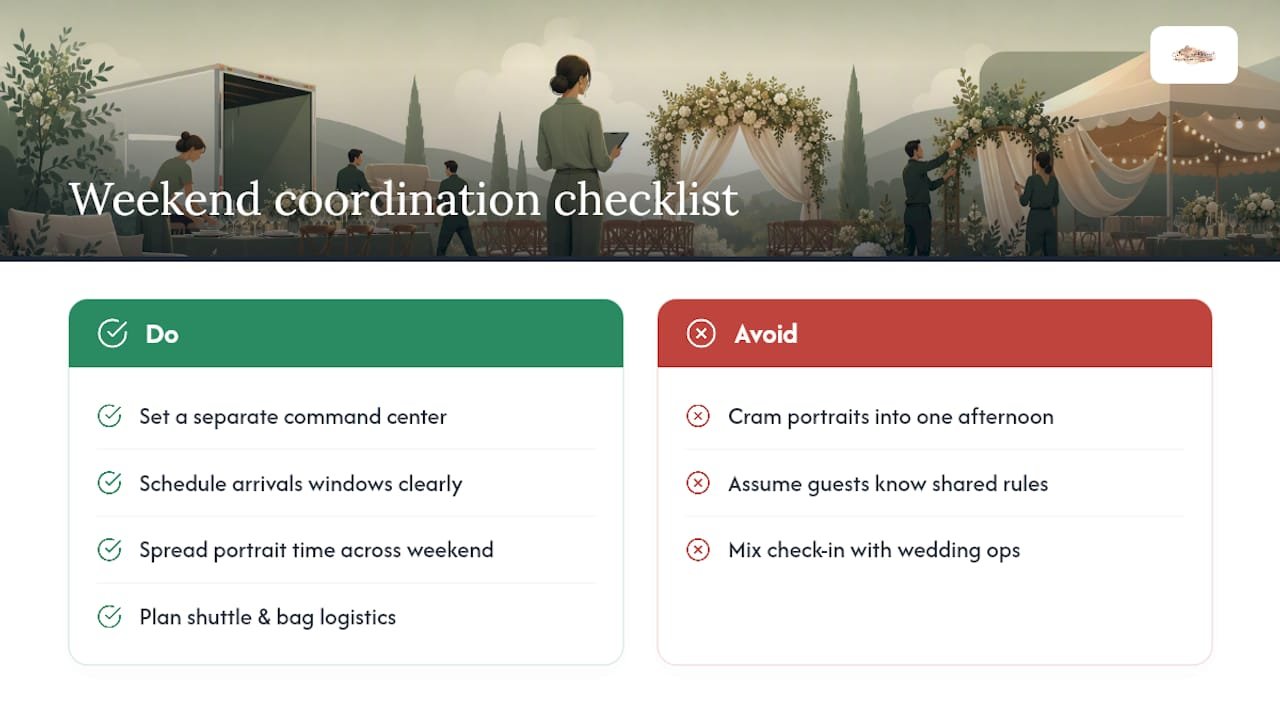
Weekend weddings with on-site lodging add a layer most single-day venues never deal with: guest logistics across multiple days. Venue staff often run a second command center just for check-ins, shuttle timing, and welcome bag delivery, separate from the wedding day timeline itself.
Building a photo timeline that spans the whole weekend rather than cramming portraits into one afternoon gives couples room to breathe and gives photographers better light to work with. Guests staying on-site also need clear, simple communication about arrival windows and shared spaces, especially in a group as large as sixteen.
— Luis
Cherrywood Ranch: One Booking, One Coordinator, One Weekend
Most of what this article just covered, vendor contracts, load-in logistics, rehearsal timing, guest lodging, gets simpler when one team handles the venue and the coordination together. Cherrywoodranchweddingvenue combines a private North Georgia mountain property with on-site lodging for up to 16 guests, so the couple isn’t stitching together a ceremony site, a separate reception hall, and a block of hotel rooms three towns apart.

That matters most for couples planning a multi-day celebration rather than a single afternoon. Instead of coordinating handoffs between a rental company, a hotel, and a venue that closes at 10 PM, everyone stays on the same property for the whole weekend, with a pool and hot tub for the group to unwind in between wedding events. If you’re weighing whether to hire outside coordination or want to see how an all-inclusive weekend package handles it for you, check availability and package details for your date.
Sources
For deeper timeline templates and multi-day logistics, see The Knot’s month-of coordinator guide and Cherrywood Ranch’s wedding weekend planning timeline.
- What Does a Wedding Coordinator Do? A Full Breakdown
- Month‑Of Wedding Coordinator
- Day-of coordinator checklist — EventSync
- A Wedding Coordinator Checklist — Zola