
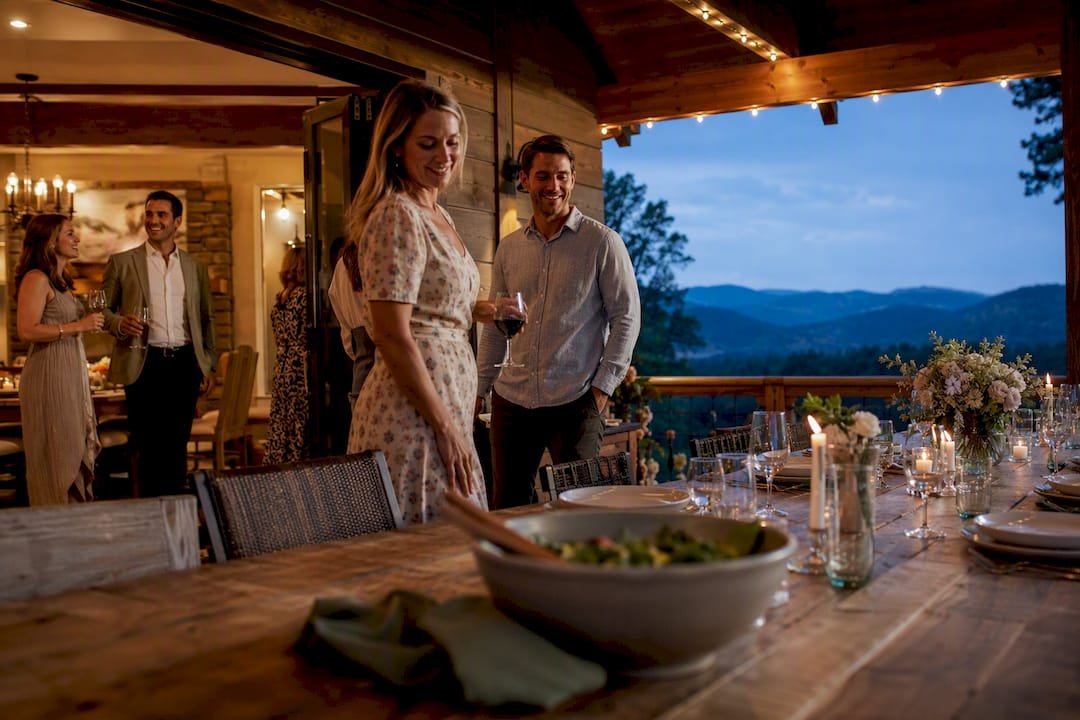
Yes, an on-site rehearsal dinner makes sense for most couples renting a private vacation-home venue for a multi-day wedding weekend. Skipping the drive to a second location keeps everyone together, avoids late-night transportation headaches, and gives guests a relaxed preview of the wedding setting a full day early. At a property like Cherrywood Ranch, where onsite lodging and family-style dinners are already part of the package, the rehearsal dinner becomes one more easy evening rather than a separate event to plan from scratch.
TL;DR:
- Hosting the rehearsal dinner on the wedding venue eliminates transportation issues, reduces costs, and allows for seamless coordination with existing staff and rentals.
- Planning should start 3 to 6 months in advance, with key steps including locking in caterers, rentals, and confirming property access and logistics 6 to 8 weeks prior.
- Proper guest lodging, accessibility, and parking require early mapping and clear communication, including a detailed arrival guide to minimize questions on arrival day.
- Casual, outdoor-friendly catering styles like family-style or food trucks fit well with on-site venues and help keep costs manageable while enabling a relaxed atmosphere.
- Organizing logistics and connecting with the venue for permits, noise precautions, and cleanup can prevent last-minute issues and ensure a smooth, memorable evening.
Table of Contents
- Why an At-Home Rehearsal Dinner Wins for a Wedding Weekend
- When Should You Book the Rehearsal Dinner and Finalize Details?
- How Do You Handle Guest Lodging and Arrival Logistics?
- What Catering Style Fits an On-Site Rehearsal Dinner Best?
- How Do You Turn the Property Into a Memorable Setting?
- What Does a Sample Rehearsal Dinner Run-Sheet Look Like?
- Do You Need a Permit to Host an Event at a Vacation Home?
- How Do You Keep Neighbors Happy and Avoid Noise Complaints?
- Who Handles Trash and Cleanup After the Rehearsal Dinner?
- How Do You Make the Evening Accessible for All Guests?
- What I’ve Learned From Rehearsal Dinners at Private Venues
- Let Cherrywood Ranch Handle the Rehearsal Dinner Logistics
- Sources
Why an At-Home Rehearsal Dinner Wins for a Wedding Weekend
Nobody wants to load a caravan of rental cars onto a dark mountain road at 9 p.m. the night before a wedding. Keeping the rehearsal dinner on the property you’re already staying at removes that risk entirely, and it also means nobody’s aunt gets lost following GPS directions to a restaurant she’s never heard of.
Beyond convenience, an at-home rehearsal dinner gives out-of-town guests their first real look at the setting where the wedding will happen. That preview matters more than most couples expect. Guests arrive at the ceremony the next day already familiar with the layout, the views, and where the bar is.
There’s a financial case too. Hosting the rehearsal dinner at the wedding venue reduces transportation costs, cuts down on duplicate rentals like tables and chairs, and simplifies coordination since staff and vendors already have property access.
Practical advantages stack up fast:
- No second venue deposit or rental fee
- Catering staff can prep once and serve twice across two evenings
- Guests unpack once and never leave the property until the wedding is over
- Photos from the rehearsal dinner naturally match the ceremony’s backdrop
Casual rehearsal dinners for around 35 guests typically run $1,050 to $1,925, and hosting on-site tends to land toward the lower end of that range since you’re not paying for a second location’s staff or room fee.
When Should You Book the Rehearsal Dinner and Finalize Details?
Planning generally starts 3 to 6 months before the wedding, and a vacation-home venue adds a few extra scheduling wrinkles beyond a standard restaurant booking.
- 3 to 6 months out — confirm your wedding weekend dates and ask your venue whether the rehearsal dinner is included or requires an add-on fee.
- 2 to 3 months out — lock in your caterer, since popular caterers and Friday evening slots book early.
- 6 to 8 weeks out — order any rentals your caterer doesn’t supply: extra seating, linens, or a portable bar.
- 3 to 4 weeks out — confirm staff arrival windows with the property, especially if overnight guests are checking in that same day.
- 10 to 14 days out — finalize your headcount and pass it to the caterer along with dietary notes.
A few vacation-home specifics deserve their own line item:
- Check the property’s check-in and check-out windows against your rehearsal dinner start time.
- Ask how many hours before the event caterers and rental delivery trucks can access the driveway.
- Coordinate overnight-guest arrivals so the rehearsal dinner doesn’t collide with people hauling suitcases through the kitchen.
- Build in buffer time for setup if the same crew is running both the rehearsal dinner and the wedding reception.
Cherrywood Ranch walks couples through these exact milestones as part of planning a mountain wedding weekend, which helps prevent the common mistake of treating the rehearsal dinner as an afterthought squeezed into an already packed Friday.
How Do You Handle Guest Lodging and Arrival Logistics?
Start by counting heads against beds. If your venue sleeps 16 and your rehearsal dinner guest list runs to 30, roughly half your group needs somewhere else to sleep, which means a hotel block or nearby short-term rental has to go on your to-do list months in advance, not weeks.
A rooming chart solves more problems than it creates work. Assign one point person per carload or per family group who knows exactly which bedroom is theirs and who to call if a key doesn’t work. This person becomes the unofficial concierge, and it saves you from fielding a dozen texts about towel closets on the morning of your wedding.
Parking and accessibility need early attention too, particularly on rural properties where the driveway wasn’t designed for fifteen cars:
- Map out parking zones and share them on your wedding website before anyone arrives.
- Flag any uneven terrain, gravel stretches, or stairs for guests using mobility devices.
- Arrange a shuttle or carpool system if overflow lodging sits more than a short walk away.
- Post the property’s Wi-Fi password and a local contact number somewhere guests will actually see it.
Pro Tip: Send a one-page arrival guide with your packing list two weeks before the wedding. Include check-in time, parking instructions, and what to wear for the rehearsal dinner. It cuts arrival-day questions by more than half.
What Catering Style Fits an On-Site Rehearsal Dinner Best?
The right service style depends less on your budget and more on how your group actually eats together. Family-style service tends to suit intimate vacation-home groups because it keeps the mood loose and communal, while food trucks work surprisingly well outdoors if your property has room for one to park.
Each style comes with its own tradeoffs:
- Family-style keeps costs down on labor since fewer servers are needed, and it feels natural at a long farmhouse table.
- Buffet gives guests flexibility but usually needs more serving staff to keep lines moving.
- Plated dinners feel more formal and work well for smaller groups, though they typically cost more per head.
- Food trucks cut rental needs almost entirely and add a built-in activity for guests to wander toward.
Food and catering usually represent 40 to 50 percent of your total rehearsal dinner budget, so the format you choose matters more than any other line item. Many restaurants waive private room fees against a food and beverage minimum, but that math doesn’t apply once you’re cooking on-site, so ask your caterer directly whether they need full kitchen access or prefer to drop in with their own equipment.
To trim costs further, consider a Thursday rehearsal dinner instead of Friday, limit the bar to beer, wine, and one signature cocktail, and lean into family-style service over a plated menu.
How Do You Turn the Property Into a Memorable Setting?
You don’t need a decorator. String lights strung between porch posts, one long table pulled from the dining room, and firepit seating for after-dinner conversation do more heavy lifting than a rented arch ever will.
Unique settings spark conversation, and a private vacation home already qualifies. Couples increasingly seek out unconventional spaces for exactly this reason, since it makes the evening feel intentional instead of routine.
A few low-effort activities keep the night moving without turning it into a second wedding:
- A welcome cocktail hour on the porch as guests trickle in from the road
- A small tasting station if your caterer offers appetizer samples ahead of the main meal
- Two or three short toasts, kept under five minutes each, followed by a quick photo slideshow
- Lawn games like cornhole or bocce for guests who arrive early
If your property has a pool or hot tub, treat it as a bonus rather than the main event. Set clear expectations about swimming after dark and keep a towel station stocked so nobody tracks water through the house.
Pro Tip: Schedule toasts before dessert, not after. Guests pay more attention on a full appetizer course than a full dessert course, and it keeps the night from dragging past when people are ready to wind down.
Cherrywood Ranch’s outdoor reception ideas apply just as well to a rehearsal dinner, since both events lean on the same mountain views and open-air layout.
What Does a Sample Rehearsal Dinner Run-Sheet Look Like?
A loose plan beats no plan, but a timed one beats both. Here’s a run-sheet that works for most groups of 25 to 50:
- 5:00 p.m. — Rehearsal begins at the ceremony spot (aim to start early enough to finish before dinner, especially if the property has a noise curfew).
- 5:45 p.m. — Cocktail hour starts on the porch or lawn as guests arrive from lodging.
- 6:30 p.m. — Dinner service begins; family-style dishes go out in waves rather than all at once.
- 7:15 p.m. — Toasts from parents or the wedding party, kept brief and mic-checked beforehand.
- 7:45 p.m. — Dessert and slideshow, if you’re doing one.
- 8:30 p.m. — Casual wind-down: firepit, games, or an early exit for anyone with a rehearsal-day hangover to avoid.
A clear run-of-show avoids the bottleneck that happens when everyone’s still eating appetizers while the caterer’s ready to plate dinner, a mistake venue operators flag often.
Before the night starts, confirm these items and who owns each one:
- Parking layout — venue coordinator maps it, couple shares it on the wedding website
- Lighting — property staff sets up string lights and porch lanterns by late afternoon
- AV for toasts — couple brings or borrows a small speaker and mic
- Dietary notes — couple sends the final list to the caterer at least a week ahead
- Cleanup plan — caterer handles kitchen and serving areas; a family point person handles common spaces
- Vendor arrival times — venue coordinator confirms with each vendor 48 hours out
A partner checklist like this step-by-step wedding checklist can help you track these milestones alongside your broader wedding to-do list.
Do You Need a Permit to Host an Event at a Vacation Home?
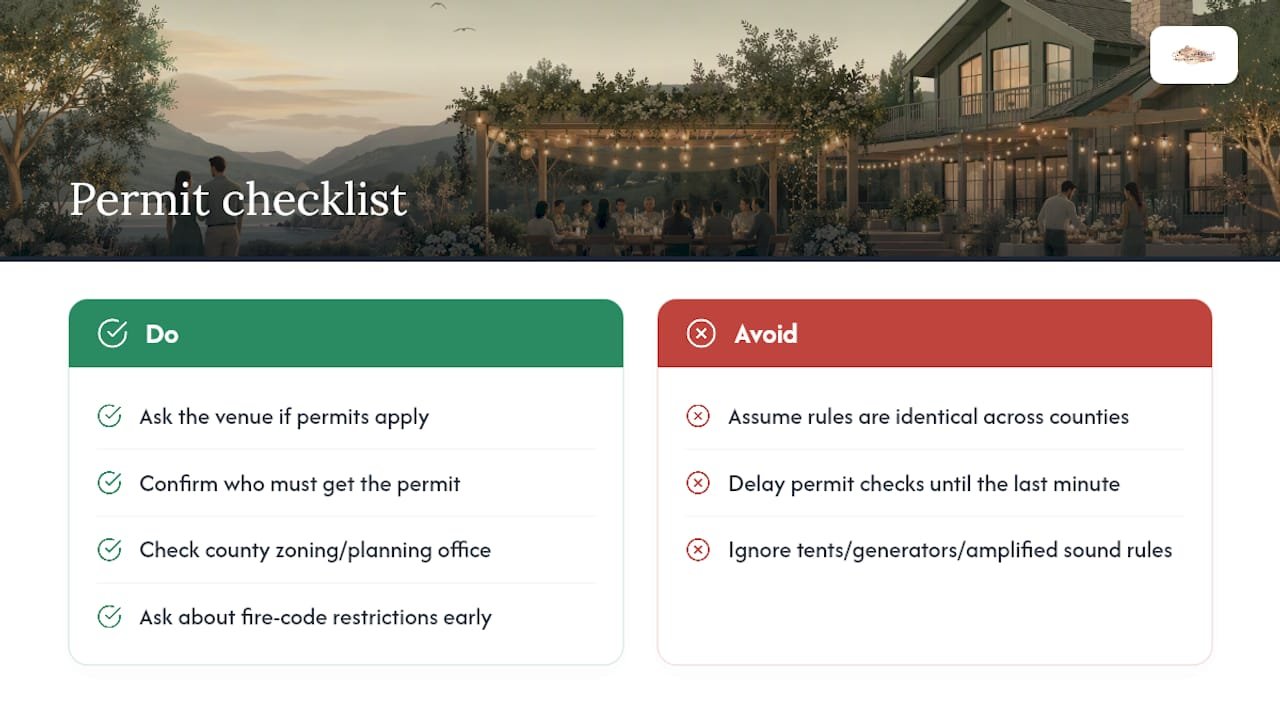
Rules vary by county and by property, so this is the one section where you should never assume. Some counties require a temporary event permit for gatherings above a certain guest count, especially if you’re setting up tents, generators, or amplified sound. Others only regulate commercial short-term rentals, not private events hosted by the property’s paying guests.
Before booking, ask your venue directly whether they hold any required event permits or whether that responsibility falls on you as the renter. A reputable vacation-home wedding venue will already know its own county’s rules and should be able to tell you plainly whether a permit applies to your guest count and setup. If you’re renting a standard vacation home rather than a venue built for events, check your county’s zoning office or planning department before signing a contract, since some jurisdictions cap the number of guests allowed at a residential property regardless of who’s hosting.
Fire code often factors in too, particularly if you’re planning a firepit, string lights run through trees, or a tent for weather backup. Ask about any restrictions before you finalize your rain plan, since a permit denial two weeks before the wedding is not a problem you want to solve last minute.
How Do You Keep Neighbors Happy and Avoid Noise Complaints?
Rural properties often sit close enough to neighboring homes that sound carries farther than you’d expect, especially amplified music after dark. Most counties enforce a noise curfew, commonly somewhere between 9 and 11 p.m., though the exact cutoff depends entirely on local ordinance.
Starting the rehearsal dinner earlier in the evening, around 5:30 to 6:00 p.m., helps you finish the meal and teardown before quiet hours kick in, which matters most for properties with strict curfews. This is exactly the scheduling logic Cherrywood Ranch builds into its own mountain wedding weekend planning guidance, since starting early protects both your evening and your relationship with the people next door.
A little courtesy goes a long way here. If your venue has a known neighbor or property manager nearby, a quick heads-up call a few days before the event, mentioning the date and expected end time, prevents most complaints before they happen. Keep speakers pointed away from neighboring homes rather than toward them, and ask your DJ or playlist operator to lower volume noticeably once the sun goes down.
Who Handles Trash and Cleanup After the Rehearsal Dinner?
Someone needs to own this before the first guest arrives, not after the last one leaves. Most catering contracts cover kitchen and serving-area cleanup, but common spaces like the lawn, porch, and firepit area often fall to the couple or a designated family member unless you’ve specifically added cleanup service to your venue package.
Set out extra trash and recycling bins in visible spots before cocktail hour starts, since guests will use whatever’s closest rather than hunting for the right bin. If your rehearsal dinner includes a bar, plan for glass and bottle disposal separately since most rural trash pickup doesn’t include recycling.
Confirm with your venue whether trash removal is included in your rental or whether you’re responsible for hauling it out before checkout. Some properties have strict rules about where bins go and when pickup happens, particularly if you’re in a more remote area with limited waste service. Ask this question during your initial venue walkthrough rather than the week of the wedding.
How Do You Make the Evening Accessible for All Guests?
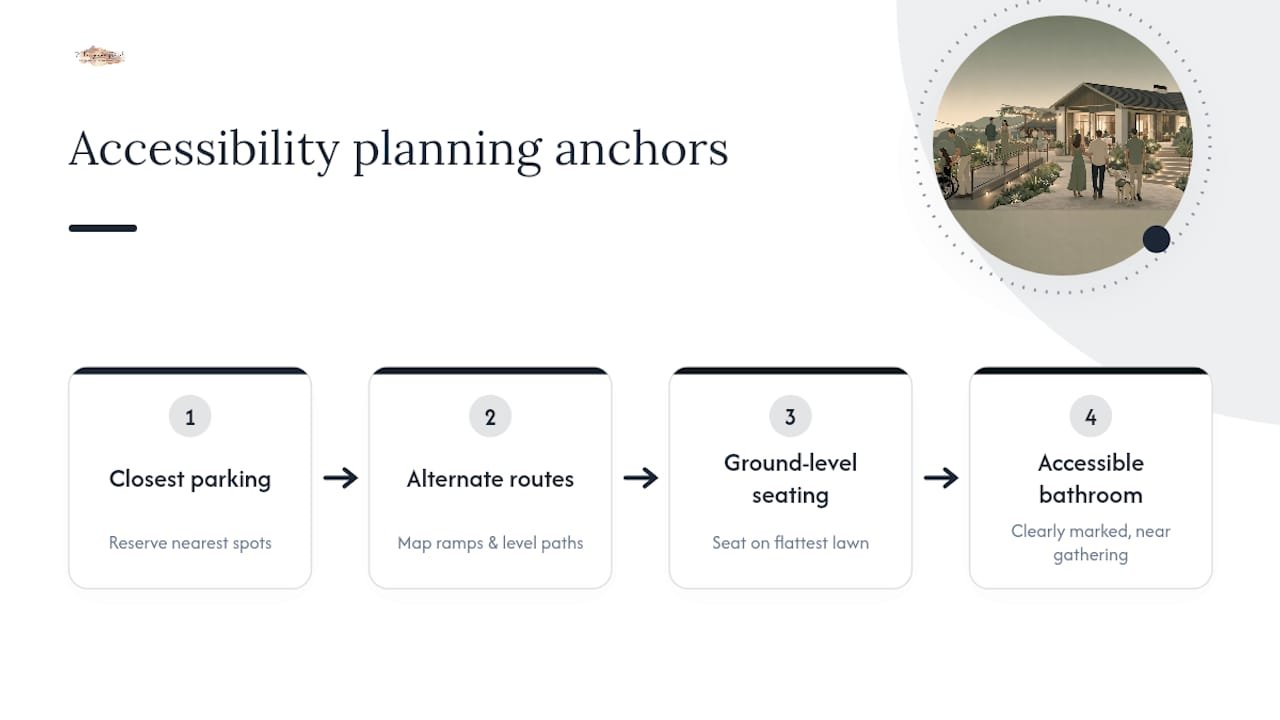
A beautiful mountain property can still be a hard place to navigate if your guest list includes anyone using a wheelchair, walker, or cane. Gravel driveways, sloped lawns, and multi-level decks are common at vacation-home venues, and they’re worth mapping out well before the rehearsal dinner.
Walk the property specifically looking for accessibility gaps: steps without a ramp option, uneven grass where a wheelchair would struggle, or bathrooms that aren’t on the main level. If a guest has mobility needs, ask your venue coordinator directly whether alternate routes or ground-level seating options exist for both the rehearsal dinner and the ceremony the next day.
Simple adjustments make a real difference. Reserve parking spots closest to the entrance for guests who need them, set up seating on the flattest part of the lawn rather than the most scenic corner, and make sure at least one accessible bathroom is clearly marked. If your rehearsal dinner includes lawn games or a firepit gathering, keep a seating area nearby so guests who can’t stand for long periods aren’t left out of the conversation.
What I’ve Learned From Rehearsal Dinners at Private Venues
The biggest misconception couples bring into a vacation-home wedding weekend is that the rehearsal dinner is the “small” event, the one that doesn’t need much planning because the real spotlight is the wedding day. That’s backwards. The rehearsal dinner sets the tone for everything that follows, and a disorganized one puts everyone in a worse mood heading into the ceremony.
What actually works is treating the rehearsal dinner as a dress rehearsal for logistics, not just for vows. Staffing overlap, guest flow, and timing all get tested the night before, which means problems show up when there’s still time to fix them. Couples who plan light activities, like simple guest games or a casual toast structure, tend to see stronger cohesion among guests who didn’t know each other walking in.
— Luis
Let Cherrywood Ranch Handle the Rehearsal Dinner Logistics
You don’t have to juggle a separate venue contract, a second caterer, and a whole new set of directions for guests just to host a proper rehearsal dinner. Cherrywood Ranch keeps everything on one property: the ceremony site, the reception lawn, and the rehearsal dinner all happen within a short walk of where your guests are already sleeping.

The venue accommodates overnight guests, allowing your closest family and wedding party to stay close to where the rehearsal dinner happens the night before. With features like a pool, hot tub, and mountain views, the setting photographs well without needing a decorator, and family-style dinners are often part of how properties host wedding weekends.
The venue also coordinates important elements couples often find stressful: lodging logistics for the group, vendor referrals for catering and rentals, and provides sample menus to review before booking. If you’re weighing whether a private destination wedding venue in Georgia fits your wedding weekend, reach out for a tour or request a rehearsal dinner planning packet to see exactly how the property handles both nights of your celebration.
Sources
- Planning rehearsal dinner guide — Los Angeles Times
- Rehearsal dinner planning guide — WithJoy
- Pix
- Advantages to having an on‑site rehearsal dinner — Woodhaven venue
- Rehearsal dinner planning guide — Dream Event