

Wedding weekends reduce stress by spreading your celebration across multiple days, giving you and your guests the time and flexibility to actually enjoy it. The rigid, single-day format forces every meaningful moment into a compressed window, which is exactly why so many couples finish their wedding day feeling more exhausted than elated. Wedding planner Augusta Cole notes that owning the entire weekend is one of the most impactful decisions a couple can make for stress reduction. This guide breaks down the science, the strategy, and the practical planning behind why multi-day wedding experiences work so well for couples aged 25 to 45 who want presence over performance.
Why wedding weekends reduce stress compared to single-day events
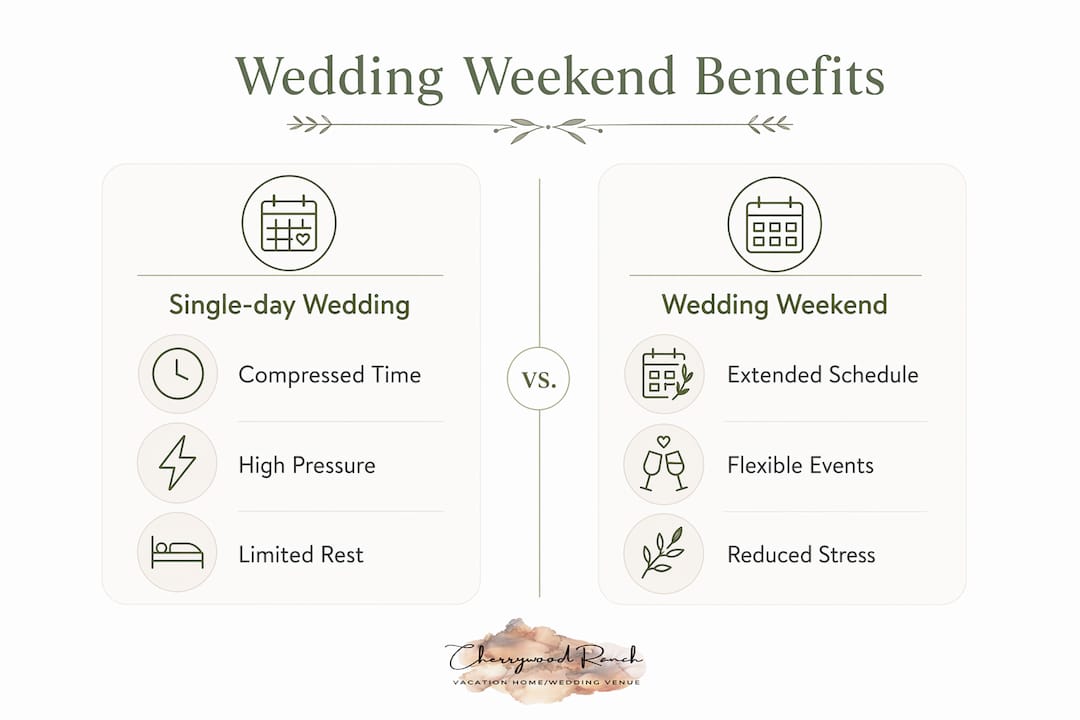
The core difference between a wedding weekend and a traditional one-day wedding is control over time. Single-day weddings compress every meaningful interaction, logistical transition, and emotional milestone into roughly eight to twelve hours. That compression creates constant time pressure, which your nervous system reads as urgency regardless of how happy the occasion is.
Weekend weddings spread those same events across two or three days, which changes the entire emotional texture of the celebration. You stop hosting and start participating. Photographer and wedding commentator Keri Lindekugel describes how multi-day weddings allow couples and guests to fully inhabit the celebration rather than rush through it. That shift from performance to presence is the single biggest reason couples report feeling less stressed.
There are specific operational reasons this works:
- Optional events reduce obligation. Plan A Wedding advises that labeling events as optional directly lowers social pressure on both couples and guests. When attendance is a choice, not a duty, the atmosphere relaxes.
- Breaks between events allow recovery. A Friday welcome dinner, a Saturday ceremony, and a Sunday brunch give everyone natural rest windows. No one is running on fumes by the time the vows happen.
- Hosting duties distribute more evenly. With multiple events, you can delegate each one to a family member or coordinator rather than managing everything yourself on one day.
- Guests arrive and settle at their own pace. Latecomers to a Friday gathering do not derail anything. That flexibility removes a major source of pre-wedding anxiety.
Pro Tip: Label every event in your wedding weekend invitation suite with a clear “optional” or “hosted” designation. This single communication choice eliminates a surprising amount of guest-related stress before the weekend even begins.
How a multi-day format affects your stress hormones
Wedding planning stress is not just emotional. It is physiological. Polka Dot Wedding explains that the nervous system cannot distinguish good stress from bad stress. Elevated cortisol from months of planning decisions, vendor negotiations, and family dynamics keeps your body in a low-grade fight-or-flight state. By the time your wedding day arrives, many couples are already running on a depleted stress-response system.
A wedding weekend format addresses this in two ways. First, it reduces the density of high-stakes moments on any single day. When the ceremony is not also the only window for every family photo, every meaningful conversation, and every vendor handoff, the cortisol spike associated with each event is lower. Second, the multi-day structure builds in natural recovery periods. Sleep between events, a slow morning before the ceremony, and an unscheduled afternoon on Sunday all give your nervous system time to reset.
“Wedding planning stress manifests physiologically. Pacing and breaks enabled by weekends improve wellbeing and presence.” — Polka Dot Wedding
Experts at Polka Dot Wedding also recommend a specific tactic for the planning phase itself: weekly evenings free from any wedding discussion. This is not a soft suggestion. Continuous wedding-related conversations increase mental background stress in measurable ways, and regular breaks from planning talk directly improve emotional state. Couples who protect even one evening per week from wedding talk report feeling more grounded throughout the planning process.
What are the best practices for planning a stress-reducing wedding weekend?
Planning a wedding weekend well requires a different mindset than planning a single-day event. The goal is not to fill every hour. The goal is to design a schedule that feels generous rather than packed.
Here is a practical framework for building a low-stress wedding weekend:
- Choose two anchor events, not five. Plan A Wedding recommends a tight two-event weekend over a sprawling multi-event schedule. A welcome dinner on Friday and the ceremony plus reception on Saturday is often the ideal structure. A Sunday brunch is a bonus, not a requirement.
- Vary the formality level across events. A casual Friday gathering followed by a formal Saturday ceremony keeps the weekend engaging. If every event has the same dress code and energy, guests and couples both fatigue faster.
- Build 90-minute buffer blocks into your schedule. Travel between venues, wardrobe changes, and unexpected conversations all take longer than planned. Buffer time is not wasted time. It is the difference between a calm transition and a frantic one.
- Protect private couple time. Block at least one hour on Saturday morning before the ceremony that belongs only to you two. No vendors, no family, no decisions. This is your reset window before the main event.
- Assign a point person for each event. You do not need to be the host of every gathering. Delegate Friday evening to a sibling or close friend. Hire a wedding day coordinator for Saturday. Distribute the hosting load so you can be a guest at your own celebration.
| Single-day wedding | Wedding weekend |
|---|---|
| All events compressed into 8-12 hours | Events spread across 2-3 days |
| Couple hosts every moment | Hosting duties distributed across events |
| No recovery time between milestones | Natural rest windows built into the schedule |
| High social pressure to connect with everyone | Multiple relaxed opportunities for connection |
| One chance to get logistics right | Flexibility to adjust as the weekend unfolds |
Pro Tip: Send a simple weekend itinerary to guests two weeks before the event. A one-page PDF with event times, locations, dress codes, and optional labels removes the most common source of guest confusion and last-minute questions.
How does extended time together improve the guest experience?
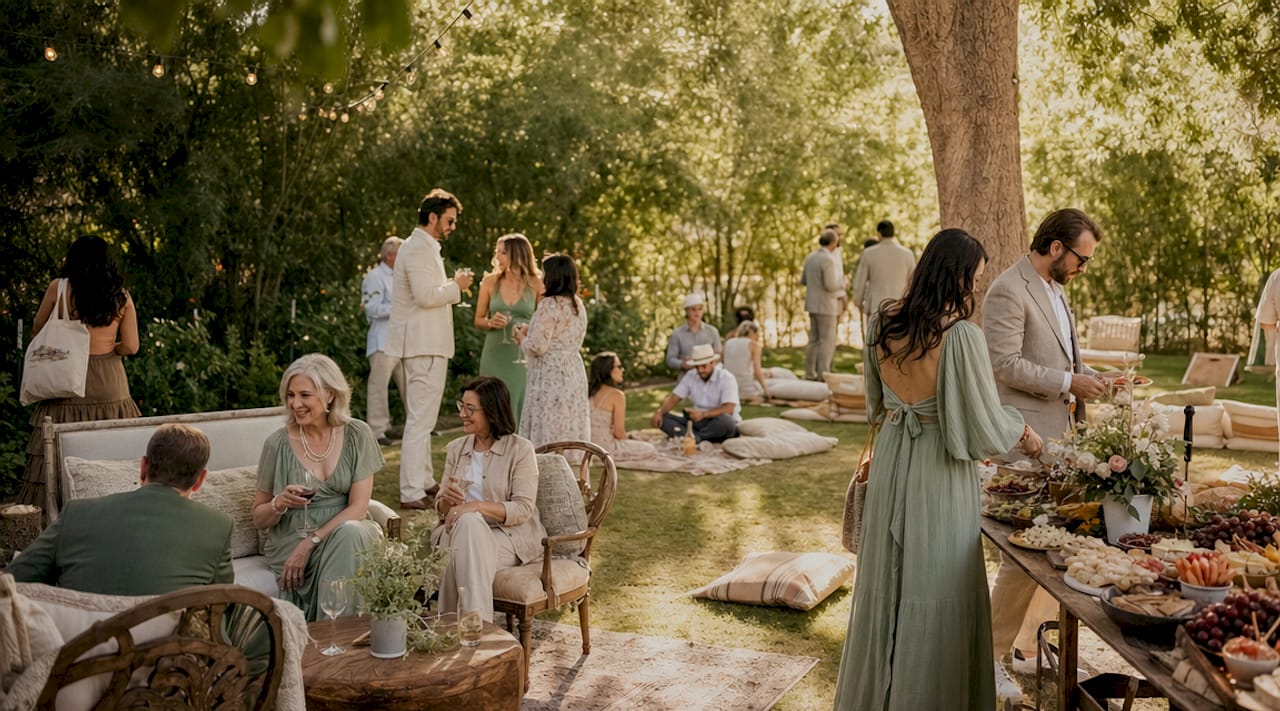
The social dimension of a wedding weekend is one of its most underrated benefits. Wedding expert Marcy Blum notes that couples gain a sense of community through multi-day events that simply is not possible in a single-day format. That community feeling is not just pleasant. It actively reduces stress for the couple by creating an atmosphere that carries itself.
When guests have Friday evening to arrive, meet each other, and settle in, Saturday’s ceremony begins with a room full of people who already feel connected. Conversations have already started. Awkward introductions are already behind everyone. The emotional warmth in the room on the actual wedding day is noticeably higher, and that warmth feeds back to the couple.
Consider what this means practically:
- Guests who traveled from out of town feel welcomed rather than rushed into a ceremony the moment they arrive.
- Family members from different sides of the relationship have time to meet naturally rather than being formally introduced at a cocktail hour.
- The couple spends less time working the room on Saturday because meaningful conversations already happened on Friday.
- Children, elderly guests, and anyone who needs extra time to settle in can do so without disrupting the main event.
The result is a wedding day where you actually remember talking to people. Not because you forced it, but because the weekend gave everyone enough time to show up fully.
Can a wedding weekend fit a realistic budget?
Multi-day weddings do cost more. Plan A Wedding puts the increase at 25 to 45 percent more than a comparable single-day event. That number sounds significant, but the framing matters. You are not spending more on the same thing. You are redistributing resources across a longer, more meaningful experience.
The key to managing that cost without adding stress is intentional subtraction:
- Cut events, not quality. A Friday welcome dinner does not need a caterer. A backyard barbecue or a restaurant buyout costs a fraction of a catered event and creates the same relaxed atmosphere.
- Choose a venue that handles multiple functions. A property with lodging, outdoor ceremony space, and indoor reception capability eliminates transportation costs and vendor coordination across multiple locations.
- Limit the Sunday event to something simple. A continental brunch or a casual pool gathering requires minimal planning and almost no additional vendor spend.
- Prioritize the Saturday ceremony and reception budget. That is where your investment belongs. The surrounding events should support it, not compete with it financially.
Couples who approach the budget this way consistently report that the weekend felt more generous than a single-day event at the same total spend. The distribution of experiences across time creates a perception of abundance that a single compressed day cannot replicate.
Key takeaways
Wedding weekends reduce stress because they replace time pressure and social obligation with paced, flexible, multi-day experiences that allow couples and guests to be fully present.
| Point | Details |
|---|---|
| Time pressure is the root cause | Single-day weddings compress every milestone into hours, triggering sustained stress responses. |
| Optional events lower obligation | Clearly labeled optional events reduce social pressure for both couples and guests. |
| Nervous system recovery matters | Multi-day pacing gives cortisol levels time to drop between events, improving presence. |
| Two anchor events beat five | A tight Friday-Saturday structure outperforms sprawling multi-event weekends for calm and budget. |
| Community builds itself over time | Extended guest interaction creates warmth that reduces the couple’s social workload on the wedding day. |
Why I think the “one perfect day” model sets couples up to fail
I have spent years watching couples pour everything into a single Saturday, and the pattern is almost always the same. By 9 PM, they are exhausted, they have not eaten, and they are mentally cataloging everything that did not go exactly as planned. The day they spent eighteen months building is already behind them, and they are too depleted to feel it.
The wedding weekend model fixes this not by adding more events but by removing the scarcity that makes a single day so high-stakes. When you know you have Friday evening to reconnect with your grandmother and Sunday morning to sit with your college friends, Saturday stops carrying the weight of every relationship in your life. That redistribution of emotional weight is the real mechanism behind why multi-day celebrations feel so different.
What I find most couples resist is the idea that a relaxed schedule is somehow less special. The opposite is true. Presence requires space. You cannot be fully in a moment when you are simultaneously tracking the timeline, managing a vendor, and calculating whether you have spoken to every table. A weekend retreat format gives you back the mental bandwidth to actually experience what you planned.
The one pitfall I see couples fall into with wedding weekends is overscheduling. They treat the extra days as extra capacity rather than extra breathing room. Three days of back-to-back hosted events is not a wedding weekend. It is a single-day wedding stretched thin. Design for white space. The moments that end up mattering most are almost always the unscheduled ones.
— Luis
Plan your stress-free wedding weekend at Cherrywood Ranch
Cherrywoodranchweddingvenue was built specifically for couples who want the wedding weekend experience without the logistical complexity of coordinating multiple venues and accommodations.
The property in the North Georgia Mountains combines ceremony space, reception areas, and lodging for up to 16 guests on a single property. That means your Friday welcome gathering, Saturday ceremony, and Sunday brunch all happen in the same place, with your closest people already on site. The pool, hot tub, and mountain views handle the atmosphere. You handle the moments that matter. Explore wedding packages and availability to see how a Cherrywood Ranch weekend fits your vision, or learn more about the venue and its amenities before you reach out.
FAQ
Why do wedding weekends reduce stress more than single-day events?
Wedding weekends spread events across multiple days, removing the time pressure that forces every milestone into a single compressed window. This pacing lowers sustained cortisol levels and gives couples natural recovery time between high-stakes moments.
How many events should a wedding weekend include?
Plan A Wedding recommends two anchor events: a Friday welcome gathering and a Saturday ceremony with reception. A Sunday brunch is optional. More events increase hosting load and cost without proportionally improving the experience.
Do wedding weekends cost significantly more?
Multi-day weddings cost roughly 25 to 45 percent more than single-day events, but that increase is manageable when you cut event quantity rather than quality. Keeping Friday and Sunday events simple and informal controls costs while preserving the weekend’s relaxed atmosphere.
How do optional events reduce wedding stress?
Clearly labeling events as optional removes the social obligation for guests to attend everything, which in turn reduces the couple’s anxiety about attendance and logistics. Plan A Wedding identifies this communication practice as one of the most direct ways to lower exhaustion across a multi-day celebration.
What is the best way to protect couple time during a wedding weekend?
Block at least one unscheduled hour on the morning of the ceremony with no vendor access, no family requests, and no decisions. This protected window functions as a nervous system reset before the most emotionally significant event of the weekend.