

A multi-generational family wedding weekend is defined as a structured, multi-day celebration designed to bring together guests of all ages, from toddlers to grandparents, around a shared milestone. 47% of travelers now choose multi-generational trips, with 77% organized specifically around major milestones like weddings. That number tells you something important: couples are no longer treating the wedding as a single evening. They are building a full experience. To plan a multi-generational family wedding weekend well, you need three things working together: a flexible schedule, a venue that fits everyone, and communication that leaves no guest guessing.
What tools and timelines do you need to plan a multi-day wedding weekend?
Successful coordination of an intergenerational event requires three distinct timelines: a guest-facing itinerary, a vendor schedule, and a wedding party timeline. Each one serves a different audience and solves a different problem. Collapsing them into one document is the most common planning mistake couples make.
The guest-facing itinerary tells your family and friends where to be, when to arrive, and what to wear. Keep it simple and visual. The vendor timeline runs 15–30 minutes ahead of the guest version, giving your caterer, photographer, and florist enough runway to set up without guests watching. The wedding party timeline is the most granular of the three. It accounts for hair and makeup, travel between locations, and pre-ceremony photos.
For tools, platforms like Zola, The Knot, and Aisle Planner each offer shared calendars and checklist templates built specifically for multi-day events. Google Sheets works just as well for couples who prefer a custom setup. The goal is one shared source of truth that every vendor and family coordinator can access in real time.
- Guest itinerary: Times, locations, dress codes, and transport details for each event
- Vendor schedule: Setup windows, delivery times, and breakdown logistics
- Wedding party timeline: Hair, makeup, photos, and travel buffers built in
- Shared planning tool: Zola, The Knot, Aisle Planner, or a shared Google Sheet
- Contingency buffer: Add 20 minutes of buffer between every major transition
Pro Tip: Schedule a mandatory 2-hour blackout on the morning of your wedding day. No vendor calls, no family check-ins. That protected window is the single most effective way to prevent burnout before the ceremony even starts.
Multi-day wedding weekends typically cost 25–45% more than single-day weddings. Prioritizing event quality over quantity yields better results. That means one well-produced welcome party beats three rushed activities every time.
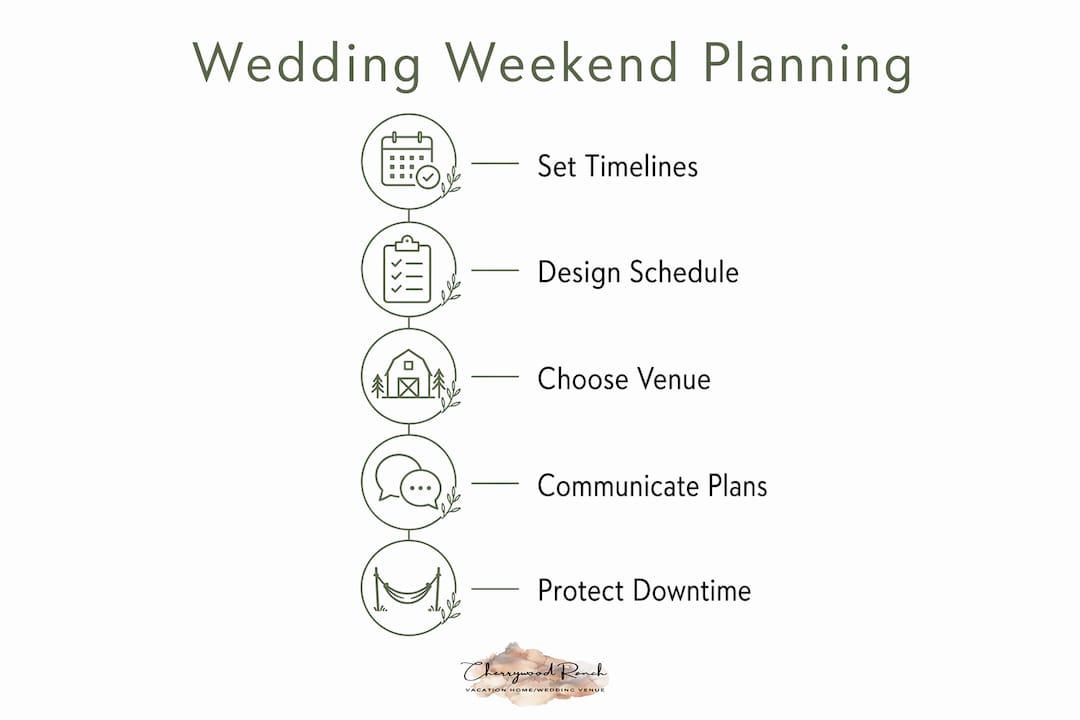
How do you design an inclusive schedule for all generations?
The standard framework for a family reunion wedding weekend follows a three-day structure. A Friday welcome party, Saturday ceremony, and Sunday farewell brunch under two hours gives you a proven backbone to build from. What you add between those anchors defines the guest experience.
Here is how to build that schedule with every generation in mind:
- Friday evening: Welcome party. Keep it casual and low-pressure. A backyard cookout, a bonfire, or a catered dinner on a porch works better than a formal cocktail hour. The goal is to unify guests and shift them from travelers to a community. That emotional transition is what makes the rest of the weekend feel cohesive.
- Saturday morning: Free time. Do not fill this block. Grandparents need rest. Kids need to burn energy. Young adults want to explore. Offering optional activities like a nature walk, a pool session, or a local market visit lets each group self-select without anyone feeling left out.
- Saturday afternoon and evening: Ceremony and reception. This is your one mandatory event. Everything else is optional.
- Sunday morning: Farewell brunch. Keep it casual and brief. Skip formal speeches. A two-hour window with good food and open seating lets guests say their goodbyes at their own pace.
The word “optional” carries real weight in multi-generational wedding planning. Labeling all events except the ceremony as optional relieves social pressure and keeps participation genuine. Guests who show up because they want to are far more energized than guests who show up because they felt obligated.
Pro Tip: Stagger activity intensity across the weekend. Place your highest-energy event on Friday night when guests are fresh, and your most relaxed activity on Sunday morning when everyone is winding down. Elders and young children both benefit from this arc.

Owning the full weekend lets you design a schedule around your family’s actual personality rather than a generic wedding template. That flexibility is the biggest advantage of a multi-day format.
What venue features support a multi-generational wedding weekend?
Venue selection is where most couples underestimate the complexity of planning intergenerational events. The right venue does not just look good in photos. It solves logistical problems before they start.
The single most effective venue feature for a family wedding weekend is exclusive use. When your group controls the entire property, you eliminate conflicts with other events, reduce noise complaints, and give every generation a space to call their own. Home base venues where guests stay onsite reduce group movement complexity and stress. That matters enormously when you are coordinating grandparents, toddlers, and out-of-town cousins simultaneously.
| Feature | Why It Matters for Multi-Generational Groups |
|---|---|
| Exclusive use | Eliminates conflicts and gives your group full control of the space |
| Onsite lodging | Keeps all generations close without requiring rental cars or shuttles |
| Multiple gathering zones | Separates high-energy and low-energy activities so no one feels crowded |
| Accessibility features | Ramps, wide doorways, and level pathways protect mobility-impaired guests |
| Pool or outdoor amenities | Gives children and younger guests an outlet during downtime blocks |
Multiple gathering zones prevent the crowding and event repetition that drain guest energy over a multi-day celebration. A venue with a ceremony lawn, a dining area, a casual lounge space, and a pool covers every mood and energy level your guests will cycle through.
Accessibility is non-negotiable. Level pathways, accessible restrooms, and seating with back support are not extras. They are the baseline for any event that includes older guests. Walk the property yourself before booking and ask specifically about mobility accommodations.
How do you communicate plans to guests across all generations?
Clear, early communication is the difference between a weekend that flows and one that generates a constant stream of “What time does this start?” texts. Digital itineraries and wedding websites minimize confusion and measurably improve the guest experience. Set yours up at least six weeks before the event.
Your communication toolkit should include:
- A wedding website with the full weekend schedule, venue address, parking details, and a FAQ section for common questions
- Printed timeline cards mailed with invitations for older guests who prefer paper over apps
- A group messaging thread on WhatsApp or GroupMe for real-time updates and spontaneous coordination
- A pre-arrival email sent one week out with packing tips, weather forecasts, and a reminder of optional versus required events
- Day-of signage at the venue with clear directional markers and event times posted visibly
The pre-arrival email is the most underused tool in family wedding planning. It answers the questions guests were too polite to ask and removes the anxiety of arriving somewhere unfamiliar. Include a simple map of the venue, a list of nearby pharmacies or urgent care clinics, and the name of one point of contact for logistical questions.
Avoid overscheduling your communications the same way you avoid overscheduling your weekend. One clear message with all the details beats five partial updates that create more questions than they answer.
Key takeaways
A successful multi-generational wedding weekend requires three timelines, an optional-first activity structure, and a venue with exclusive use and onsite lodging.
| Point | Details |
|---|---|
| Build three separate timelines | Create distinct guest, vendor, and wedding party schedules to prevent confusion. |
| Label events as optional | Reducing social pressure keeps guest energy and participation genuinely high. |
| Choose an exclusive-use venue | Onsite lodging and multiple gathering zones solve most multi-generational logistics automatically. |
| Communicate early and clearly | A wedding website plus a pre-arrival email eliminates the majority of day-of questions. |
| Protect the couple’s time | A 2-hour blackout on wedding morning prevents burnout and keeps the couple present. |
What i have learned from planning multi-generational wedding weekends
The couples who struggle most with intergenerational wedding weekends are the ones who try to please everyone simultaneously. That instinct is understandable. It is also the fastest path to a schedule so packed that no one actually enjoys it.
The most effective thing I have seen work, consistently, is a strong Friday kickoff event. Not a formal dinner. Not a rehearsal with speeches. A genuine gathering where people eat, laugh, and start telling stories. That first evening does something no itinerary can manufacture. It turns a group of relatives who see each other twice a year into a community that is genuinely excited to celebrate together. Every other event in the weekend benefits from that foundation.
I also push back hard when couples resist protecting their own downtime. They feel guilty about it. They think guests will notice or feel abandoned. Guests do not notice. What they do notice is a couple who arrives at their own ceremony exhausted and distracted. The 2-hour blackout is not selfish. It is the most important item on the entire weekend schedule.
The other insight I keep returning to is this: the best multi-generational wedding weekends feel like they have no schedule at all. That feeling is the result of meticulous planning, not the absence of it. When every transition is smooth, every space is ready, and every guest knows exactly where to be, the weekend feels effortless. That effortlessness is what people remember ten years later.
Inclusive planning does not mean doing more. It means doing the right things in the right order, then getting out of the way and letting your family show up for you.
— Luis
Why Cherrywoodranchweddingvenue is built for family wedding weekends
Cherrywoodranchweddingvenue sits in the North Georgia Mountains and was designed specifically for the kind of weekend this article describes. The property offers exclusive use, onsite lodging for up to 16 guests, and resort-style amenities including a pool and hot tub. Every generation has a space that fits them.

Cherrywoodranchweddingvenue combines the ceremony venue and vacation home into one property, which eliminates the shuttle logistics and fragmented scheduling that make multi-day events stressful. Couples who book the Georgia mountain wedding venue get the gathering zones, the mountain views, and the coordination support that turn a good weekend into one their families talk about for years. Explore weekend retreat packages to see how the venue fits your vision.
FAQ
What is a multi-generational wedding weekend?
A multi-generational wedding weekend is a 2–3 day celebration that includes guests of all ages, structured with varied activities, rest periods, and a mix of optional and required events. The format replaces a single-day wedding with an extended experience that gives every generation time to connect.
How many events should a wedding weekend include?
Three anchor events cover the full weekend: a Friday welcome gathering, a Saturday ceremony and reception, and a Sunday farewell brunch. Additional optional activities fill the gaps without overwhelming guests.
How do you keep older guests comfortable during a wedding weekend?
Choose a venue with accessible pathways, onsite lodging, and quiet spaces for rest. Ensuring guests have downtime between events is the most direct way to keep energy high and engagement genuine across all age groups.
What is the best way to communicate the weekend schedule?
A wedding website paired with printed timeline cards and a pre-arrival email covers both digital and non-digital guests. Digital itineraries sent six weeks in advance give guests enough time to plan travel and ask questions before arrival.
How much more does a wedding weekend cost than a single-day wedding?
Multi-day wedding weekends typically cost 25–45% more than single-day events. Focusing your budget on two or three high-quality experiences rather than filling every hour with activities delivers better value and a more memorable weekend.