
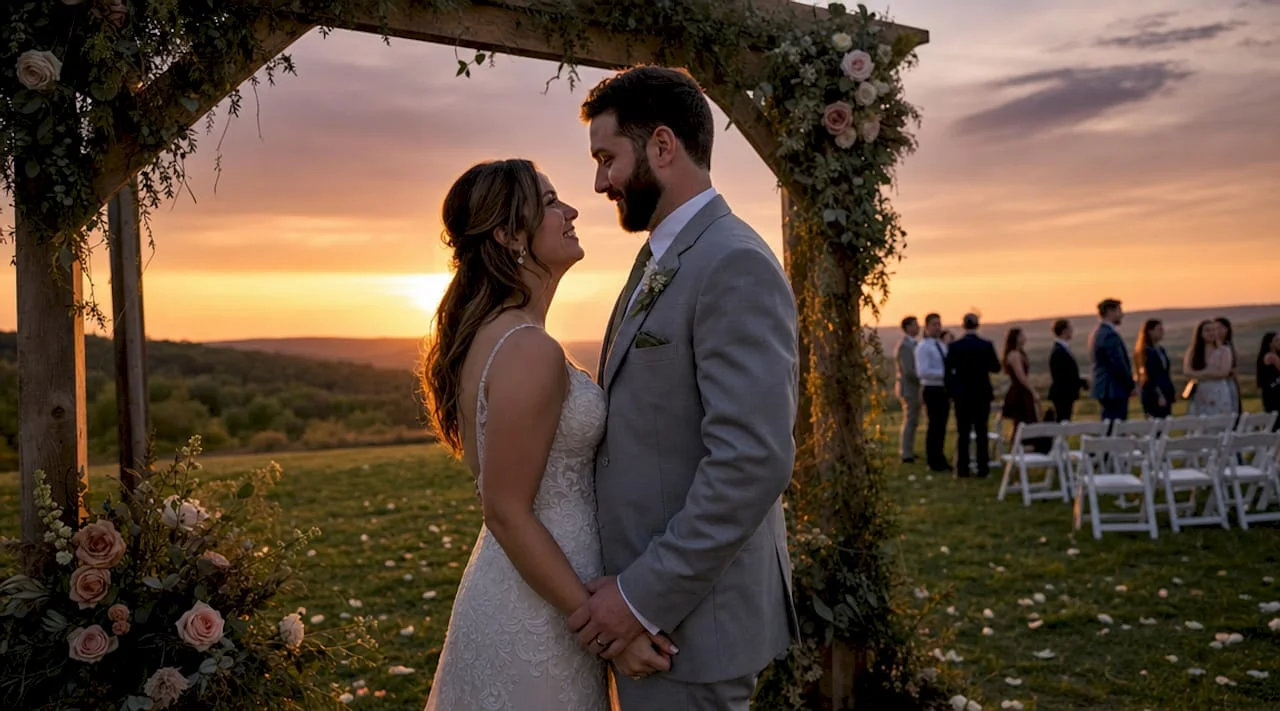
Sunset weddings are ceremonies timed to golden hour, the 45 to 60 minutes before the sun drops below the horizon, when warm amber light transforms every moment into something cinematic. The reason why sunset weddings are memorable comes down to three forces working together: flattering light that makes everyone look their best, cooler temperatures that keep guests comfortable, and a natural visual spectacle that no decorator can replicate. Couples who choose this timing report a deeper emotional connection to their ceremony because the environment itself shifts around them, from daylight into twilight, creating a living backdrop that guests feel rather than just observe. At Cherrywood Ranch in the North Georgia Mountains, that backdrop includes rolling pastures, mountain ridgelines, and horses grazing at dusk.
Why sunset weddings are so memorable
The core reason sunset weddings leave a lasting impression is that the environment does the emotional work for you. Sunset ceremonies create a dynamic, cinematic setting because the light visibly shifts during the ceremony itself, moving from golden warmth into soft twilight. Guests and couples perceive that changing light as deeply enchanting, not just pretty. It triggers something primal. Humans are wired to respond to the end of the day with a sense of reflection and presence, which is exactly the emotional state you want your guests in when you say your vows.
This is not just aesthetics. Couples choose sunset weddings because the relaxed day’s pacing matches the emotional experience they want to remember. A morning spent without rushing, an afternoon building anticipation, and a ceremony timed to nature’s most dramatic moment creates a narrative arc to the entire day. That arc is what people talk about at the reception and remember years later.
How does sunset lighting affect wedding photos?
Golden hour light is the single most flattering natural light source available to wedding photographers. The warm, rich tones and softer contrast of sunset light enhance photos with flattering skin tones and a cinematic ambiance that harsh midday sun simply cannot produce. Midday light hits faces from directly above, creating unflattering shadows under eyes and noses. Golden hour light arrives at a low angle, wrapping around faces and filling in shadows with warmth.
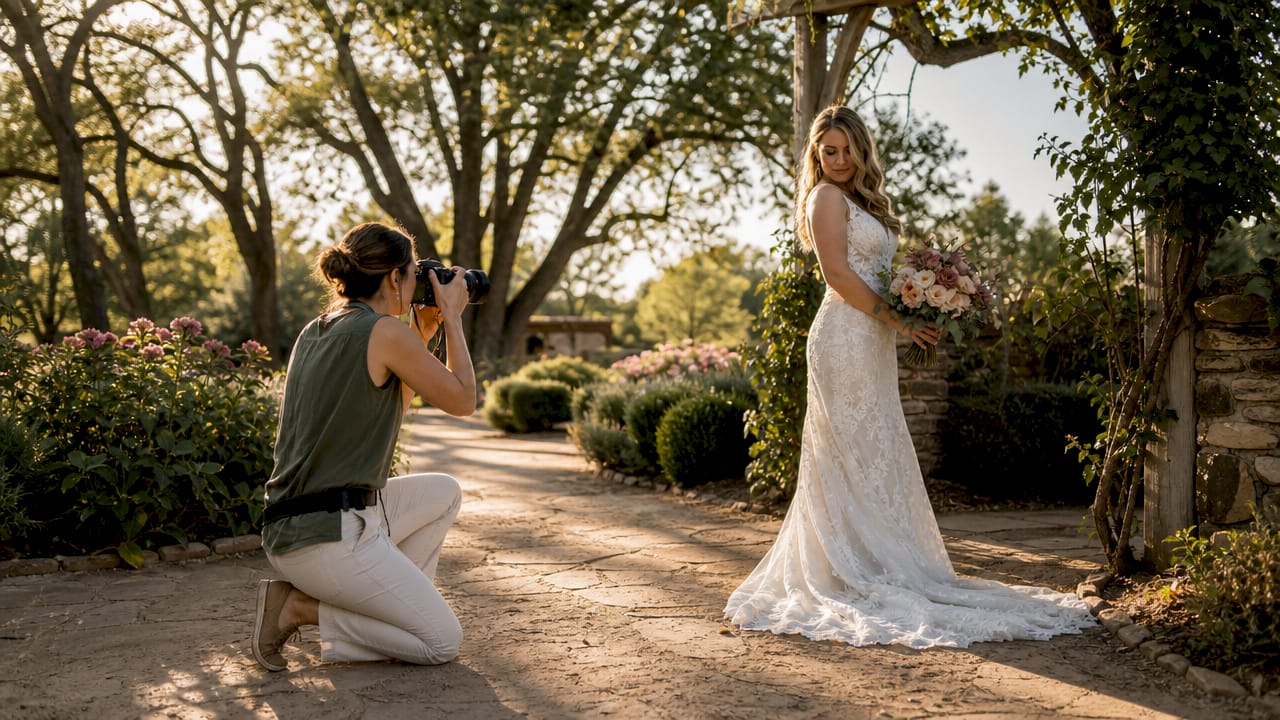
The science behind this matters for planning. Golden hour light improves natural skin appearance in photos compared to harsh or colored lighting, making it the preferred window for portrait work. This means your photographer can capture genuine, relaxed expressions without asking you to squint or reposition constantly. The light does the heavy lifting.
Here is what the impact of sunset lighting delivers for your wedding gallery:
- Warm amber and gold tones that make white dresses glow and dark suits look rich rather than flat
- Dramatic shadows that add depth and dimension to landscape shots, especially at mountain or ranch venues
- Soft, diffused light that eliminates the need for heavy flash fill during outdoor portraits
- A color palette that shifts from gold to pink to purple as the ceremony progresses, giving your photographer multiple distinct looks in one session
- Silhouette opportunities that are impossible at any other time of day
Pro Tip: Ask your photographer to schedule a 15 to 20 minute portrait session starting exactly 30 minutes before sunset. This window captures peak golden hour color before the light fades too quickly to use.
What are the comfort advantages of a sunset ceremony?
Scheduling your ceremony at sunset solves one of the most common outdoor wedding complaints: heat. Couples choosing sunset timing report better comfort and significantly less heat stress, particularly in mountainous or warm-climate areas. Guests in formal attire are far more comfortable when temperatures have dropped from the afternoon peak. Nobody remembers the vows if they spent the ceremony fanning themselves.
The comfort advantages extend beyond temperature. Evening timing at popular venues means fewer crowds and more privacy, which enhances guest presence and connection. When distractions disappear, people actually listen. They look at you. They feel the moment rather than managing their own discomfort.
The practical benefits of sunset timing include:
- Cooler air temperatures that make outdoor ceremonies comfortable for guests in suits, gowns, and formal wear
- Reduced insect activity compared to dusk in some regions, particularly at higher elevations
- A relaxed morning timeline that gives the couple and wedding party time to prepare without rushing
- Natural transition into evening so the reception begins with the energy already built from the ceremony
- Less direct sun glare for guests seated facing the couple, meaning no squinting or shading eyes during your vows
Sunset ceremonies allow couples to savor moments throughout the day rather than racing through a compressed morning schedule. That slower pace shapes the emotional memory of the entire wedding day.
Pro Tip: Build your getting-ready timeline to finish at least 90 minutes before the ceremony. This buffer lets you take first-look photos in afternoon light and arrive at the ceremony calm rather than rushed.
How to choose the right venue and timing for a sunset wedding
Venue orientation is the most overlooked factor in sunset wedding planning. West-facing locations maximize golden hour light for both photos and atmosphere. A venue facing east will have the couple standing in shadow while the sky glows behind the guests. That is the opposite of what you want. Coastal venues, mountain ridgelines, and open ranch properties with unobstructed western horizons are the gold standard for sunset ceremonies.
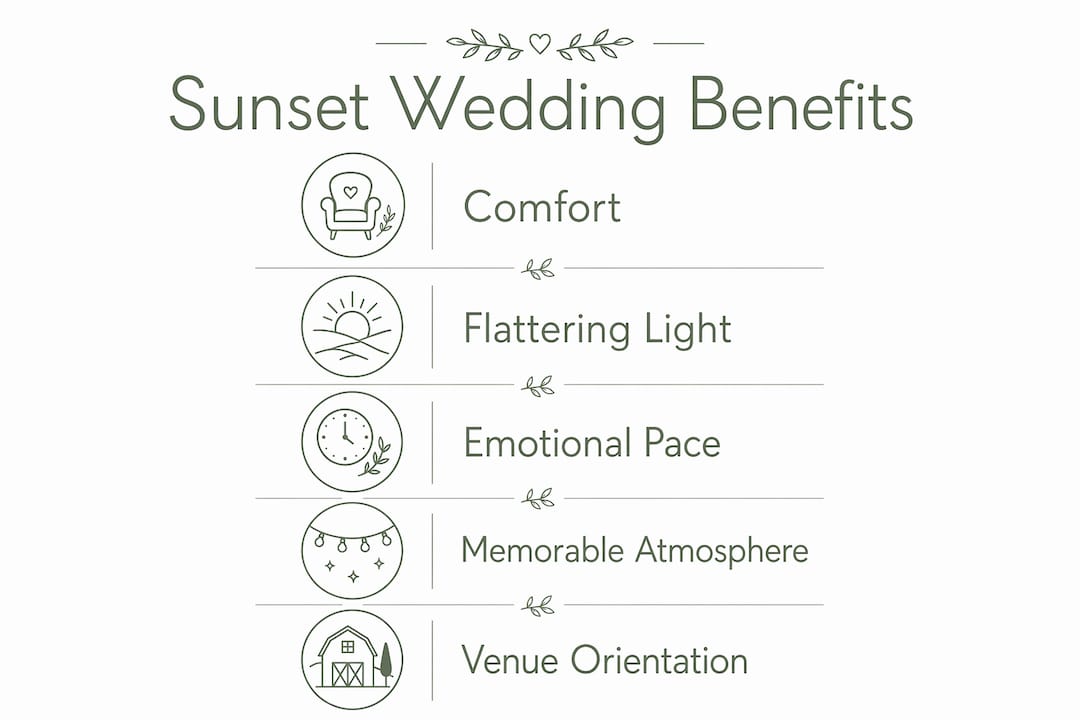
Golden hour lasts roughly 45 to 60 minutes before sunset, peaking in the final portion. This means you cannot simply schedule the ceremony “around sunset” and hope for the best. You need to build your entire wedding day timeline backward from the exact sunset time on your wedding date. Sunset time varies by season, latitude, and geography, so check the precise time for your specific venue location and date.
Here is how to build a sunset wedding timeline:
- Look up the exact sunset time for your venue’s location and wedding date using a tool like TimeandDate.com or The Photographer’s Ephemeris.
- Schedule the ceremony start 30 to 45 minutes before sunset so the ceremony timing captures peak golden hour light during the vows and ring exchange.
- Plan portrait sessions immediately after the ceremony while the last light remains, typically a 15 to 20 minute window.
- Coordinate with all vendors including your florist, caterer, and officiant so everyone understands the timeline is built around a fixed natural event.
- Build in a 15 minute buffer for any ceremony delays so you do not lose the light entirely.
| Season | Approximate sunset time (North Georgia) | Planning note |
|---|---|---|
| Spring (March to May) | 7:30 to 8:15 PM | Ideal for comfortable temperatures |
| Summer (June to August) | 8:15 to 8:45 PM | Latest light, hottest days |
| Fall (September to November) | 6:30 to 7:30 PM | Best color in sky, cooler air |
| Winter (December to February) | 5:15 to 6:00 PM | Early ceremonies, dramatic skies |
Creative ideas to make your sunset ceremony unforgettable
The most memorable sunset weddings treat the sky as part of the décor rather than just a backdrop. Styling based on the sunset palette deepens the wedding atmosphere and guest experience. When your florals, linens, and attire echo the amber, gold, and blush tones already appearing in the sky, the entire scene feels intentional and cohesive rather than assembled.
Here are specific ideas to amplify the romance and memorability of your evening ceremony:
- Match your color palette to the sky. Incorporate amber, terracotta, blush, and gold into bouquets, centerpieces, and bridesmaid attire. These tones photograph beautifully in golden hour light and look stunning as the sky shifts.
- Use candlelight to carry the mood into the reception. Pillar candles, taper candles in brass holders, and lanterns along the aisle extend the warm glow of sunset into the evening celebration naturally.
- Plan a sunset cocktail hour. Position guests on a west-facing porch or lawn during cocktail hour so they watch the sky change while mingling. This moment becomes a shared experience that guests reference for years.
- Add fairy lights to your reception space. As natural light fades, string lights and Edison bulbs maintain the warm, intimate atmosphere without harsh overhead lighting.
- Schedule a fire pit gathering. After the reception, a fire pit brings the wedding party and close family together for an informal end to the evening that feels personal and unhurried.
- Capture the silhouette shot. Ask your photographer to position you against the brightest part of the sky for a silhouette portrait. This image consistently becomes the most shared photo from sunset weddings.
The venue’s covered reception pavilion at Cherrywood Ranch uses draped ceilings and romantic lighting that transitions perfectly from golden hour into evening, so the atmosphere never drops between ceremony and reception.
Key takeaways
Sunset weddings are memorable because golden hour light, comfortable evening temperatures, and a naturally shifting environment combine to create an emotional and visual experience no other ceremony timing can match.
| Point | Details |
|---|---|
| Golden hour light is irreplaceable | Warm, low-angle light flatters skin tones and creates cinematic photos impossible to replicate at midday. |
| Build your timeline backward | Start from the exact sunset time and schedule the ceremony 30 to 45 minutes before it for peak light. |
| Venue orientation determines success | West-facing venues with unobstructed horizons, like mountain or ranch properties, maximize the sunset effect. |
| Comfort drives guest connection | Cooler evening temperatures and fewer crowds let guests focus entirely on the ceremony rather than their discomfort. |
| Style to the sky | Matching décor and florals to the sunset palette creates a cohesive, intentional atmosphere that photographs beautifully. |
What I’ve learned from watching couples choose sunset ceremonies
After spending years observing how couples plan and experience their wedding days, one pattern stands out clearly. The couples who remember their weddings most vividly are almost always the ones who let the natural environment lead. They did not fight the light or try to control every variable. They built their day around a single, fixed, beautiful moment and let everything else follow.
What most planning guides miss is the emotional pacing argument. A sunset ceremony gives the entire day a destination. Every hour before it builds toward something. Guests feel that anticipation even if they cannot name it. By the time the ceremony begins, the crowd is already emotionally primed by the changing light, the cooling air, and the sense that something significant is about to happen.
The most common planning mistake I see is treating the timeline as flexible. Golden hour is not flexible. It arrives and leaves on its own schedule. Couples who run 20 minutes late to their ceremony miss the peak light entirely and spend the rest of the evening wondering why their photos look different from what they imagined. Precision here is not perfectionism. It is the difference between the wedding you planned and the wedding you actually remember.
My honest advice: pick your venue for its western exposure first, everything else second. A beautiful indoor ballroom with no sunset view will never compete with an open mountain ridge at 7:45 PM in October. The ranch wedding setting at Cherrywood Ranch, with its open pastures and unobstructed mountain views, is exactly the kind of canvas that makes this timing work without effort.
— Luis
Plan your sunset wedding at Cherrywood Ranch
Cherrywood Ranch Wedding Venue sits on over 35 acres of North Georgia mountain scenery with west-facing views designed for exactly the kind of golden hour ceremony this article describes. The property’s open pastures, rolling hills, and mountain ridgelines create an unobstructed canvas for sunset photography, and the wedding packages available include ceremony and reception support built around your specific timeline needs.

The venue accommodates up to 75 guests and includes a luxury 6-bedroom mountain home where your wedding party can stay the entire weekend. Browse the sunset wedding gallery to see how golden hour looks across the property in every season, then reach out to start planning a ceremony timed to the light.
FAQ
What makes sunset weddings more romantic than daytime ceremonies?
Sunset weddings create a visibly shifting environment, moving from golden light into twilight, that guests and couples experience as deeply enchanting. That natural transformation, combined with cooler temperatures and warm amber light, produces an emotional atmosphere no artificial setting can replicate.
How long does golden hour last for wedding photos?
Golden hour lasts roughly 45 to 60 minutes before sunset, with the most flattering light concentrated in the final 20 to 30 minutes. Schedule portrait sessions to begin no later than 30 minutes before sunset to capture peak color and warmth.
What type of venue works best for a sunset wedding?
West-facing venues with unobstructed horizons, such as coastal properties, mountain ridgelines, and open ranch settings, deliver the clearest and most dramatic sunset views. Venues where buildings or trees block the western sky will limit both the visual impact and photography opportunities.
When should the ceremony start relative to sunset?
Start the ceremony 30 to 45 minutes before sunset so the vows and ring exchange happen during peak golden hour light. This timing also allows for a portrait session immediately after the ceremony while usable light remains.
Do sunset weddings work in every season?
Sunset weddings work year-round, but the timing shifts significantly by season. In North Georgia, summer sunsets arrive after 8:00 PM while winter sunsets can occur before 6:00 PM. Fall offers the most dramatic sky colors and the most comfortable temperatures for outdoor ceremonies.