
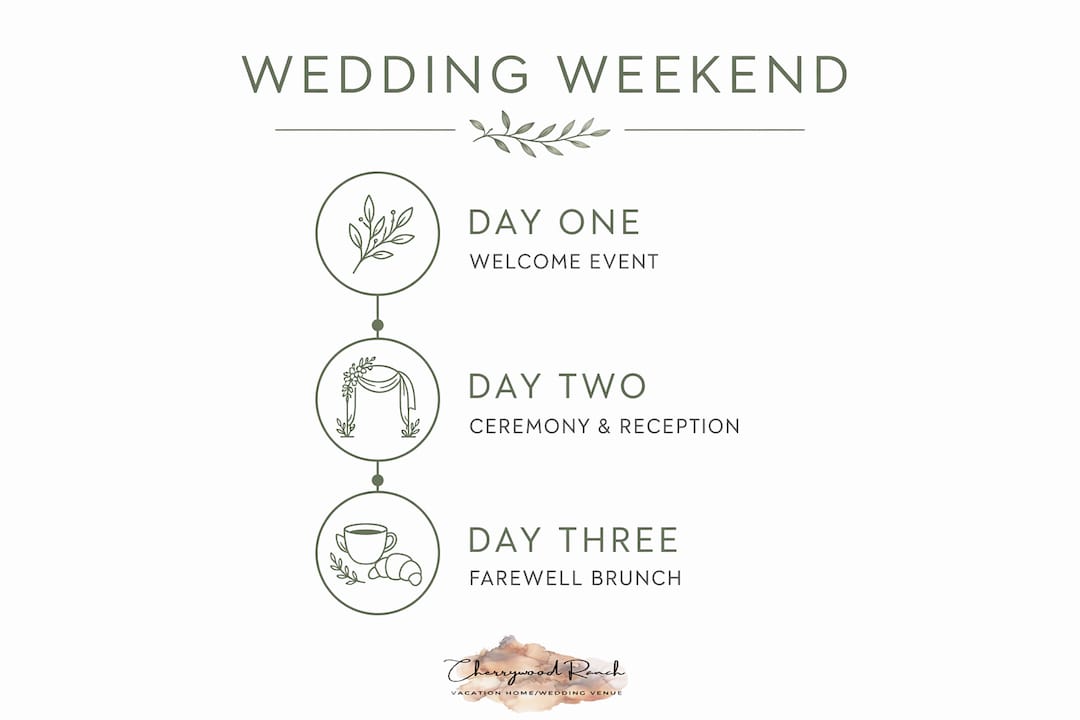
A three-day wedding celebration is a structured multi-day event where couples host distinct gatherings across a full weekend, typically beginning with a Friday welcome party, followed by the main ceremony and reception on Saturday, and closing with a Sunday farewell brunch. This format, often called a “wedding weekend,” transforms a single-day milestone into an immersive shared experience. Guest satisfaction reaches 94% for three-day formats compared to 71% for traditional single-day weddings. That 23-point gap reflects something real: guests who travel far and invest emotionally want more than four hours at a reception hall. The multi-day wedding model is increasingly replacing traditional formats among destination couples who want to maximize time with guests arriving from across the country.
What is a three-day wedding celebration, day by day?
The standard three-day timeline follows a clear arc: casual arrival on Friday, the main event on Saturday, and a relaxed send-off on Sunday. Each day carries a distinct emotional tone, and that contrast is exactly what makes the format work.
Day 1: The welcome event (Friday evening)
Friday sets the tone without overwhelming anyone. A casual welcome party or mixer gives guests a chance to meet each other before the formality of Saturday. Think backyard barbecues, cocktail hours with lawn games, or a themed dinner at a local restaurant. The goal is introductions and relaxation, not performance. Keep it to two to three hours and end at a reasonable hour so guests arrive at Saturday’s ceremony rested.
Day 2: The main ceremony and reception (Saturday)
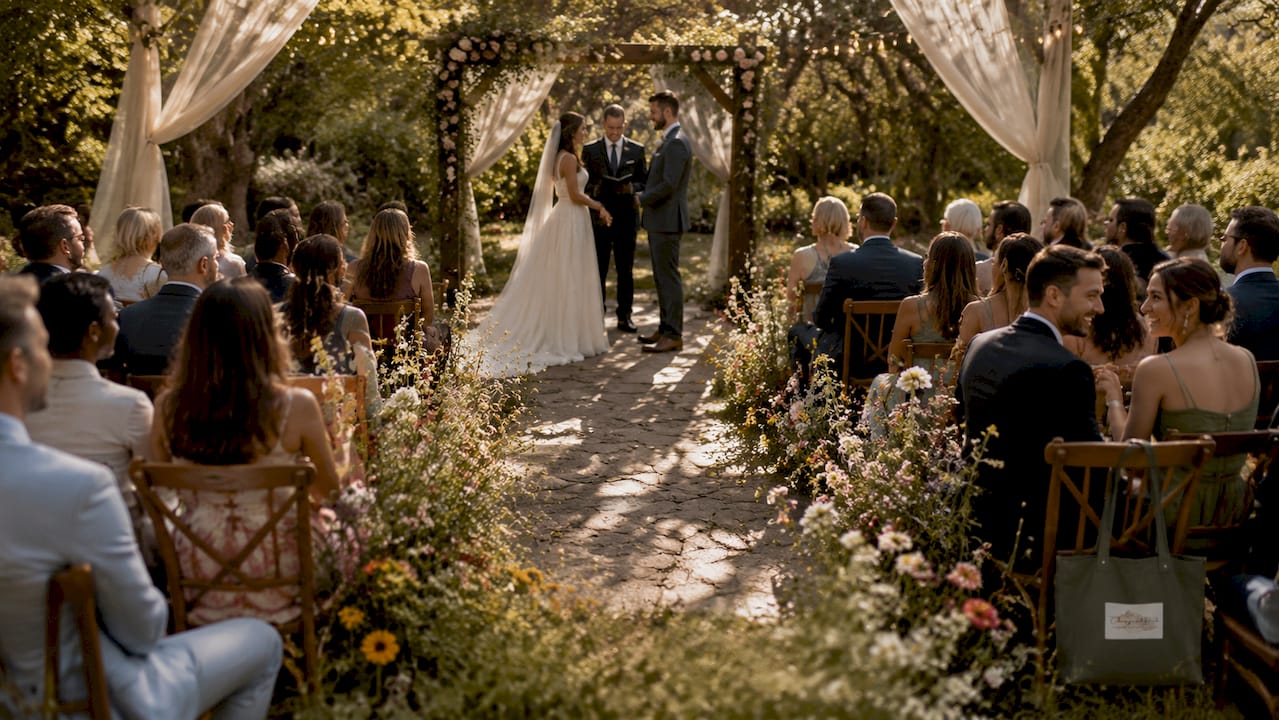
Saturday carries the full emotional weight of the weekend. The ceremony, cocktail hour, formal reception, and optional after-party all live here. This is the day guests dress up, speeches are made, and the couple’s story reaches its peak. Many couples schedule the ceremony for late afternoon to give guests a relaxed morning, which unstructured morning time significantly improves guest enjoyment and reduces fatigue heading into the main event.
Day 3: The farewell brunch (Sunday morning)
Sunday is where the weekend lands softly. A recovery-style farewell brunch is often the most emotionally resonant meal of the entire weekend. Guests are relaxed, the pressure is off, and real conversations happen over coffee and eggs. Keep it casual, offer a hearty menu, and allow guests to drift out naturally rather than scheduling a hard end time.
Optional additions
Some couples add a Friday afternoon activity like a hike, winery visit, or spa session for early arrivals. Others include a post-brunch group activity on Sunday before checkout. These are genuinely optional and should be communicated as such.
Pro Tip: Block at least 90 minutes of unscheduled time on Saturday morning for both you and your guests. No brunches, no group activities. That buffer prevents the exhaustion that derails receptions by 9 p.m.
How does budgeting for a three-day wedding differ from a traditional one?
Planning a three-day wedding celebration requires a meaningful budget adjustment. Costs typically increase 25 to 45% over a single-day wedding when you account for additional catering, extended venue rental, and extra vendor hours. That range is wide because the welcome party and farewell brunch can be scaled dramatically depending on your choices.
The major cost drivers in a multi-day wedding event include:
- Catering across three events. Even a casual welcome party for 50 guests adds $1,500 to $4,000 depending on format. The farewell brunch adds another layer.
- Extended venue rental. Many venues charge per day or per event. Securing a single property for the full weekend often costs less than booking three separate spaces.
- Vendor overtime. Photographers, coordinators, and DJs may charge day rates or hourly extensions. Confirm multi-day pricing upfront.
- Guest accommodations. When guests travel for a destination wedding, you may feel pressure to subsidize or block hotel rooms. This is optional but common.
- Transportation. Shuttle services across three days add up quickly, especially for remote venues.
The smartest budget move is concentrating spending on Saturday and keeping Friday and Sunday deliberately low-key. A potluck-style welcome dinner or a catered brunch buffet costs a fraction of a plated dinner. Vogue’s wedding planning guidance makes the point directly: couples should honestly assess whether their budget suits a three-day format or whether focusing resources on one exceptional day produces better results. There is no shame in choosing depth over breadth.
Clear communication with guests also reduces hidden costs. When guests know which events are optional versus mandatory, they plan their travel accordingly, and you avoid catering for 80 people at a brunch where only 40 show up.
What are the key logistics for a smooth three-day wedding weekend?
Logistics outweigh budget as the primary success factor in multi-day wedding events. A beautiful venue with poor transportation coordination will frustrate guests faster than a modest floral budget. Here is where to focus your planning energy:
- Transportation and shuttles. Guests navigating three events across a weekend need reliable, scheduled shuttle service. Confirm pickup and drop-off times in writing and share them in your guest itinerary packet.
- Venue flow across days. If you are using a single property for all three events, map out how spaces transition between a casual Friday setup and a formal Saturday reception. Venue staff need clear instructions and adequate reset time.
- Detailed guest itinerary. Send a printed or digital itinerary before arrival that includes event times, locations, dress codes, and which events are optional. Guests typically prepare three to four outfits for a wedding weekend, and clear dress code guidance reduces anxiety and keeps the atmosphere of each event intact.
- Mandatory versus optional labeling. Clearly stating which events are optional prevents guest exhaustion and protects the energy guests bring to Saturday’s ceremony.
- Catering variety. Diverse menus across the three days prevent monotony and maintain engagement. Casual food stations on Friday, a formal plated dinner on Saturday, and a comfort-food brunch on Sunday create a natural arc that guests notice and appreciate.
Pro Tip: Hire a coordinator with specific multi-day wedding experience, not just single-event experience. The skill set is different. Multi-day coordinators think in phases, manage vendor handoffs across days, and anticipate the fatigue patterns that derail extended celebrations.
What creative ideas can make each day feel distinct?
The best three-day wedding ideas share one quality: each day feels like its own event, not a warm-up or an afterthought. Here is how to build that distinction intentionally.
Friday welcome party ideas
Lean into interaction. Themed mixers work well because they give guests a conversation starter. Options include a local food and wine tasting, a lawn games tournament, a bonfire with s’mores stations, or an interactive party supply setup with photo props and games that reflect the couple’s personality. The goal is breaking the ice, not impressing anyone.
Saturday main event enhancements
Saturday is where you invest in the unexpected. Couples are incorporating diverse cultural traditions into ceremonies, choosing non-traditional venues like mountain overlooks or ranch properties, and designing cocktail hours around local craft beverages. Unique ceremony formats, like circular seating or outdoor amphitheater arrangements, change how guests experience the moment.
Sunday farewell brunch concepts
Sunday works best when it feels like a family morning rather than a formal event. A recovery-focused menu with build-your-own mimosa bars, comfort food stations, and casual seating encourages lingering. Some couples use Sunday to share a slideshow of weekend photos, write thank-you notes at the table, or organize a short group activity before guests depart.
Destination-inspired experiences
For couples hosting a long weekend wedding celebration in a specific region, weaving local character into each day deepens the experience. A North Georgia mountain wedding weekend might include a Saturday morning hike, a local craft beer welcome party, and a Sunday brunch featuring Southern comfort food. The location becomes part of the story.
| Day | Tone | Creative focus |
|---|---|---|
| Friday | Casual and social | Interactive food stations, games, local experiences |
| Saturday | Formal and celebratory | Ceremony, reception, cultural traditions, after-party |
| Sunday | Relaxed and heartfelt | Comfort brunch, photo sharing, personal farewells |
Key takeaways
A three-day wedding celebration succeeds when each day has a distinct purpose, logistics are treated as the primary planning priority, and guests are given clear guidance on what to expect and when.
| Point | Details |
|---|---|
| Three-day structure | Friday welcome, Saturday ceremony and reception, Sunday farewell brunch form the core arc. |
| Guest satisfaction advantage | Three-day formats reach 94% guest satisfaction versus 71% for single-day weddings. |
| Budget reality | Expect a 25 to 45% cost increase; concentrate spending on Saturday and keep other days lean. |
| Logistics first | Transportation, itinerary communication, and venue flow matter more than budget size. |
| Optional versus mandatory | Label each event clearly so guests manage their energy and arrive at Saturday ready to celebrate. |
Why the wedding weekend format changes everything
I have worked with enough couples to say this plainly: the three-day format is not for everyone, and pretending otherwise does couples a disservice. If your guest list is mostly local, your budget is tight, or you genuinely prefer one focused evening of celebration, a single-day wedding is the right call. Spreading a modest budget across three events dilutes quality at every point.
But for couples hosting guests who are traveling significant distances, the math flips completely. Those guests are already investing in flights, hotels, and time off. A single four-hour reception feels like a poor return on that investment. A full weekend feels like a gift.
What I find most couples underestimate is the emotional value of Sunday morning. Saturday night ends in a blur of dancing and toasts. Sunday brunch is where the real conversations happen. I have watched guests who barely spoke on Friday become genuinely close by Sunday checkout. That depth of connection does not happen in a single evening.
The one principle I return to consistently: treat the weekend as one continuous event with three phases, not three separate parties. Every decision, from catering to dress codes to transportation, should serve that single narrative arc. When couples think that way, the weekend flows. When they plan each day in isolation, guests feel the disconnection.
Explore the wedding planning resources at Cherrywoodranchweddingvenue for more detailed guidance on building a cohesive multi-day celebration.
— Luis
Plan your three-day wedding at Cherrywood Ranch

Cherrywoodranchweddingvenue in the North Georgia Mountains is built for exactly this format. The property combines a stunning ceremony and reception space with an on-site vacation home that sleeps up to 16 guests, meaning your closest family and friends stay together across the entire weekend. The pool, hot tub, mountain views, and expansive outdoor spaces give each day its own natural setting without requiring anyone to drive between venues. The team at Cherrywoodranchweddingvenue understands multi-day event logistics and supports couples through every phase of the weekend. Browse available wedding packages or explore the North Georgia venue details to see how the property supports a full three-day celebration.
FAQ
What is included in a typical three-day wedding weekend?
A three-day wedding weekend typically includes a casual welcome party on Friday evening, the main ceremony and reception on Saturday, and a farewell brunch on Sunday morning. Optional additions like group activities or afternoon events can be layered in based on guest energy and budget.
How much more does a three-day wedding cost than a one-day wedding?
Budget increases of 25 to 45% are standard for three-day wedding celebrations compared to single-day events. The range depends on how elaborate the welcome party and farewell brunch are relative to the main reception.
How do you keep guests from getting exhausted over a three-day wedding?
Label each event as mandatory or optional, keep Saturday morning unscheduled, and vary the tone and menu across each day. Guests who know what to expect and have built-in rest time arrive at the ceremony with full energy.
Is a three-day wedding only for destination weddings?
No, but the format is most common among destination wedding couples because it maximizes time with guests who have traveled far. Local weddings can also use the three-day structure when the couple wants a more intimate, extended celebration with family and close friends.
What is the best venue type for a three-day wedding celebration?
A single property that accommodates both events and guest lodging is the most practical choice for a weekend retreat wedding. It eliminates transportation complexity, keeps the group together, and allows each day’s atmosphere to build naturally on the last.