
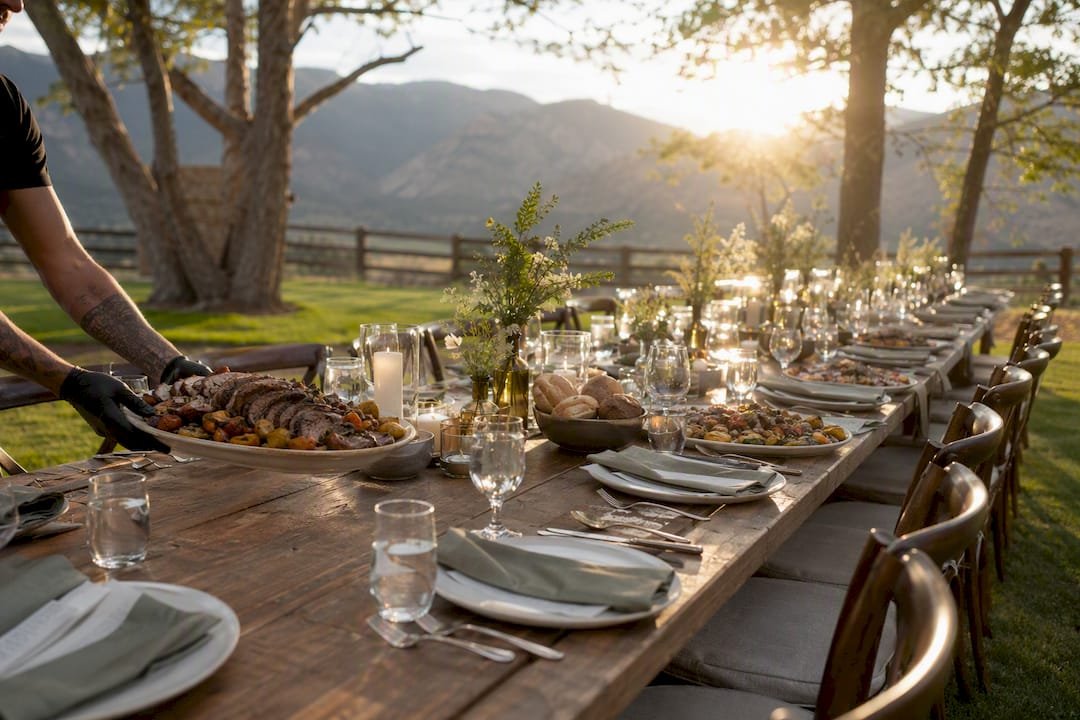
Family-style dinner wedding service means large shared platters of food, set on each guest table for everyone to pass and portion themselves. It suits couples who want the warmth of a home-cooked dinner without buffet lines, and it works best for guest lists of roughly 50 to 150 where multi-generational groups actually talk to each other. The trade-off is real: more serving ware, tighter table logistics, and a per-head cost that lands above buffet but below plated.
TL;DR:
- Family-style dinners typically cost between $65 and $120 per guest and require one server per 10 to 15 guests for 60 to 90 minutes of service.
- Guests pass large platters counterclockwise, which promotes interaction but requires careful planning of platter sizes and placement, especially for long tables.
- Menus should include sturdy, non-delicate dishes that hold up over time, with roughly 10 to 15% additional food ordered beyond the headcount for accurate portioning.
- Close communication with the caterer about staffing ratios, rental costs, and allergen handling is essential to avoid logistical issues during service.
- A venue with on-site lodging simplifies planning, reduces waste, and enhances guest bonding for multi-day weddings built around family-style meals.
Table of Contents
- What Is Family-Style Dinner Service, and How Does It Compare to Plated and Buffet?
- Pros and Cons of Family-Style Dinners
- What Does Family-Style Cost, and How Much Staff and Time Does It Need?
- Table Setup and Serving Logistics That Actually Work
- Family-Style Menu Ideas and How Much Food to Order
- Who Family-Style Suits, and What to Ask Your Caterer
- Why Family-Style Works So Well for a Wedding Weekend With On-Site Lodging
- An Editorial Take on Getting Family-Style Right
- Cherrywood Ranch: Family-Style Dinners Built Into a Full Wedding Weekend
- Sources
What Is Family-Style Dinner Service, and How Does It Compare to Plated and Buffet?
In family-style service, servers bring large platters to each seated table, and guests pass them around, serving themselves. Nobody stands in line, and nobody gets a plate assembled by a stranger behind a chafing dish. The etiquette is simple but matters: guests wait until everyone at their section has a serving option in front of them before digging in, and platters get passed counterclockwise using the attached serving utensils, not personal forks.
Compared to the alternatives, the differences show up fast:
- Movement: Buffet requires guests to walk; family-style and plated keep everyone seated.
- Choice: Buffet and family-style offer variety at the table; plated locks in one selection per guest ahead of time.
- Presentation: Family-style platters create a visual centerpiece of their own; plated wins on individual plate artistry.
- Portion control: Plated is exact; buffet and family-style depend on guests serving themselves, which means slightly more food waste risk on one end and shortage risk on the other.
Pros and Cons of Family-Style Dinners
The biggest draw is conversation. Passing a platter of roasted chicken forces interaction in a way a buffet line never does, and it eliminates the awkward fifteen minutes where half your guests are still waiting to be served while the other half already finished. There’s no buffet queue eating into your reception window, and coordinating dietary needs happens at the kitchen level instead of a guest standing confused in front of a food label.
The downsides cluster around three things:
- Table real estate. Platters, bread baskets, and serving bowls compete for space with centerpieces and place settings.
- Allergy complexity. A shared platter with nuts or shellfish sauce isn’t a safe option for a guest with a severe allergy, no matter how clearly it’s labeled.
- Rental load. You’ll need more serving bowls, tongs, and platters than a plated dinner requires, which adds a line item to your catering invoice.
Caterers who run family-style regularly treat it as an active operation, not a casual “pass the bowls” affair, and they train staff specifically on replenishment timing and passing protocol, according to The Knot’s caterer guide. Mitigate the real risks by ordering individually plated allergy-safe meals for guests who need them, scaling platter sizes to table count rather than guessing, and keeping centerpieces low so platters actually reach every seat.
Pro Tip: Ask your caterer to pre-plate allergy meals and deliver them at the same moment platters hit the table, so the guest with the allergy never feels singled out or delayed.
What Does Family-Style Cost, and How Much Staff and Time Does It Need?
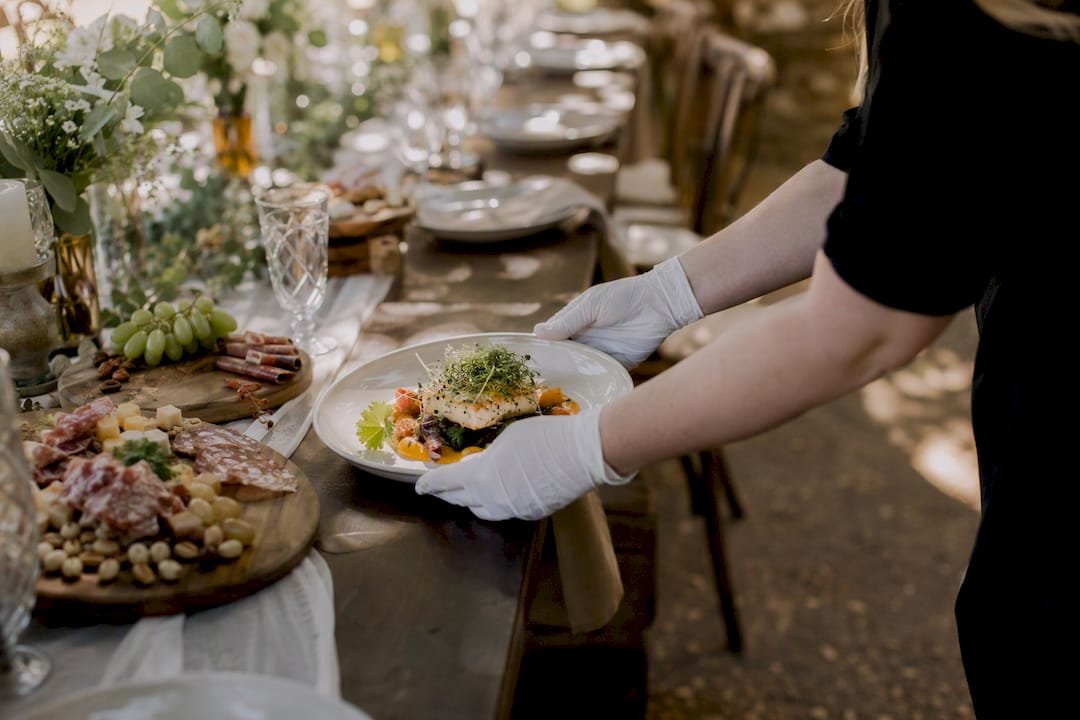
Family-style sits in the middle of the pricing spectrum for a reason: it needs more labor than buffet but less individual plating labor than a formal plated dinner. Published per-guest ranges put family-style at roughly $65 to $120 per guest, with the spread driven by menu complexity, protein choices, and how many servers you staff.
On staffing, a workable rule of thumb is one server per 10 to 15 guests to keep platters full and tables cleared without long gaps between courses. Fewer servers than that, and you’ll notice empty platters sitting untouched for ten minutes while everyone waits.
- Expect dinner service itself to run 60 to 90 minutes, similar to plated.
- Build in a buffer before toasts and dancing, since family-style courses arrive in waves rather than all at once.
- Confirm with your caterer whether the quoted price includes platter rental or bills it separately.
Family-style pricing, staffing, and timing at a glance: $65–$120 per guest, one server per 10–15 guests, 60–90 minutes of service.
Table Setup and Serving Logistics That Actually Work
Table shape changes everything about how family-style feels. Round tables seating 8 to 10 guests make passing intuitive because nobody sits more than an arm’s reach from the center. Long banquet tables look stunning in photos but demand more platters, since guests seated in the middle of a 20-foot table can’t reach a single serving bowl at either end.
A practical planning rule: for long tables, budget three to four platters per section of every four to six seats, so nobody is reaching across a neighbor’s plate. That often means renting more serving bowls than you’d initially guess, which is worth flagging with your caterer before you get a quote.
- Keep centerpieces under 12 inches or use tiered stands, freeing table surface for platters without sacrificing the look.
- Confirm clearance between platters and place settings during your tasting or walk-through, not the week of the wedding.
- Ask specifically about the replenishment plan: who refills empty platters, how fast, and whether backup platters are staged in the kitchen.
If you’re planning long table seating for a family-style dinner, walk the layout with your venue coordinator before finalizing your floor plan. Table shape decisions made on paper don’t always translate once linens and centerpieces are in place.
Pro Tip: Bring a tape measure to your venue walk-through and mark out actual platter footprint on a sample table. It sounds excessive, but it’s the fastest way to catch a serving-space problem before the wedding, not during it.
Family-Style Menu Ideas and How Much Food to Order
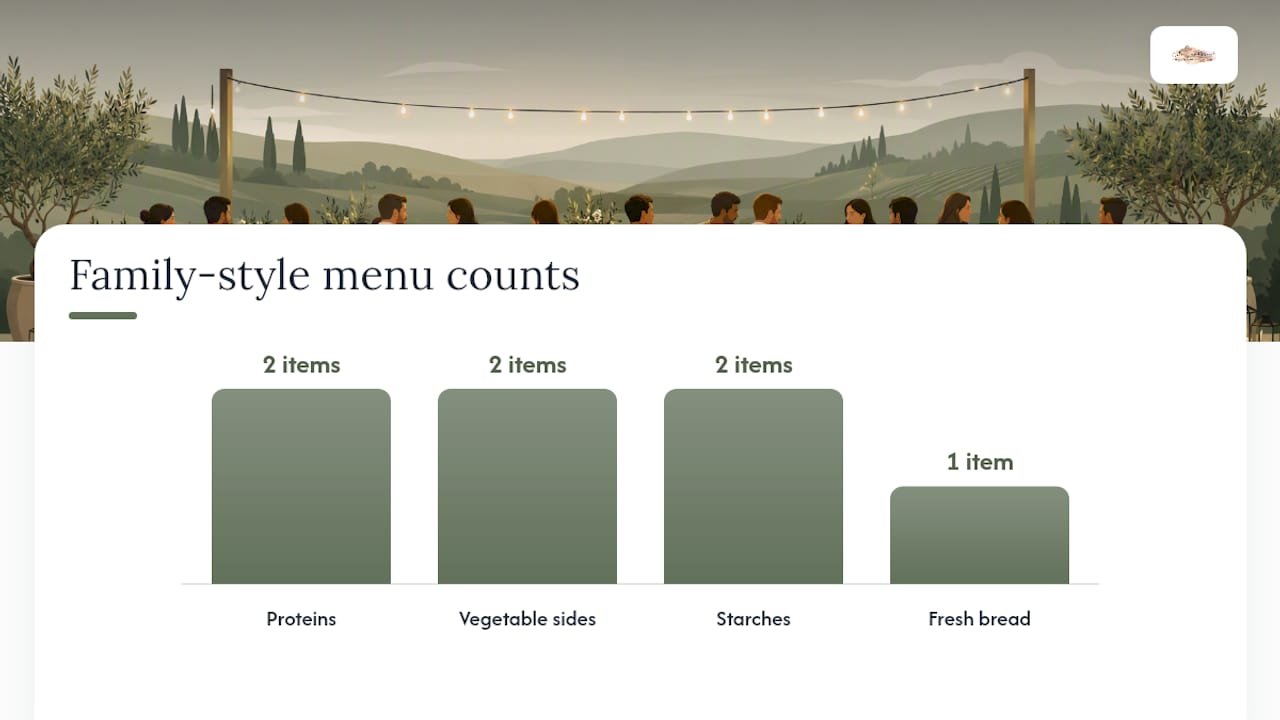
A menu structure that works reliably: two proteins, two vegetable sides, two starches, and fresh bread. That’s the balanced template caterers recommend because every component travels well on a platter and holds its temperature through a full pass around the table.
Dishes that shine in family-style service tend to share one quality: they don’t fall apart when they sit for ten minutes. Slow-roasted meats, braised short ribs, roasted root vegetables, and baked pastas all hold up. Menus rooted in shared-food traditions, like Southern barbecue, Italian, or Mediterranean spreads, tend to feel most natural in this format because passing platters is already part of the culture behind the food.
- Order roughly 10 to 15% more than a strict headcount calculation, since family-style portioning is less precise than plated servings.
- Skip delicate items like seared fish filets or anything with a sauce that separates when it cools.
- Pair heavier proteins with lighter sides to balance what’s actually being passed around the table.
For seasonal menu inspiration that scales well for shared platters, Wild Foodz’s event planning guide covers dishes built specifically for group presentation.
Who Family-Style Suits, and What to Ask Your Caterer
Family-style works best for guest lists between 50 and 150, mixed-generation groups who genuinely want to talk over dinner, and venues with enough table space to accommodate platters without cramping place settings. It suits weddings where storytelling and connection matter more than plate-by-plate precision. It suits multi-generational families less if mobility is a major concern at every table, since reaching for a heavy platter isn’t easy for every guest.
Red flags during vendor conversations: a caterer who can’t specify their staffing ratio, who quotes a flat per-head price without breaking out rental costs for platters and bowls, or who treats family-style as “just put bowls on the table” without a replenishment plan.
Bring this checklist to your tasting:
- What’s your server-to-guest ratio for family-style specifically?
- Are platter and serving-ware rentals included in the quote, or billed separately?
- How do you handle severe allergies within a shared-platter format?
- What’s your plan for replenishing platters mid-service?
- Can we walk through table clearance with our actual centerpieces before the wedding?
If you’re coordinating meals for a multi-generational wedding weekend, ask these questions early, since staffing and rental logistics often take longer to lock in than the menu itself.
Why Family-Style Works So Well for a Wedding Weekend With On-Site Lodging
Family-style dinners land differently when your guests are already staying together under one roof for the weekend. Leftover platters don’t go to waste in a hotel banquet hall; they move straight to the kitchen for a next-morning breakfast. Excess food becomes a shared resource instead of a disposal problem, and that alone changes how caterers plan portions for a lodging-based wedding weekend.
When a wedding stretches across two or three days on one property, family-style dinner stops being just a meal service choice and becomes part of how the whole group bonds, the same way a holiday dinner works at a family gathering rather than a restaurant.
Weekend events built around shared activities consistently show more guest interaction at family-style meals than single-day receptions, simply because people have already spent the day together before dinner starts.
An Editorial Take on Getting Family-Style Right
Most wedding advice treats family-style as a cost decision: cheaper than plated, fancier than buffet, pick your lane. That framing misses the actual variable that determines whether it works, which is table geometry, not menu choice. A couple can order a beautiful menu and still watch the format fall apart because the tables were too long, the centerpieces too tall, or the caterer understaffed the pass.
The conventional advice to “just add extra platters” also undersells the real fix, which is planning platter count by table section, not by total guest count. A 20-foot table with four platters spaced evenly works. The same table with four platters clustered at one end does not, no matter how good the food tastes.
If there’s one thing worth prioritizing above menu selection, it’s the walk-through. Stand at the venue with your actual table shapes, your actual centerpiece height, and ask your caterer to show you where platters land. Multi-day weekend weddings have an advantage here that single-day receptions don’t: you’re not rushing that walk-through into a thirty-minute rehearsal slot, you have the whole weekend to get the layout right.
— Luis
Cherrywood Ranch: Family-Style Dinners Built Into a Full Wedding Weekend
Booking a venue and a caterer separately means juggling two vendors’ schedules just to test whether your table layout actually works. Cherrywood Ranch removes that friction: the venue, lodging, and event coordination live under one roof in the North Georgia mountains, so your family-style dinner planning happens in the same space where the wedding actually unfolds, not on a floor plan you’re guessing at from photos.
The property accommodates up to 16 lodging guests on-site, which means the same multi-generational group sharing platters at dinner is already staying together for the whole weekend, cutting down on leftover waste and turning excess food into a next-morning breakfast instead of a disposal problem. Cherrywood Ranch’s team handles planning coordination alongside the space itself, so table shape, platter clearance, and staffing conversations happen with people who already know the property’s layout. Check available dates and package details on the destination wedding venue page to see whether a weekend at Cherrywood Ranch fits your guest count and family-style plans.
Sources
- Family-Style Dinner Wedding: Menu and Setup Ideas
- Plated vs Buffet Wedding Reception: Cost, Timing, and Guest Experience Compared
- A Caterer’s Guide to a Family Style Wedding Dinner
- Family-style wedding dinner advice