
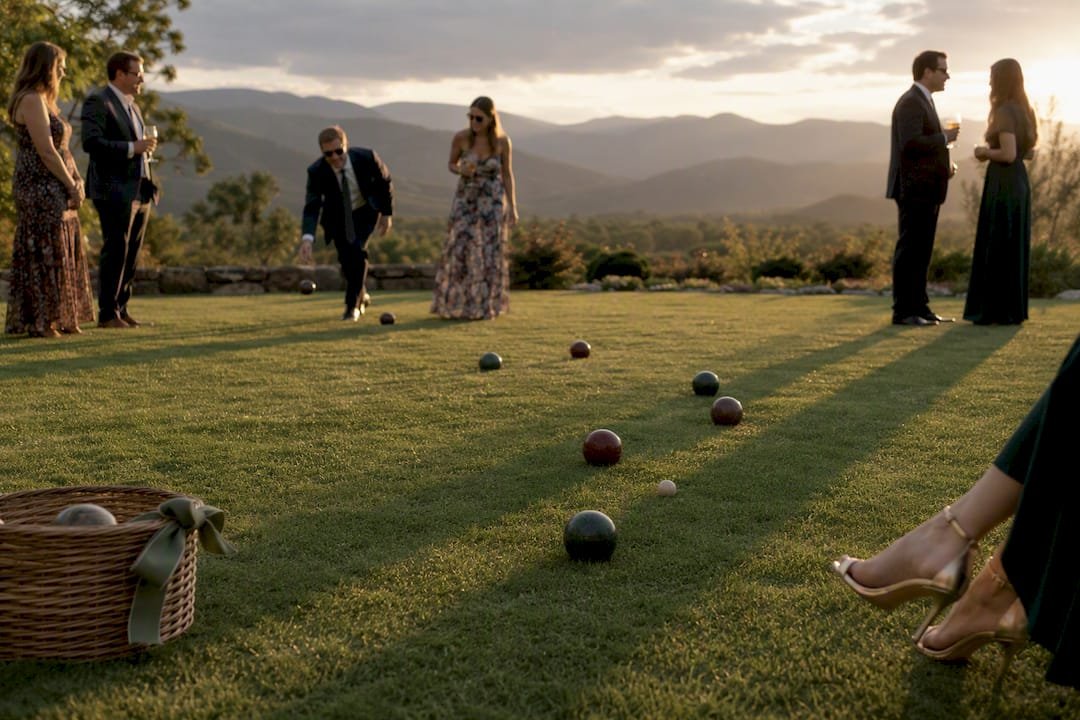
The best wedding lawn games are cornhole, giant Jenga, bocce ball, giant Connect Four, and croquet, five options that reliably entertain guests without requiring kneeling, running, or ruining formal attire. The rule that decides how many to set out: plan on approximately one game station for every small group of guests, so a wedding with a typical number of guests usually needs a few stations, not many.
From there, the real work is matching games to your crowd, your space, and your weather plan.
TL;DR:
- Limiting games to cornhole, bocce, giant Connect Four, giant Jenga, and croquet ensures guests in formal attire can participate comfortably without exertion or risking injury.
- Set up approximately one game station for every 25 to 30 guests, placing them in different zones to avoid crowding and encourage exploration.
- Prioritize level, stable surfaces and plan for weather backups such as tents or indoor alternatives to keep games accessible and safe.
- Personalize outdoor games with weatherproof paint or engravings to serve as decor and keepsakes that match the wedding theme.
- Keep extra equipment, signage, and supervision in mind, and assign someone to facilitate game explanations, especially for less familiar options.
Table of Contents
- Wedding Lawn Games That Actually Get Played
- How to Pick the Right Games for Your Guest List and Timeline
- Setting Up Games So People Actually Play Them
- Making the Games Feel Like Part of Your Wedding
- Buy, Rent, or DIY: What Actually Makes Sense
- Keeping Games Safe, Accessible, and Easy to Join
- What a Multi-Day Venue Teaches You About Lawn Games
- Where to Shop, Rent, or Learn More
- A Straight Take on Why Simpler Games Win
- Sources
Wedding Lawn Games That Actually Get Played
Not every game that looks good in a catalog photo earns its spot on your lawn. The ones that get played over and over share a few traits: they’re easy to learn in ten seconds, they don’t demand exertion in dress shoes, and they let guests wander in and out without breaking a conversation. Here’s the shortlist worth your budget.
Cornhole. This is the reception default for a reason. Two people can play a quick round holding a drink in one hand, and it reads as instantly familiar to almost any guest, from your grandmother to your college roommate. Boards are compact enough to tuck near a cocktail area, and they’re one of the easiest games to personalize with a monogram or wedding date. Skip it only if lawn space is genuinely tight, since regulation boards need a clear throwing lane.
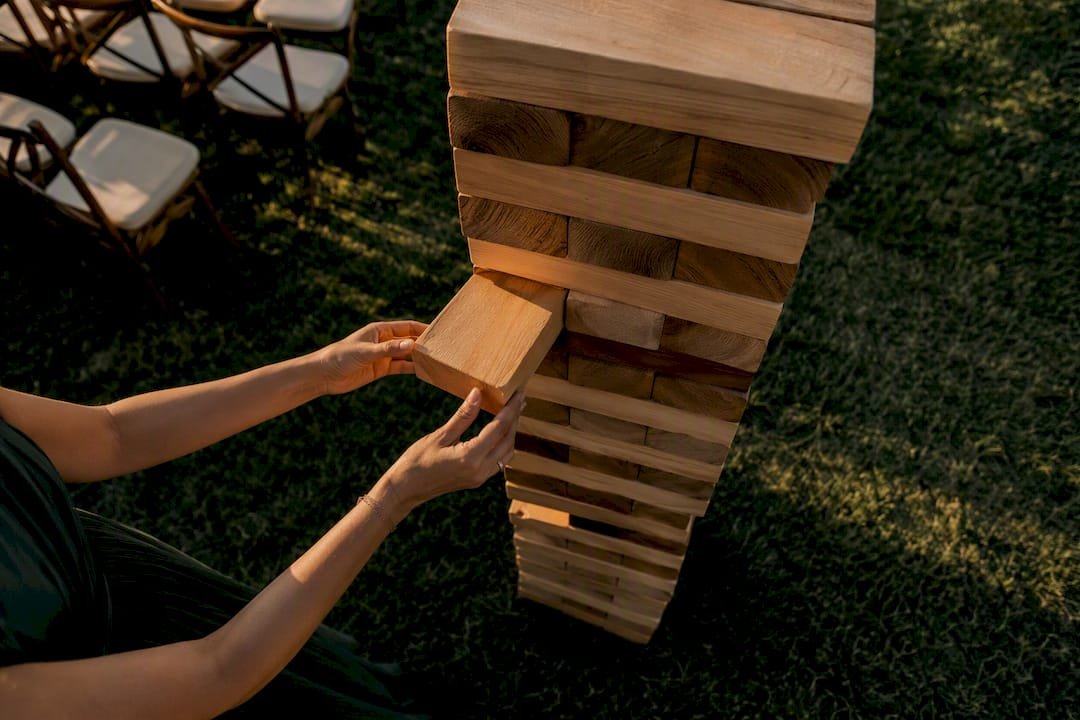
Giant Jenga (Giant Tumbling Timbers). Nothing photographs better at golden hour than a wobbling tower of oversized wooden blocks. It’s slow enough to allow conversation between turns, which fits the “easy energy” vibe wedding planning experts recommend for reception activities, and it doubles beautifully as a guestbook alternative when guests sign a block before playing. The only catch is stability. A crooked tower on uneven grass falls fast, so this one needs a level surface more than most.
Bocce ball. Low exertion, works on grass or packed dirt, and it scales from two players to eight without anyone feeling left out. It’s also one of the few games that genuinely suits multi-generational play, since there’s no kneeling and no sudden movement required in a dress or heels.
Giant Connect Four. A small footprint and an instant hook for kids and less mobile guests alike. Because players stand and drop pieces rather than bend, it’s one of the safer choices for anyone in formal wear.
Giant Checkers. Similar logic to Connect Four: compact, low-movement, and easy for two people to pick up mid-conversation. It tends to sit quietly at the edge of a lounge area rather than drawing a crowd, which makes it a smart complement to louder games rather than a centerpiece.
Croquet. A classic for a reason. It moves slowly, doesn’t require bending far, and looks elegant on a manicured lawn. It does need more real estate than cornhole or Connect Four, so measure your space before committing to a full course.
Ladder toss (ladder golf). Guests loop bolas around a rung, no kneeling required, and it plays well in pairs or small teams. It travels light and packs down fast, which matters if you’re moving games between a ceremony lawn and a reception space on the same day.
Ring toss. Simple, cheap, and forgiving of uneven ground. It’s a good filler game near a kids’ table or a quieter corner where you don’t need a full station.
Horseshoes. Traditional and durable, though the metal stakes and pits mean it needs a dedicated patch of ground away from foot traffic, and it’s not the best fit for guests in heels.
Spikeball and badminton. If part of your guest list is younger and more athletic, these earn a spot, but they demand real movement and open grass. Keep them at the edge of the property, away from anyone in formal attire, and treat them as optional rather than central.
Giant dominoes. Oversized, sturdy, and simple enough that no explanation is needed. They stack nicely as a decor element even when not in active play.
Kubb. A Scandinavian lawn game growing in popularity at outdoor weddings. It rewards a little strategy, plays well in teams, and looks striking laid out on open grass, though it needs more space than most items on this list.
Tic-tac-toe (giant format). Fast rounds, zero learning curve, and a favorite with kids during the awkward gap between ceremony and reception.
A few of these are better suited to formal attire than others. Cornhole, bocce, croquet, ladder toss, giant Connect Four, and giant checkers ask nothing of a guest in heels or a suit. Horseshoes, spikeball, and badminton ask for real movement and open space, so they belong further from the reception tent, if you include them at all.
How to Pick the Right Games for Your Guest List and Timeline
Start with headcount, not enthusiasm for a specific game. The one-station-per-25-to-30-guests guideline keeps a reception lawn from feeling either empty or cluttered, and it’s the number planners and specialty game vendors default to when a couple asks “how many do we actually need.” For a moderate guest list, two stations is often enough. For a larger gathering, aim for a few more. Beyond 150, resist the urge to add a station for every 25 people mechanically; spread the extras across different zones of the property instead, so guests aren’t funneling into one crowded corner.
Guest makeup matters as much as headcount. A crowd heavy on older relatives or young kids does better with cornhole, bocce, croquet, and giant Connect Four, games that don’t ask anyone to bend, run, or risk a fall on grass. A younger, more athletic guest list can support spikeball or badminton alongside the calmer options, but keep those physical games away from the main gathering area so they don’t compete with conversation.
Timing changes what works best. Cocktail hour is prime real estate for lawn games, since guests are standing around with a drink and nowhere urgent to be. Retailers who sell wedding-specific game sets recommend setting games out before guests arrive so the lawn feels populated and inviting rather than staged. The gap between dinner and dancing is a second natural window, especially for families with kids who need something to do while adults linger at the table.
Run through this checklist before finalizing your lineup:
- Space. Measure your actual lawn footprint, not the space you imagine it has.
- Noise. Keep loud, competitive games away from any area used for toasts or quiet conversation.
- Power and lighting. If games run into evening hours, plan string lights or lanterns near each station.
- Supervision. Decide which games need an attendant to explain rules and which are self-explanatory.
- Venue rules. Confirm stakes, ground anchors, or games with pieces that could damage turf are permitted.
- Insurance. Ask your venue or planner whether liability coverage extends to guest injuries during optional activities.
Pro Tip: Assign one game per zone rather than clustering all of them together. Guests naturally spread out to explore, and it keeps any single area from feeling like a crowded arcade.
Setting Up Games So People Actually Play Them
Placement decides whether a game gets used or just sits there looking nice in photos. Cornhole needs roughly a 20 to 27 foot lane between boards, giant Jenga needs a few feet of clearance on all sides so a toppled tower doesn’t hit a passerby, and a bocce court typically runs somewhere between 60 and 90 feet, though a shortened backyard version works fine for casual play.
Surface matters more than most couples expect. Grass looks best but shifts under repeated play, so boards and courts benefit from ground stakes or sandbags to keep them from sliding. Packed soil holds steadier but may need leveling shims under game bases to stop wobble. If your reception sits on asphalt or a patio, weighted bases and non-skid pads keep lighter games from drifting during play.
A few logistics separate a polished setup from a chaotic one:
- Post small signs with quick rules next to any game that isn’t universally familiar, like Kubb or ladder golf.
- Keep a scoreboard or chalkboard near team games so casual competition doesn’t fizzle out from confusion.
- Stage a small table nearby for bean bags, bocce balls, or rings so pieces don’t scatter across the lawn.
- Put a drink station within view of the games area, since guests linger longer when refills are close.
- Assign a coordinator or willing family member to explain rules for the first hour, especially for anything unfamiliar.
Weather is the variable most couples underplay. Top wedding-planning guides consistently recommend an indoor backup for every outdoor station, whether that’s a tabletop version of cornhole, a stack of card games, or a giant Jenga set moved under a tent. Games that fold flat or pack into a single box, like ring toss, ladder golf, and giant dominoes, move indoors in minutes if rain hits. Bocce sets and croquet mallets travel just as easily. If your venue includes a rain plan already, coordinate your indoor game backups with that same space rather than scrambling separately.
Making the Games Feel Like Part of Your Wedding
A cornhole board with your last name and wedding date stenciled across it does double duty as decor and as a keepsake you’ll actually use again. Monogram initials, your wedding colors, or a simple date stamp turn an off-the-shelf set into something that matches your reception’s look rather than clashing with it.
For durability, weatherproof paint and sealed wood finishes hold up far better outdoors than a quick coat of craft paint, and solid wood sets survive damp conditions noticeably better than cheaper composite alternatives, which matters if the set gets left out overnight during a multi-day celebration. Removable vinyl wraps are a solid middle ground if you’d rather not commit to permanent branding on a set you plan to reuse for backyard gatherings later.
A few personalization ideas double as keepsakes:
- Signature Jenga blocks guests write well wishes on, functioning as a 3D guestbook.
- Custom-painted cornhole boards that become a housewarming piece afterward.
- Engraved bocce balls or paddles given away as favors to close friends or wedding party members.
- A wrapped ladder toss set that later becomes a fixture at your own backyard cookouts.
Buy, Rent, or DIY: What Actually Makes Sense
Buying makes sense for durable wooden sets you’ll use again, at home, at future gatherings, or for a second event. Wedding-planning guides point out that purchasing a solid wood set often costs about the same as a one-time rental fee, but you keep the set afterward instead of returning it.
Renting wins for bulky or heavy items you’ll only use once, giant Jenga sets, full croquet courses, or anything you don’t have storage space for afterward. It also removes the transport headache; most rental companies deliver and pick up.
DIY or custom vendors need lead time. Custom-painted or engraved boards typically take four to eight weeks to complete, so order well before your final headcount is locked. Rental reservations are more forgiving, usually bookable one to four weeks out, though popular vendors during peak wedding season fill faster than that.
A few practical notes before you sign anything:
- Confirm who handles transport, since heavy wooden sets don’t fit in most sedans.
- Ask your venue about onsite storage if games arrive days before the event.
- Build cleanup and pack-down time into your vendor contract or day-of timeline.
- If DIY painting is part of your plan, finish it at least two weeks out to allow drying and sealing time.
Keeping Games Safe, Accessible, and Easy to Join
Skip any game that requires kneeling or heavy physical effort. Cornhole, bocce, and croquet work precisely because nobody has to bend down in a gown or dress shoes to play a round.
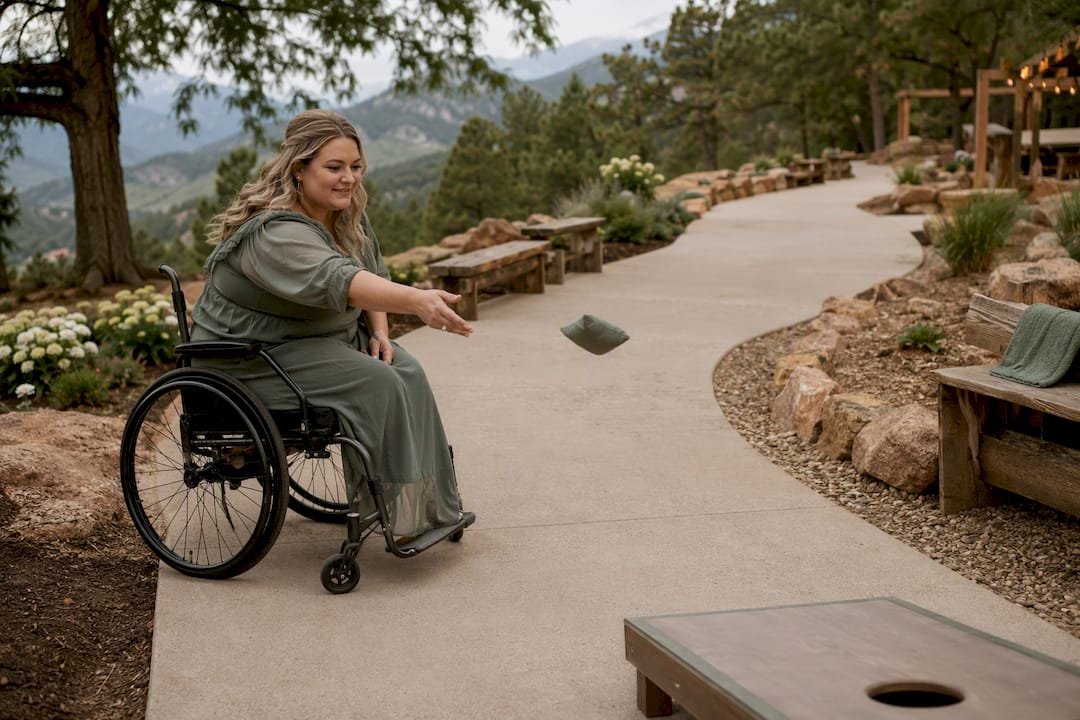
Level walkways and stable ground matter for guests using canes, walkers, or wheelchairs. Keep at least one low-effort game accessible along a flat path, and provide nearby seating so guests can watch without standing the whole time. Clear signage helps everyone, but it helps hesitant or unfamiliar guests join in without feeling awkward asking. Set a soft time limit at busy stations so games don’t monopolize one group all evening, keep an eye on kids near anything with hard pieces, and stay mindful that drinks and competitive games together call for a bit more supervision, not less.
What a Multi-Day Venue Teaches You About Lawn Games
Most wedding advice assumes a single afternoon. A wedding weekend changes the math entirely. At Cherrywood Ranch, where couples and guests stay onsite across several days, games spread naturally across a welcome gathering, the rehearsal, and the main event itself, which eases the setup burden instead of piling it all into one afternoon.
Coordinate storage and setup timing with venue staff early. Ask where games can sit overnight, whether lighting is available near your chosen game zones, and who handles teardown after the last guest wanders off. A short list worth bringing to that conversation: storage space for oversized sets, outlet access for evening lighting, a rain-plan room for tabletop backups, and clarity on who’s responsible for cleanup each night. Getting those answers before the weekend starts means the games actually get used, not left in boxes by the porch.
Where to Shop, Rent, or Learn More
For game selection and staging ideas, The Knot’s wedding games guide covers guest favorites in more depth. YardGames.com sells wedding-specific sets with personalization options, and Hitched’s outdoor games roundup breaks down buy-versus-rent tradeoffs further. For staging inspiration around photo-friendly layouts, Proposal Italy’s planning guide is worth a look too.
A Straight Take on Why Simpler Games Win
Couples tend to overthink this. They see a rental catalog with fifteen game options and assume more variety means more fun, when the opposite is usually true. A cluttered lawn with eight half-explained games gets less actual play than a lawn with three games everyone already knows how to use.
The games that work at weddings aren’t the most interesting ones. They’re the ones that ask the least of a guest holding a cocktail in one hand and wearing shoes they can barely walk in. That’s why cornhole outperforms spikeball at almost every reception, not because it’s a better game, but because it fits the moment. Save the athletic options for a rehearsal-weekend cookout when guests have changed into something they can move in.
The other thing most planning guides underplay: an attendant matters more than the game itself for anything slightly unfamiliar. Kubb, ladder golf, giant dominoes, all of these sit untouched at receptions where nobody explains the rules in the first ten minutes. A single confident person walking new arrivals through a thirty-second explanation is often the difference between a station that runs all night and one that becomes an expensive lawn ornament.
— Luis
Sources
- 47 Wedding Games Guests Actually Want to Play
- Yardgames
- Outdoor Wedding Games: 28 Fun Ideas from Giant Jenga to Prosecco Pong