
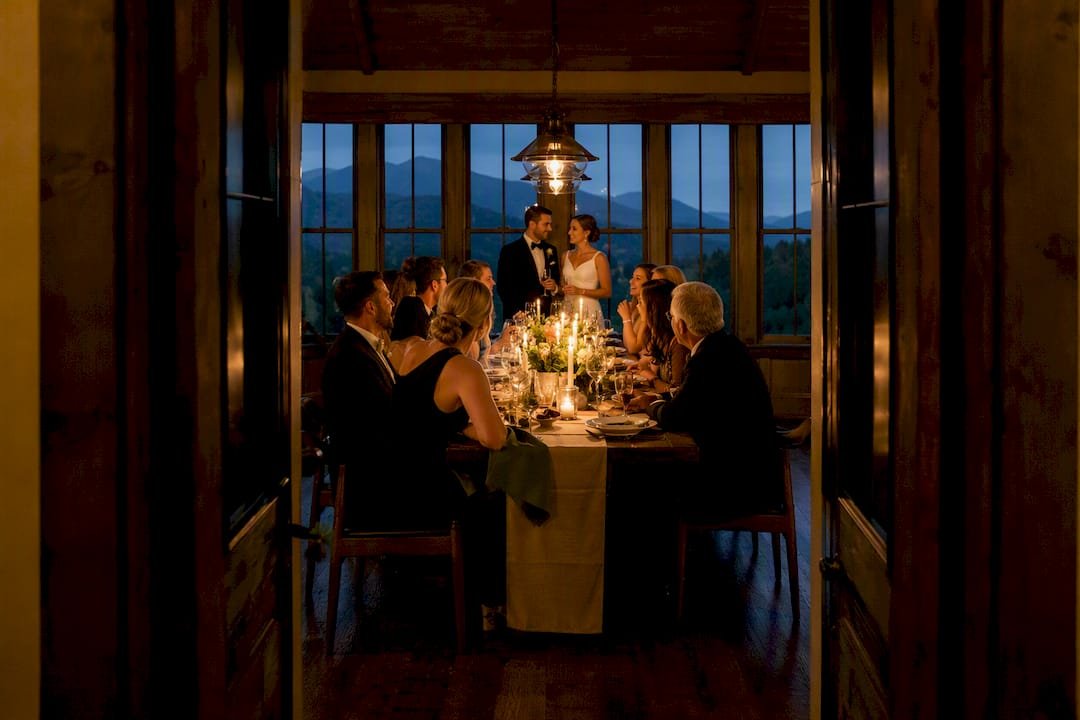
The best intimate wedding receptions share one thing: they trade scale for connection, using a shared meal, an intimate venue, dramatic lighting, and interactive moments to make every guest feel like the guest of honor. These ideas work for anywhere from 10 to 80 guests. Below, you’ll find stealable ideas plus the logistics checklists to actually pull them off.
TL;DR:
- Small receptions benefit from shared tables, family-style service, and interactive demos, encouraging conversation and creating a cozy atmosphere.
- Venue options like private homes, Airbnb, or small boutique spaces require careful consideration of seating, amenities, and permits to suit guest numbers.
- Dramatic lighting, statement decor, and layered sound systems enhance visual and auditory warmth without overwhelming the intimate space.
- Incorporating rituals, personalized favors, and a full weekend schedule fosters deeper connection and memorable moments among fewer guests.
- Budgeting for small events should focus on impactful design and entertainment, as vendor minimums may raise per-person costs regardless of guest count.
Table of Contents
- Intimate Wedding Reception Ideas You Can Steal Right Now
- Dining and Seating That Make Conversation Natural
- Venue Choices and How to Pick the Right Small-Space Setting
- Decor and Lighting That Read Larger Than Your Guest Count
- Entertainment and Interactive Moments That Involve Everyone
- Timeline, Guest Inclusion, and Weekend Hospitality
- Budget and Logistics Every Small-Reception Planner Must Check
- Real-World Example: How an All-Inclusive Weekend Reception Works
- Unique Personalized Favor Ideas for Intimate Weddings
- Meaningful Rituals and Traditions to Weave Into the Reception
- Music and Sound That Make a Small Room Feel Warm
- Photography and Video Styles Suited for Small Gatherings
- Health and Safety Considerations for Small Receptions
- What Planning Dozens of Small Receptions Actually Teaches You
- Cherrywood Ranch: One Weekend, One Location, No Logistics Puzzle
- Sources
Intimate Wedding Reception Ideas You Can Steal Right Now
You don’t need a wedding planner to know a good idea when you see one. Here are twelve that work specifically because the guest count stays small.
- Family-style long tables. One table, shared platters, no assigned “head” seat that puts anyone at a distance.
- Restaurant private dining or a full small-venue buyout. You get built-in ambiance and staff without decorating from scratch.
- Backyard or Airbnb with a private chef. Trades venue fees for personality, though you’ll need to check permits first.
- A welcome event the night before. Cocktails, a casual dinner, or even a bonfire breaks the ice before the main event.
- Interactive cocktail or chef demos. Everyone can actually see what’s happening when the crowd is small.
- A floral ceiling or statement chandelier. One big visual moment beats a dozen small centerpieces.
- Memory-driven dinner moments. A slideshow projected during dessert, or toasts woven between courses instead of stacked at the end.
- A mini dance party, no formal dance floor required. Clear a corner and let it happen organically.
- A live painter or an alternative guestbook. A painted scene or a Polaroid wall beats a signature line nobody reads twice.
- Themed food or drink stations sized down. A cheese board station for 40 hits different than a buffet built for 200.
- Conversation-first seating. A semi-circle or single long table instead of scattered rounds.
- Built-in photo windows. A 20-minute gap after dinner for couple portraits, announced ahead so nobody feels shut out.
Dining and Seating That Make Conversation Natural
Seating shapes the entire mood of a reception. Round tables of eight tend to fracture a room into small, separate conversations that never cross the table. A single long table, or two long tables running parallel, keeps everyone within earshot of each other, which is exactly why arranging guests around one long table is such a common move at dinner-party-style weddings.
Family-style service supports that layout well. Shared platters passed down the table give people a reason to talk, lean in, and pass things to strangers who become friends by dessert. Plated service feels more formal and controlled, which works if your group runs more traditional. Chef-attended stations split the difference, offering movement without full buffet chaos.
- Use place cards to separate similar names and blend acquaintances with immediate family.
- Keep sightlines open. Nobody should be talking to the back of someone’s head all night.
- Ask your caterer how staffing changes for family-style versus plated at your headcount. This format works especially well for groups of roughly 30 to 80 guests in a dinner-party setup.
- Confirm portion sizes ahead of time. Family-style service can cut plate waste, but it demands tighter server timing to keep the meal moving.
Pro Tip: Ask your caterer for a family-style tasting before you finalize the menu. Portion control looks different on a shared platter than on an individual plate, and you don’t want to find that out on the wedding day.
Venue Choices and How to Pick the Right Small-Space Setting
Three venue types dominate small receptions, and each comes with its own trade-offs.
A restaurant or private dining room hands you built-in service, real bathrooms, and a kitchen that already knows how to run dinner service. The catch: many restaurants restrict outside decor, candles, or your own vendor list.
A private residence or Airbnb gives you character and privacy that a commercial space can’t match. But you’ll need to confirm permits, parking, and whether the property’s plumbing and power can handle a full reception.
A boutique inn or small dedicated venue, like Cherrywood Ranch’s mountain setting, often bundles lodging with the reception space itself, which removes a layer of logistics entirely.
Before booking anything, ask:
- Does the space comfortably seat your guest count, or just technically fit it?
- Are restrooms adequate, or will you need rentals?
- What are the noise curfew and permit rules?
- Can your vendors access the space early enough to set up?
Decor and Lighting That Read Larger Than Your Guest Count
A small guest list means you’re not paying to fill a ballroom, and that freed-up budget goes further on fewer, bigger design moves. One dramatic floral installation, a rented chandelier, or a statement backdrop does more visual work than a dozen small centerpieces scattered across tables. That’s the logic behind why smaller weddings can afford bigger design choices that would be prohibitively expensive at scale.
Layer your lighting. String lights overhead, dimmable sconces or uplighting, and candles at each table create depth that a single overhead light source never will.
- Pick one big focal piece: a floral ceiling, a chandelier, or a lit backdrop.
- Add candles or low string lighting at table level for warmth.
- Splurge on personalized menus or table runners. Skip generic favors nobody remembers.
- DIY smaller touches like place cards; hire out anything installed overhead.
The rule of thumb worth repeating to your florist: pick two visual-impact items, maybe overhead lighting plus a table runner, rather than spreading the budget thin across many small accents.
Entertainment and Interactive Moments That Involve Everyone
Small crowds change what counts as entertainment. A live band that plays to an empty dance floor falls flat, but a bartender doing tableside cocktail demos in front of 40 people becomes the moment guests talk about for years. That’s the appeal of bartender demonstrations at intimate events, where the small scale lets everyone get a front-row seat instead of watching from across a ballroom.
Chef demos work the same way. Family-style plating done in front of guests turns dinner service into a small show. Interactive cocktail or chef moments tend to be the most-remembered part of the night precisely because the crowd is small enough to gather close.
- Book a bartender who does tableside pours or a signature-drink demo.
- Ask your caterer about family-style plating done tableside instead of in the kitchen.
- Consider a single acoustic musician or a live painter over a full band.
Pro Tip: Position any demo near the dining area, not off to the side. If guests have to leave their seats to see it, half of them won’t bother.
Timeline, Guest Inclusion, and Weekend Hospitality
A reception that only lasts a few hours puts pressure on every minute. Stretching the celebration into a full weekend takes that pressure off and gives guests more ways to connect.
- Host a welcome event the night before. A casual dinner or cocktail hour lets guests meet ahead of time, so the reception isn’t the only chance for meaningful interaction.
- Share the timeline in advance. A simple note or welcome bag telling guests when the couple will step away for photos keeps anyone from feeling ditched.
- Build in shared moments beyond the ceremony. A group breakfast or a pool afternoon gives guests something to do together outside the formal event.
- Lock your vendor bookings around the full timeline, not just the ceremony hour, since photographers, caterers, and musicians all price around total time on site.
Budget and Logistics Every Small-Reception Planner Must Check
Small doesn’t always mean cheap. Vendor minimums often stay flat whether you’re hosting 25 guests or 100, which means your per-person cost climbs as the list shrinks.
- Rent portable luxury restrooms if you’re hosting at a private residence, especially past a modest guest threshold.
- Confirm permit and HOA rules before you commit to a headcount on private property.
- Ask caterers directly how their pricing shifts below their usual minimum.
- Redirect savings from a smaller guest list into photography or design, since a lighter list frees up room in the budget for the details that matter most.
Family-style catering set-ups typically work best for groups in the 30 to 80 guest range, which is worth knowing before you request quotes built for a much larger dinner-party format.
Real-World Example: How an All-Inclusive Weekend Reception Works
An all-inclusive weekend venue removes a layer of friction that DIY receptions can’t avoid: nobody’s driving between the ceremony, the reception, and a hotel. Guests wake up already there.
At a venue like Cherrywood Ranch, that structure shows up in the programming itself:
- Group breakfasts the morning after, since everyone’s already staying on-site.
- Pool-side gatherings that turn downtime into more connection, not less.
- A single long-table dinner that carries the same conversation-first seating logic covered above, just without needing to transport anyone anywhere.
Unique Personalized Favor Ideas for Intimate Weddings
Skip the tiny jars of jam nobody asked for. A small guest list means you know exactly who’s at each seat, and that gives you room to make favors feel specific instead of generic.
Handwritten notes work better at this scale than at any larger wedding. A short, personal line to each guest, tucked under a napkin or paired with a small gift, takes ten times longer to write for 200 people than it does for 40. That math is exactly why it belongs on a small guest list.
Consider a few directions:
- A locally sourced take-home item. A small bottle of honey, hot sauce, or wine from a producer near your venue gives guests something tied to the place, not just the day.
- A custom recipe card. If a family-style dinner featured a dish that mattered to your family, print the recipe as a keepsake.
- A Polaroid or instant print from the night. Paired with the guestbook idea mentioned earlier, this doubles as both favor and memory.
- A small batch of something you made together. Homemade jam, infused olive oil, or a specific cocktail syrup used at the bar that night.
- Framed table numbers or menu cards as keepsakes. If you invested in nice printed pieces for the tables, let guests take them home rather than tossing them.
The through-line: at 40 guests, a favor can double as a thank-you note. At 200, it’s just an object. Use the smaller number to your advantage instead of treating it as a limitation.
Meaningful Rituals and Traditions to Weave Into the Reception
A shrinking guest list is the perfect excuse to slow down and actually explain your rituals instead of rushing past them. At a larger wedding, a unity ceremony or a family toast happens fast because there’s a schedule to protect. At a small reception, you can let it breathe.
A few ways to build ritual into the night without it feeling staged:
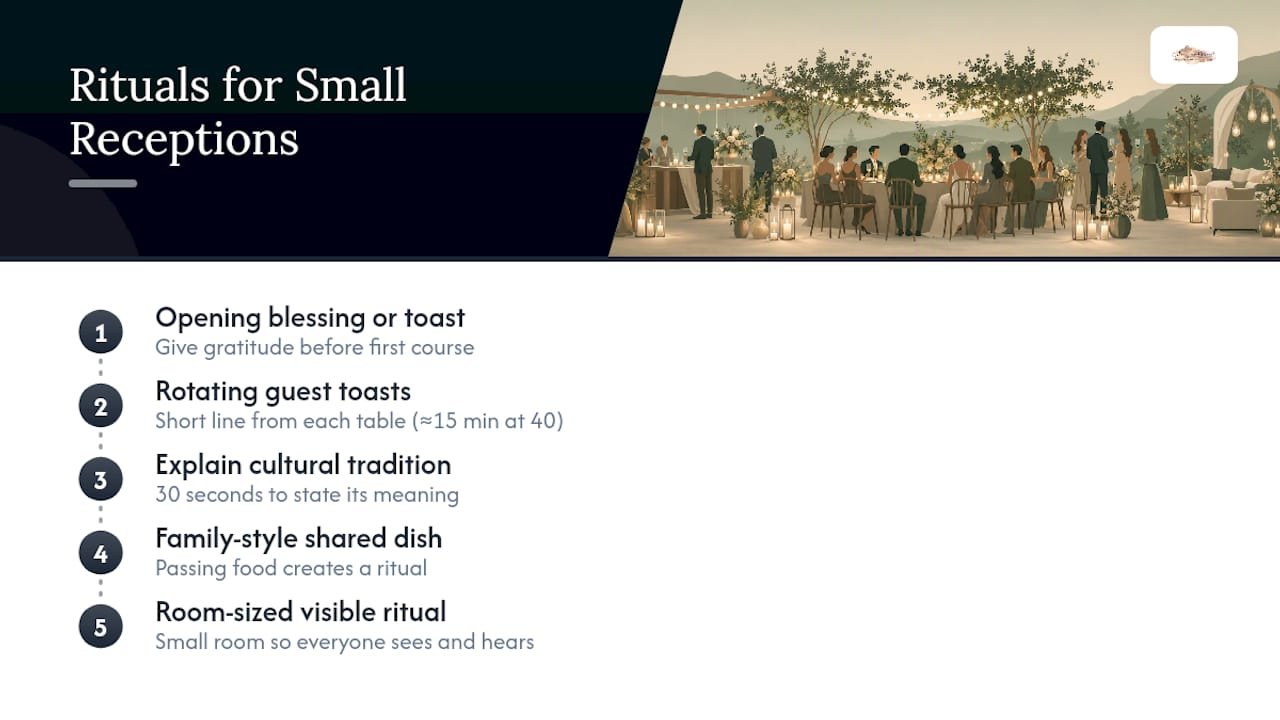
A shared meal blessing or toast before the first course. Instead of saving toasts for the end of dinner, open with one. It sets a tone of gratitude for the rest of the night.
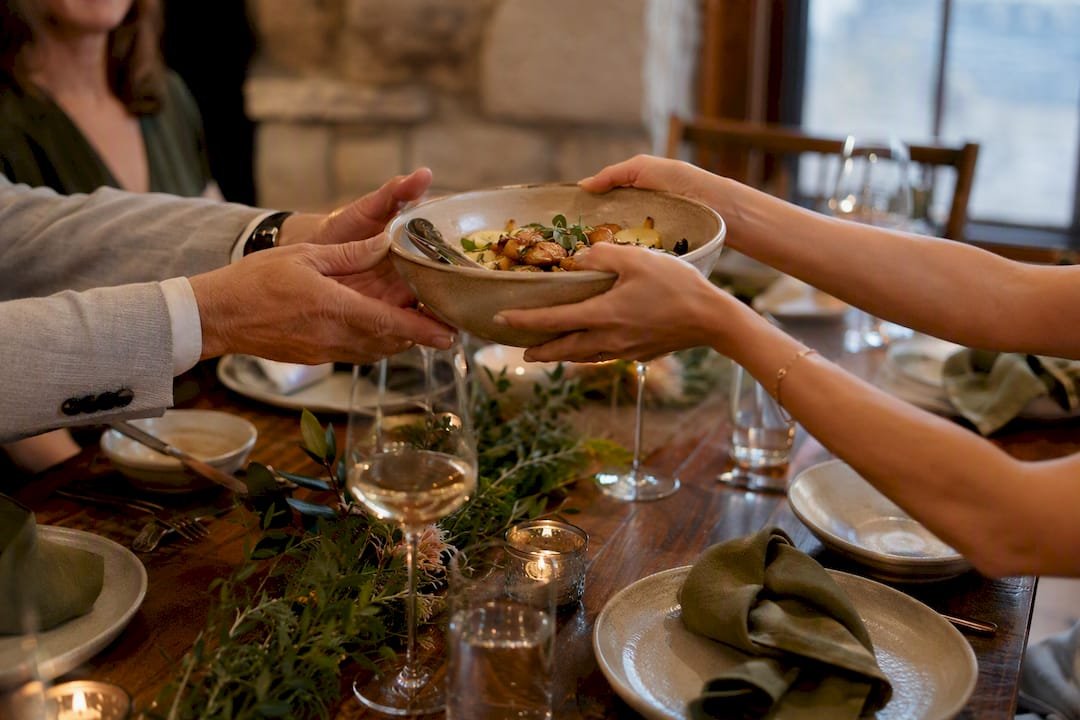
A rotating toast format. Rather than two or three formal speeches, invite a short line from each table or each family group. At 40 guests, this takes fifteen minutes and touches everyone. At 200, it would take hours.
A cultural or family tradition explained aloud. If your family does a specific dance, a candle-lighting, or a food ritual, take thirty seconds to explain its meaning before doing it. Guests who’ve never seen it before will remember the explanation as much as the ritual itself.
A collective element tied to the meal itself. Passing a shared dish family-style, as covered in the dining section above, is itself a kind of ritual. Guests physically hand things to each other, which mimics what a lot of cultural dinner traditions already do.
None of this requires more time or money. It requires a small enough room that a ritual can be seen and heard by everyone in it, rather than lost in a ballroom’s back rows.
Music and Sound That Make a Small Room Feel Warm
Sound behaves differently in a room built for 40 people than in a hall built for 300. A full DJ setup with heavy bass can overwhelm an intimate space, while the same system in a ballroom would sound thin.
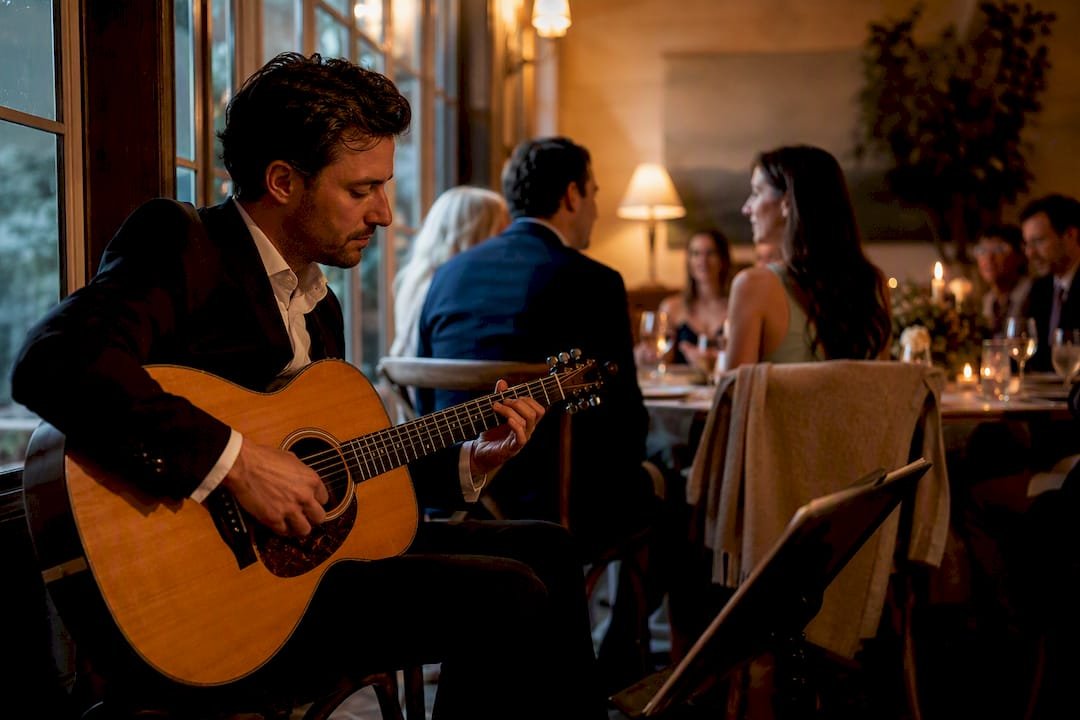
Match your sound to your room size. A single acoustic guitarist or a small string duo fills an intimate dining room without drowning conversation. Save a full band or DJ setup for spaces with real square footage to absorb it.
Think about volume zones, not just song choice. Dinner conversation needs music low enough that people can talk over it without raising their voices. Once dancing starts, that same system can climb.
A few practical moves:
- Curate a dinner playlist separately from a dancing playlist. Don’t let one Spotify mix run the whole night at the same volume.
- If you’re hosting outdoors or in a backyard, check what sound equipment the space can actually handle before booking a full band.
- Consider a cordless speaker setup for a welcome event or send-off moment, since those don’t need the same power as a full reception sound system.
- Ask whoever is running sound to walk the room before guests arrive and adjust for how a full room absorbs sound differently than an empty one.
A quiet room with the right playlist can feel warmer than a loud one with an expensive system. Sound at a small reception, done right, works underneath the room, not over it.
Photography and Video Styles Suited for Small Gatherings
A guest list under 80 changes what a photographer can actually do. Instead of working a room to catch every table in a ballroom, they can shoot the same moment from three or four different angles because there’s simply more time per guest.
Documentary-style, candid coverage tends to outperform posed group shots at this scale. With fewer people, a photographer can hang back and catch real reactions during toasts, the shared meal, or the first dance, rather than staging shot after shot. Fewer people also means fewer formal photo groupings to coordinate, which frees up time for portraits of the couple, the kind of images that end up on the wall years later.
A smaller guest list also means more of the budget can go toward photography itself, since you’re not stretching funds to cover a large headcount elsewhere. That’s worth discussing directly with your photographer when you book: ask for more coverage hours or a second shooter rather than defaulting to a package built for a 150-person wedding.
For video, consider a shorter highlight reel over a full-length documentary cut. At an intimate reception, the toasts, the ritual moments covered earlier, and the shared-table dinner are usually the heart of the footage, not wide shots of a crowded dance floor.
Health and Safety Considerations for Small Receptions
A smaller guest list gives you more control over health and safety logistics than a large wedding ever could. Spacing tables further apart, improving ventilation in an indoor venue, or moving cocktail hour outdoors are all far easier to manage with 40 guests than with 200.
If any of your guests are managing health concerns, or if illness is circulating in your area close to the date, a few practical steps help:
- Choose a venue with strong natural ventilation or outdoor space as a backup, not just an indoor room with the AC running.
- Space seating slightly further apart than a typical banquet setup, especially if older or immunocompromised guests are attending.
- Keep hand sanitizer accessible near the bar and dining area without making it feel clinical.
- If any guests are unable to travel or attend safely, consider a livestream of the ceremony or key reception moments.
None of these require a formal announcement or a shift in tone. Building in a little extra space and a backup outdoor option protects your guests without turning the reception into something it isn’t.
What Planning Dozens of Small Receptions Actually Teaches You
Every intimate reception that works well shares three habits: the couple spent their budget on a handful of things instead of everything, they designed seating for conversation instead of formality, and they built in windows of time so nobody, including the couple, felt rushed. The receptions that fall flat usually skipped one of those three.
— Luis
Cherrywood Ranch: One Weekend, One Location, No Logistics Puzzle
If everything above sounds right but the thought of coordinating a venue, a caterer, a rental company, and overnight lodging separately makes your head spin, that’s the exact problem an all-inclusive weekend venue solves. Certain all-inclusive venues bundle the outdoor ceremony space, the reception setting, and lodging into one property to simplify planning, so you’re not stitching together multiple vendors and hoping the timeline holds.
That structure fits couples planning for a small to mid-sized guest list who want a private wedding weekend rather than a single rushed day, featuring scenic views, communal spaces for downtime that fosters connection, and on-site space for dinner and welcome gatherings. If a full weekend at a private mountain property sounds like the right fit, start by looking at the destination wedding venue details for available dates and package specifics, then browse outdoor reception setups for more ideas on making the most of the space.
Sources
- An Intimate Vineyard Wedding Set With Family-Style Dining – Inspired By This
- This NYC restaurant wedding was an intimate spring dinner party for 30 | Junebug Weddings
- Intimate Wedding Reception Ideas: when small weddings mean big design | Invevents
- 50 small wedding ideas perfect for an intimate affair | Brides