
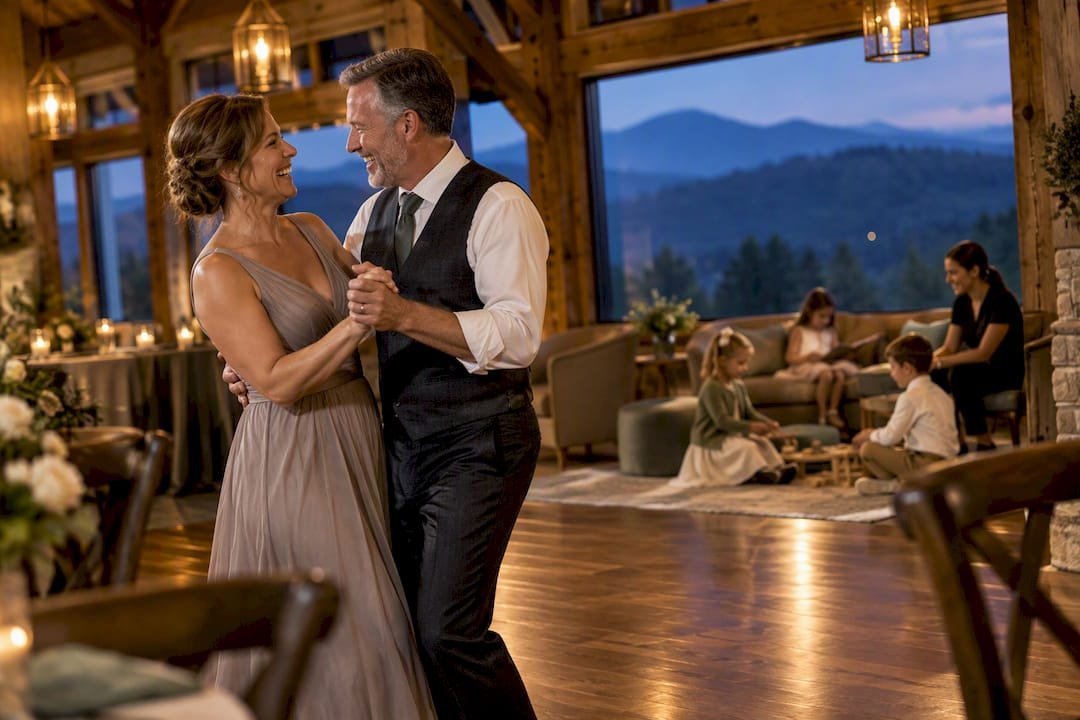
A successful family friendly wedding weekend comes down to three levers: a venue with onsite lodging and real family programming, a schedule that gives kids and adults parallel tracks instead of forcing everyone into the same room all weekend, and guest communication clear enough that nobody shows up guessing. Get those three right and grandparents relax, parents actually dance, and kids stay busy without anyone hovering. Start by prioritizing venues that can host the whole group under one roof and offer some form of supervised kids’ option.
TL;DR:
- Venues with onsite lodging and designated kids’ programming reduce travel and scheduling conflicts, making weekend logistics smoother for families.
- Clear communication of the venue’s policies, staff-to-child ratios, liability insurance, and safety measures is essential to prevent surprises and ensure child safety.
- Structuring the weekend with unstructured downtime, parallel activity tracks for different age groups, and optional events helps prevent guest burnout.
- Onsite amenities like pools, trails, and recreational spaces provide entertainment for kids and adults, minimizing the need for extra planning and coordination.
- Early planning for accommodations, childcare, and detailed guest information packets ensures smooth logistics and addresses potential friction points.
Table of Contents
- How to choose a family-friendly venue for a wedding weekend
- A sample family-friendly wedding weekend itinerary
- Kids’ activities, supervised childcare, and staffing advice
- Accommodations and onsite amenities that reduce weekend friction
- Safety and accessibility: quick checks and ADA basics
- Timeline, budget, and the guest info packet to send before the weekend
- Cherrywood Ranch example: onsite weekend logistics and family benefits
- Balancing romantic priorities with family needs
- Cherrywood Ranch: built around the family-friendly checklist
- Primary sources and further reading
- Sources
- FAQ
How to choose a family-friendly venue for a wedding weekend
The venue decision drives almost everything else, so vet it like you would a contractor. Confirm exact onsite lodging capacity and room types before you fall in love with the scenery: connecting rooms, extra beds, and crib availability matter more than a pretty photo backdrop once you have toddlers in the group.
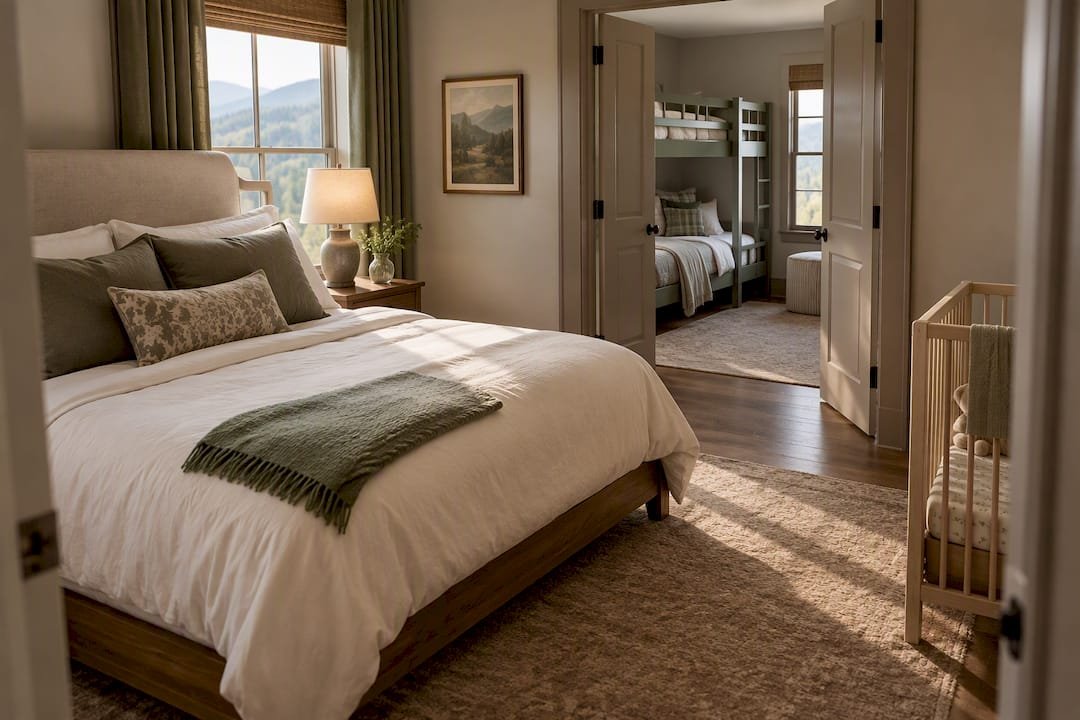
Ask directly about kids’ programming. Some venues offer a private kids’ room or can recommend babysitters; others have no framework at all and expect you to build one yourself. Walk the property with children in mind: is there a pool, trails, or lawn games, and what’s the backup plan if it rains? Distance matters too. A venue where the ceremony, reception, and lodging are a short walk apart beats one requiring shuttles between three locations.
When you talk to a venue coordinator, ask:
- What is the staff-to-child ratio for any supervised program, and can you see a sample kid schedule?
- What food and kid-menu options exist for the reception and any family meals?
- Does the venue carry liability insurance, and are there vaccination or background-check policies for anyone supervising children?
Red flags include long shuttle rides between ceremony and lodging, no quiet space anywhere on property, and house rules that flatly prohibit kid programming.
Pro Tip: Ask for the venue’s kids’ policy in writing before you book, not after your deposit is nonrefundable.
A sample family-friendly wedding weekend itinerary
Think of the weekend in three layers: must-attend moments everyone shares, optional family-friendly blocks, and choose-your-own-adventure time nobody has to justify skipping. That structure keeps the schedule from feeling mandatory front to back, which is exactly what tires out kids and grandparents alike.
- Arrival evening: a casual welcome gathering in early evening, light enough that overtired travelers and young kids can bow out early.
- Rehearsal dinner: offer an adult-only option and a family-style alternative so parents with young kids aren’t stuck choosing between the event and bedtime by considering a private chef Miami for rooftop & poolside dinners to create a memorable and convenient meal.
- Ceremony day: schedule the ceremony mid to late afternoon, when nap windows are less likely to collide with vows.
- Early dinner window: run a children’s meal or early dinner service before the adult reception ramps up.
- Evening reception: pair the adult program with a supervised kids’ activity block running in parallel.
- Next-day brunch: a low-key close that lets people linger or head home on their own schedule.
Fill the optional blocks with kids’ crafts during the welcome event, supervised pool time, a short family hike, a scavenger hunt, a teen hangout area with games, and a quiet room set aside for naps. Build in three to four hours of unstructured downtime before evening events start. Layering the weekend this way, rather than scheduling back to back, is a technique destination wedding planning guides recommend specifically to keep guests from burning out before the main event.
Kids’ activities, supervised childcare, and staffing advice
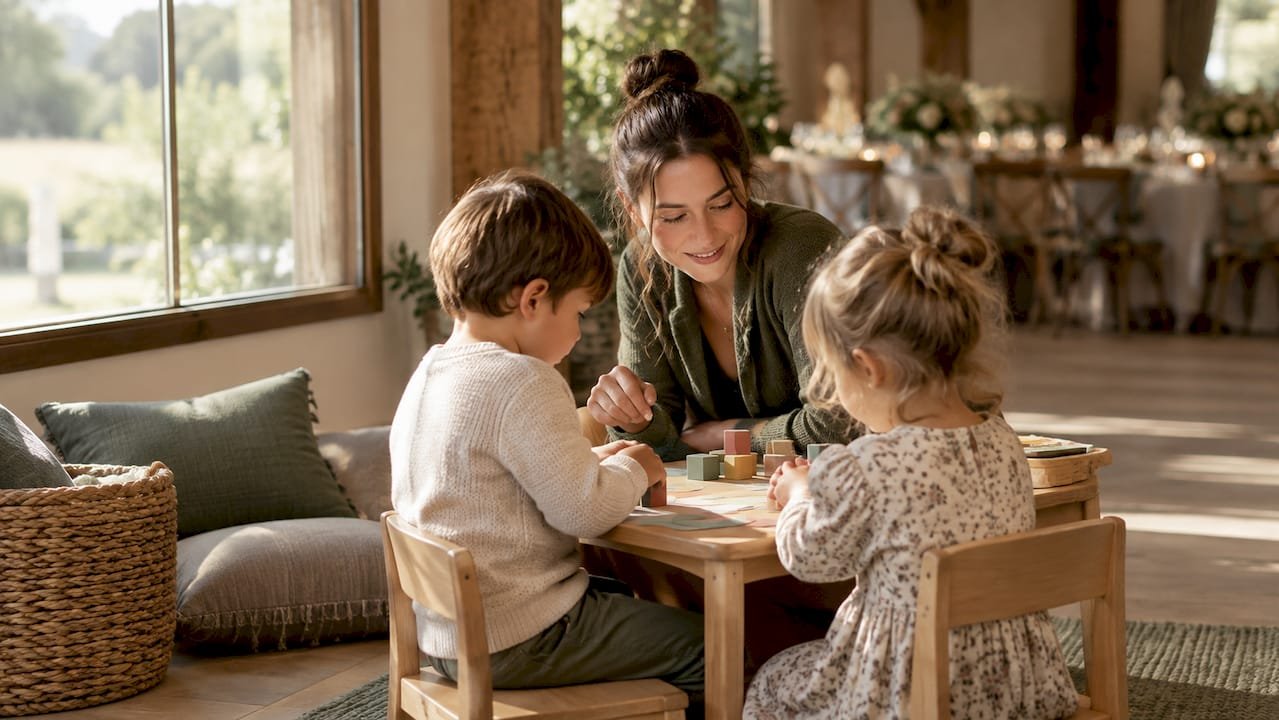
Parallel programming, where kids have their own activity track while adults do their own thing, tends to work better for multi-day weekends than trying to fold children into every single adult event. The tradeoff is coordination: someone has to plan and staff it.
Match activities to age groups:
- Toddlers: sensory bins and a quiet story corner near the reception but out of the flow of foot traffic.
- Elementary-age kids: craft stations, giant Jenga, and scavenger hunts.
- Teens: a photo challenge, a dedicated game area, or a supervised movie or arcade setup.
Busy bags at each kid’s table, filled with cheap favors like crayons, stickers, and small puzzle books, buy you real time during toasts and speeches. The Knot’s roundup of kid activities covers similar scavenger-hunt and craft-station ideas that hold up well for a multi-day format, not just a single reception.
If you hire childcare, ask about staff-to-child ratios, whether background checks are standard practice, and whether a written contract and insurance are part of the deal. Make childcare opt-in and tell parents exactly what it covers and when, so nobody assumes coverage that isn’t there.
Pro Tip: Send parents the childcare schedule a week ahead so they can decide event by event instead of guessing on the day.
Accommodations and onsite amenities that reduce weekend friction
Staying onsite removes the single biggest source of weekend stress for families: the pickup and drop-off shuffle. No one is driving a sleepy toddler back to a hotel across town during the reception, and nap windows become far easier to protect when the crib is thirty feet from the dance floor.
When you’re evaluating lodging, ask specifically about:
- Connecting rooms or suites that keep parents and kids close without sharing a bed.
- Kitchenettes or shared kitchen access for snacks, bottles, and off-schedule meals.
- Blackout shades, since a 7:00 PM sunset nap is nearly impossible without them.
- Laundry access for weekend-long stays with young kids.
- Extra cots or cribs confirmed in writing, not assumed.
Amenities that double as entertainment matter too. A pool or hot tub with clear supervision rules, walking trails, a game lawn, or an indoor rec room all give kids something to do without extra planning. Confirm meal hours and kid-friendly menu options ahead of time so nobody is left calculating whether the tasting menu works for a six-year-old.
Safety and accessibility: quick checks and ADA basics
Before you finalize any venue, walk the property specifically looking for hazards: water features without barriers, drop-offs, uneven terrain, inadequate fencing, and how emergency vehicles would actually reach the site. Set aside a quiet or sensory space away from the main event, since Here Comes The Guide notes that a low-cost quiet zone benefits both neurodiverse guests and overtired kids.
Designate one person as the safety lead for the weekend and set up a central first-aid station. Share emergency contacts and that person’s phone number with every parent in the group ahead of time.
- Mark hazard boundaries clearly and add soft surfacing near play areas.
- Require life jackets around any open water feature.
- Post signage at trailheads, pool areas, and anywhere footing gets uneven.
Under the ADA, commercial and public event venues generally must meet accessibility requirements such as ramps, accessible parking, and level pathways, though private non-public venues may be exempt unless they’re hosting public events. Confirm a venue’s specific obligations directly with the property rather than assuming.
Timeline, budget, and the guest info packet to send before the weekend
Lock vendors and room blocks early, since lodging for a multi-day group books out faster than a single reception hall. A rough sequence:
- Secure venue deposit and room block, then set an RSVP deadline that gives you time to finalize headcounts for both adults and kids.
- Confirm childcare staffing and any activity vendors once headcounts firm up.
- Send the full guest info packet four to six weeks before the weekend.
Budget for lodging blocks, childcare, kids’ activities, shuttle or transport costs, and any additional staffing beyond your core vendor team, since these line items get skipped in single-day wedding budgets.
Your guest packet should include the full schedule with kid-friendly events flagged, shuttle and parking details, a packing list, allergy notes, and a contact sheet for the weekend’s safety lead and coordinator.
Cherrywood Ranch example: onsite weekend logistics and family benefits
Cherrywood Ranch Wedding Venue puts several of these checklist items under one roof by design. The property houses up to 16 guests onsite, which keeps the group together instead of splitting them across a hotel and a separate ceremony site.
- Onsite lodging removes the drive between where people sleep and where the wedding happens.
- A pool and hot tub give kids and adults something to do during the unstructured downtime blocks.
- Mountain views and multi-day packages can mean the ceremony, reception, and family time all happen on the same property.
Fewer transitions mean fewer chances for a tired toddler to derail the schedule, and parents get more of the weekend back.
Balancing romantic priorities with family needs
Not every wedding-weekend event needs everyone in the room. Onsite venues make it easier to let people opt in and out without missing the ceremony itself.
Pick the two or three moments that genuinely need the whole family present, the ceremony, maybe one shared meal, and treat the rest of the weekend as optional. It takes pressure off both the schedule and the guest list.
— Luis
Cherrywood Ranch: built around the family-friendly checklist
Cherrywood Ranch covers several items from this checklist directly: onsite lodging for up to 16 guests, a pool and hot tub for downtime, and multi-day wedding packages built for exactly this kind of weekend.

If you’re planning a weekend that needs to work for grandparents and toddlers alike, check availability and request a sample run sheet through Cherrywood Ranch’s booking page to see how the property fits your family’s schedule.
Primary sources and further reading
- Accessible Aisle on ADA compliance for wedding venues
- Beaches on planning a destination wedding with children
- The Knot’s ideas for keeping kids busy at a wedding
Sources
- Do wedding venues have to be ADA compliant? Here’s what to know | Accessible Aisle
- How to Plan a Destination Wedding with Children | Beaches
- 11 ways to keep kids busy at your wedding | The Knot
FAQ
What is the 50/20/30 rule for weddings?
This rule refers to a common wedding-budget split rather than a family-planning guideline, and definitions vary by source. For a family-friendly weekend, it’s more useful to budget separately for lodging, childcare, and activities alongside your core wedding costs.
What are some ideas for a kid-friendly wedding reception?
Craft stations, scavenger hunts, oversized lawn games, and busy bags at each child’s table are practical options that The Knot recommends for keeping kids occupied during adult-focused parts of the reception. A supervised activity room running parallel to the main event also gives parents a break without excluding kids from the day entirely.
What is the most popular weekend for weddings?
Popularity varies by region and season, and no single source in this guide tracks that figure. Couples planning a family-friendly weekend should focus less on the calendar’s busiest dates and more on choosing a date that works for lodging blocks and school schedules.
What is the 30-5 minute rule for weddings?
This isn’t a standard or widely documented planning rule, so treat any claim about it with caution. If you’ve heard it referenced, ask the source what specific timing it’s meant to describe before building your schedule around it.