
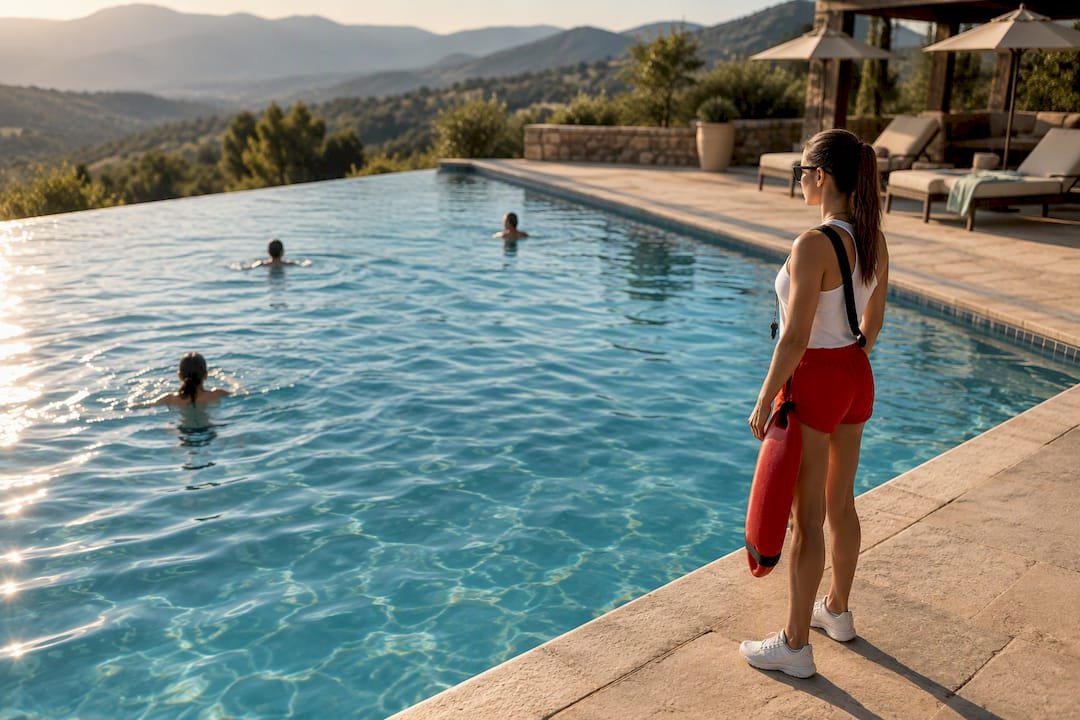
The fastest way to keep a pool party safe is to assign one undistracted water watcher, layer your protection with fences, life jackets, and swim competency, and have a written emergency plan with someone trained in CPR. These three moves cover most of what leads to drowning: unsupervised gaps, unsecured access, and slow emergency response. Everything else in this guide builds on that foundation.
TL;DR:
- A single undistracted water watcher, layered fencing and alarms, and a written emergency plan with CPR training are essential for pool safety.
- Physical barriers like four-sided fences with self-latching gates and alarms are crucial to prevent wandering children from accessing the pool unattended.
- Life jackets and swim lessons reduce risk but do not replace constant supervision, especially for weaker swimmers or children.
- Immediate emergency response, including calling 911 and performing CPR, is vital since drowning often occurs silently with no shouting or splashing.
- Managing multi-day gatherings with staged swim times, onsite lodging, and staff coordination enhances safety and minimizes supervision gaps.
Table of Contents
- Quick checklist: 10 immediate steps hosts should do before and at a pool party
- Supervision: how to run an effective water watcher system
- Barriers and pool security: fences, alarms, and covers
- Floatation and swim lessons: what actually protects swimmers
- Emergency readiness: what to do in the first minutes
- Common party hazards and how to avoid them
- Host pre-party checklist: final checks before guests arrive
- Applying these practices at a venue or multi-day event
- Consider a supervised pool weekend at a staffed venue
- Sources
- FAQ
Quick checklist: 10 immediate steps hosts should do before and at a pool party
Before guests arrive, run through this list. It takes minutes and closes the biggest gaps that lead to accidents.
- Assign a water watcher and give them a visible marker like a hat or lanyard.
- Lock every gate and secure side doors that lead to the pool.
- Test door and pool alarms to confirm they still work.
- Check pool lighting if the party runs into the evening.
- Set out a charged phone within reach of the water watcher.
- Post emergency numbers and the property address near the pool.
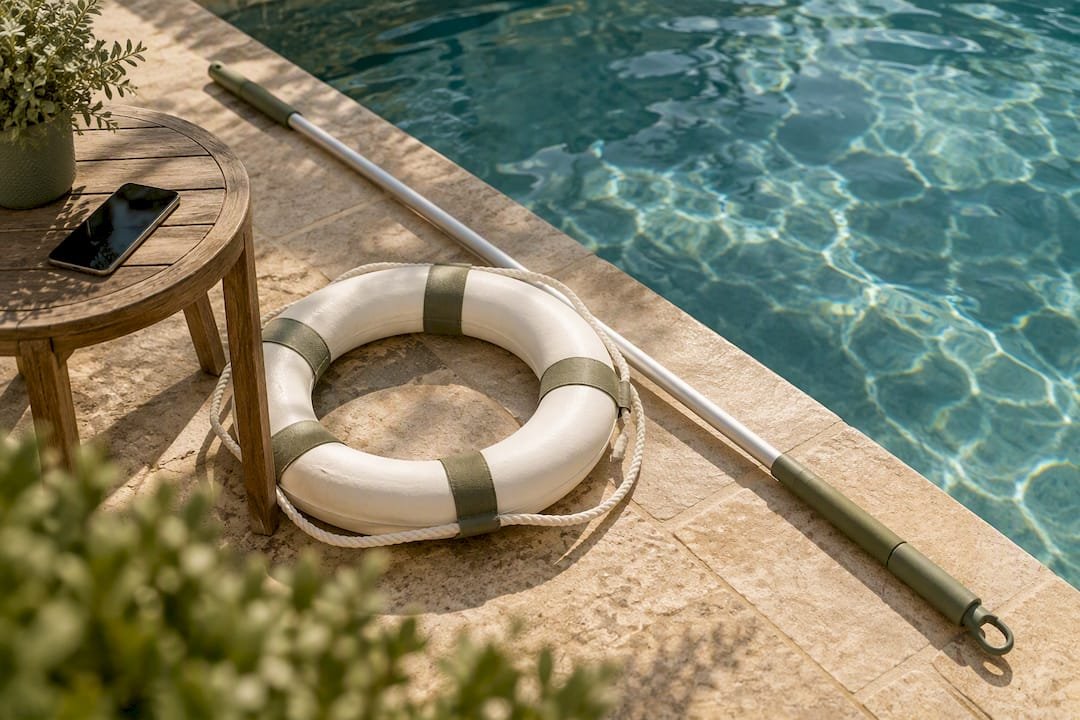
- Place a first-aid kit, rescue ring, and reaching pole poolside.
- Announce pool rules to guests as they arrive: no diving, no running.
- Schedule breaks every hour for hydration and sunscreen reapplication.
- Confirm at least one adult knows CPR before swimming starts.
Supervision: how to run an effective water watcher system
When a group of adults is around a pool, everyone tends to assume someone else is watching. That assumption, known as the bystander effect, is one reason drownings happen even at crowded parties. A single named watcher removes the ambiguity. The CDC’s drowning prevention guidance calls for constant, undistracted supervision, which means the watcher’s only job for that shift is scanning the water.
Make the role concrete:
- No phone, no reading, no side conversations during a shift.
- A visible marker so guests and other adults know who is on duty.
- Rotations every 15 to 20 minutes with a clear hand-off, not a casual “can you watch for a bit.”
- A short verbal check between the outgoing and incoming watcher confirming who is in the water.
Pro Tip: Print a one-page duties card for the watcher role. A written checklist keeps new volunteers from improvising.
For larger events, more than a dozen swimmers, mixed ages, or a pool with deep ends and limited sightlines, consider hiring a certified lifeguard. A CDC working paper on lifeguard effectiveness notes that lifeguards reduce risk in public settings, but only when surveillance is their sole task and they are not pulled into other duties.
Barriers and pool security: fences, alarms, and covers
Physical barriers stop the accidents that happen when no one realizes a child has wandered toward the water. The CDC recommends a four-sided fence that fully separates the pool from the house and yard, since a fence attached to only one side of the house leaves a gap that toddlers can find in seconds.
- Fences should be at least four feet tall with no footholds for climbing.
- Gates need to be self-closing and self-latching, with the latch mounted out of a child’s reach.
- Door alarms on any house exit facing the pool add a second layer if the gate fails.
- Pool covers and surface alarms help but are not a substitute for a locked gate. A cover left partly open or an alarm with dead batteries gives false confidence.
- Above-ground pools need their ladder removed or locked when unsupervised, since the ladder is often the only access point.
Before guests arrive, walk the perimeter yourself. Check that gates latch on the first try, alarms have working batteries, and nothing (a chair, a cooler) props a gate open.
Floatation and swim lessons: what actually protects swimmers
Life jackets and swim lessons both reduce risk, but neither replaces a watcher. For children and weak swimmers, use a U.S. Coast Guard approved personal flotation device rather than pool toys.
- Choose a properly sized, Coast Guard approved life jacket for any child or adult who is not a confident swimmer.
- Treat inflatable arm bands and pool noodles as toys, not safety equipment. They can slip off or deflate.
- Enroll children in formal swim lessons when they are ready. The American Academy of Pediatrics supports lessons for most children around age 4, and sometimes younger, but is clear that lessons reduce risk without making a child drown proof.
- Keep active supervision in place regardless of a swimmer’s skill level or gear.
Emergency readiness: what to do in the first minutes
Drowning is often silent. There’s no splashing or shouting, just a person going quiet and still, which is why constant visual scanning matters more than listening for trouble.
If someone is unresponsive in the water:
- Call 911 immediately or have someone else call while you begin the rescue.
- Get the person out of the water and check for breathing.
- Start CPR right away if you are trained and the person is not breathing.
- Use an AED if one is available and you know how to operate it.
- Stay on the line with the dispatcher until help arrives.
Each year on average from 2022 to 2024, there were thousands of pool or spa related nonfatal drowning injuries treated in emergency departments, according to a CPSC report on pool and spa submersion. Many of these victims looked fine seconds before the incident.
Keep a reaching pole, a rescue ring, and a charged phone within arm’s reach of the water watcher at all times, not stored in a garage or closet. Even when a submerged person seems okay afterward, the American Red Cross recommends medical evaluation because water in the lungs can cause complications hours later.
Common party hazards and how to avoid them
A few specific risks account for a disproportionate share of pool party injuries, and most are simple to fix.
- Check that drain covers are intact and undamaged before the party, and remind guests, especially kids, to stay away from drains and suction outlets.
- Ban diving in any area where the depth is unclear, and remove coolers, chairs, or ledges guests might use as makeshift diving platforms.
- Keep speakers, phone chargers, and extension cords well clear of wet pool decks, and use GFCI-protected outlets for anything electrical near the water.
- Set a clear alcohol policy: the water watcher does not drink during their shift, and intoxicated guests should not swim. Alcohol impairs judgment and coordination, which is a factor in many drowning incidents.
If a child suddenly goes missing during the party, check the pool first. Many drownings happen when a child was not expected to be near the water at all.
Host pre-party checklist: final checks before guests arrive
Run through this in the hour before the party starts.
- Test water clarity and sanitizer levels so you can see the pool bottom clearly.
- Remove toys, floats, and clutter from the pool deck to improve sightlines.
- Check that ladders and any diving board are stable and properly secured.
- Confirm lighting works if the party will run past sunset.
- Set the first-aid kit and emergency numbers somewhere visible, not tucked away.
- Gather guests briefly to state the rules: no diving, no running, no glass near the water.
Applying these practices at a venue or multi-day event
Hosting a multi-day gathering changes the math. With guests coming and going across a weekend, supervision gaps open up around meals, late arrivals, and early risers who wander to the pool alone. Staging swim times, so the pool is “open” only during announced windows with a watcher assigned, closes that gap better than an all-day open pool.
At Cherrywood Ranch, our lodging and event spaces sit on one enclosed property, which means the pool, hot tub, and sleeping quarters are within sight of each other rather than scattered across separate rentals. That layout, paired with a staged pool weekend approach, helps hosts brief arriving guests once instead of repeating safety rules all weekend. Rescue gear and pool keys stay in one known spot, and hot tub time limits get covered in that same briefing.
— Luis
Consider a supervised pool weekend at a staffed venue
Running pool safety for a two-day family gathering is a real logistical load: rotating watchers, briefing new arrivals, checking gates every few hours. Hosting at a venue built for multi-day stays takes some of that off your plate.

Cherrywood Ranch is a private mountain property in North Georgia with onsite lodging, an enclosed layout, and staff who help coordinate the weekend’s schedule, so pool time and quiet hours are planned rather than improvised.
- Lodging, ceremony space, and pool access all sit on one property, reducing unsupervised transitions that can occur when guests move between separate rentals.
- Staff coordination through packages like the 3-day wedding package or Weddings services means someone besides your family is helping manage the weekend’s logistics.
- Guests planning a keepsake for the trip sometimes add a wedding location necklace to mark the property where they celebrated.
If you’re weighing a private wedding weekend or family gathering with a pool involved, check availability and book your stay to talk through scheduling and safety practices for your group size.
Sources
These are the public health and safety organizations behind the guidance in this article.
- Pool or Spa Submersion: Estimated Nonfatal Drowning Injuries and Reported Drownings, 2025 Report
- Preventing drowning | CDC
- Home pool & hot tub safety | American Red Cross
- Swimming pool safety for kids | HealthyChildren (AAP)
FAQ
What does the 80/20 rule mean in swimming?
There is no single official rule recognized by the major safety organizations behind this guide. If you’ve heard a rule like this, it likely refers informally to the idea that most drownings happen during brief supervision lapses, which is why constant, undistracted watching matters more than total time spent near the pool.
Why put vaseline on before swimming?
Some swimmers use petroleum jelly to reduce chafing or as a light water barrier on skin, but it isn’t a recognized drowning prevention or sun protection measure. For sun protection, a proper sunscreen applied and reapplied during breaks is the safer choice.
What are the top safety tips for swimming pools?
The core tips are constant undistracted supervision, a four-sided fence with self-closing gates, Coast Guard approved life jackets for weak swimmers, swim lessons paired with supervision, no alcohol for the person watching the water, and a clear emergency plan with someone trained in CPR. The CDC and American Red Cross both frame these as layers rather than any single fix.
What should a host do during a pool party?
Assign a named water watcher for the entire party, keep gates locked when the pool isn’t actively supervised, and set clear rules like no diving and no glass near the water. Keep a phone, first-aid kit, and rescue equipment within reach the whole time, and check in on the watcher rotation every 15 to 20 minutes.
Do swim lessons mean a child doesn’t need supervision?
No. The American Academy of Pediatrics notes that swim lessons reduce drowning risk but do not replace active supervision or physical barriers. A child who has completed lessons still needs a watcher whenever they’re near water.