
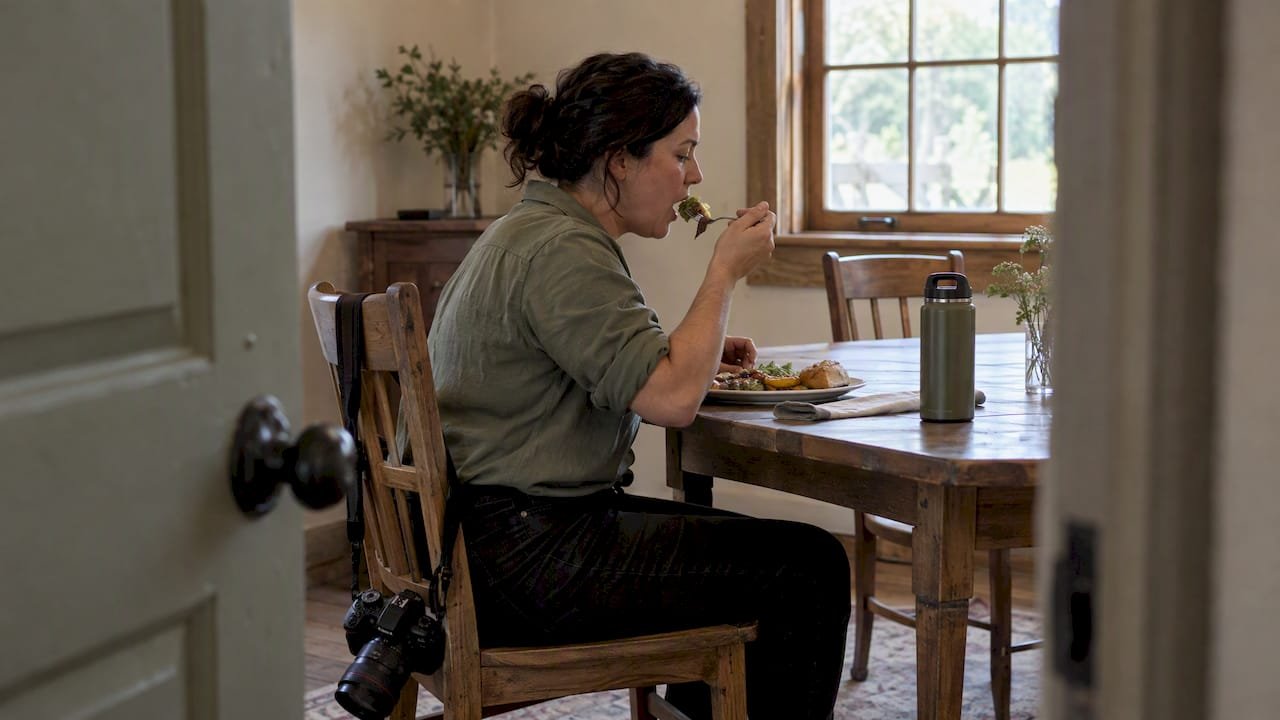
A vendor meal is a meal you provide to the professionals who work most of your wedding day. That usually means your photographer, videographer, DJ or band, and planner or coordinator. Plan one for anyone working roughly six hours or more, serve it after you and your head tables are fed, give them a quiet place to eat, and list the count with your caterer early. Below you will find the details: who qualifies, what it costs, what to serve, the timing that keeps coverage unbroken and the contract language worth checking.
TL;DR
- Feed the vendors who work most of the day (photo, video, DJ or band, planner). Florists and cake bakers who drop off and leave usually do not need a meal, according to Brides.
- Budget roughly $40 to $65 per vendor meal. One published venue package lists $40, $45 and $65 options, and prices vary by venue.
- Serve vendors right after the couple and key family tables are served, never during speeches or the first dance.
- Read every vendor contract for meal clauses: type of meal, timing and headcount.
- Give vendors a separate, quiet spot to sit, and keep hot food hot and cold food cold.
Table of Contents
- What vendor meals are and why they matter
- Which vendors get a meal
- What vendor meals cost
- What to serve
- When and where vendors eat
- Put it in writing: contracts and counts
- Keep vendor food safe
- Gratuities are separate
- Our perspective: vendor meals at a one-venue weekend
- Plan your wedding weekend with us
- FAQ
- Sources
What vendor meals are and why they matter
Vendors are on your clock, not their own. A photographer who arrives for getting-ready photos at 1 p.m. and leaves after the send-off at 10 p.m. cannot step out for lunch without missing something. The meal keeps them on site, fed and focused.
Wedding planner Allie Beik, quoted by Brides, describes the meal as both a courtesy and a practical necessity: it keeps your team on the property, energized and part of the event flow instead of driving off to find food. That last point matters more than most couples expect. A vendor who leaves for forty minutes is a vendor who may not be there for the cake cutting.
There is also a plain human reason. People who work hard for your happiest day should not be handed a dry sandwich in a parking lot. You do not need to spend lavishly. You do need to treat it as a real meal.
Which vendors get a meal
The simple test is time on site. Brides says planners, photographers, videographers, DJs and bands typically need a provided meal, and that vendors who come only for setup or the ceremony, such as florists and cake bakers, generally do not. The same guide notes that catering staff are normally self-sufficient and do not belong in your vendor meal count.
Here is a practical way to sort your list.
| Vendor | Usually gets a meal? | Why |
|---|---|---|
| Photographer (and second shooter) | Yes | Works from getting-ready through the reception |
| Videographer | Yes | Same long coverage window |
| DJ, MC or band | Yes | Sets up early, plays through the night |
| Planner or day-of coordinator (and assistants) | Yes | On site from setup to breakdown |
| Hair and makeup artist | Only if staying for touch-ups all day | Often finishes before the ceremony |
| Officiant | Usually no | Present for the ceremony only, though an invitation is kind |
| Florist, cake baker, rental delivery | Usually no | Drop off and leave |
| Caterer and servers | No | Self-sufficient, per Brides |
Two cases deserve a second look. If your photographer brings an assistant or second shooter, that is another meal. If you hire a content creator or a live musician for the ceremony only, ask whether they stay later. When in doubt, ask each vendor directly rather than guessing.
Should vendors sit on your seating chart? Generally no. A separate vendor table or area is the norm, and it spares them the awkwardness of eating beside guests who are watching them work.
What vendor meals cost
Vendor meals are normally priced below guest meals. A 2025 wedding package from a Fort Lauderdale resort lists vendor meal options at $40, $45 and $65 per person, which is a fair picture of what you will see at hotels and catered venues. A venue pricing sheet on WeddingWire shows hot vendor meals estimated at $40 each, with a line for six to eight vendors. Some venues fold vendor meals into the catering package. Others charge a set add-on fee. Always ask which applies.
A worked example
Suppose your team is a photographer, a second shooter, a videographer, a DJ and a coordinator with one assistant. That is six meals.
- At $40 each: $240
- At $65 each: $390
That is a small line in a wedding budget, yet it is the one couples forget until the caterer asks for a final count. If you are building the whole budget, our wedding weekend budget guide walks through per-guest math so vendor meals sit in the plan from day one instead of arriving as a surprise.
What to serve
You are not required to serve vendors the same plated dinner your guests eat. The Knot’s pro panel suggests the food be high quality and filling, and that simple, healthy meals that sustain people through long hours beat cheap snacks or heavy, unhealthy choices that leave staff sluggish.
Your realistic options, from simplest to most polished:
- The same meal as guests. Easiest for the kitchen and the most generous. Often the best choice at a buffet, where one more plate costs little to prepare.
- A scaled-down version of the guest menu. Same protein and sides, smaller portions or no appetizer course.
- A separate hot meal. A simple entree with a side and a vegetable, plated by the caterer on a different schedule.
- A boxed meal. Sandwich or wrap, a salad, fruit and a dessert. It works if it is fresh and substantial, and it is easy to hand to someone who cannot sit for long.
- A catered snack plus a real meal. Useful for the vendors who arrive early, such as the photographer or the coordinator.
Ask about dietary needs when you collect final counts. A vegetarian DJ or a photographer with a gluten allergy is far easier to feed if you know a week ahead.
How your guests eat affects the choice. A buffet makes extra plates simple, while a plated dinner needs an exact count. Our guide to buffet versus plated dinners at a wedding weekend explains how service style changes portions and headcounts, and family style dinners bring their own math.
Small touches that go a long way
Water, coffee and a few snacks out all day cost almost nothing. A grab-and-go bag for the early arrivals helps. If you like a personal touch, branded custom snacks for events can be tucked into a vendor thank-you bag, though nothing replaces an actual meal for a person working nine hours.
When and where vendors eat
Timing is where most couples go wrong. Many ask vendors to eat first, before guests are served. Vendors usually prefer to eat right after the couple, the head table and the parents’ tables have been served. Burgh Brides explains that this lets them finish eating and be ready to capture the move into dancing, speeches and other key moments. The same source says never to schedule vendor meals during speeches or first dances.
The photographer and videographer usually eat while you eat. Your photographer has already captured the first bites. A rough sequence looks like this:
- Couple and head table are served.
- Photographers and videographers get their plates (or a ten-minute break).
- DJ or band eats during dinner, when the music is low.
- Guests finish, then toasts begin.
If you want to protect key shots, build the break into your photo plan. Our wedding weekend photo timeline shows how to sequence portraits and coverage so nobody is chewing through the cake cutting.
Give vendors a place to sit
Many experts advise a separate, quiet area. Burgh Brides notes it gives staff a mental break and avoids guests feeling watched by working staff. Practical choices include a side room, a shaded patio corner or a small table at the edge of the reception. Just make sure there is a chair, a plate, utensils and a place to put equipment bags nearby.
Put it in writing: contracts and counts
Vendor meal clauses are standard in many professional contracts. Brides warns that if you do not provide the meal, a vendor may be entitled to leave the site to find food, which can leave a gap in your coverage during the reception. Read the fine print for:
- Meal type: hot meal or box lunch?
- Timing: within a set window, or at any point?
- Headcount: does the contract include assistants?
- Alternatives: can you pay a meal stipend instead?
Then give your caterer a final vendor count with your guest count, including meal preference or allergies. Ask the venue whether vendor meals are in your catering package or billed separately, and confirm the price per plate in writing.
Keep vendor food safe
Feeding a team spread across a long day means food sits around. The USDA’s Food Safety and Inspection Service says hot food should stay above 140°F and cold food below 40°F. Perishable food should not sit at room temperature for more than two hours, or one hour when it is above 90°F outside. That matters for a summer outdoor wedding, and it matters for a boxed meal sitting on a table while a photographer works through portraits.
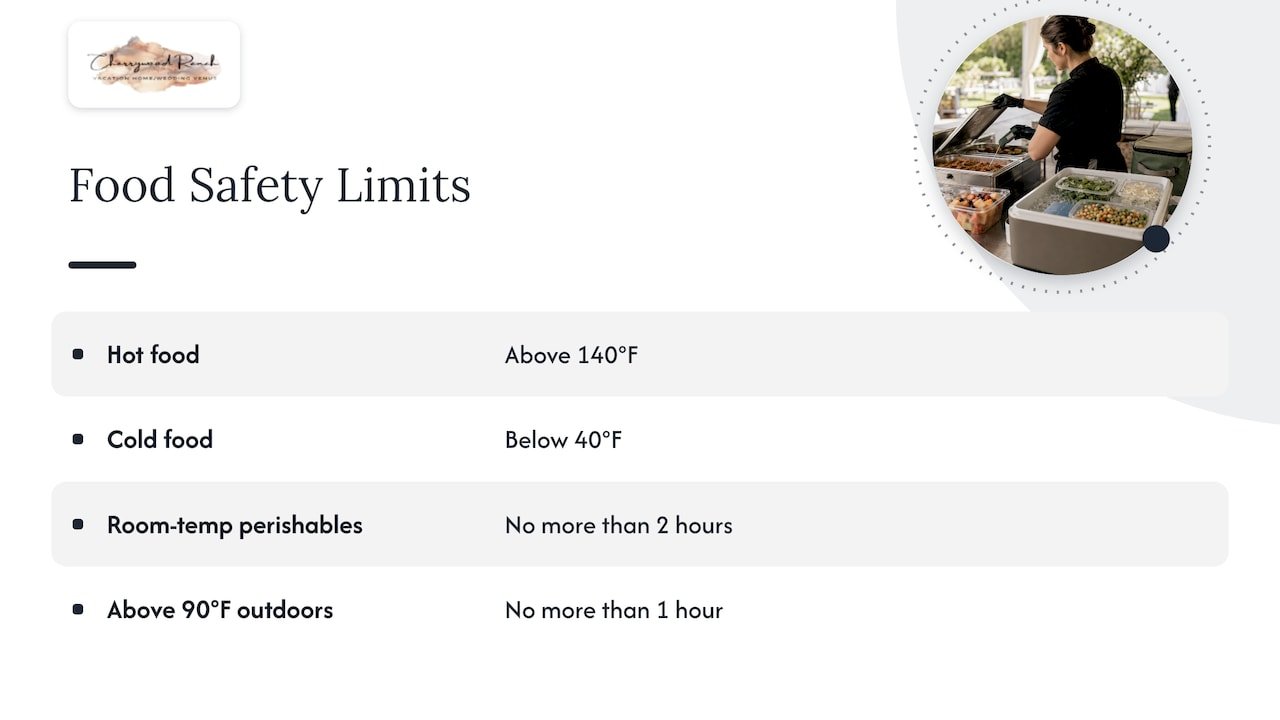
In practice, ask your caterer to hold vendor meals in the kitchen or a cooler until the moment they are served, rather than leaving boxes out from noon. Discard anything that has been out past those limits. If your vendors will eat late, have the caterer plate theirs fresh.
Gratuities are separate
A meal is not a tip. Planning guides such as Wedding & Party Network list typical gratuity ranges, for example 15 to 20 percent of the food and beverage bill for caterers and servers when it is not already included, and 15 to 20 percent for hair and makeup artists. Check each contract first, since some already include service charges. Plan the tip envelopes separately from the meal count.
Our perspective: vendor meals at a one-venue weekend
We host weddings at a private North Georgia mountain property with onsite lodging for up to 16 guests, so we think about a wedding as a weekend instead of a single dinner. That shapes how we think about feeding the people who make it work.
First, in the mountains, you cannot assume a quick run to town. Vendors who leave to find lunch risk missing the moments you hired them for. So we encourage couples to settle meal logistics before the day, not that morning: who is eating, what they are eating and where they will sit.
Second, a long day gets longer when the celebration spans several days. If your vendors also cover a welcome gathering or a day-after brunch, count meals for each event, not just the wedding dinner. Our guide to coordinating a multi-day wedding celebration helps you map each meal to each event.
Third, keep your vendor team small and well known to the venue. We keep a vendor list so you can see the kinds of professionals who work in our setting, which makes a vendor headcount easier to settle early.
Our honest advice: spend the extra $40 to $65 per plate. Good coverage, a fed DJ and a relaxed photographer are worth far more than the plate costs.
— Luis
Plan your wedding weekend with us
If you are picturing a mountain wedding where family stays on site and vendors know the grounds, take a look at our wedding and event services. Our published rates on the booking page include a day session at $1,950 per day and an hourly rate of $350 per hour. Guest overage fees are $10 per guest over 10 and $10 per guest over 75. Ask us how vendor meals fit into your weekend plan.
FAQ
Do I have to feed my wedding vendors?
Not by law, but many contracts require a meal for vendors who work most of the day, and Brides notes that skipping it can let a vendor leave the site to eat. Check each contract. Even when it is not required, feeding your team is a practical and kind way to keep coverage steady.
Do vendors eat the same meal as guests?
They can, but they do not have to. Many couples serve a simpler or smaller version of the guest menu, or a boxed meal. What matters is that it is filling and fresh, as The Knot advises.
How much should I budget for vendor meals?
Plan roughly $40 to $65 per vendor, based on published venue package pricing. Multiply by the number of vendors and assistants who stay most of the day. Your venue or caterer may set its own rate, so ask for it in writing.
When should vendors eat at the reception?
Right after the couple, head table and parents’ tables are served, so they are finished before dancing and key events begin. Do not schedule it during speeches or the first dance, per Burgh Brides.
Which vendors do not need a meal?
Those who only drop off or attend briefly, such as florists, cake bakers and rental delivery crews. Caterers and their servers feed themselves too. When a vendor stays unusually long, offer a meal anyway.
Sources
- A Guide to Serving Vendor Meals at Your Wedding, Brides
- All Your Questions About Wedding Vendor Meals Answered by Pros, The Knot
- Feeding Your Wedding Vendors: Who, What, Where & When, Burgh Brides
- Food safety tips for catered and DIY wedding food, USDA FSIS
- 2025 wedding packages, Fort Lauderdale Marriott Harbor Beach Resort & Spa
- Working with wedding vendors: questions, tips and etiquette, Wedding & Party Network