A good wedding bar comes down to six decisions made in the right order: what your venue allows, what you will serve, how much to buy, what gear and supplies you need, who pours, and where the bar goes. This checklist walks through each one, with worked numbers for a 75-guest reception, so nothing is left to the afternoon of the wedding.
TL;DR
- Ask the venue first: outside alcohol, licensed bartenders, insurance, service hours and ice or fridge access decide everything else.
- Plan roughly one drink per drinking guest per hour, then adjust for your crowd. For 75 guests over four hours, that is about 240 servings.
- Budget about 1.5 pounds of ice per guest as a starting point, more outdoors in warm weather.
- Assign one bar station per 75 guests and name one person to manage ice.
- Do your prep the night before: chill, batch, garnish, count. Keep the wedding day for setup and service checks.
Table of Contents
- Start with the venue’s rules
- Choose your bar style
- Work out how much to buy
- The equipment and supplies checklist
- Staffing and station layout
- Perspective: why the bar works best when the lodging is on site
- A timeline for the last week
- Plan the bar into your weekend
- FAQ
- Sources
Start with the venue’s rules
Before you buy a single bottle, find out what the venue allows. Some venues include alcohol service, some require a licensed bartender, some let you bring your own, and some limit service hours. Those answers change your budget and your shopping list, so get them in writing.
Ask these questions on your first call or walkthrough:
- Can we bring our own alcohol, or must it come from the venue or an approved caterer?
- Do you require a licensed or insured bartender?
- Is there an insurance requirement for events that serve alcohol?
- What are the hours alcohol can be served?
- Who supplies ice, tables, linens, trash cans and trash removal?
- Is there refrigeration we can use, and when can we load in?
- What is the plan for heat, rain or wind if the bar is outdoors?
We cover the BYO side in more detail in our guide to BYO alcohol wedding venues and what to ask. For the insurance question, see what venues require for wedding insurance. And if you are still touring, our venue walkthrough checklist puts the bar questions next to everything else you should check before you sign.
Check the state rules too
Alcohol law is state by state, so confirm yours. As one example, in Georgia the Department of Revenue says a special event permit is needed when alcohol is tied to a payment, such as a cash bar, at a location without a retail alcohol license. It also states that a wedding reception where the host provides alcohol to guests with no expectation of payment does not need that permit. That is Georgia’s rule only. If you are marrying in another state, or planning a cash bar, ask your venue or your state’s alcohol agency what applies before you buy.
Choose your bar style
Your style sets your shopping list, your staffing and your cost. The four common choices:
| Bar style | What you buy | Staffing | Best for |
|---|---|---|---|
| Beer and wine only | Two or three beers, a red, a white, sparkling | Light | Smaller guest lists, tighter budgets |
| Beer, wine and signature drinks | The above plus one or two cocktails | Moderate | Adding personality without a full stock |
| Full bar | Spirits, mixers, garnishes, plus beer and wine | Heavier | Larger crowds that expect choice |
| Self-serve | Pre-batched drinks, wine, beer in tubs | Minimal, but someone should still oversee it | Casual, small, private gatherings |
Two points help most couples decide. First, Junebug Weddings notes that venue or state rules may require professional bartenders, that a professional bar is low-maintenance, and that stocking the bar yourself can cost less. Second, The Knot reports industry experts suggesting a beer and wine bar with one or two signature cocktails as a balanced way to manage labor and liquor costs. A signature drink also gives the bar a story: the couple’s first-date cocktail, a favorite local peach or bourbon pour, a non-alcoholic version of the same.
Decide four things together: how much you want to spend, how long the bar will be open, how many bartenders you need, and which types of alcohol you will serve. Changing one moves the others.
Work out how much to buy
The common starting rule is one drink per guest for every hour of the reception. Junebug Weddings gives the example of 100 guests over five hours, which comes to 500 drinks. A more refined version counts only the guests who drink. One drink calculator assumes about one serving per drinking guest per hour, so 100 guests with 80% drinking over four hours starts near 320 servings.
A worked example for 75 guests
Here is that approach applied to a 75-guest reception with a four-hour bar:
- 75 guests, about 80% drinking, is 60 drinkers.
- 60 drinkers across 4 hours at one drink per hour is 240 servings.
- Many hosts add a cushion, since the first hour is usually the heaviest. If you plan for two drinks in the first hour, the total rises to about 300.
Now split those servings by how your crowd drinks. A typical starting split for a mixed crowd is about half wine, a third beer and the rest spirits, but adjust it to the people you invited. A wine-loving family and a group of college friends need very different carts.
Turn servings into bottles
The bottle math is simple arithmetic. A 750 ml bottle of wine is about 25 ounces, so it pours about five 5-ounce glasses. A standard liquor bottle of the same size makes roughly 16 cocktails at 1.5 ounces of spirit each. Using the 240-serving example with half wine:
- 120 wine servings divided by 5 is 24 bottles of wine.
- A third beer is about 80 beers, or just over three cases of 24.
- The remaining 40 servings in cocktails need about three bottles of spirits, split across your signature drinks.
Add a small buffer, and ask whether your store accepts returns on unopened bottles. Always include non-alcoholic options: sparkling water, a house mocktail, iced tea or lemonade. They serve your drivers, your pregnant guests and your grandparents, and they slow the pace of the whole room.
Mixers and ice
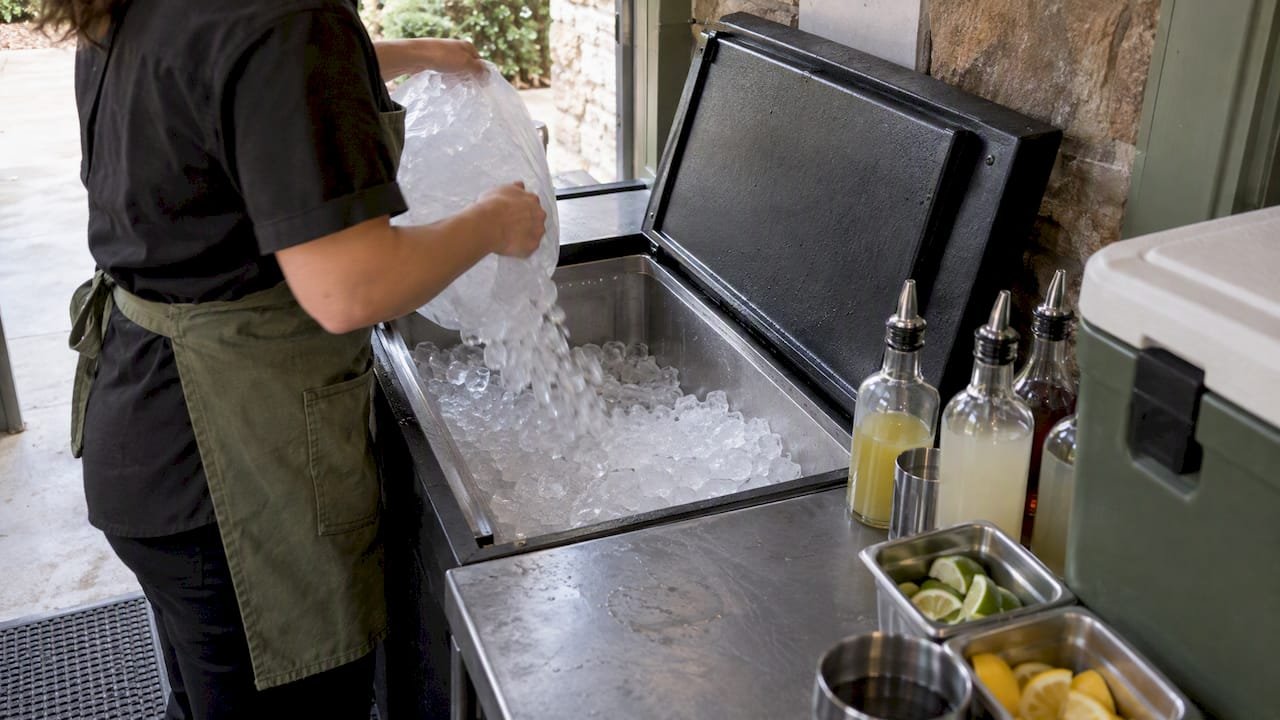
For cocktails, plan a few mixers per bottle of spirit, then cut the list down to what your signature drinks actually use. For ice, the same calculator starts at 1.5 pounds per guest, with an added buffer for outdoor or warm-weather events. For 75 guests that is about 112 pounds before the buffer. Ice runs out before liquor does at almost every outdoor wedding, so buy more than feels sensible and ask whether the venue has a freezer to hold it.
The equipment and supplies checklist
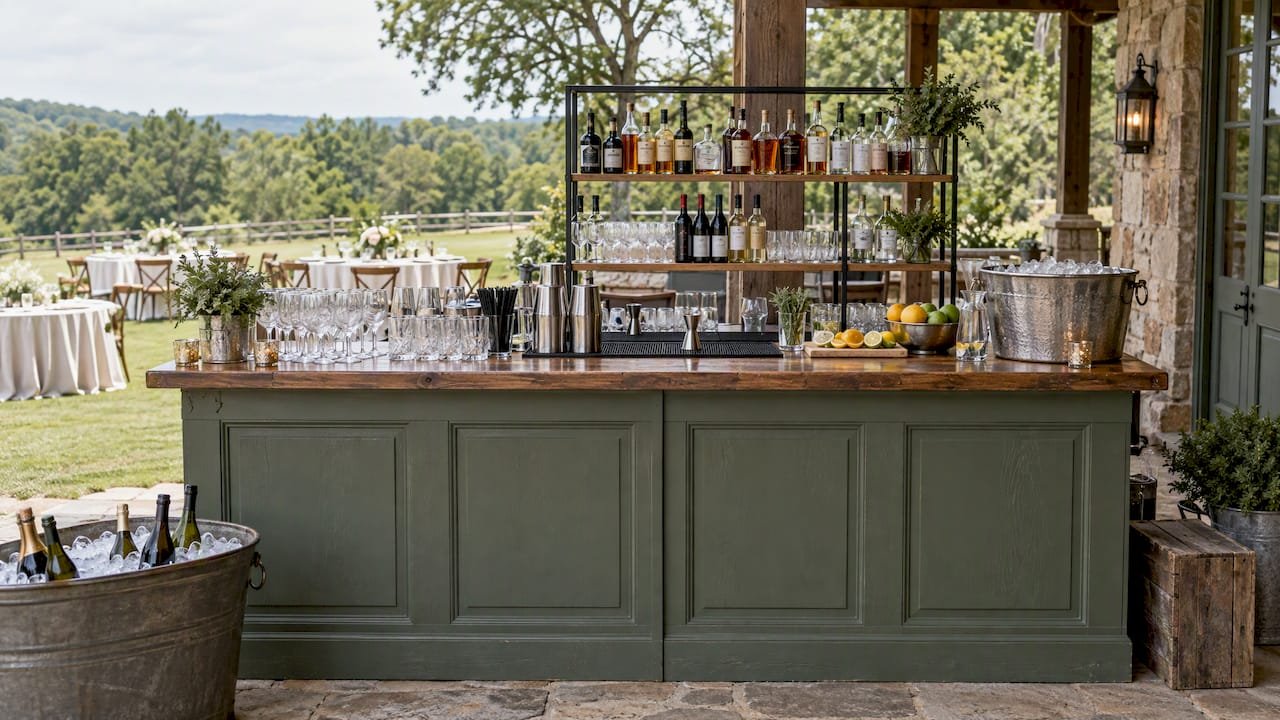
No matter the bar style, the essential gear is similar. A DIY bar guide lists a bar table or surface, ice bins or tubs, glassware or high-quality disposable stemware, bottle openers, corkscrews, jiggers, shakers, a cutting board and knife for garnishes, cocktail napkins and straws. Use this as your packing list:
Surface and cold storage
- Bar table with a cloth that reaches the ground, plus a back table for stock
- Coolers, ice tubs or a fridge for beer, wine and mixers
- Extra bags of ice, held in a separate cooler so the drinks tub stays cold
- Bar mats or towels to catch spills
Tools
- Bottle openers and wine keys, at least two of each
- Pour spouts for spirits
- Jiggers, shakers and strainers if you serve cocktails
- Cutting board, knife, and a bin for citrus rinds
- Pitchers or dispensers for batched drinks and water
Service items
- Glassware or good disposables, with about two glasses per guest if using real glass so no one waits on a dirty one
- Cocktail napkins and straws
- Stir sticks, picks, and small bowls for garnishes
- A menu sign listing the drinks, so the line moves faster
- Trash cans and recycling bins near the bar
Extras that get forgotten
- A water station near the bar
- Extension cords if you plan to use a blender or lights
- A first-aid kit, a lighter, and a roll of paper towels
- Tape or clips for tablecloths in the wind
Staffing and station layout
How many people do you need to pour? The usual guidance is about one bartender per 75 to 100 guests for beer and wine, and one per 50 to 75 for a full bar with cocktails. Treat that as a planning range, and ask any bartender you hire how many they recommend for your menu and your venue.
For layout, ThePerfectWedding.com recommends one bar station per 75 guests to prevent long lines, and suggests designating an ice manager to monitor and replenish ice. For a 75-guest wedding, that means one well-stocked station, or a main bar plus a small drinks table for water and wine. Place it so it does not block the entrance or the path to the dance floor, and where guests can queue without stepping into the ceremony or dining area.
Responsible service
Who is serving matters as much as what. Responsibility.org says responsible beverage service training reduces harm from risky alcohol consumption, especially when managers support and enforce it. It also says trained staff can recognize signs of intoxication, verify identification and refuse service to impaired guests. If friends or family are pouring, brief them before the reception: no serving anyone who is visibly impaired, no serving minors, and a plan for rides. Printing a ride-share reminder on your bar sign or in your welcome bags is a small step that helps.
Perspective: why the bar works best when the lodging is on site
We have hosted enough wedding weekends to know the bar is rarely the problem. The trouble is the logistics around it: guests driving back after the reception, ice delivered late, a cooler tub no one planned for. At Cherrywood Ranch, guests stay in the vacation home for up to 16 people, so the question of who drives home after the party gets a lot simpler for the people sleeping on property. Our setup is designed to let couples and family celebrate for a full weekend without moving between locations, which also means the bar can be a relaxed, multi-day idea: a welcome toast on arrival, a signature drink at the reception, a coffee and mimosa morning after.
Our advice to couples: keep the bar small and well made. Two beers, two wines, one signature cocktail and a good non-alcoholic option beat a sprawling full bar nobody asked for. Spend the savings on ice, glassware and a person whose only job is the bar. If you want more ideas for the weekend’s other gatherings, our welcome party ideas and at-home rehearsal dinner run sheet show how the drinks fit into the full schedule.
— Luis
A timeline for the last week
Use this order and the day itself will be calm. For the larger picture, our wedding planning timeline shows where these tasks sit alongside everything else.
One to two weeks before
- Confirm the venue’s rules, hours and load-in time in writing.
- Finalize drink menu and quantities. Order or buy alcohol.
- Confirm your bartender or helpers, plus who is your ice manager.
- Buy glassware, napkins, signs and all tools on the list above.
Two to three days before
- Pick up or have delivered beer, wine and mixers.
- Print the drink menu and ride-share reminder.
- Pack the bar kit into labeled bins so anyone can set up from them.
The night before
- One planning checklist advises preparing garnishes and mixing and chilling signature cocktail batches the night before.
- Chill what you can. Recount bottles against your plan.
- Put a note on your phone with the vendor and venue contact numbers.
Wedding day
- Load in early enough to set up before the ceremony, not during it.
- Set the bar and back table, stock coolers, fill ice bins, lay out glassware and signs.
- Do a service check after the ceremony: ice, cold drinks, trash cans, napkins.
- Check again an hour into the reception, then top off ice and restock the cold beer.
- At close, stop service at the agreed time, pour out batches, and collect all leftover alcohol for transport.
Don’t forget the people working your wedding. Our guide to vendor meals at a wedding covers who to feed and when, and a bartender with a plate of food is a better bartender at hour three.
Plan the bar into your weekend
If you are comparing venues, the bar is a good tiebreaker. A private property where your group stays on site gives you room to stock, chill and serve without a rush to leave. Cherrywood Ranch offers wedding weekends, 3-day wedding packages and elopements in the North Georgia Mountains, with lodging for up to 16, a pool and a hot tub. Tell us your guest count and the weekend you have in mind, and we will talk through how a bar would fit. See our wedding packages and services or look at our wedding venue with lodging in Georgia.
If you are still weighing the weekend format, our packing list for a wedding weekend is a handy next step, and the buffet vs. plated wedding guide helps you plan the food that keeps the bar in balance.
FAQ
How much alcohol do I need for 75 wedding guests?
A common rule is one drink per drinking guest per hour. If about 80% of 75 guests drink over a four-hour bar, that is roughly 240 servings, or about 300 if you plan two drinks in the first hour. Then split by wine, beer and spirits based on your crowd, and add a small buffer.
Do I need a bartender at my wedding?
It depends on your venue and state. Some venues or local rules require a licensed or professional bartender, so ask before you buy. Even where it is not required, someone should be in charge of pouring and refusing service to guests who have had enough.
How much ice should I buy for a wedding bar?
A starting point is about 1.5 pounds of ice per guest, with extra for outdoor or warm-weather events. For 75 guests that is about 112 pounds before the buffer. Keep drink ice and cooler ice separate, and name someone to refill it.
How many bar stations do I need?
Plan one station per 75 guests so lines stay short. Put the bar away from the entrance and the dance floor path. If you have a larger crowd or a long cocktail hour, a second small station for water and wine can help.
Can I serve free alcohol at a Georgia wedding without a permit?
The Georgia Department of Revenue says a special event permit is not required when a host provides alcohol to guests with no expectation of payment, though the alcohol must be bought from a Georgia licensed retailer. A cash bar is different. Check the current rules with the department and your venue before you plan.
Sources
- Georgia Department of Revenue: Alcohol Licensing for Events
- Junebug Weddings: The Ultimate Guide to Your Wedding Reception Bar
- The Knot: The Open Bar Wedding Cost
- The Forager Bar: Wedding Drink Calculator
- ThePerfectWedding.com: DIY Wedding Bar Setup
- Responsibility.org: Alcohol Service Training Programs
- SpoonAndSip: Wedding Bar Checklists