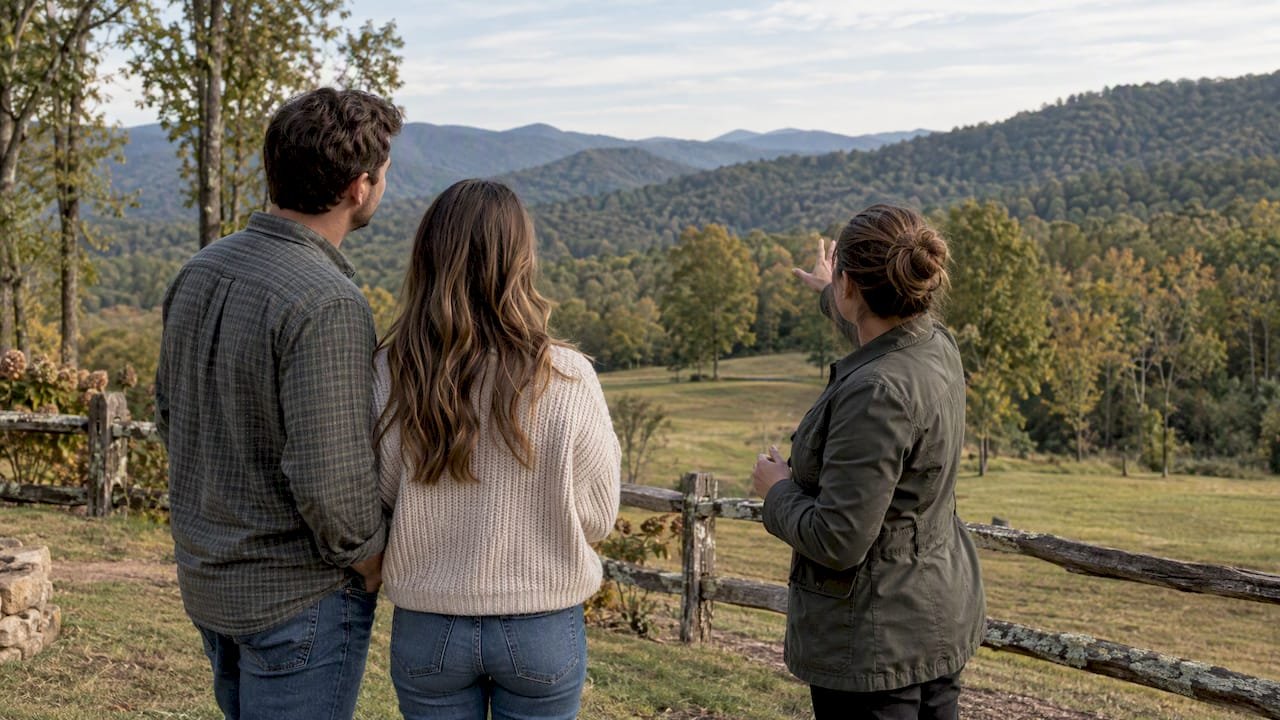
Late summer through early fall, roughly July through September, gives most couples the strongest mix of warm days, cooperative weather, and scenery, according to National Park Service reporting on Rocky Mountain National Park. The real answer depends on your venue’s elevation and exposure: a site at 9,000 feet behaves nothing like one at 3,000 feet. Wildflowers, fall color, afternoon storms, and even winter snow each open different windows, which is why venues like Cherrywood Ranch Wedding Venue & Vacation Home plan around site-specific conditions rather than a single calendar rule.
TL;DR:
- Choosing late summer to early fall (July to early October) generally offers the best balance of stable weather and scenic views for mountain weddings.
- Elevation and slope orientation significantly influence snowmelt, wildflower bloom, and fall foliage timing, making site-specific planning essential.
- Afternoon thunderstorms and lightning pose the biggest risks during summer months, requiring immediate shelter plans and backup indoor options.
- Booking should be done at least 12 to 18 months in advance for peak season dates, with shoulder seasons offering more availability and lower costs.
- An all-inclusive venue with onsite indoor space reduces logistical challenges if poor weather requires relocating or delaying outdoor events.
Table of Contents
- Choosing your season and month for a mountain wedding
- How elevation changes your ideal wedding month
- Planning for thunderstorms, lightning, and mountain weather risk
- Timing your wedding around wildflowers and fall color
- Booking lead times and how season affects mountain wedding cost
- A step-by-step checklist for setting your date
- Why day and night temperatures swing so much in the mountains
- What permits or legal steps a mountain wedding might require
- Getting guests up the mountain: access and transportation
- How altitude can affect your guests’ comfort
- Building a weather contingency plan beyond thunderstorms
- What we’ve learned from hosting mountain wedding weekends
- An all-in-one mountain venue that takes the weather guesswork off your plate
- Where to check site-specific weather and bloom conditions
- Sources
- FAQ
Choosing your season and month for a mountain wedding
Every mountain season offers a different bargain between scenery and risk. Understanding what each month typically delivers lets you pick a trade-off you’re comfortable with instead of discovering it on the wedding day.
Spring is the least predictable season for outdoor mountain ceremonies. Snowmelt timing varies year to year, and the National Park Service describes spring at parks like Mount Rainier as swinging between warm and cold, wet and dry, sometimes within the same week. If you’re set on a spring date, a lower-elevation site gives you better odds, and you’ll still want a flexible mindset about what the ceremony backdrop will actually look like.
June sits in a transition zone. Many mid-elevation venues are fully open and green by this point, but higher sites can still be holding snow from winter. This is the month where “check your specific elevation” matters most, because a June date that’s perfect at 4,000 feet may be unusable at 8,000 feet.
July and August are the warmest, greenest months at most elevations and typically bring peak wildflower blooms in many ranges. They’re also the riskiest months for afternoon thunderstorms, a pattern serious enough that the Park Service issues dedicated lightning guidance for this stretch. Couples who choose summer are trading storm risk for the fullest, most photogenic landscape of the year.
September through early October often gives the best overall balance. Days are cooler and more stable, thunderstorm frequency drops off, and many mid-elevation sites move into fall color. This is frequently the sweet spot for couples who want dependable weather without giving up scenery, though it comes with its own booking pressure since so many couples reach the same conclusion.
Winter weddings are romantic on paper: snow-dusted pines, quiet trails, dramatic light. They’re also the most logistically demanding option. Road access can be unreliable, guest travel gets harder, and an outdoor ceremony without a true indoor backup is a gamble most planners won’t take.
A rough seasonal cheat sheet:
- Spring: Unpredictable; best kept to lower elevations with a flexible mindset.
- June: Transitional; confirm your exact elevation before committing to a date.
- July to August: Warmest, greenest, highest wildflower odds, but the peak window for afternoon storms.
- September to early October: Cooler, more stable, often fall color, generally the most dependable stretch.
- Winter: Scenic but requires indoor ceremony and reception space plus a real travel contingency.
How elevation changes your ideal wedding month
A regional recommendation like “July is great for mountain weddings” is only a starting point. The number that actually matters is your venue’s elevation, because everything else shifts around it.
Snowmelt is the clearest example. Lower valleys clear out in April or May, but alpine terrain can hold snow deep into the season. At Mount Rainier, the National Park Service notes that snow can persist at 5,000 to 8,000 feet into mid-July even during the driest, warmest months of the year. A date that looks safely “summer” on paper can still mean snowbanks at higher elevations.
Slope exposure adds another layer. South-facing slopes warm and green up earlier than north-facing ones at the same elevation, sometimes by weeks. Sites above the tree line behave differently again, with thinner air, harsher wind, and faster-moving weather than forested sites just a few hundred feet lower. Latitude plays a role too: a 6,000-foot site in a northern range clears later than the same elevation farther south.
To translate a generic month recommendation into a real date for your site:
- Confirm your venue’s exact elevation and which direction the ceremony spot faces.
- Ask the venue for historical conditions at that specific date range, not just a seasonal average.
- Check park or forest service pages, trailhead reports, and public webcams for the closest comparable elevation.
Pro Tip: If your venue sits near a national park or forest boundary, that agency’s trail and webcam reports are often the fastest way to see current snowpack and bloom conditions at a comparable elevation.
Planning for thunderstorms, lightning, and mountain weather risk
Summer afternoon storms are the single biggest operational risk for a mountain wedding, and they deserve a real plan, not an umbrella. The National Park Service notes that lightning is common from June through September in alpine areas like Rocky Mountain National Park, and the guidance is specific: when thunder is audible, the safe move is to get inside a substantial building or vehicle, not to wait it out at an overlook or ridge.
Lightning is common across summer months in alpine terrain, which is why the National Park Service lightning guidance recommends sheltering in a building or vehicle the moment thunder is heard. That single rule should shape where you place your ceremony and how fast your team can move people if skies turn.
A workable backup plan includes:
- A designated decision-maker, usually the venue coordinator or planner, with clear authority to call a move before anyone debates it.
- Confirmed indoor or vehicle shelter with enough capacity for your full guest list, not just the wedding party.
- A known evacuation route from the ceremony site that doesn’t depend on a single trail or road.
- Vendor contingency agreements covering what happens to photography, music, and catering setups if the location changes.
- Built-in timing buffers so a 20-minute weather delay doesn’t collapse the rest of the day.
Scheduling itself is a mitigation tool. Morning ceremonies dodge the afternoon storm window almost entirely, and moving the reception earlier does the same for later events. If you’re tenting any part of the day, insist on solid sides and proper anchoring from a certified vendor, since mountain wind loads are a different problem than a calm backyard tent ever faces.
Timing your wedding around wildflowers and fall color
If scenery is driving your date choice, the flowers or foliage you picture need to match your elevation, not just the calendar month.
The U.S. Forest Service reports that wildflower viewing commonly runs mid-June through mid-August in many mountain areas, with blooms progressing from lower elevations to higher ones as snow melts. That progression means the same species can peak in June at 5,000 feet and not bloom until late July at 9,000 feet. A site-specific date, not a regional month, is what actually gets you the bloom you’re picturing.
Fall color follows a similar elevation-driven pattern, typically peaking in September through early October depending on the range and the year. Higher elevations tend to turn first, with color moving downhill as the season progresses, which is worth knowing if you’re choosing between a valley ceremony and one higher up the slope.
To verify timing before you commit to a date:
- Ask the venue directly what bloom or foliage conditions looked like in past years around your target date.
- Check Forest Service or park pages for the closest comparable elevation to your site.
- Look at historical photos or public webcams from the same time of year, when available.
For couples building their color story around the season, mountain wedding palettes tied to early fall foliage are worth a look before finalizing a date.
Booking lead times and how season affects mountain wedding cost
Season doesn’t just change the weather, it changes what’s available and what it costs. Peak summer and early fall dates at popular mountain venues frequently book out 12 to 18 months in advance, especially weekend dates in the strongest weather months.
Shoulder-season and winter dates generally open up shorter booking windows, since fewer couples are competing for them. That flexibility can work in your favor if your priority is availability over ideal weather odds.
Cost tends to track demand. Venue and lodging rates are typically highest in July and August when the weather odds and scenery peak, while early fall dates can run slightly lower while still delivering dependable conditions and color. Winter dates sometimes offer the most room to negotiate, offset by the added cost of indoor backup space and guest travel support.
A few planning factors worth building into your budget and timeline:
- Vendor travel: Photographers, florists, and caterers serving remote mountain venues may charge travel fees that vary by season and distance.
- Cancellation or weather insurance: Worth pricing out for any outdoor ceremony, especially in storm-prone summer months.
- Guest logistics: Off-season dates can mean fewer flight options or seasonal road closures, which affects how early you need to send travel details.
For a longer walkthrough of matching a wedding date to elevation and season, see this guide to mountain wedding planning.
A step-by-step checklist for setting your date
Once you understand the seasonal trade-offs, narrowing down an actual date is mostly a matter of working through a short list in order.
- Confirm elevation and scenery priority. Decide whether wildflowers, fall color, or snow matters most, then check what your venue’s elevation supports for that goal.
- Shortlist two or three candidate months. Weigh warmth and bloom odds against storm risk and booking competition for each one.
- Confirm the indoor backup and evacuation plan. Don’t book a date until you know where guests go if weather turns.
- Brief guests and vendors early. Send packing guidance for temperature swings and share the day’s timeline, including any weather contingency windows.
Before locking in a date, confirm directly with your venue: who has authority to call a weather delay, how many people the indoor space actually holds, what the tent specifications are if one is used, and what the emergency access route looks like from the ceremony site.
Pro Tip: Schedule your ceremony for late morning or early afternoon rather than 3 or 4 p.m., and build a 30-minute buffer into every vendor’s schedule. That single shift avoids most of the afternoon thunderstorm window without changing anything else about your day.
For setup ideas that hold up in exposed mountain conditions, these outdoor ceremony tips and ceremony arch designs are worth reviewing alongside your weather plan.
Why day and night temperatures swing so much in the mountains
Mountain air cools faster and farther than most guests expect. The National Park Service notes that even in July and August, when daytime highs at Rocky Mountain National Park often sit in the 70s and 80s, nights commonly drop into the 40s, and a passing system can knock another 10 to 20 degrees off any part of the day.
That swing has real timeline consequences. A ceremony that feels warm at 2 p.m. can turn uncomfortably cold by an 8 p.m. reception, especially at higher elevations or once the sun drops behind a ridge. Build your day around it: suggest guests bring a layer even for a summer date, plan a spot for coats and wraps near the reception space, and consider patio heaters or a fire feature if the evening runs late. For the wedding party, lightweight layers that can go on or off between photos and dinner solve most of the problem without changing the look of the day.
What permits or legal steps a mountain wedding might require
Requirements vary widely depending on whether your ceremony happens on private land, at a private venue, or within a public park or forest. A private venue, like a ranch or lodge with its own event license, typically handles venue-related permitting itself, which is part of why many couples choose that route over a public natural area.
Ceremonies held in a national park, national forest, or other public land generally require a special-use permit, and rules differ by agency and by site regarding guest counts, amplified sound, and vehicle access. If a public natural area is part of your plan, even just for photos, checking directly with that park or forest office before finalizing your date is the only reliable way to confirm what’s allowed.
Marriage license requirements are separate from venue permitting and are set at the state and county level, so confirm those rules with the county where you’ll be married, not the location of your venue.
Getting guests up the mountain: access and transportation
Remote elevation is part of the appeal and part of the challenge. Many mountain venues sit along winding roads, sometimes unpaved for the final stretch, which can be difficult for guests unfamiliar with mountain driving or arriving after dark.
A few logistics questions are worth settling early: is the venue reachable by a standard vehicle, or does it need higher clearance? Is there guest parking on site, or will shuttles be needed? For guests with mobility limitations, ask directly about terrain between parking and the ceremony site, since a grass meadow or gravel path can be a real obstacle for a wheelchair or a walker.
Sharing clear directions, drive times, and any road quirks ahead of time saves confusion on the day itself, especially when using event communication tools designed to keep guests notified of weather updates and schedule changes. A short guest text or email thread covering arrival instructions and weather updates, using a tool built for event communication, can cut down on day-of phone calls to the wedding party.
How altitude can affect your guests’ comfort
Thinner air at elevation is a real factor for guests coming from sea level or low-elevation cities, even at moderate mountain heights. Common effects include quicker fatigue, shortness of breath on any incline, and mild headaches, especially in the first day or two after arrival.
Alcohol also hits harder at altitude, which is worth a quiet word to the bar staff or a note in the welcome packet, particularly for a multi-day wedding weekend where guests are drinking over several events rather than one evening.
For guests with heart or respiratory conditions, checking with their own doctor before a high-elevation trip is a reasonable step, and it costs nothing to mention it gently in your wedding information packet. Simple precautions help everyone: extra water stations, some shade or seating at the ceremony site, and a slower overall pace for the day.
Building a weather contingency plan beyond thunderstorms
Lightning gets the most attention, but it isn’t the only mountain weather risk worth planning for. Wind is a frequent problem at elevation and can affect everything from hair and veils to unsecured decor and, most seriously, tent stability, which is why any tented structure needs a certified vendor and real anchoring, not decorative stakes.
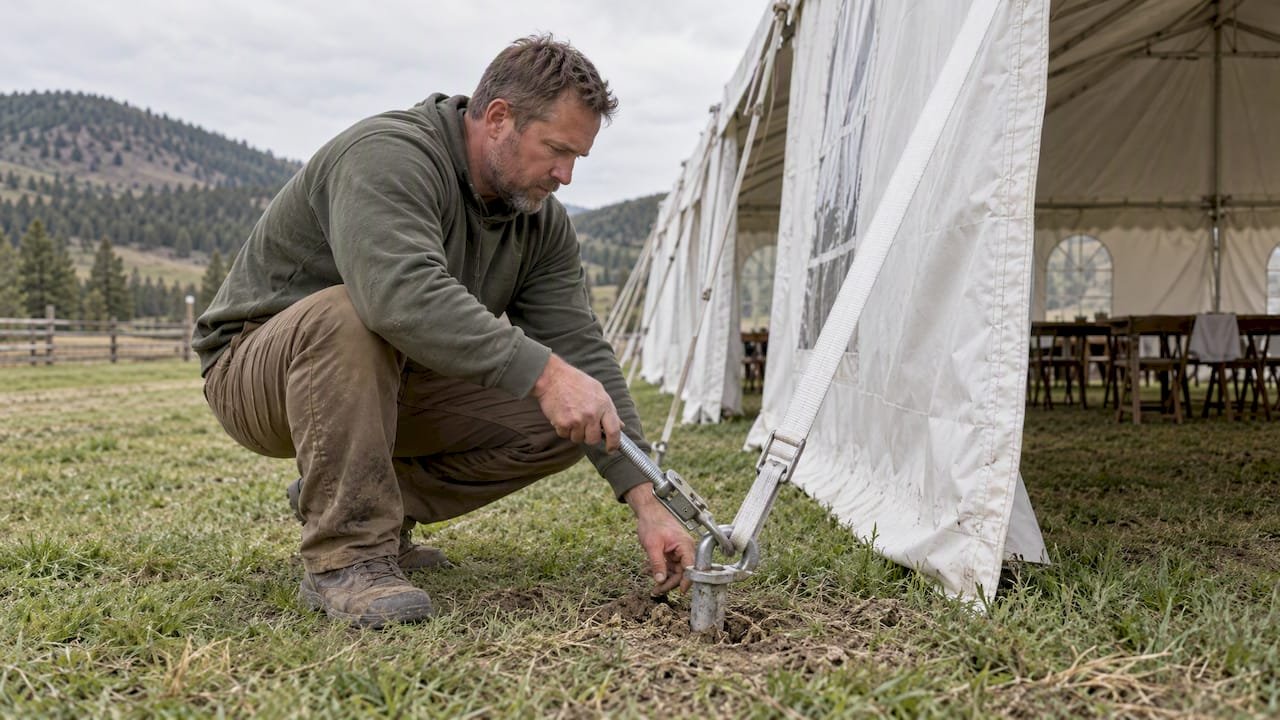
Sudden temperature drops, smoke from regional wildfire activity, and unexpected early or late-season snow are all possibilities depending on timing and location. A solid contingency plan treats these as parallel scenarios, not just backup options to a storm delay: know your indoor square footage, know how quickly it can be set for a full reception, and know who is responsible for making that call.
For a full walkthrough of building this kind of plan, see this rain and weather-backup planning guide, and for tented setups specifically, this guide to tented mountain weddings covers vendor staging in more detail.
What we’ve learned from hosting mountain wedding weekends
The most common mistake is treating “summer” as a guarantee instead of a starting point: couples assume July means safe weather and skip the backup plan entirely. The ones who fare best pick morning ceremony times, confirm elevation-specific conditions ahead of the date, and choose venues that already combine lodging with an indoor space, so a weather call doesn’t mean scrambling for a new location on short notice.
— Luis
An all-in-one mountain venue that takes the weather guesswork off your plate
Cherrywood Ranch Wedding Venue & Vacation Home sits in the North Georgia Mountains and combines a private ceremony and reception setting with onsite luxury lodging for up to 16 guests, so your wedding weekend and your backup plan live in the same place.

That matters more than it sounds. A standalone outdoor site means moving guests, vendors, and gear somewhere else if weather turns; an all-inclusive venue with indoor space on the same property means the reception simply shifts rooms. The venue’s offerings include:
- Onsite luxury lodging for guests, plus resort-style amenities like a pool and hot tub for the extended family and friends staying the weekend.
If you’d rather spend your planning energy on the parts of the day you actually want to control, check availability for your wedding weekend and see how the dates line up with your ideal season.
Where to check site-specific weather and bloom conditions
For your own venue, go straight to the source: the National Park Service and U.S. Forest Service publish weather and wildflower guidance by park and forest. Pair those pages with local webcams and a call to the nearest visitor center for the most current, site-specific read.
Sources
- All About Weather – Rocky Mountain National Park (U.S. National Park Service)
- Wildflowers – Mt Rose Meadows (U.S. Forest Service)
FAQ
What is the best month for an outdoor mountain wedding?
There’s no single best month across all mountain regions, but late summer through early fall, roughly July through September, generally offers the strongest combination of warm days and manageable storm risk according to National Park Service weather reporting. The right month for your date still depends on your venue’s exact elevation and exposure.
How much does a mountain wedding cost?
Cost varies widely by venue, region, guest count, and season, with peak summer dates typically running higher than shoulder-season dates at the same property. At Cherrywood Ranch, packages like the 3-day wedding package and standalone Weddings bookings are priced individually, with an added fee for guests beyond 10 and again beyond 75, so the best way to get an exact figure is to request pricing directly.
What is the rarest month to get married in the mountains?
Winter months are the least common choice for mountain weddings because snow, road access, and limited outdoor ceremony options make them logistically demanding. Couples who do choose winter typically need confirmed indoor ceremony and reception space plus a solid guest travel plan.
How do I avoid bad weather at a mountain wedding?
You can’t avoid mountain weather entirely, but you can reduce risk by scheduling morning or early-afternoon ceremonies to dodge peak thunderstorm hours, confirming indoor backup space before booking, and following lightning-safety guidance that recommends sheltering in a building or vehicle the moment thunder is heard. A venue with lodging and indoor space on the same property removes the scramble of relocating guests if weather turns.