
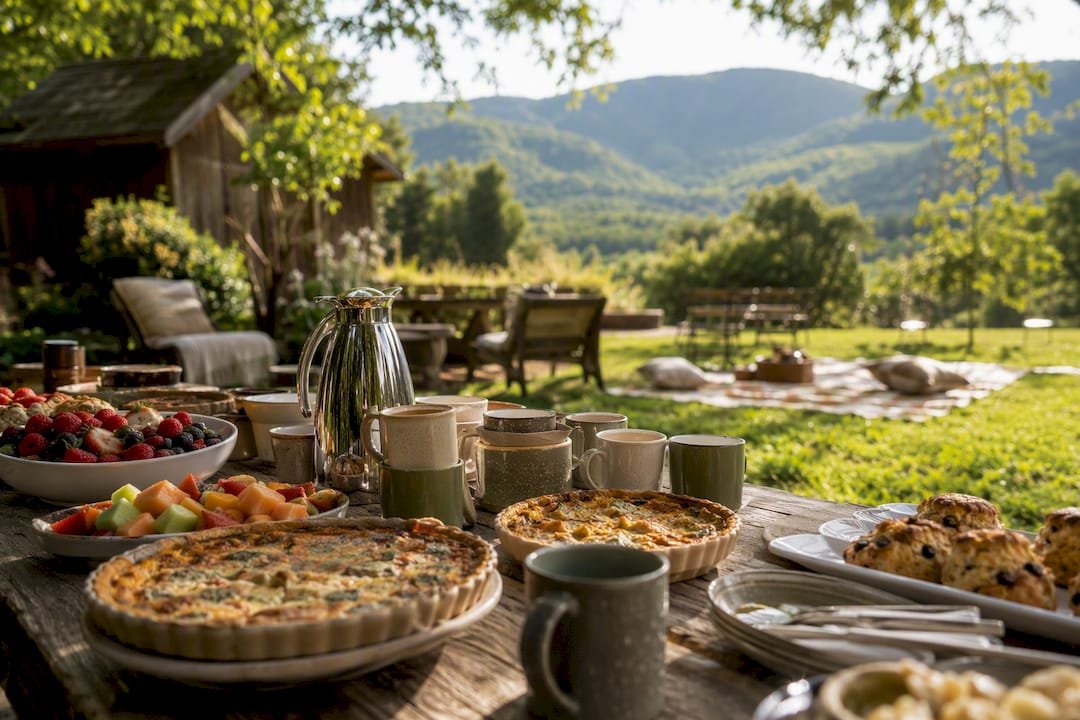
A day-after brunch is an optional, relaxed farewell the morning after your wedding, and there’s no rule saying you need one. Host it if you have out-of-town guests staying through the weekend or a wedding party you want to thank properly before everyone scatters. The easiest format, by far, is a drop-in at your hotel or venue. Skip it if your budget’s tapped out or your guest list is mostly local; a group text saying “safe travels” works fine too.
Key Takeaways
A day-after brunch works best as a short, low-structure drop-in with strong coffee, flexible timing, and a guest list limited to those staying through the weekend.
| Point | Details |
|---|---|
| Choose drop-in over seated | A flexible arrival window between 10:30 a.m. and 1:00 p.m. accommodates both late risers and early flights. |
| Coffee is non-negotiable | Order more than you think you need and pair it with a light recovery station of water and pain relief. |
| Budget by format | Expect $15 to $50 per person depending on whether you choose DIY, restaurant, or hotel packages. |
| Keep invites private | Skip the public wedding website if you’re not inviting every guest; use texts instead. |
| Consider a lodging venue | Cherrywood Ranch’s on-site lodging and catering coordination let the same team run reception and brunch without moving locations. |
Table of Contents
- Day After Brunch Ideas: Planning It in Five Steps
- Where Should You Host a Post-Wedding Brunch?
- What Should You Serve at a Day-After Brunch?
- How Do You Handle Staffing, Rentals, and Travel Logistics?
- What’s a Realistic Timeline and Budget?
- Who Do You Invite and How Do You Word the Invitation?
- How Does This Work at a Real Wedding Weekend Venue?
- Why Less Structure Makes for a Better Morning After
- Make the Morning After as Easy as the Wedding Itself
- Frequently Asked Questions
- Sources
Day After Brunch Ideas: Planning It in Five Steps
You don’t need a planner or a second event coordinator to pull this off. Five decisions cover almost everything.
- Decide who’s hosting and paying. Sometimes it’s the couple, sometimes parents pick it up as their contribution, and sometimes it’s a shared cost among close family. Settle this before anything else, because it determines your budget ceiling.
- Pick format and timing. A drop-in works better than a seated meal for most crowds, since a late-morning window between roughly 10:30 a.m. and 1:00 p.m. lets late sleepers and early flyers both show up.
- Set a simple menu with dietary options clearly marked. You’re not recreating the reception. Think coffee, carbs, protein, and one or two vegetarian or gluten-free trays.
- Confirm logistics. Venue availability, staffing, any rental equipment, what happens to leftover reception flowers, and whether your photographer wants five more minutes for casual morning-after shots.
- Send invitations and set an RSVP method. Text or a private group chat beats a formal invite for something this casual.
Pro Tip: Ask one member of the wedding party to be your point of contact that morning. You’ll be saying goodbyes and taking photos, not confirming whether the coffee urn showed up.
Where Should You Host a Post-Wedding Brunch?
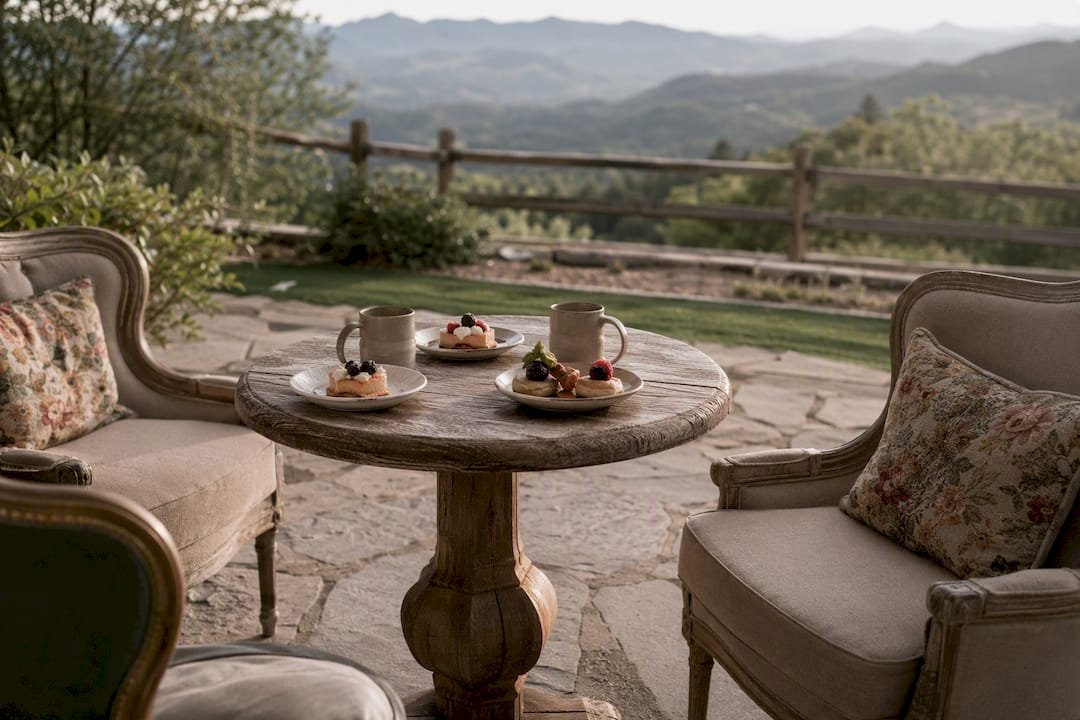
Your venue choice depends more on your guest list’s travel plans than on your personal taste. A hotel-hosted drop-in tends to win for destination weekends because it accommodates different departure times without forcing anyone into a fixed schedule. Guests roll down whenever they’re ready, grab a plate, and head to the airport.
An on-site venue brunch (poolside, on the lawn, or in a private dining space) is nearly effortless if your wedding already included lodging. A local restaurant reservation works too, but you’ll need to arrange transportation, which adds a layer most hosts underestimate. For something more relaxed, a picnic-style lounge, a grab-and-go pastry station, or even a food truck parked outside your rental home covers casual crowds with almost no cleanup.
Low-pressure formats like brunch or a casual lunch are popular precisely because they reduce guest pressure and require little extra décor or programming.
Weather sensitivity matters most for outdoor formats; have a covered backup ready if you’re not hosting indoors.
What Should You Serve at a Day-After Brunch?
Menu planning here is less about impressing anyone and more about comfort after a long night. Balance heavier, comforting staples with lighter, health-forward options, since not every guest wants a plate of biscuits and gravy at 11 a.m.
Menu groupings worth mixing:
- Classic staples: scrambled eggs, bacon or sausage, pancakes or waffles
- Lighter options: yogurt parfait bowls, fruit salad, a simple green salad with grilled chicken
- Regional specialties: shrimp and grits in the South, breakfast tacos in the Southwest, whatever reflects your destination
Stations that scale well without a big staff:
- Bagel and lox board with cream cheese variations
- Biscuit or breakfast-sandwich bar guests build themselves
- Omelet or crepe station (needs one cook, big payoff)
- Grazing table with charcuterie, cheese, and fruit
- Doughnut tower for a sweeter, lower-effort centerpiece
Drinks matter as much as food. A strong coffee and espresso bar is essential, full stop, no matter what else you serve. Pair it with a mimosa bar or Bloody Mary station for guests who want to keep the celebration going, plus a hydration station with infused water and fresh juice for those who don’t. Nonalcoholic mocktails cover everyone in between.
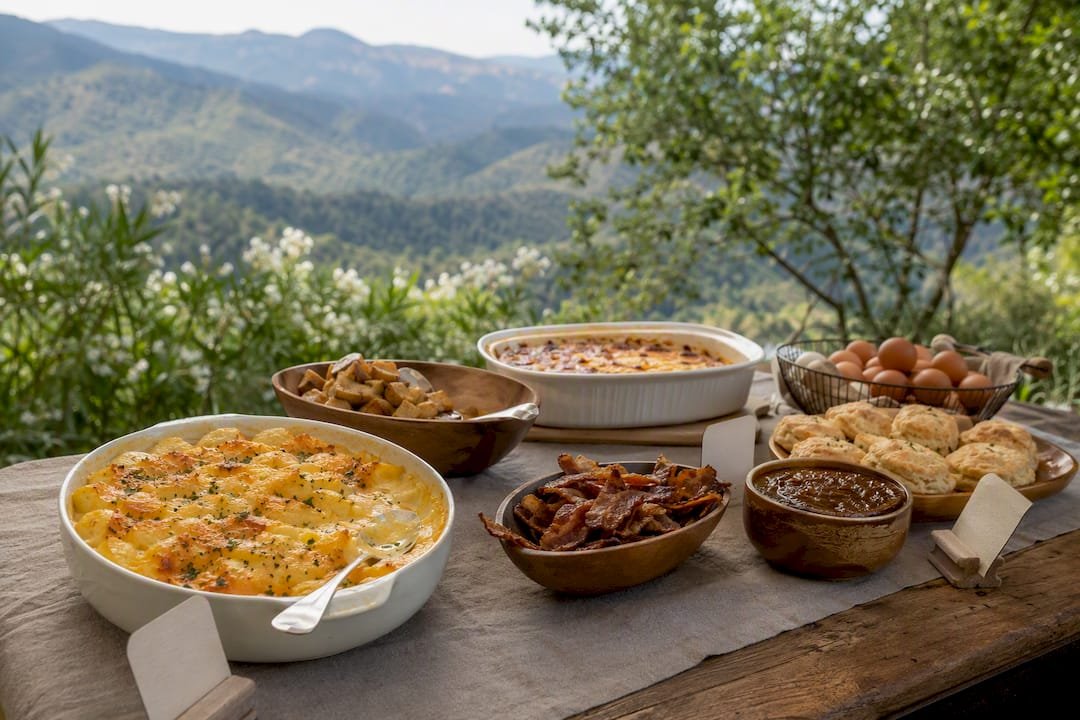
Label everything for allergies and dietary restrictions, keep one indulgent, hangover-friendly item on the table (cheesy potatoes are a crowd favorite), and pack a few grab-and-go boxes for guests catching early flights.
How Do You Handle Staffing, Rentals, and Travel Logistics?
Brunch logistics fall apart fastest around staffing and timing, not food.
- Staffing: hire catering staff for buffets over 30 people; for smaller groups, venue staff or a couple of volunteer helpers usually cover it fine. Bar coverage can be self-serve for mimosas and coffee, with one attendant if you’re serving cocktails.
- Rentals: tables, extra seating, a coffee urn or rented espresso machine, buffet chafing dishes, basic signage for labeling dishes, and clearly marked trash and recycling bins.
- Transport: designate a luggage drop area near the entrance, coordinate shuttle timing if guests are heading to a restaurant off-site, and respect hotel checkout windows when setting your start time.
- To-go options: breakfast boxes, labeled coffee cups guests can grab on the way out, and small pastry bags for the ones dashing to catch a flight.
What’s a Realistic Timeline and Budget?
A smart schedule respects two competing realities: guests partied late, and some have flights to catch. Structure your window around flexibility.
- Doors open at 10:30 a.m. Late enough for recovery, early enough that flight-catchers can still make it.
- Peak arrival between 11:00 a.m. and noon. Most guests trickle in during this stretch rather than all at once.
- Wrap by 1:00 p.m. This roughly two-and-a-half-hour window covers both crowds without dragging into an all-day event.
Budget-wise, expect anywhere from $15 to $50 per person, depending on format. DIY and grab-and-go setups sit at the low end; hotel packages and full sit-down service push toward the top. Confirm caterer headcounts, venue access times, and hotel checkout flexibility the week before, not the morning of.
Who Do You Invite and How Do You Word the Invitation?
Default to inviting out-of-town guests and your wedding party. Extending to everyone works fine for smaller weddings but gets expensive fast for larger ones.
- If you’re not inviting the full guest list, keep it off your public wedding website. Use private texts or a small group chat instead so guests who aren’t included never feel excluded.
- Name it something casual: “Farewell Brunch,” “Day-After Brunch,” or “Brunch with the Newlyweds” all work and set the right tone immediately.
- Sample wording: “Stick around one more morning. Join us for coffee and biscuits before you head home. 10:30 a.m., no RSVP needed.”
- Guests don’t pay, there’s no dress code, and RSVPs can be as informal as a text back.
How Does This Work at a Real Wedding Weekend Venue?
Picture a wedding weekend hosted at a property with on-site lodging and a pool, the kind of setup where the wedding party never has to check out of anywhere overnight. The morning after, catering staff repurpose leftover reception florals as simple table centerpieces instead of ordering new arrangements, and the same team that ran the reception handles breakfast service.
- Guests wander down from their rooms in whatever order they wake up, no fixed seating required.
- Luggage stays in rooms until an agreed late checkout, so nobody’s dragging suitcases through a buffet line.
- An elevated coffee station, with a real espresso option, sits front and center.
- One hangover-friendly comfort dish (loaded hash browns, in most cases) disappears first every time.
Pro Tip: If your venue includes lodging, ask about extending checkout by even one or two hours. It’s a small ask that transforms the whole morning from rushed to relaxed.
Why Less Structure Makes for a Better Morning After
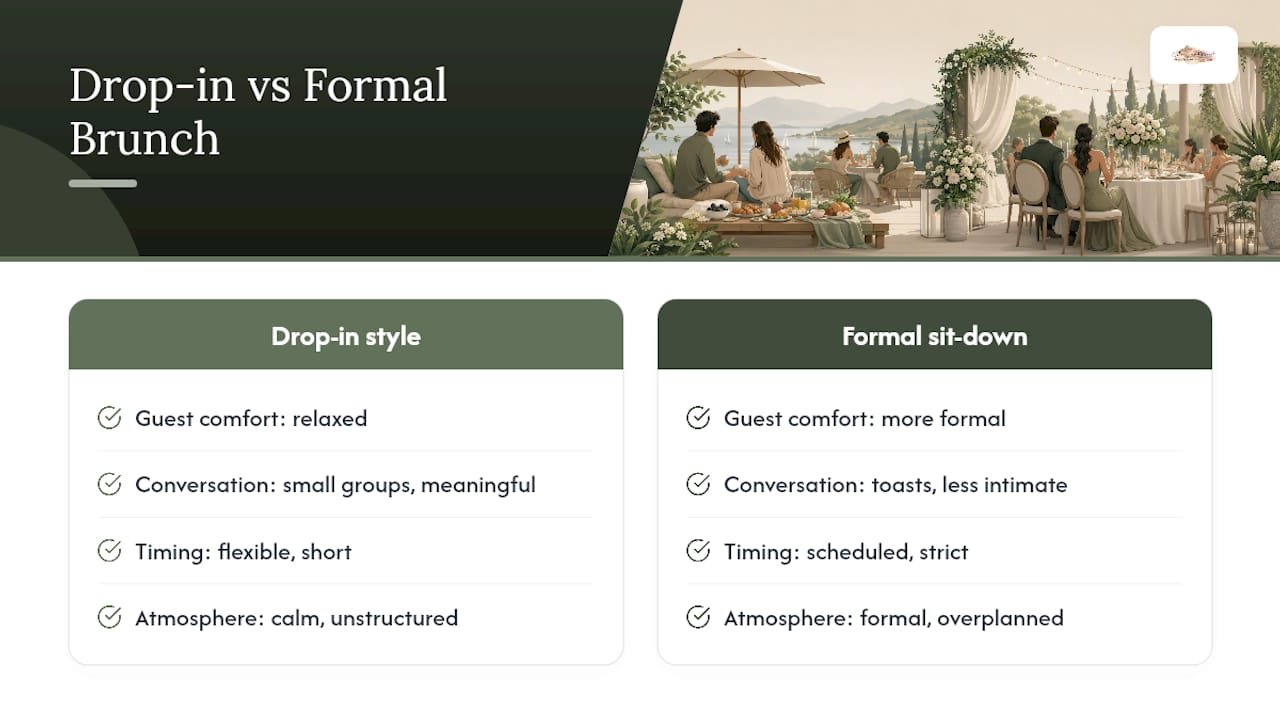
A short, unstructured brunch beats another formal event almost every time. The best conversations I’ve seen happen the morning after a wedding aren’t toasts. They’re small groups lingering over coffee, saying the things there wasn’t time for the night before. Overplanning that morning defeats the purpose. Keep it loose, keep it short, and let the weekend end the way it should: calmly.
Make the Morning After as Easy as the Wedding Itself
If you’re already comparing hotel drop-ins against restaurant reservations against DIY rentals, you’ve probably noticed the tradeoff: convenience usually costs coordination. A venue with on-site lodging removes that tradeoff entirely, because your wedding party never leaves the property between the reception and brunch.

Cherrywood Ranch hosts multi-day wedding weekends in the North Georgia mountains with lodging for up to 16 guests, a pool, and outdoor spaces built for exactly this kind of morning-after gathering. That means:
- No shuttle coordination. Guests wake up, walk downstairs, and eat.
- Catering staff who already ran your reception can handle brunch service the next morning.
- Late checkout is easier to arrange when you’re the only group booked that weekend.
If a turnkey weekend sounds better than piecing together five vendors for one morning, take a look at Cherrywood Ranch’s destination wedding venue in Georgia and check available weekend dates.
Frequently Asked Questions
Do we have to host a day-after brunch?
No. It’s an optional tradition, not an expectation. Many couples skip it entirely, especially for local weddings without much overnight guest travel.
Who typically pays for a post-wedding brunch?
It varies. Sometimes the couple covers it, sometimes parents host it as their contribution, and sometimes it’s split among close family members.
Should we invite everyone from the wedding?
Default to out-of-town guests and the wedding party. If you’re limiting the list, keep communication private rather than posting it publicly.
What’s the easiest menu for a day-after brunch?
A simple spread of coffee, pastries, eggs, and one hangover-friendly comfort dish, plus clear labeling for dietary restrictions, covers most guest lists without much cooking.
How long should the brunch last?
Roughly two to two and a half hours works well, typically from late morning into early afternoon, giving guests flexibility around checkout and travel times.
Sources
- Post-Wedding Brunch: How to Plan the Postwedding Brunch | Plan A Wedding
- Morning-after wedding brunch: who to invite and how to plan | Brides