

A drivable wedding destination is any wedding venue close enough to reach by car that offers a scenic, intimate setting and a multi-day guest experience without the stress of air travel. These venues sit within a reasonable driving radius from a major metro area, typically a few hours or less. They combine ceremony space, on-site lodging, and natural surroundings into one property. The result is a weekend celebration where guests arrive relaxed, stay connected, and leave with memories that go far beyond a single evening. Couples in 2026 are choosing this format because it solves the two biggest problems with traditional destination weddings: high travel costs and low guest attendance.
What is a drivable wedding destination and how does it differ?
A drivable wedding destination is the industry’s informal name for what planners more formally call an “accessible destination venue.” The defining feature is that guests reach it by car, not by plane. That single difference reshapes the entire event experience.
Traditional destination weddings require flights, hotel bookings, and days of travel coordination. The logistics alone cause a meaningful share of invited guests to decline. Drivable venues remove that barrier entirely. Guests avoid air travel exhaustion and arrive in a mindset suited to slow, social celebration rather than recovery from a long journey. That shift in guest energy is one of the most underrated advantages of this format.
The typical drivable venue bundles several features that traditional banquet halls do not offer:
- On-site lodging for the wedding party and close family, keeping everyone in one place
- Scenic natural settings such as mountain ridges, lakefronts, or private ranch land
- Multi-day programming that spreads the celebration across a full weekend
- Privacy through full-property buyouts rather than shared hotel floors
Contrast this with a conventional venue rental, which gives you a room for four to six hours and sends everyone home at midnight. A drivable destination venue gives you a property for a weekend.
Pro Tip: When evaluating drivable venues, use a two-hour driving radius as your baseline. Research consistently shows that guest attendance drops significantly beyond that threshold, regardless of how appealing the venue looks online.
Which venue types make the best road trip wedding locations?
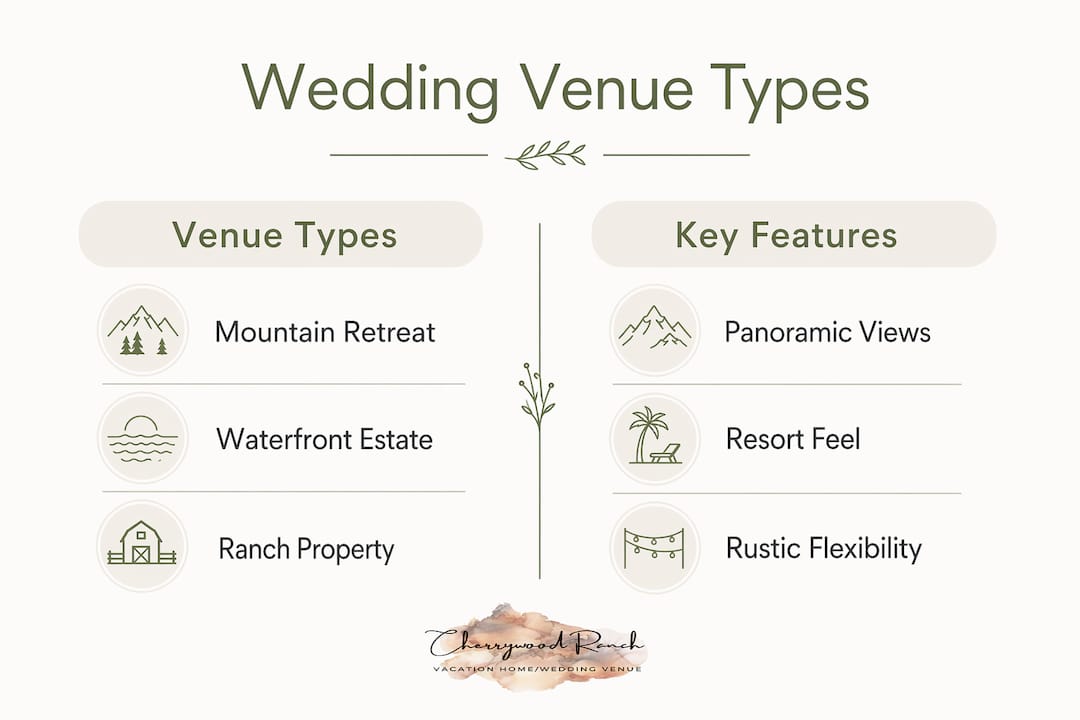
The best drivable wedding venues fall into three broad categories: private mountain retreats, waterfront estates, and working ranch properties. Each type offers a distinct atmosphere, but all share the core traits of privacy, natural scenery, and on-site lodging.
Mountain retreats sit in elevated terrain with panoramic views. They work especially well for couples who want dramatic backdrops without traveling to a national park. Venues in ranges like the North Georgia Mountains or the Blue Ridge are within a three-hour drive of Atlanta, Charlotte, and several other major Southern cities. Remote but drivable mountain locations deliver genuine isolation and intimacy that flat suburban venues simply cannot replicate.

Waterfront estates on lakes or rivers offer a relaxed, resort-style feel. Guests can swim, kayak, or simply sit by the water between events. These properties tend to attract couples who want a vacation atmosphere woven into the wedding weekend.
Ranch properties provide wide open spaces, rustic architecture, and flexibility for large outdoor ceremonies. They also tend to have the infrastructure, power capacity, and parking that more remote properties lack.
| Venue type | Typical guest capacity | Key amenity | Ideal driving radius |
|---|---|---|---|
| Mountain retreat | 16–50 | Panoramic views, hot tub | 2–3 hours |
| Waterfront estate | 30–100 | Lake or river access | 1–3 hours |
| Ranch property | 50–200 | Outdoor ceremony space | 1–4 hours |
| Private estate | 20–80 | Full-property buyout | 1–2 hours |
One factor couples frequently overlook is last-mile access. A venue may be two hours from the city, but the final stretch of road matters. GPS alone is often insufficient for remote mountain venues. Ask the venue coordinator for written driving instructions and confirm whether standard passenger vehicles can reach the property safely.
Pro Tip: Request a site visit in the same season as your wedding date. A road that is perfectly passable in september may be a different story after winter weather.
How do you plan a successful wedding weekend at a drivable venue?
Successful planning at a drivable destination venue comes down to one principle: centralize everything. Keeping lodging, ceremony, reception, and activities at one property prevents the “activity sprawl” that quietly kills weekend wedding cohesion. When guests have to drive between a hotel, a ceremony site, and a dinner venue, the weekend fragments. When everything happens on one property, the energy compounds.
Building your weekend timeline
A well-structured drivable wedding weekend typically runs across three days:
- Friday arrival: Guests check in, settle into on-site lodging, and gather for a casual welcome dinner or bonfire.
- Saturday ceremony and reception: The main event, followed by an after-party on the property.
- Sunday farewell: A relaxed brunch before guests depart at their own pace.
This structure gives you roughly 48 hours of shared time with your closest people. That depth of connection is what separates a drivable destination wedding from a standard one-night event.
Coordinating vendors at a unique property
Vendors must be familiar with the venue’s infrastructure, including power capacity, load-in routes, and parking logistics. A caterer who has never worked a rural property may underestimate generator needs or struggle with a gravel service road. Always ask your venue coordinator for a list of preferred vendors who have worked the property before.
Guest activities that keep everyone engaged
The best drivable wedding weekends offer a mix of structured and unstructured activities:
- Pool and hot tub access for casual afternoon socializing
- Guided hikes or nature walks on or near the property
- Lawn games such as cornhole, bocce, or croquet
- A s’mores station or fire pit gathering on Friday night
- A group breakfast or brunch on Sunday morning
You can find a full breakdown of weekend guest activity ideas that work specifically for property-based celebrations. The goal is to give guests reasons to stay on-site rather than wander off to nearby towns.
What are the real costs of drivable wedding destinations?
Drivable wedding venues often appear more expensive at first glance because they charge for the full property rather than a per-head room rental. That framing is misleading. On-site lodging packages can replace individual hotel bookings for your closest guests, which shifts a significant cost from your guests’ pockets to the venue contract.
The real cost comparison looks like this:
- A traditional destination wedding with flights, resort hotels, and a separate venue rental adds up quickly across the full guest list
- A drivable venue with a full-property buyout bundles lodging and event space into one contract
- Guests who stay on-site spend nothing on hotels, and many spend less on travel overall
Venue rental packages that bundle lodging and event space can reduce the total cost of a wedding weekend compared to booking each component separately. The savings are most visible when you account for what guests would otherwise spend on two nights of hotel rooms near a traditional venue.
Budget considerations specific to drivable venues include:
- Minimum night stays: Most properties require a two or three-night minimum for weekend bookings
- Catering logistics: Remote venues may require caterers to bring additional equipment
- Transportation: Shuttle service between a nearby town and the venue is worth budgeting for guests who prefer not to drive after the reception
Pro Tip: Book your drivable venue on an off-peak weekend, such as a friday-to-sunday in early november or late march, and you will often find significantly lower rental rates with the same amenities.
Couples who want to understand the full financial picture of all-inclusive venue rental benefits will find that the bundled model almost always outperforms the piecemeal approach when you factor in guest experience alongside raw cost.
Key Takeaways
A drivable wedding destination delivers more guest engagement, more intimate settings, and more value per dollar than a traditional venue when the full weekend cost is calculated correctly.
| Point | Details |
|---|---|
| Define the format clearly | A drivable destination venue is accessible by car and offers on-site lodging, ceremony space, and multi-day programming. |
| Centralize everything | Keeping lodging, ceremony, and activities on one property prevents guest dispersal and builds weekend cohesion. |
| Vet last-mile access | Confirm road conditions and vehicle requirements before booking any remote or mountain property. |
| Compare full weekend costs | On-site lodging often replaces individual hotel bookings, making the total cost competitive with traditional venues. |
| Use local vendors | Vendors familiar with the property’s infrastructure handle load-in, power, and parking far more efficiently. |
Why drivable venues change what a wedding actually feels like
I have watched couples spend enormous energy chasing the idea of a destination wedding in some far-off location, only to end up with a beautiful backdrop and a half-empty guest list. The people who matter most could not make the trip. That gap between the vision and the reality is the most common disappointment I see in wedding planning.
Drivable venues solve this quietly and completely. When your guests do not have to book flights, clear vacation days, and navigate foreign airports, they show up. Not just physically, they show up present. Guests who avoid travel exhaustion are more engaged, more social, and more likely to stay through Sunday morning rather than rushing out after the cake is cut.
The other thing I have come to believe strongly: the pacing of a drivable wedding weekend is irreplaceable. There is something that happens on a Saturday morning when your grandmother is having coffee on the porch and your college roommate is already in the pool. Those unscripted moments between events are what people talk about for years. You cannot manufacture that at a four-hour ballroom reception.
The trend toward experience-focused weddings is real, and drivable venues are its natural home. Couples who want their wedding to feel like a gathering rather than a performance consistently find that a scenic, private property within driving distance delivers exactly that. The location does not need to be exotic. It needs to be beautiful, accessible, and built for people to linger.
— Luis
Cherrywoodranchweddingvenue: a North Georgia mountain wedding weekend
Cherrywoodranchweddingvenue sits in the North Georgia Mountains, within driving distance of Atlanta and several major Southeast cities. The property combines a full wedding venue with a vacation home that sleeps up to 16 guests, so your closest family and friends stay on-site from Friday through Sunday.

The venue features mountain views, outdoor ceremony spaces, a pool, and a hot tub, all within one property buyout. Cherrywoodranchweddingvenue handles the setting so you focus on the celebration. Couples planning a mountain wedding weekend in Georgia will find that the all-inclusive format removes the coordination burden that makes most destination weddings stressful. You can also review the full lodging and venue packages to see exactly what is included in a weekend booking.
FAQ
What is a drivable wedding destination?
A drivable wedding destination is a wedding venue within a few hours’ drive of a major city that offers on-site lodging, scenic surroundings, and a multi-day event experience without requiring air travel.
How far is considered “drivable” for a wedding venue?
Most couples and planners define drivable as a two to three-hour drive from the majority of their guest list. Beyond that range, attendance rates tend to decline noticeably.
Do drivable wedding venues cost more than traditional venues?
Not when you calculate the full weekend cost. On-site lodging bundles replace individual hotel bookings, and guests spend far less on travel, which often makes the total cost comparable or lower than a traditional destination wedding.
What should I check before booking a remote drivable venue?
Confirm road conditions and vehicle requirements for the final approach to the property, verify that preferred vendors have worked the site before, and ask for written driving directions beyond what GPS provides.
Can a drivable venue work for a vow renewal?
Yes. The intimate scale and multi-day format of drivable venues suit vow renewals particularly well, especially when the couple wants a relaxed weekend gathering rather than a formal single-night event.