

A weekend getaway wedding celebration is a multi-day, intimate wedding event designed to create a relaxed and meaningful experience with close friends and family in a natural setting. Known in the industry as a “wed-cation,” this format replaces the rushed single-day wedding with a 3 to 5 day shared experience built around connection, presence, and joy. Couples who plan weekend getaway wedding celebrations consistently report less stress, deeper bonds with guests, and more vivid memories than those who stick to a traditional one-day format. If you are engaged and dreaming of something more personal than a ballroom reception, this guide gives you a practical, step-by-step path forward.
What to consider before you plan a weekend getaway wedding celebration
The first decision is guest count. A wedding weekend works best with 10 to 50 guests. That range keeps the event intimate enough for real conversation and flexible enough to fill a full weekend without anyone feeling lost or ignored. Going above 50 guests shifts the event into a different logistical category entirely.
Budget is the second major factor. A multi-day celebration costs more than a single-day event, but the cost per meaningful moment is often lower. You are paying for lodging, multiple meals, and activities spread across several days. Couples who build a per-day budget rather than a single event budget find it easier to track and control spending.
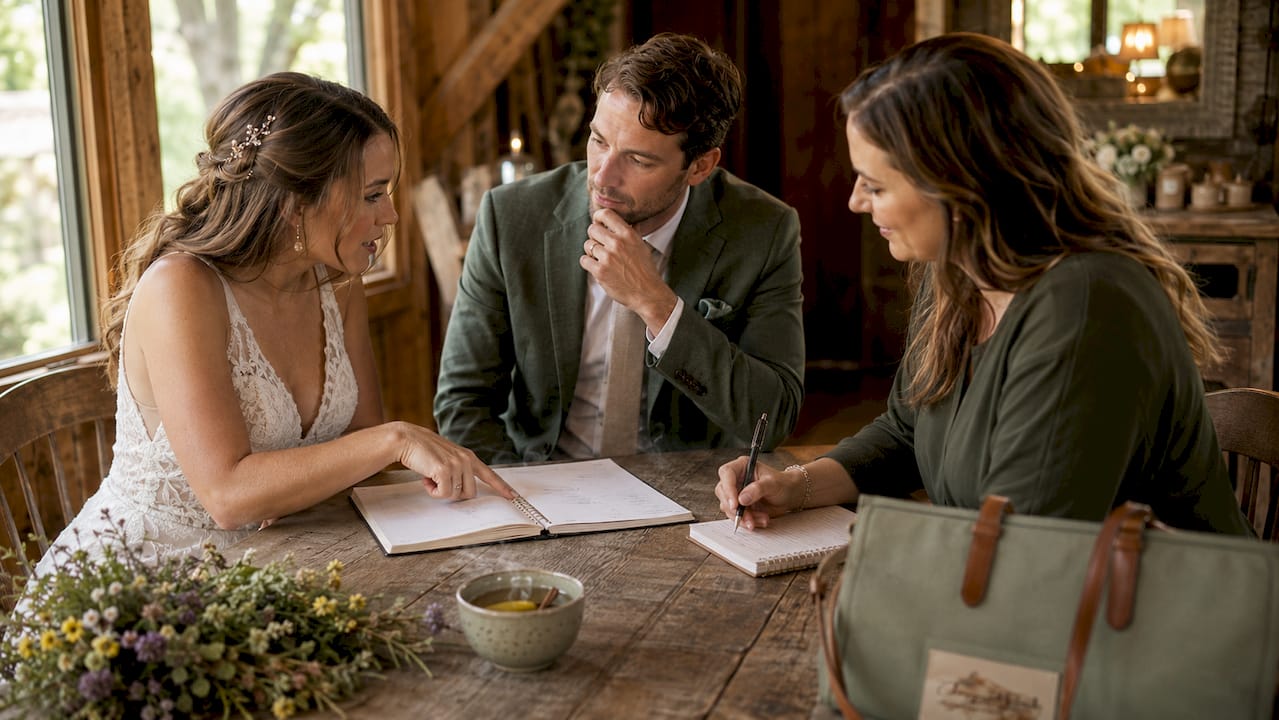
Venue selection shapes everything else. The best venues for a wedding weekend escape offer on-site lodging, multiple event spaces, and a natural setting that gives guests something beautiful to look at between events. Transportation and lodging proximity directly affect how smoothly guests arrive and how much energy they have for the actual celebration. A venue where guests sleep, eat, and celebrate in one place removes the single biggest source of logistical friction.
Seasonality matters more for outdoor weddings than for any other format. Spring and fall offer the most comfortable temperatures for nature-based celebrations in most of the United States. Summer works well at elevation. Winter weddings require contingency plans for weather, heating, and guest comfort.
Key considerations before you commit:
- Guest count: Confirm your list stays within the 10 to 50 range for true intimacy
- Budget structure: Plan per day, not per event, to avoid surprises
- Venue priorities: On-site lodging, outdoor ceremony space, and natural surroundings
- Season and weather: Match your venue’s strengths to your preferred month
- Transportation: Choose a venue guests can reach without connecting flights or long drives
- Communication plan: Decide early how you will share the itinerary and updates
Pro Tip: Send a “save the weekend” notice at least six months out. Guests need more lead time for a multi-day trip than for a single-day wedding.
How to structure the weekend itinerary for smooth flow
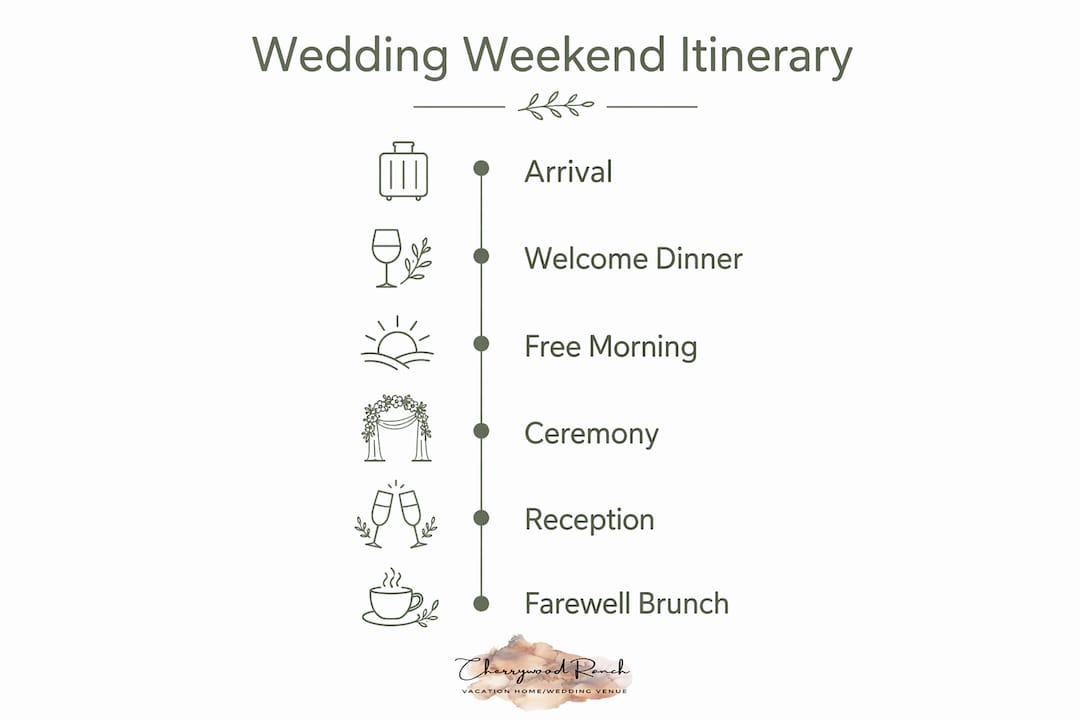
The standard 3-day structure is the most reliable framework for a wedding weekend escape. Day 1 centers on arrival and a welcome gathering. Day 2 holds the ceremony and reception. Day 3 closes with a farewell brunch. This sequence gives guests time to settle in, builds to the emotional peak of the ceremony, and ends on a warm, unhurried note.
Pacing is the detail most couples underestimate. The morning of the wedding day should stay open. Hair, makeup, photography prep, and nerves all take longer than planned. Scheduling buffers for transitions like shuttles, makeup, and vendor arrivals prevents the cascade of delays that turns a relaxed weekend into a stressful one.
The table below shows a sample timeline that balances structure with breathing room.
| Day | Time | Event |
|---|---|---|
| Friday | 3:00 PM | Guest arrival and check-in |
| Friday | 6:00 PM | Welcome dinner or cocktail gathering |
| Saturday | 9:00 AM | Free morning (brunch available) |
| Saturday | 4:00 PM | Ceremony |
| Saturday | 5:30 PM | Cocktail hour |
| Saturday | 6:30 PM | Reception and dinner |
| Sunday | 10:00 AM | Farewell brunch |
| Sunday | 12:00 PM | Guest departure |
Free time on Saturday morning is not wasted time. It is the buffer that keeps the ceremony on schedule and the couple calm. Guests use it to explore the property, rest, or connect with each other informally. That unstructured time often produces the most genuine moments of the entire weekend.
Pro Tip: Build a 30-minute buffer after every scheduled transition. If the shuttle runs late or the florist needs extra time, that buffer absorbs the delay without affecting the ceremony start.
What destination wedding activities work best for a nature weekend?
Wedding weekend activities should be optional, varied in energy level, and capped at roughly three hours each. The goal is bonding, not a packed itinerary. Guests who feel free to opt out are more likely to show up enthusiastic when they do participate.
Nature-oriented celebrations have a natural advantage here. The setting itself provides entertainment. A mountain property with trails, a pool, and open land gives guests something to do without any formal programming. The best destination wedding activities layer a few organized options on top of that natural backdrop.
Activity ideas that work well for nature-based wedding weekends:
- Morning hike: Keep it under two miles and mark it as optional. Offer a shorter walk for guests who prefer less exertion.
- Campfire gathering: Low effort, high connection. Works on Friday evening as a casual icebreaker.
- Outdoor games: Cornhole, bocce, and lawn bowling require no skill and invite everyone to play.
- Wine or craft beer tasting: Works as a structured afternoon activity that feels relaxed and social.
- Pool or hot tub time: Unstructured but deeply appreciated, especially after a long travel day.
- Group cooking or brunch: Involving guests in a shared meal creates connection faster than almost any planned activity.
The key is offering two or three options at any given time, not one mandatory event. Over-scheduling leads to guest exhaustion and less authentic connection. Couples who treat the weekend as a living, breathing experience rather than a production schedule find that the best moments happen in the gaps between events.
Align activities with your own energy and personality. If you hate organized games, do not plan them. Guests read authenticity immediately, and a weekend that reflects who you actually are will feel more memorable than one built from a generic checklist.
How should you handle guest communication and logistics?
Clear, early communication is the single most controllable factor in a smooth wedding weekend. Guests who know exactly where to be, what to wear, and what to pack arrive relaxed and ready. Guests who receive vague or last-minute information arrive anxious and ask questions all weekend.
Send a formal pre-arrival email one to two weeks before arrival that includes the full itinerary, weather forecast, packing suggestions, dress codes for each event, and emergency contact numbers. This one email eliminates the majority of guest questions before they are asked.
A practical communication sequence for the weeks leading up to the wedding:
- Six months out: Send the “save the weekend” notice with dates, location, and lodging details.
- Three months out: Share the wedding website with a draft itinerary and travel logistics.
- Six weeks out: Confirm RSVPs and send activity preference surveys.
- Two weeks out: Email the full schedule, packing list, and vendor contacts.
- One week out: Send a group chat link or app invite for real-time updates during the weekend.
- Day of arrival: Post a welcome note at the venue with the weekend schedule printed clearly.
For guest lists above 50, hiring a dedicated planner becomes a practical necessity rather than a luxury. A planner manages vendor contracts, coordinates deliveries, handles emergencies, and acts as a guest concierge throughout the weekend. That frees you to be present rather than operational. Professional planners reduce couple burnout by absorbing the logistical load that would otherwise fall on the couple or their family.
Always build a weather contingency plan. For outdoor ceremonies, identify a covered backup space and communicate it to guests in advance. Guests who know the backup plan feel secure. Guests who find out about it during a rainstorm feel stressed.
Pro Tip: Create a simple one-page PDF with the weekend schedule, venue map, and key contacts. Share it digitally and print copies for each guest room. It answers 90% of questions before they are asked.
Key Takeaways
A well-structured wedding weekend built around intimacy, pacing, and clear communication consistently outperforms a single-day wedding in guest satisfaction and couple presence.
| Point | Details |
|---|---|
| Guest count defines the format | Keep your list to 10–50 guests to maintain the intimacy that makes a wedding weekend work. |
| Structure around a 3-day arc | Use Day 1 for arrival, Day 2 for the ceremony, and Day 3 for a farewell brunch. |
| Protect the wedding morning | Leave Saturday morning unscheduled to absorb delays and keep the couple calm. |
| Make activities optional | Offer 2–3 activity choices at varied energy levels; never require participation. |
| Communicate early and in detail | Send a full pre-arrival email 1–2 weeks out with schedule, packing tips, and contacts. |
Why the best wedding weekends feel effortless (and how to get there)
The couples I have seen pull off truly memorable wedding weekends share one trait. They stopped trying to fill every hour. The instinct to schedule back-to-back events comes from a real fear: that guests will be bored, or that the weekend will feel thin. That fear is almost always wrong.
An intentional, paced wedding weekend transforms an event into a lived experience. The difference shows up in the quiet moments. It is the conversation that happens by the fire at 10 PM that no one planned. It is the spontaneous group walk before brunch. Those moments only exist when you leave space for them.
The most common planning mistake I see is treating each day as a separate event rather than one continuous experience. Viewing the weekend as a single unfolding operation changes how you schedule, how you communicate, and how you show up. You stop asking “what happens next?” and start asking “how does this feel as a whole?”
My honest advice: cut one activity from your list. Whatever you planned that you are least excited about, remove it. The weekend will be better for the space you create. Presence is the point. Everything else is logistics.
— Luis
Cherrywoodranchweddingvenue: a natural fit for your wedding weekend
Cherrywoodranchweddingvenue brings together everything a wedding weekend requires in one property in the North Georgia Mountains. On-site lodging for up to 16 guests, multiple outdoor event spaces, mountain views, a pool, and a hot tub mean your guests never have to leave the property to find something beautiful or comfortable.

The venue functions as both a destination wedding venue in Georgia and a luxury vacation home, which removes the single biggest logistical headache of a multi-day celebration: getting guests from lodging to the event and back. At Cherrywoodranchweddingvenue, they are already there. Personalized planning support helps you build a weekend that fits your style, your guest list, and your vision. Explore the wedding weekend venue options and see how the property translates everything in this guide into a real, bookable experience.
FAQ
What does a weekend getaway wedding mean?
A weekend getaway wedding, also called a wed-cation, is a multi-day intimate wedding celebration typically spanning 3 to 5 days with 10 to 50 guests. It replaces the single-day event with a shared experience focused on connection and presence.
How many guests work best for a wedding weekend?
The ideal guest count for a wedding weekend is 10 to 50 people. That range keeps the event intimate and manageable without requiring the logistical infrastructure of a large-scale wedding.
Do I need a wedding planner for a weekend celebration?
For guest lists above 50, hiring a dedicated planner is strongly recommended to manage contracts, coordinate vendors, and handle emergencies. For smaller groups, a detailed communication plan and a clear itinerary can substitute effectively.
What activities should I plan for a nature-based wedding weekend?
Optional activities like morning hikes, campfire gatherings, outdoor games, and pool time work best. Keep each activity under three hours and offer varied energy levels so every guest can participate comfortably.
When should I send guests the weekend itinerary?
Send a full pre-arrival email with the complete schedule, packing tips, dress codes, and emergency contacts one to two weeks before the event. Follow up with a group chat or app for real-time updates during the weekend itself.