
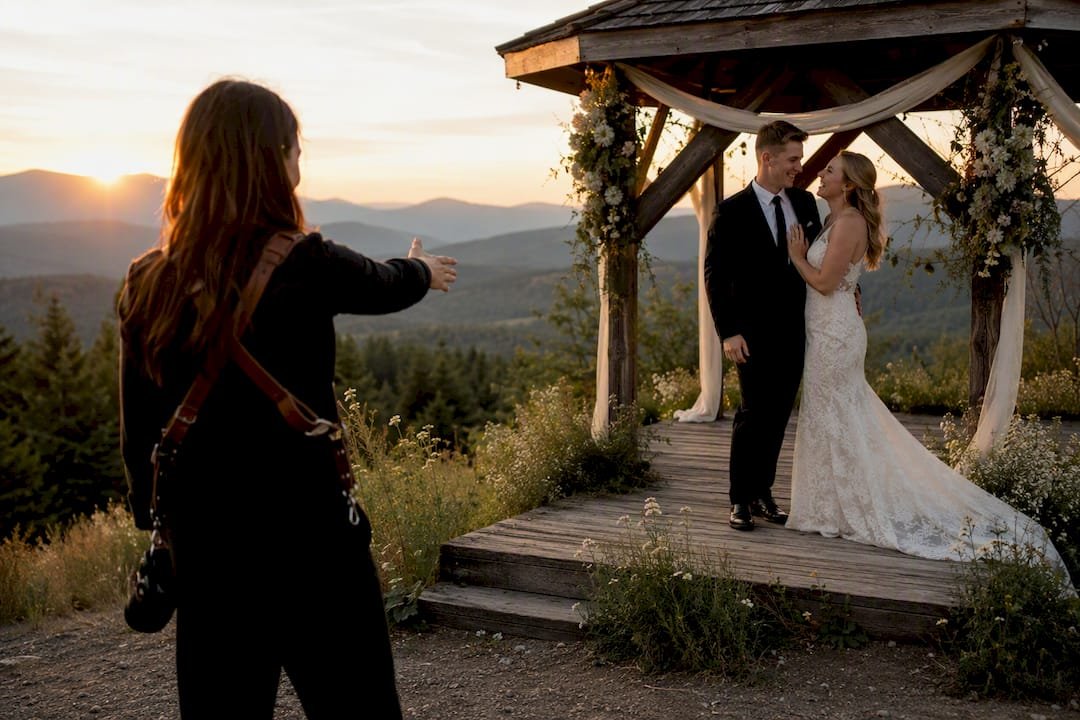
Reserve 15 to 30 minutes during the final hour before sunset for your couples portraits, and start that window roughly 45 to 60 minutes before the sun actually goes down. That’s the whole plan in one sentence. Everything else in this guide just helps you protect that window from the dozen things that try to eat into it on a wedding day.
Here’s how to size the block to your goals:
- 15 to 20 minutes: a quick, focused couples session (enough for 3 to 4 setups).
- 30 to 45 minutes: a fuller session with variety in poses, locations, and light.
Do this today: look up your wedding date’s sunset time, pick a backup-free spot near your ceremony or reception site, and tell your photographer and planner the exact minute you plan to slip away.
Key Takeaways
The strongest golden-hour plan reserves 15 to 30 minutes in the final hour before sunset and builds the rest of the wedding-day timeline backward from that block.
| Point | Details |
|---|---|
| Block the right window | Reserve 15 to 20 minutes for a quick session or 30 to 45 minutes for a fuller one. |
| Use a sun-tracking app | PhotoPills maps exact sun position to your venue’s coordinates and date. |
| Scout at the real hour | Walk the location at the actual portrait time to catch trees, ridges, or buildings that block light. |
| Brief every vendor | Give your photographer, planner, and DJ the exact minute you’re stepping away. |
| Choose a venue built for it | Cherrywood Ranch places scenic mountain viewpoints and lodging within walking distance, protecting your golden-hour block from travel time. |
Table of Contents
- How to Plan Golden Hour Wedding Photos Into Your Timeline
- What Tools Tell You the Exact Golden Hour Time?
- How Do You Coordinate the Team Around Golden Hour?
- Where Should You Stand for the Best Golden-Hour Light?
- What Camera and Phone Settings Work Best?
- What Shots Should You Ask For During Golden Hour?
- What If the Weather Ruins Golden Hour?
- Day-Of Checklist for Golden Hour Portraits
- A Sample Golden-Hour Timeline for a Mountain Venue
- Why Golden Hour Deserves Its Own Line on the Timeline
- Plan Your Golden Hour With Cherrywood Ranch
- Frequently Asked Questions
- Sources
How to Plan Golden Hour Wedding Photos Into Your Timeline
Every golden-hour timeline works backward from sunset. Here are three starting points, built around a hypothetical 8:00 PM sunset.
1. Fast wedding (ceremony late afternoon): Ceremony at 5:00 PM, family formals 5:30 to 6:15 PM, cocktail hour 6:15 to 7:15 PM, golden-hour couples session 7:15 to 7:35 PM, reception entrance 7:45 PM.
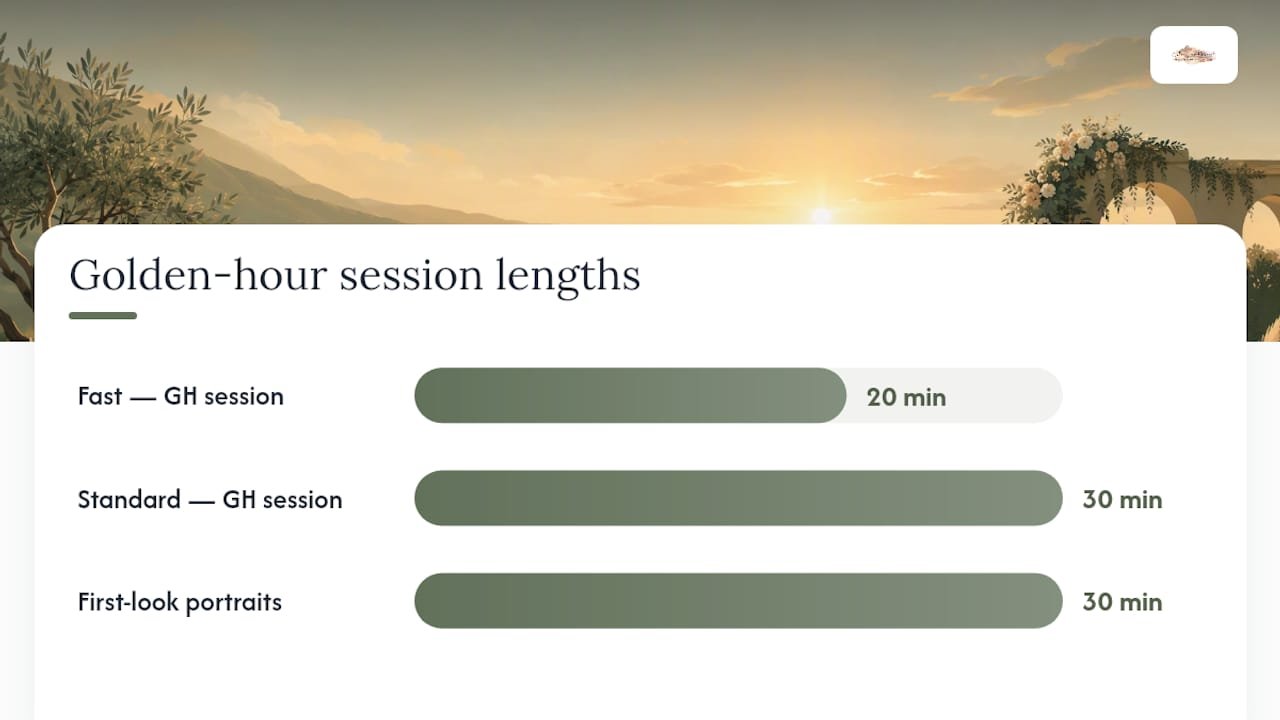
2. Standard wedding (ceremony mid-afternoon): Ceremony at 4:00 PM, portraits and family photos 4:30 to 6:00 PM, cocktail hour 6:00 to 7:00 PM, golden-hour session 7:10 to 7:40 PM, dinner service begins 7:50 PM.
3. Sunset-first-look option: Skip the traditional cocktail-hour portrait slot entirely. Do a first look at 6:30 PM, then hold the full portrait session from 7:15 to 7:45 PM, walking straight into dinner.
A few notes regardless of which template you use:
- Slot family photos and cocktail hour before golden hour starts, never during it.
- If your reception is already underway when the light turns gold, plan a 5 to 10 minute sneak-away session instead of skipping it.
- Build in 10 to 15 minutes of buffer between each block. Weddings run late, not early.
For a full breakdown of how to sequence an entire wedding weekend around light and logistics, our wedding weekend photo timeline guide walks through it start to finish.
What Tools Tell You the Exact Golden Hour Time?
Sunset time isn’t the same as golden hour, and guessing costs you real minutes. PhotoPills is the tool most wedding photographers reach for. It doesn’t just show sunset. It maps the sun’s exact position and azimuth to your venue’s GPS coordinates on your specific date, so you know precisely where the light will fall and which direction to face the couple.
- Enter your venue address and wedding date into PhotoPills or TimeandDate to get an exact sunset time, not an estimate.
- Check the week-of forecast for cloud cover, since haze and clouds shift how the light actually looks.
- Use the rule of thumb: golden hour typically runs 30 to 90 minutes before sunset, often close to 60, but mountains, tree lines, and buildings can shrink that window.
Pro Tip: Scout your venue at the exact clock time your wedding portraits are scheduled, not just “in the evening.” A ridge or tree line that looks fine at noon can swallow your sunset entirely by 7:30 PM.
How Do You Coordinate the Team Around Golden Hour?
Your photographer, planner, and DJ all need the same information: the exact minute you’re stepping away and for how long. Confirm these specifics with your photographer ahead of time:
- Have they scouted your ceremony or reception location for backlight and open sight lines?
- How long is the session, and is there a backup lighting plan if clouds roll in?
- Who physically cues you and your partner to leave the reception?
Give your planner and DJ the same window so they can pause toasts or announcements rather than compete with an empty dance floor. A short message like this works well in the group chat: “Golden hour portraits are 7:15 to 7:35 PM. Please hold speeches until we’re back.” Loop in your full vendor list early so nobody is surprised when the couple disappears mid-reception.
Where Should You Stand for the Best Golden-Hour Light?
Backlighting, where the sun sits behind the couple, produces that glowing rim-light look everyone associates with golden hour. Front-lighting, where the couple faces the sun, gives warmer, more even skin tones but requires squint control. Most photographers alternate between the two during a single session.
Terrain changes everything about your window:
- Open fields, hilltops, and beaches give you the longest usable light since nothing blocks the horizon.
- Tree-lined courtyards and mountain ridges can cut your golden hour short by 10 to 20 minutes depending on how steep the terrain is.
- Water adds a second light source through reflection, which is worth using if your venue has a pond, lake, or waterfall nearby.
Pro Tip: If your venue has a distinctive natural feature, like a waterfall backdrop, plan one setup that uses it directly instead of walking past it toward open sky.
What Camera and Phone Settings Work Best?
For photographers shooting with a camera, keep ISO between 100 and 400 and shoot wide open, often around f/1.4 to f/2.0, for soft, blurred backgrounds and flattering skin tones. Backlit shots need slight overexposure to avoid silhouetting faces unintentionally, so bracket a few frames at different exposures rather than trusting one setting.
For couples or guests shooting candids on a phone:
- Tap the screen on the couple’s face to lock exposure there instead of the bright sky.
- Turn HDR off for warmer, more natural color; turn it back on only in high-contrast backlit shots.
- A cheap reflector, or even a white tablecloth, bounces light back into shadowed faces when the sun sits low and harsh.
Golden hour’s soft, low-angle light is one reason sunset weddings photograph so distinctively: the same pose looks flat at noon and cinematic at 7:30 PM.
What Shots Should You Ask For During Golden Hour?
Give your photographer a short wish list going in, since golden hour moves fast and nobody wants to spend those minutes debating poses. Ask for:
- A candid walk-away shot, hands linked, shot from behind.
- A backlit veil shot, letting the sun create a halo effect through the fabric.
- Close facial frames with both of you looking into the light.
- A silhouette embrace against the brightest part of the sky.
- One wide environmental shot that shows off the venue, not just the couple.
If time allows, grab a tablescape detail shot bathed in warm light, or a candid of guests mid-toast with the sunset behind them. Encourage small, real movement, walking, laughing, a quiet whisper, rather than stiff posing. It reads far more natural in the final gallery.
What If the Weather Ruins Golden Hour?
Clouds happen. If the sun disappears, shift to overcast diffused light near a bright open area, or head indoors and use a window for warm, directional light. A low-power, warm-gelled flash or an LED panel can substitute for real sunlight in a pinch. If skies clear late, blue hour, the 20 to 30 minutes after sunset, offers a moody, saturated alternative, though it needs longer exposures and often a flash.
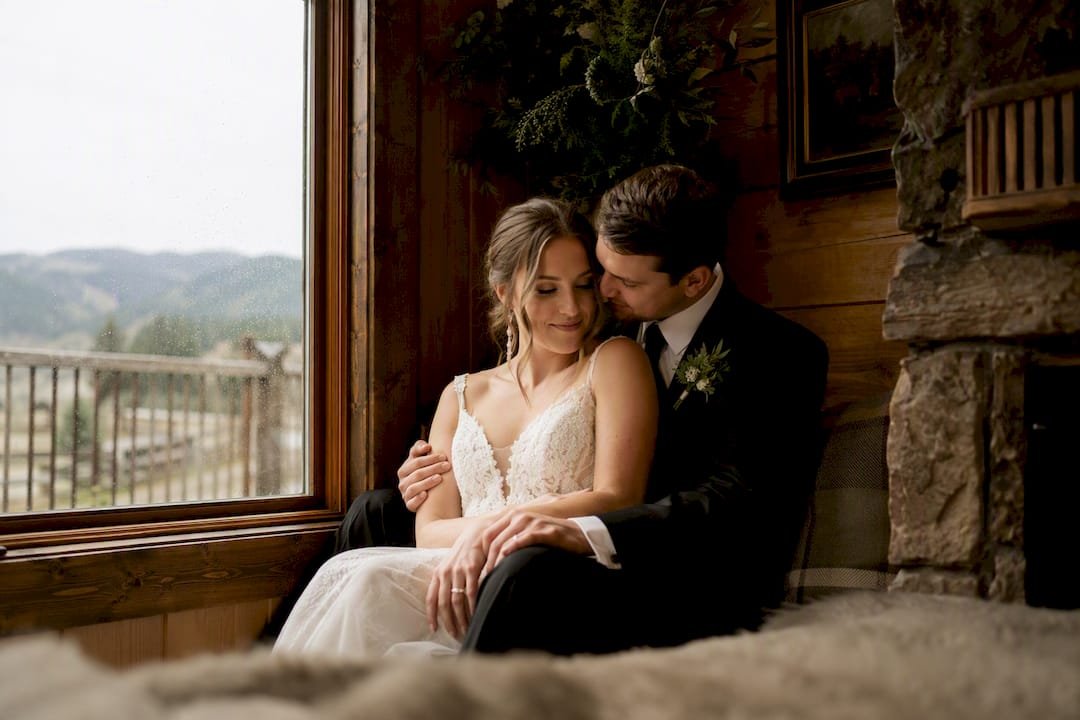
Pro Tip: Ask your photographer to sketch a backup aesthetic (moody and dark versus warm and indoor) before the wedding, not during it. For outdoor ceremonies specifically, pair this with a written rain plan so the whole day, not just golden hour, has a fallback.
Day-Of Checklist for Golden Hour Portraits
Hand this to your planner or photographer the morning of the wedding:
- Confirm the exact sunset time for your date and venue.
- Confirm the scouted photo location and backup spot.
- Pack a reflector or small LED panel.
- Confirm the 15 to 30 minute window with all vendors.
- Assign who cues the couple to step away.
Photographer-facing shot list to prioritize in that window:
- Backlit walk-away, veil halo shot, silhouette embrace, close facial frame, wide environmental portrait, and one candid laugh or movement shot.
The coordinator should give a five-minute warning before the window opens, then a clear verbal cue (“time to go”) rather than relying on the couple checking a watch mid-reception.
A Sample Golden-Hour Timeline for a Mountain Venue
For a mountain property, here’s how a 7:50 PM sunset timeline might run:
- Ceremony at 5:30 PM on the ridge overlook.
- Family formals and cocktail hour, 6:00 to 7:00 PM.
- Golden-hour couples session, 7:00 to 7:25 PM, a short walk to the best viewpoint.
- Reception entrance by 7:35 PM.
Mountain terrain shifts the math: ridgelines can block the sun 10 to 15 minutes earlier than a flat-horizon forecast suggests, so scouting the actual viewpoint matters more than trusting an app alone. Onsite lodging also means no drive time between portraits and reception, which is exactly what makes a weekend getaway wedding easier to schedule tightly.
Pro Tip: Mountain evenings cool fast once the sun drops behind a ridge. Have your planner stage blankets near the golden-hour spot and hand off lighting cues to the DJ the moment you’re back.
Why Golden Hour Deserves Its Own Line on the Timeline
Couples often treat golden hour as a bonus if the schedule allows it. It should be the opposite: the one block you protect first, then build everything else around. At a mountain venue, that means walking the actual overlook at the actual hour, not trusting a sunset app from the parking lot. A protected window isn’t a luxury add-on. It’s standard planning, and a good coordinator treats it that way from the first timeline draft.
Plan Your Golden Hour With Cherrywood Ranch
Cherrywood Ranch is built for exactly this kind of timeline. Instead of hunting for a separate scenic location and coordinating a drive between venue and photo spot, our mountain property puts ridgeline views, open fields, and onsite lodging within a short walk of your ceremony and reception space. That means your 15 to 30 minute window isn’t lost to travel time.

Because guests and wedding party stay onsite for the weekend, nobody’s scrambling to find parking or missing the moment the couple slips away. Our team helps you build that golden-hour block into your day-of schedule from the start, working around our scenic ridgelines and mountain views rather than fitting it in as an afterthought. If you’re weighing a mountain wedding venue in Georgia, take a tour and walk the property at sunset yourself. Seeing the actual light at the actual hour tells you more than any app ever will.
Frequently Asked Questions
How many minutes before sunset should golden hour portraits start?
Start your session roughly 45 to 60 minutes before sunset, and plan to be finished by the time the sun actually dips below the horizon.
What is a golden hour wedding, exactly?
It’s a wedding where portraits, and sometimes the ceremony itself, are scheduled around the warm, low-angle light that appears in the final hour before sunset.
How long does golden hour actually last?
It commonly runs 30 to 90 minutes before sunset, often close to 60 minutes, though mountains and tree cover can shorten it.
What if our reception is already happening during golden hour?
Plan a short 5 to 10 minute sneak-away session with your photographer rather than skipping the light entirely.
Is blue hour worth planning for too?
Only if you specifically want it. Blue hour falls 20 to 30 minutes after sunset and needs longer exposures, so ask your photographer directly if you want those cooler-toned shots added to your list.
Sources
- Golden Hour Photography — The Knot
- How to Plan Golden Hour Wedding Photos: Timing, Tips & What to Tell Your Photographer | Plan A Wedding
- How to Plan Golden Hour Wedding Photos for Your Dream Wedding – Celeste Wedding Photography
- Golden Hour vs. Blue Hour: When to Schedule Your Wedding Portraits | Bokeh Weddings