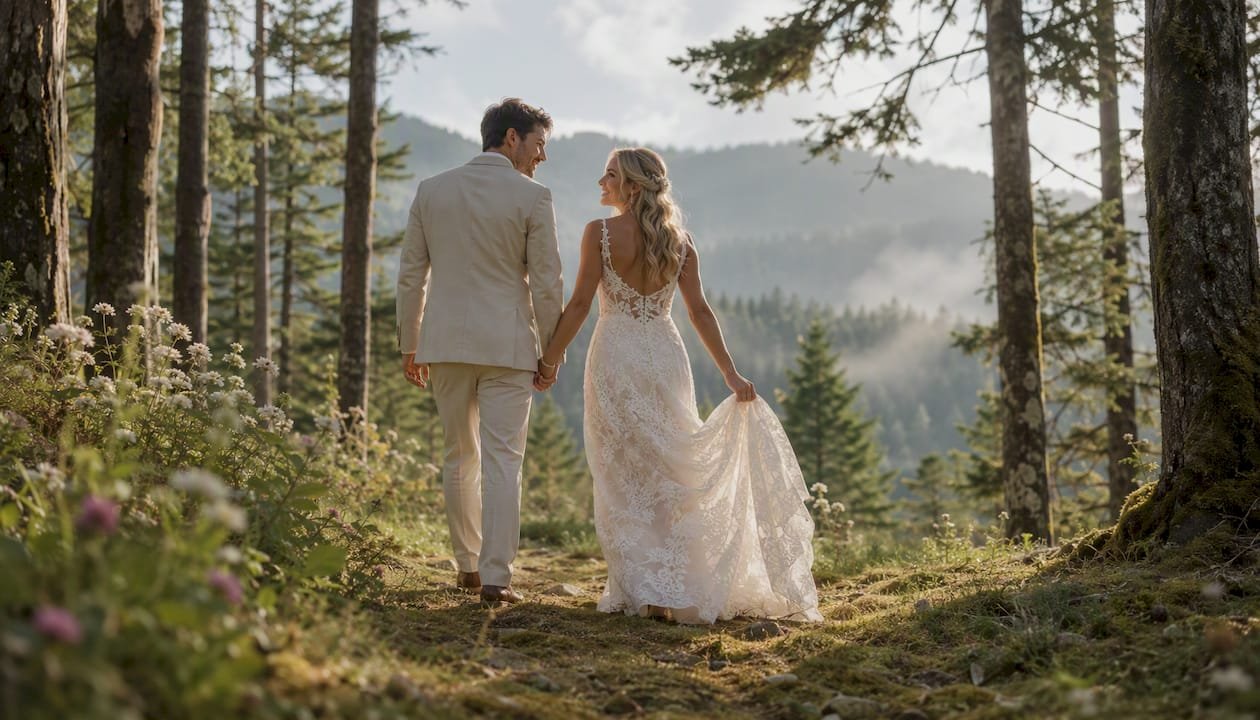
A scenic venue is a location where the surrounding environment, whether a mountain ridge, a lakeside estate, or a garden with a waterfall, serves as the primary aesthetic and emotional backdrop for an event. The scenery is not decorative filler; it is the centerpiece. According to the Oxford Advanced Learner’s Dictionary, “scenic” means having pleasing or beautiful natural scenery, and MICE Magazine defines a venue as the physical location hosting an event. Put those together and a scenic venue is a place where the location itself does the heavy lifting aesthetically.
Think of a ceremony on a mountain overlook with a 180-degree ridgeline view, vows exchanged on a lakefront lawn at golden hour, or a reception inside a botanical garden. Cherrywood Ranch in the North Georgia Mountains is a working example: panoramic mountain views frame every ceremony space, and the surrounding landscape shapes the mood before a single flower arrangement is placed.
Table of Contents
- What does “scenic venue” mean for your wedding experience?
- What types of scenic venues exist, and which fits your style?
- Practical logistics you must confirm before booking
- Questions to ask when touring a scenic venue
- When should you pick the most scenic option vs. the easiest venue?
- How scenery affects your budget and décor choices
- Indoor scenic spaces and how seasons change the view
- Cherrywood Ranch: a real scenic venue in the North Georgia Mountains
- How to tell whether a venue’s scenic quality is real
- Common pitfalls when choosing a scenic venue
- How to integrate the scenery into your event planning and photography
- How different scenic venue types shape event mood and theme
- Key Takeaways
- Why the view is only half the story
- See Cherrywoodranchweddingvenue in the North Georgia Mountains
- Further reading and sources
What does “scenic venue” mean for your wedding experience?
The definition matters because it changes how you plan. At a standard ballroom, you build the atmosphere from scratch with lighting, florals, and draping. At a scenic venue, the atmosphere already exists. Your job shifts from creating a backdrop to working with one.
That distinction has real budget implications. Scenic venues often lower costs for decorative elements because the environment provides the primary “wow” factor for guests. A mountain panorama or a waterfall-fed garden does not need a floral wall behind the altar.
The emotional payoff is equally concrete. Some scenic locations create a cinematic, immersive experience that shapes guest expectations before the ceremony even begins, like a tram ride to a mountaintop ceremony that builds atmosphere on the ascent. Photographers and event professionals treat scenery as an emotional anchor that elevates the entire day.
Core benefits of choosing a scenic event location:
- Photography: Natural light, layered depth, and organic framing produce images that studio-lit ballrooms cannot replicate.
- Built-in décor: The landscape reduces the need for artificial backdrops, arches, and filler florals.
- Emotional tone: Guests feel the setting before the first toast. A dramatic view creates awe; a garden creates calm.
- Memorable guest experience: Unique settings are what guests describe for years afterward.
- Streamlined styling: Fewer décor decisions mean less vendor coordination and often a shorter planning timeline.
Pro Tip: Visit the venue at the exact time of day you plan to hold your ceremony. A site that looks stunning at noon can be backlit and washed out at 4 PM, or vice versa. Bring your phone and shoot a quick video of the sightlines to review later.
What types of scenic venues exist, and which fits your style?
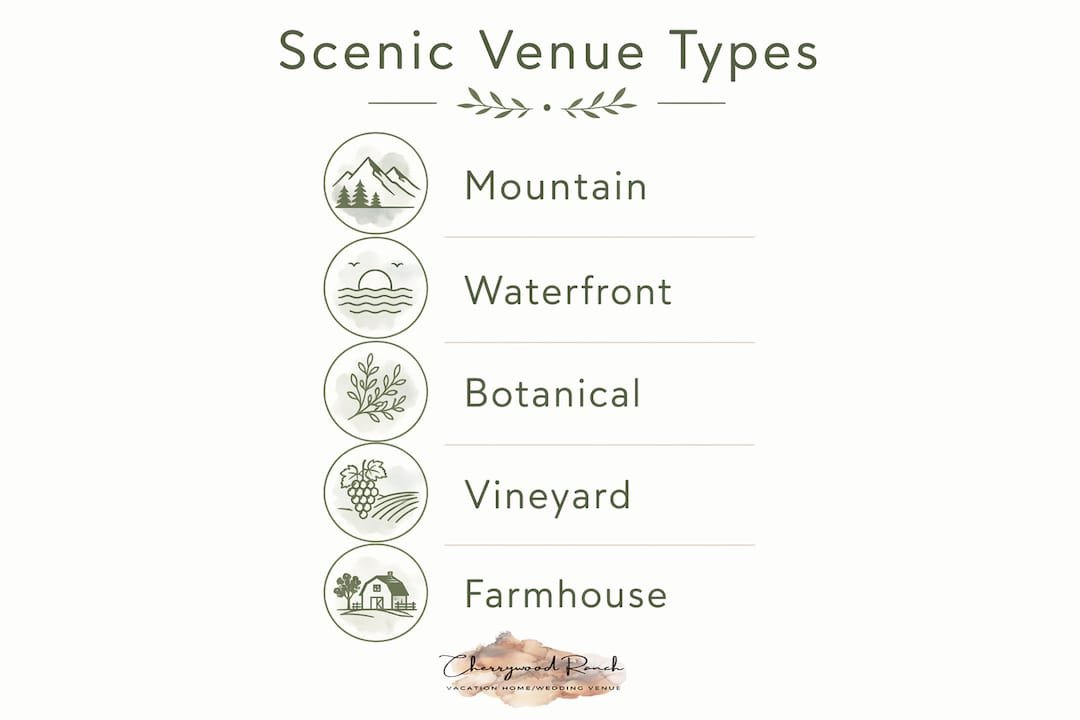
Each category of scenic venue creates a distinct mood and comes with its own logistical profile.
| Venue Type | Best For (Mood) | Key Logistic Note |
|---|---|---|
| Mountain / ridgeline | Dramatic, adventurous, intimate | Weather exposure; may require shuttle access |
| Waterfront / lakeside | Romantic, serene, timeless | Humidity and wind; check permit requirements |
| Botanical garden | Soft, lush, colorful | Seasonal bloom schedules; public access hours |
| Vineyard / winery | Rustic-elegant, warm, celebratory | Harvest season conflicts; vendor restrictions |
| Farmhouse / ranch | Relaxed, earthy, family-oriented | Generator needs; limited vendor parking |
| Urban skyline rooftop | Modern, bold, cosmopolitan | Noise ordinances; elevator logistics for guests |
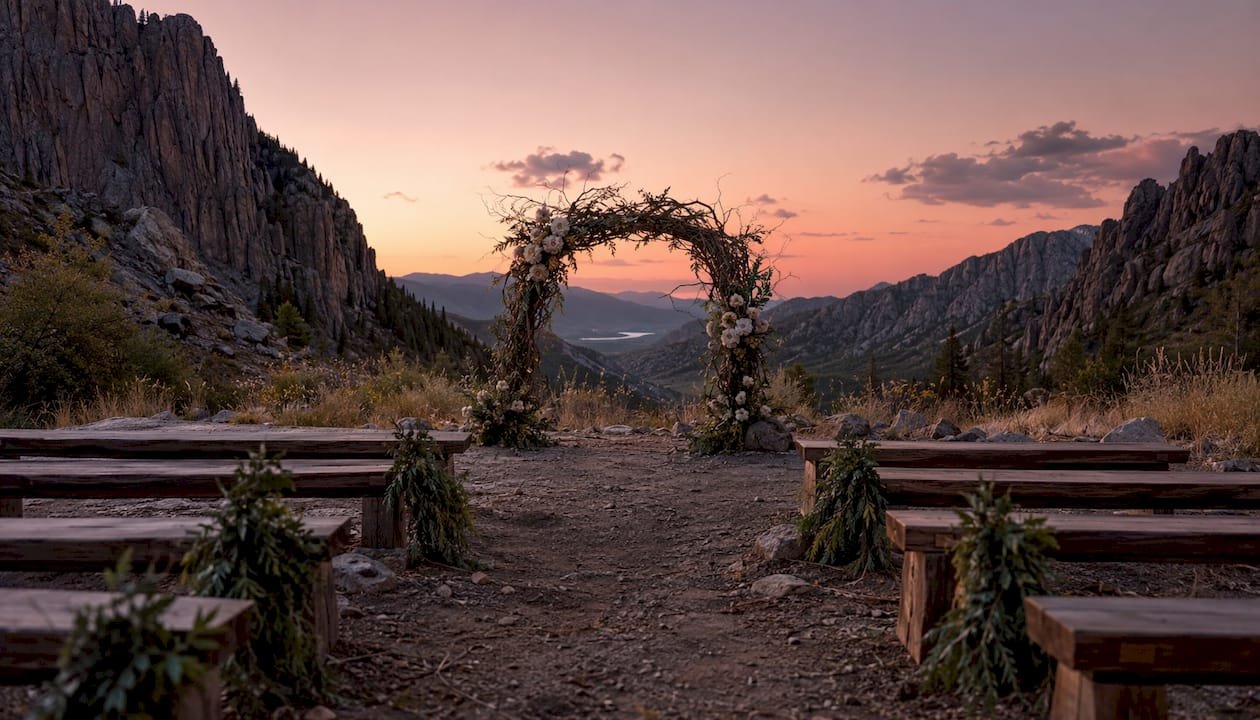
Mountain venues deliver scale. The ridgeline becomes the altar backdrop, and the ceremony feels like it belongs to the landscape rather than sitting on top of it. High-end mountain sites commonly pair dramatic views with onsite lodging, pools, and event coordination for multi-day celebrations.
Waterfront venues work especially well for sunset ceremonies, where the water reflects light and softens the entire scene. Wind is the variable to manage; a lakeside ceremony can be beautiful or chaotic depending on the season and time of day.
Botanical gardens and vineyards tend to suit couples who want lush color without committing to a fully outdoor, weather-exposed setting. Gardens often have indoor backup spaces nearby. Vineyards add a built-in narrative to the day.
Farmhouse and ranch venues like Cherrywood Ranch offer something the other types rarely do: onsite lodging that turns a wedding into a weekend. The waterfall attractions near venues in North Georgia add another layer of natural drama to the ranch category.
Practical logistics you must confirm before booking
Scenic beauty is valuable only when the venue can actually support an event. A stunning overlook with no restrooms, no power access, and a gravel road that coaches cannot navigate is a liability.
Accessibility is the first filter. Confirm whether the ceremony site is reachable on foot for elderly guests or guests with mobility limitations. If it requires a shuttle or tram, ask who manages that and what happens when it rains.
Parking and vendor load-in are separate questions. Caterers, florists, and photographers often arrive hours before guests and need vehicle access close to the setup area. Remote sites sometimes restrict vendor vehicles to a staging lot, which adds time and cost to every vendor’s day.
Power and electricity matter more than couples expect. Outdoor lighting, sound systems, catering equipment, and photo booths all draw power. Ask whether the venue has permanent electrical hookups or whether you need to rent a generator. Generator rental adds cost and noise.
Weather contingency is non-negotiable at any outdoor scenic venue. Ask specifically what the backup plan looks like, not just whether one exists. A tent on a hillside is not the same as an enclosed indoor space with heating.
- Confirm the backup space can hold your full guest count comfortably.
- Ask whether the backup triggers an additional fee.
- Verify the decision timeline: when does the venue call the weather and activate the backup?
Pro Tip: Ask to see photos from a real wedding held at the venue during the same month you plan to marry. Seasonal foliage, light angles, and crowd flow look very different in October versus May.
Permits and local restrictions apply at many scenic sites, particularly those in national forests, state parks, or conservation areas. Confirm whether the venue holds the necessary event permits or whether that responsibility falls to you.
Questions to ask when touring a scenic venue
Walk into every venue tour with these questions ready. The answers reveal whether the scenery is backed by real infrastructure.
Sightlines and photography:
- Where does the sun set relative to the ceremony space, and at what time?
- Which spots do photographers use most for portraits and first looks?
- Are there any obstructions (construction, neighboring buildings, utility lines) that appear in ceremony photos?
Weather and backup:
- What is the indoor backup space, and can it hold our full guest count?
- How much notice do we get before the backup is activated?
- Has the backup ever been used, and what did that day look like?
Logistics and vendors:
- Where do vendors load in, and how close can vehicles get to the setup area?
- Is there permanent power, or do we need a generator?
- Are there restrictions on outside vendors, amplified music, or lighting installations?
Guest experience:
- Where are the restrooms relative to the ceremony and reception spaces?
- Is the path from parking to the ceremony accessible for guests with limited mobility?
- Is onsite lodging available, and how many guests can it accommodate?
Request recent wedding photos from the venue, ideally from the same season. A venue that cannot produce real wedding images from the past year is a yellow flag.
When should you pick the most scenic option vs. the easiest venue?
The short decision rule: choose scenery-first when visual impact and guest experience are your top priorities; choose ease-first when guest logistics or budget are the binding constraints.
| Dimension | Scenery-First Choice | Ease-First Choice |
|---|---|---|
| Guest comfort | Requires more planning (shuttles, accessibility) | Built-in parking, flat terrain, climate control |
| Vendor complexity | Higher (remote access, power, permits) | Lower (urban or suburban, standard hookups) |
| Photography potential | Very high (natural light, depth, drama) | Moderate (relies on artificial lighting) |
| Cost implications | Lower décor spend; higher logistics spend | Predictable flat-rate packages |
| Weather exposure | Significant; backup plan required | Minimal; indoor-primary venues |
- Small intimate wedding (under 30 guests): Scenery-first almost always wins. Logistics are manageable, and the intimacy amplifies the emotional impact of a dramatic setting.
- Weekend destination celebration: Scenic venues with onsite lodging are the clear fit. The all-inclusive weekend rental model reduces planning friction and keeps the group together.
- Large cocktail-style reception (100+ guests): Ease-first is often smarter. Moving a large crowd through a remote scenic site adds real risk and cost.
How scenery affects your budget and décor choices
A strong natural backdrop shifts where money goes, not how much you spend overall. Décor budgets shrink; logistics budgets grow.
Where you can spend less:
- Ceremony arch florals (the view replaces the backdrop)
- Artificial lighting during daylight hours
- Draping, pipe-and-drape backdrops, and filler greenery
- Printed signage directing guests to “the venue” (the setting speaks for itself)
Where costs may increase:
- Shuttle or transportation for remote sites
- Generator rental or electrical hookups
- Tent or weather backup structures
- Permits for outdoor events on public or conservation land
- Photographer day rates (scenic venues often attract higher-tier photographers who charge accordingly)
Styling tips for scenic venues:
- Match your color palette to the landscape rather than contrasting it. Earth tones and soft neutrals disappear into mountain settings beautifully; bright primaries compete.
- Use the natural focal points as ceremony anchors. A gap in the treeline, a rock outcropping, or a pond edge is a better altar backdrop than any floral installation.
- Keep tablescapes low so guests can see the view from their seats during the reception.
- Consider wine selections for welcome gifts that reflect the region’s character, which reinforces the sense of place the venue creates.
Indoor scenic spaces and how seasons change the view
Not every scenic venue is fully outdoors. Large windows, glass walls, terraces, and conservatories can deliver the same visual payoff with weather protection built in. A venue with floor-to-ceiling windows overlooking a mountain valley is scenic by every meaningful definition, even if the ceremony happens inside.
Seasonal changes matter more than most couples anticipate:
- Spring: Blooms peak, but rain is frequent. Mud is a real concern for outdoor ceremonies on grass.
- Summer: Full green canopy, long golden hours, but heat can be oppressive at midday.
- Fall: Peak foliage in mountain regions like North Georgia typically runs mid-October through early November, producing the most photogenic conditions of the year.
- Winter: Bare trees open sightlines that summer foliage blocks. Low-angle winter light is dramatic and flattering for portraits.
Indoor-with-views vs. fully outdoor:
- Indoor: Weather-resilient, climate-controlled, easier for elderly guests, but loses the sensory immersion of being outside.
- Outdoor: Authentic, immersive, and photographically richer, but requires a solid backup plan and more guest-comfort planning.
The best scenic venues offer both, with an outdoor ceremony space and an indoor reception area that shares the same view through large windows or open walls.
Cherrywood Ranch: a real scenic venue in the North Georgia Mountains
Cherrywoodranchweddingvenue sits in the North Georgia Mountains and demonstrates what a well-executed scenic venue actually looks like in practice. The property pairs panoramic mountain views with the infrastructure that makes those views usable on a wedding day.
Features that address common scenic-venue concerns:
- Onsite lodging available for guests: No shuttle logistics for the wedding party; everyone stays on the property for the full weekend.
- Pool and hot tub: Resort-style amenities that turn the wedding into a multi-day celebration rather than a single event.
- Indoor backup space: Weather contingency is built into the property, not an afterthought.
- Vendor-friendly setup: Power access, load-in areas, and coordination support reduce the friction that remote scenic sites typically create.
- Ceremony sightlines designed for photography: The ceremony spaces are oriented to use the mountain backdrop intentionally, not incidentally.
The Georgia mountain wedding venue experience at Cherrywood Ranch also benefits from the surrounding region’s natural features, including nearby waterfalls and scenic drives that extend the guest experience beyond the property itself.
Pro Tip: For a North Georgia fall wedding, book early. The October foliage window is narrow and the most in-demand dates fill months in advance.
How to tell whether a venue’s scenic quality is real
Not every venue marketed as “scenic” delivers on the label. Some properties use selective photography to hide obstructions, neighboring structures, or views that only exist from one narrow angle.
Signs the scenery is genuine:
- The venue can produce unedited, wide-angle photos from real weddings, not just styled shoots.
- The view is visible from multiple ceremony and reception positions, not just one Instagram-optimized corner.
- Staff can describe the sightlines at different times of day without hesitation.
- The surrounding land is protected (conservation easement, national forest, private acreage) so the view cannot be developed away.
Red flags for staged or overstated scenery:
- All marketing photos are taken from the same angle or at the same time of day.
- The “scenic” element is a single decorative feature (a fountain, a planted hedge row) rather than a natural landscape.
- The venue cannot confirm what is visible from the ceremony space during the season you plan to marry.
Ask directly: “What will guests see when they face the altar?” If the answer is vague, the view probably is too.
Common pitfalls when choosing a scenic venue
The most common mistake is treating scenery as the only evaluation criterion. Couples fall in love with a view during a daytime tour in perfect weather, then discover on the wedding day that the site has no shade, no restrooms within a reasonable walk, and a vendor access road that a catering truck cannot navigate.
Other frequent missteps:
- Assuming “outdoor” means “scenic.” A parking-lot-adjacent patio is outdoor. It is not scenic.
- Ignoring seasonal changes. A venue that looks lush in June may look barren in February, or vice versa.
- Underestimating guest comfort at remote sites. Elderly guests, guests with young children, and guests in formal attire need flat paths, shade, and accessible restrooms.
- Skipping the backup-plan conversation. Asking “do you have a backup?” is not enough. Ask to see it, walk through it, and confirm it fits your guest count.
- Overbuilding décor to compete with the view. Heavy floral installations and elaborate draping fight the landscape rather than complement it.
How to integrate the scenery into your event planning and photography
The most effective scenic venues are built into the event flow, not just used as a backdrop for photos. Align the ceremony aisle with the primary vista so guests face the view during the vows. Use terraces or overlooks for cocktail hour so guests engage with the landscape between the ceremony and reception. Frame portrait areas against natural focal points rather than constructed backdrops.
For photography, brief your photographer on the venue’s light schedule before the wedding day. Golden hour at a mountain venue can last 20–30 minutes; knowing exactly when and where it hits the ceremony space lets your photographer position you without guesswork. The scenic drive to the venue is also worth capturing, since arrival photography sets the narrative of the day.
Timing the portrait session to coincide with the best natural light, typically 45–60 minutes before sunset, consistently produces the strongest images at outdoor scenic venues. Schedule a buffer between the ceremony end and the reception start specifically for this window.
How different scenic venue types shape event mood and theme
The venue type does not just change the photos; it sets the entire emotional register of the day.
A mountain venue creates a sense of scale and permanence. Guests feel small in the best way, which makes the ceremony feel significant. The aesthetic tends toward rustic elegance: natural wood, stone, warm textiles, and minimal ornamentation.
A waterfront venue softens everything. The sound of water, the reflected light, and the horizontal expanse of a lake or ocean create a calm, romantic atmosphere that suits intimate ceremonies and long, leisurely receptions.
A botanical garden lends a fairy-tale quality. Color is everywhere, the scale is human rather than monumental, and the setting suits couples who want lush beauty without the weather exposure of a fully open landscape.
A vineyard adds a narrative layer: harvest, craft, and celebration are built into the setting. The aesthetic almost writes itself: warm tones, wooden barrels, candlelight, and a long table dinner under string lights.
A farmhouse or ranch like Cherrywoodranchweddingvenue grounds the day in warmth and family. The setting encourages guests to relax, linger, and treat the event as a gathering rather than a performance. That shift in guest behavior is one of the most underrated benefits of a ranch-style scenic venue.
Key Takeaways
A scenic venue’s primary value is its irreplaceable natural backdrop, which shapes guest emotion, reduces décor costs, and produces stronger photography than any artificially constructed setting.
| Point | Details |
|---|---|
| Scenery replaces décor | Natural backdrops lower floral and staging costs while delivering stronger visual impact. |
| Logistics must match the view | Confirm power, parking, vendor access, and a weather backup before committing to any scenic site. |
| Season changes everything | Visit at your planned ceremony time and season; request real wedding photos from the same month. |
| Venue type sets the mood | Mountain sites create drama; waterfront creates calm; gardens create lushness; ranches create warmth. |
| Cherrywoodranchweddingvenue | Combines North Georgia mountain views with onsite lodging, indoor backup, and full-weekend coordination. |
Why the view is only half the story
The couples who have the best experiences at scenic venues are the ones who stopped treating the scenery as the whole decision. A spectacular view is a starting point. What makes a scenic venue actually work is the infrastructure behind it: the backup plan that gets activated before guests even know it rained, the vendor access road that means your caterer arrives on time, the onsite lodging that keeps the wedding party together instead of scattered across three different hotels.
The venues that get this right are the ones worth booking. They invest in guest flow, sightline design, and operational reliability because they understand that beauty without function is just a pretty problem. When you tour a scenic venue, the question is not only “how does this look?” It is “how does this work?” Ask both, and you will leave the tour knowing whether the venue is genuinely ready for your day.
See Cherrywoodranchweddingvenue in the North Georgia Mountains

Cherrywoodranchweddingvenue offers something most scenic venues do not: a complete wedding weekend in one place. The North Georgia mountain views are the backdrop, but the onsite lodging for up to 16 guests, the pool and hot tub, the indoor backup space, and the all-inclusive coordination are what make the day actually work. You are not just renting a pretty hillside. You are booking a private mountain property where your family and closest friends stay together, celebrate together, and wake up together the morning after.
Packages cover elopements, intimate ceremonies, and full weekend celebrations for a range of guest counts. The property handles vendor coordination, so you are not managing a dozen separate relationships from a remote location. Ready to see the views and walk the ceremony spaces in person? Check availability and book a tour at Cherrywoodranchweddingvenue, or browse the wedding weekend packages to find the right fit for your celebration.
Further reading and sources
- Cherrywood Ranch: destination wedding venue in Georgia — all-inclusive packages, lodging, and availability
- Georgia mountain wedding venue features — ceremony spaces, sightlines, and seasonal notes
- Plan your weekend getaway wedding celebration — multi-day logistics and guest planning guide
- Scenic drives to wedding venues — how arrival experience shapes the guest day
- Waterfall attractions near venues — natural features that extend the scenic experience
- Oxford Advanced Learner’s Dictionary: scenic — plain-English definition of “scenic”
- Collins English Dictionary: scenic location — definition of scenic place and location
- MICE Magazine: what is a venue? — industry definition of venue types
- Scenic wedding venue benefits — how natural settings reduce décor costs and shape guest experience
- Mountain wedding case study: Palisades Tahoe — real example of a high-altitude scenic wedding with onsite logistics