
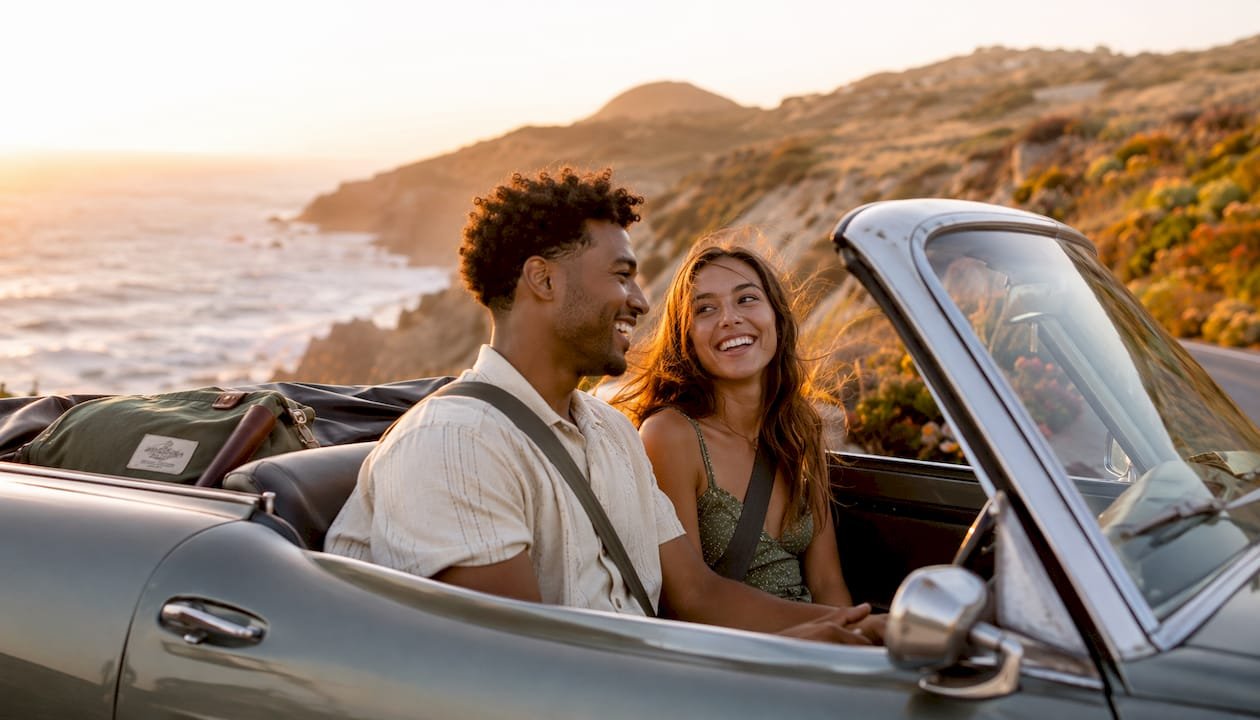
What is a scenic drive to a wedding venue?
A scenic drive to a wedding venue is a purposefully chosen route that moves guests through beautiful natural surroundings on the way to the ceremony. Think winding mountain roads framed by hardwood forests, vineyard lanes catching the late afternoon sun, or ridge-top highways where the valley opens up below you. The drive itself becomes part of the event.
The best scenic routes share a few defining qualities:
- Panoramic views at natural overlooks or ridge crossings
- Low traffic that lets guests actually look around instead of brake-checking
- Varied terrain like forests, meadows, rivers, or mountain passes
- A sense of arrival where the final approach to the venue feels like a reveal
Regions like the Blue Ridge Mountains and Shenandoah National Park are the gold standard for this in the American South and Mid-Atlantic. The Blue Ridge delivers dramatic Appalachian scenery without the logistical headaches of remote alpine destinations, and its proximity to Atlanta (roughly 90 miles north via I-575) makes it genuinely accessible. Shenandoah’s Skyline Drive offers 105 miles of ridge-top road with overlooks every few miles. Neither requires guests to be experienced mountain drivers.
How a scenic drive shapes the guest experience
The drive sets the tone before a single vow is spoken. Many couples describe the approach to a mountain or rural venue as the “opening act” of the whole wedding weekend. That framing is exactly right. By the time guests park, they have already shared something together: the view, the winding road, the moment the venue appeared through the trees.
The practical benefits are real too:
- Scenic routes reduce the rushed, transactional feeling of urban venue arrivals
- Shared travel through beautiful landscapes gives guests a natural conversation starter
- The gradual shift from highway to country road signals that something different is happening
- Arriving relaxed and present makes guests more engaged during the ceremony itself
Wedding planning experts consistently treat the scenic drive as an extension of hospitality, not a logistical afterthought. When you choose a venue with a beautiful approach, you are giving guests an experience that starts the moment they leave the highway. That is worth planning around.
Transportation and logistics for scenic wedding drives
Beautiful roads and smooth logistics do not always go together. Rural and mountain venues introduce real challenges that urban venues simply do not have.
Add 15–30 minutes to every travel estimate for scenic or mountain routes. GPS apps calculate speed limits, not the reality of a winding two-lane road with switchbacks and slow-moving sightseers. For mountain venues specifically, pad GPS estimates to account for reduced driving speeds and terrain.
Rideshare is the other major risk. Availability near rural venues is extremely limited, especially after dark. Guests have experienced long waits for rides that never arrived in remote areas. Pre-arranged shuttle service is not a luxury in these settings; it is the only reliable option.
Key logistics to lock in early:
- Shuttle service for guests who will be drinking, non-negotiable on mountain roads
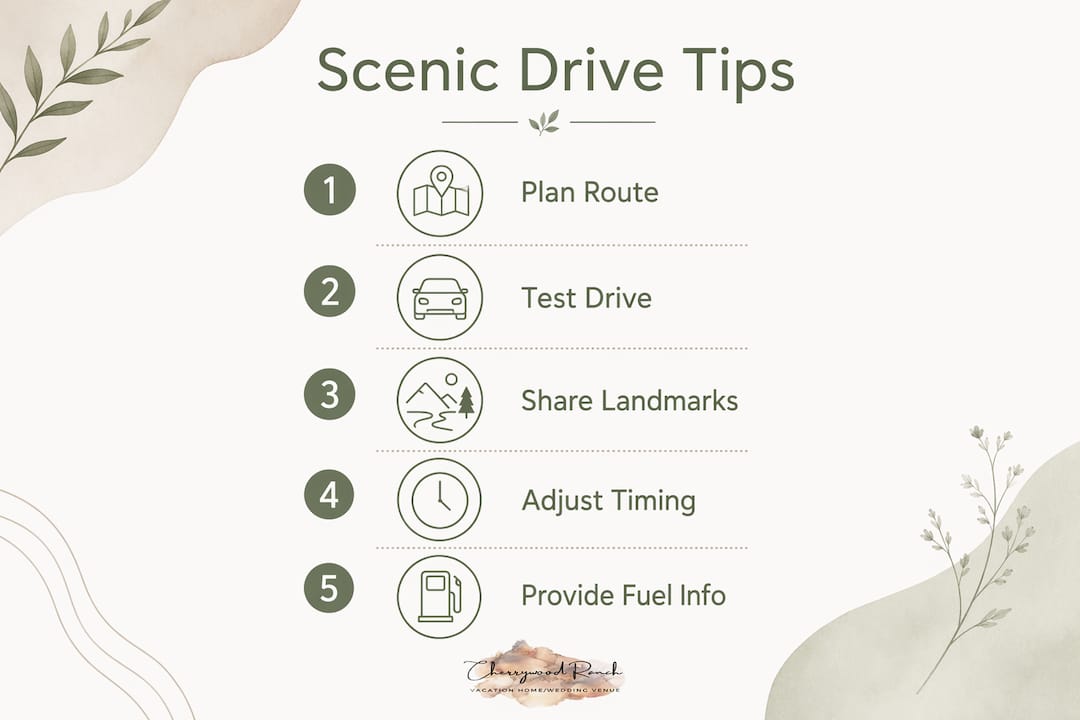
- Detailed written directions with physical landmarks, not just a Google Maps link
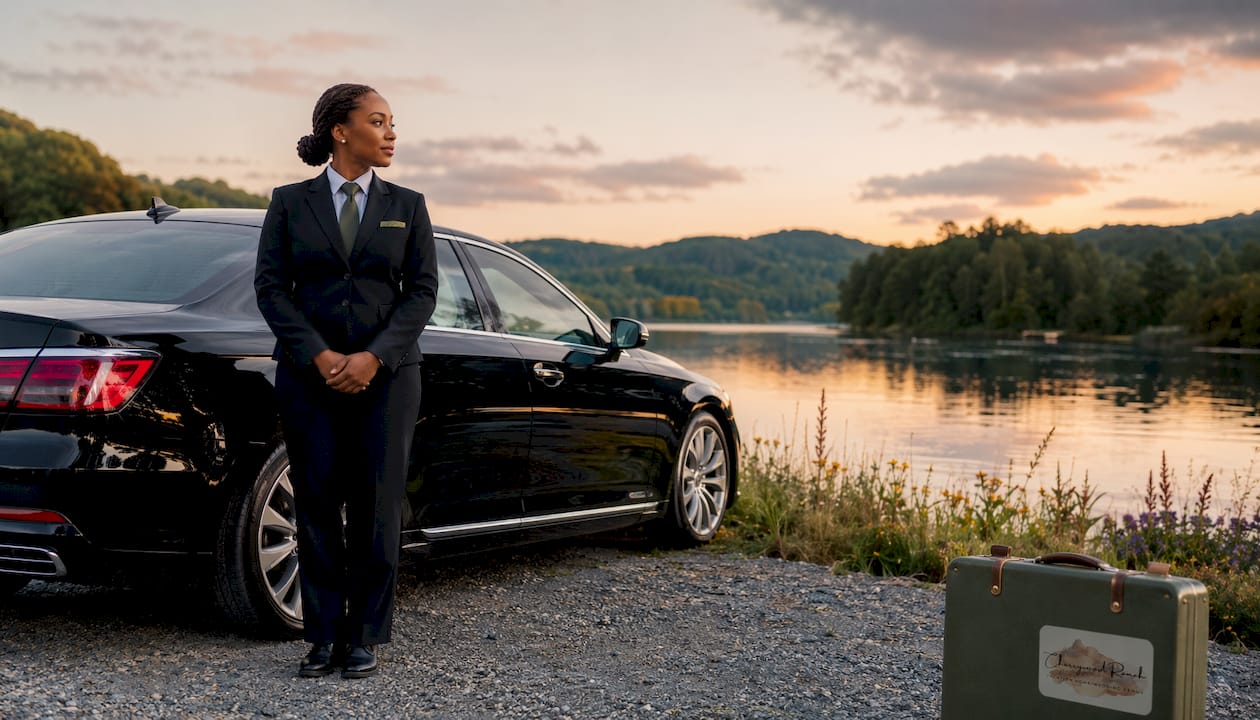
- Professional local drivers who know the terrain, the timing, and the back roads
Pro Tip: Include a “last chance for fuel” note in your guest directions. Many scenic routes pass through areas with no gas stations for 20+ miles, and a guest running low on fuel at 10 PM on a mountain road is a genuine problem.
Professional chauffeur services also know the “secret spots” along scenic routes where the light is right for impromptu photos. That local knowledge is something a generic rideshare driver cannot replicate.
How to evaluate a venue by its scenic drive and access quality
Not every road that looks beautiful on a map actually works for a wedding. When you tour potential venues, the drive in deserves the same scrutiny as the ceremony space.
Questions worth asking every venue coordinator:
- What is the road condition in wet weather or winter?
- Is the final access road paved, gravel, or unpaved?
- Where is the nearest gas station and cell service?
- Can large vehicles (shuttles, limos, catering trucks) navigate the approach?
- Are there pull-offs or overlooks along the route for guest photos?
Seasonal impact is significant. Fall foliage on a Blue Ridge route in October is extraordinary, but fall weekends also sell out fastest and bring heavier traffic. Spring offers wildflowers and softer light. Winter can close mountain roads entirely or make them genuinely dangerous for guests unfamiliar with ice.
Photography timing ties directly to the drive. Vineyard and mountain routes look completely different at golden hour versus midday. Aligning guest arrivals with the best natural light means your first glimpse of the venue is also the most photogenic. That requires coordinating transportation timing with your photographer, not just your caterer.
Road condition, cell service, parking capacity, and seasonal accessibility are the four factors that separate a scenic drive that works from one that creates headaches on the day.
Cherrywoodranchweddingvenue: a scenic mountain venue done right
Cherrywoodranchweddingvenue sits in the North Georgia Mountains and illustrates exactly what a well-executed scenic wedding drive looks like in practice. The approach winds through forested mountain terrain before opening onto panoramic views of the surrounding ridgelines. It is the kind of arrival that guests talk about at the reception.
The venue accommodates up to 16 guests in an all-inclusive format that combines the wedding location with a full vacation home. That structure solves the rideshare problem entirely: guests stay on-site, so no one is navigating mountain roads after dark. Key features include:
- Mountain views from the ceremony and reception spaces
- Resort-style amenities including a pool and hot tub
- Lodging for up to 16 guests on the property
- Outdoor spaces designed for both ceremonies and relaxed weekend gatherings
For couples planning a Georgia mountain wedding, the on-site lodging model removes the single biggest logistical risk of scenic venues: the late-night drive home. Everyone stays, everyone relaxes, and the mountain setting works as intended.

If you are ready to experience this for yourself, explore the venue and see how Cherrywoodranchweddingvenue turns the scenic mountain drive into a full weekend celebration.
Examples of popular scenic drives to wedding venues
The United States has no shortage of routes where the drive is genuinely part of the wedding story.
Foothills Parkway, Great Smoky Mountains (Tennessee): The Foothills Parkway winds along the outer edges of the Smokies with panoramic views stretching for miles. Multiple overlooks let couples stop for portraits without complicated logistics. Early mornings offer the best light and the fewest other visitors.
Blue Ridge Parkway (North Carolina and Virginia): At 469 miles, this is one of the most photographed roads in America. Venues along its corridor benefit from layered mountain views, wildflower meadows in spring, and the famous fall color that peaks in october.
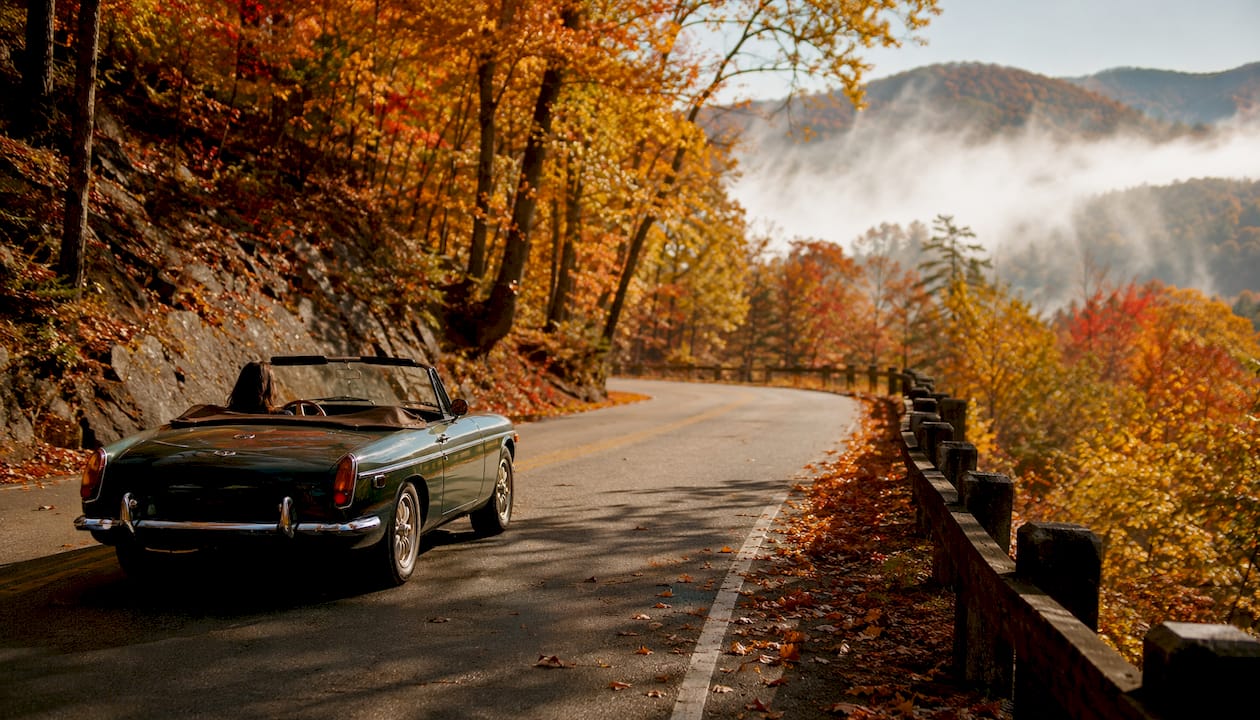
Skyline Drive, Shenandoah National Park (Virginia): The entire 105-mile route runs along the crest of the Blue Ridge, with 75 overlooks. Venues accessible from Shenandoah give guests a national park experience as part of the arrival.
North Fork, Long Island (New York): Vineyard lanes and coastal light define this route. Luxury transportation through the North Fork AVA synchronizes guest arrivals with golden hour, turning the drive through vine rows into a sensory prelude to the ceremony.
Denver to Buena Vista via US-285 (Colorado): This route passes through South Park, a high-altitude valley surrounded by peaks, before descending into the Arkansas River Valley where seven 14,000-foot summits frame the view. The drive from Denver is genuinely cinematic.
North Georgia Mountains (Georgia): The approach to venues in Fannin County via I-575 north of Atlanta offers a gradual transition from suburban highway to forested mountain road. The Blue Ridge region’s intimate vendor community and accessibility from Atlanta make it one of the most practical scenic wedding destinations in the Southeast for 2026.
Tips for planning the drive route to maximize scenic value and safety
Getting the route right takes more than picking a pretty road on a map.
Drive it yourself first, at the same time of day as your wedding. Traffic, light, and road conditions change dramatically between a Tuesday afternoon scouting trip and a Saturday evening in october. What felt easy solo can feel very different with a shuttle full of guests.
Share physical landmarks, not just GPS coordinates. On mountain and rural routes, GPS often routes guests down unpaved Forest Service roads or loses signal entirely. A direction sheet that says “turn left at the red barn past the Texaco” is more reliable than a pin drop. Include a note about where cell service drops out so guests know to download offline maps before they leave.
Time arrivals around the light. Golden hour on a mountain route looks nothing like midday. If your ceremony starts at 5 PM, guests arriving at 4 PM will catch the best light on the approach. Coordinate with your photographer to identify the two or three overlooks worth a quick stop.
Plan the return trip as carefully as the arrival. A beautiful drive in daylight becomes a challenging one after dark, especially for guests unfamiliar with mountain roads. Shuttle service for the return is not optional when alcohol is involved. Wedding transportation etiquette guides consistently recommend pre-arranged return transport as a baseline for any remote venue.
Consider a mountain wedding weekend format. When guests stay on-site or nearby, the scenic drive becomes a shared arrival experience rather than a logistical problem to solve twice. The drive in on friday becomes part of the celebration; the drive out on sunday is a relaxed goodbye.
Key Takeaways
A scenic drive to a wedding venue works best when the route is chosen intentionally and the logistics are planned with the same care as the ceremony itself.
| Point | Details |
|---|---|
| Define the route early | Choose roads for views, low traffic, and a strong sense of arrival, not just shortest distance. |
| Buffer travel time | Pad travel times by 25–30% beyond GPS estimates for mountain or rural routes; winding roads consistently run longer than apps predict. |
| Pre-arrange transportation | Rideshare is unreliable near rural venues, especially after dark; shuttle service is the only dependable option. |
| Align arrivals with light | Coordinating guest arrival time with golden hour turns the approach into a photography opportunity. |
| On-site lodging solves the return | Venues where guests stay overnight eliminate the late-night mountain drive entirely. |