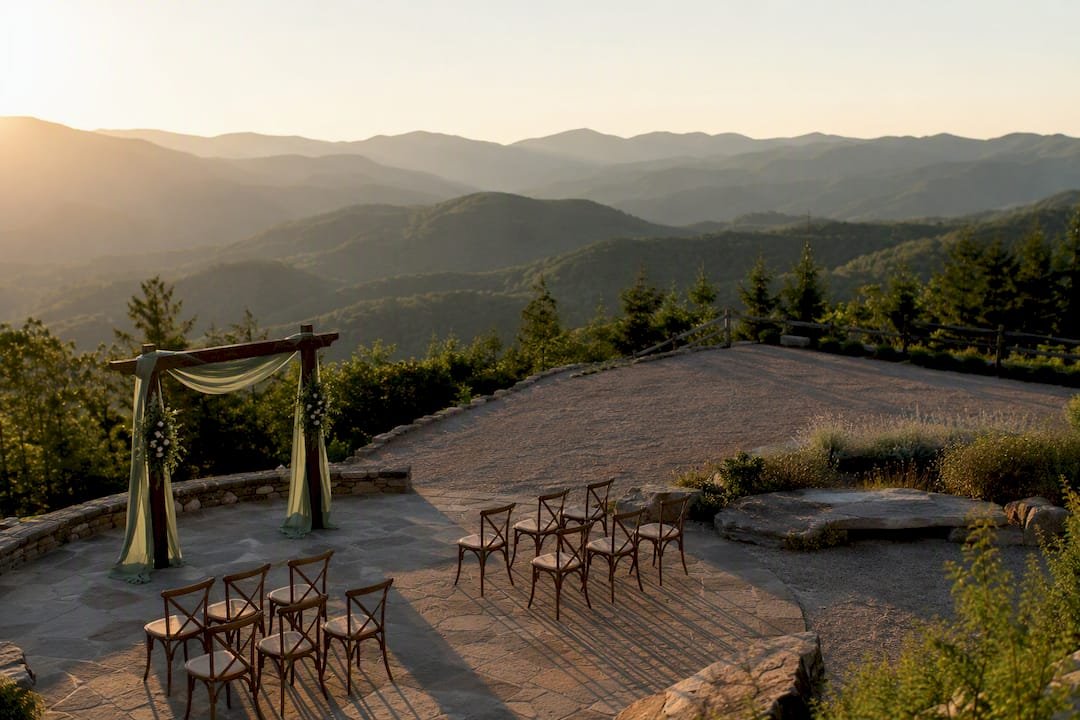
Choose your celebration format before anything else: a backcountry elopement, an intimate established venue, or a full weekend venue with on-site lodging. That single decision drives your date, your vendor list, your permits, and how your guests get fed and housed. Lock elevation and season next, then secure lodging and a real indoor backup, not a tent. An all-in-one weekend venue in North Georgia shows how bundling lodging with ceremony space removes most of the guesswork.
TL;DR:
- Booking an all-in-one mountain venue with on-site lodging simplifies logistics and reduces the need for separate transport and backup plans.
- Choosing the event location’s elevation first is critical, as snow and access vary significantly with altitude, affecting season and timing.
- Building buffer time into mountain wedding schedules accounts for winding roads, seasonal delays, and unexpected road closures.
- Confirming vendor experience at specific elevations and access challenges ensures quality service and contingency plans on the mountain.
- Securing permits, clear contracts, and early lodging reservations prevents costly surprises and availability issues during peak season.
Table of Contents
- How Do You Start Mountain Wedding Planning?
- When Should You Schedule a Mountain Wedding by Elevation?
- What Logistics Keep a Mountain Wedding on Schedule?
- What Should You Ask Wedding Vendors About Mountain Experience?
- What Should a Mountain Venue Contract Cover?
- How Do You Turn a Mountain Wedding Into a Full Weekend?
- What Luis Prioritizes When Walking a Mountain Venue
- Why an All-In-One Mountain Weekend Venue Simplifies Everything
- Sources
- FAQ
How Do You Start Mountain Wedding Planning?
Mountain wedding planning begins with a format decision, not a Pinterest board. Choosing your format early determines almost everything downstream: how many people can realistically attend, what permits you need, and which vendors can even reach your site. Skip this step and you’ll end up redoing your budget three times.
Three buckets cover most couples:
- Elopement or micro-wedding on public or backcountry land. Two to twenty guests, minimal infrastructure, often a permit required, and vendors who hike gear rather than roll it in on a cart.
- Intimate established venue. Twenty to sixty guests, existing ceremony and reception spaces, vendor access already solved, but usually no lodging on-site.
- Full weekend venue with lodging. Twenty-five to seventy-five guests, one location for ceremony, reception, and where everyone sleeps, and a schedule that stretches across two or three days instead of one afternoon.
Ask yourself three questions before you book anything: How many guests do you actually want physically present? Does anyone in your party have mobility limits that rule out trailheads or gravel access roads? Do you want a private, just-us moment or a shared weekend where family lingers over coffee the next morning? Your answers here decide whether you need a permit office or a lodging contract.
When Should You Schedule a Mountain Wedding by Elevation?
Pick elevation before you pick a date. A June wedding at 3,000 feet and a June wedding at 9,000 feet are not the same event. Snow can linger into late June at higher elevations, wildflower season shifts later the higher you go, and access roads that are fine in May might still be gated at altitude.
A few rules of thumb hold up across most mountain ranges:
- High elevation (7,000+ feet): expect a shorter reliable season, roughly July through mid-September, with snow risk bracketing both ends.
- Mid-elevation (2,500 to 6,000 feet): wider windows, but check local mud season in early spring and fall color peak dates, which vary by region and year.
- Lower elevation foothills: the most forgiving calendar, often bookable spring through fall, but still subject to sudden weather.
Summer afternoons bring fast-building thunderstorms in many mountain ranges, which is why photographers and planners routinely push ceremony times earlier in the day rather than scheduling a 4:00 PM start and hoping. The practical order of operations: choose your elevation band first, then look at which dates actually give that elevation a reliable weather window. Reverse that order and you’ll fall in love with a date that your venue’s own elevation can’t support.
What Logistics Keep a Mountain Wedding on Schedule?
Mountain timelines run longer than flat-map estimates suggest. Winding roads, seasonal traffic, and narrow service access all eat time that a GPS estimate doesn’t account for, so build in a buffer for the moment something goes sideways, whether that’s a closed pass, a flat tire on a gravel road, or a vendor stuck behind a slow RV.
A simple sequence keeps guests and vendors moving:
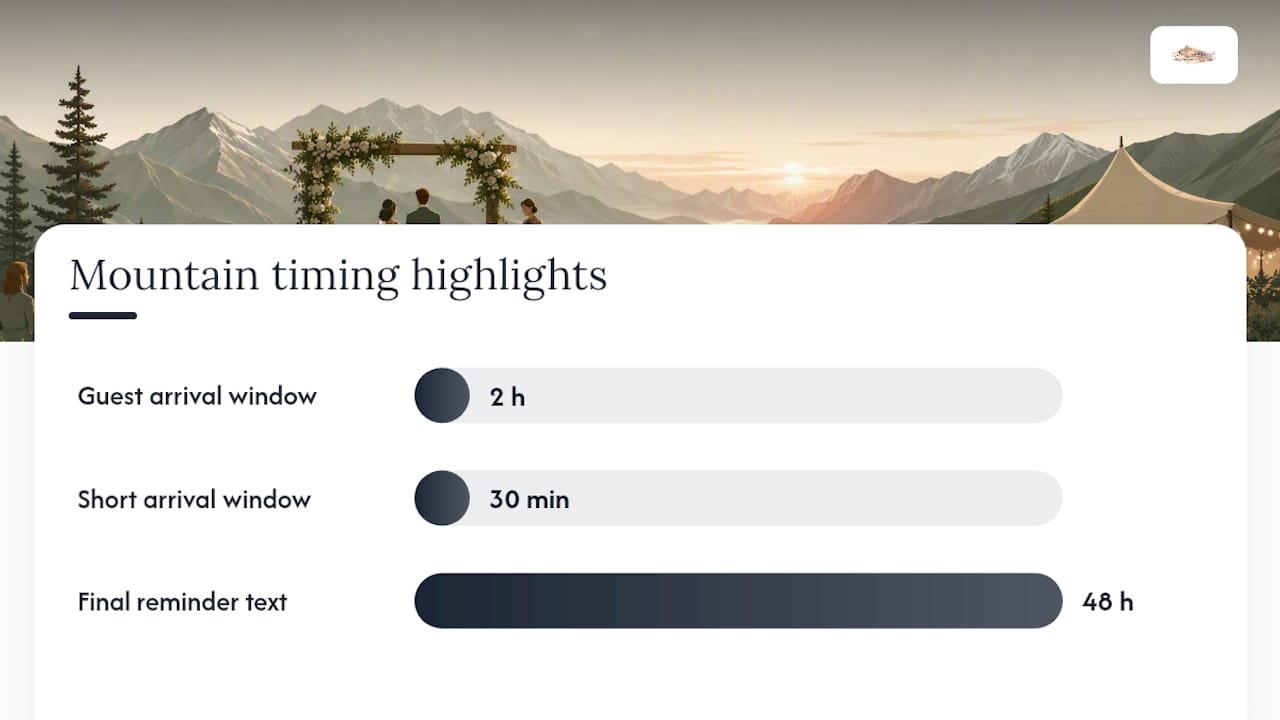
- Set a guest arrival window at least two hours before the ceremony, not thirty minutes.
- Recommend hydration starting the day before, especially for anyone flying in from sea level; altitude sickness shows up fastest in people who skip this.
- Flag alcohol pacing in your invitation suite or welcome packet. Altitude intensifies its effects, and nobody wants a guest wobbling during toasts.
- Confirm shuttle pickup times from valley parking lots if your site has limited on-site parking.
- If a gondola or lift is part of guest transport, get the last-lift time in writing and build your reception end time around it, not the other way around.
- Arrange a backup transport plan for after dark. Mountain roads without streetlights are a different experience than the same drive at 3:00 PM.
Pro Tip: Text your final shuttle and arrival schedule to guests 48 hours out, not just in the invitation. People forget printed timelines; they don’t ignore a text with a link to directions.
What Should You Ask Wedding Vendors About Mountain Experience?
Not every vendor who does great work at a country club can pull off a mountain site. Ask directly whether they’ve worked at elevation before, and ask for a specific example, not a vague “yes, we’ve done outdoor weddings.”
Key questions worth asking every vendor:
- Have you worked this specific venue or a comparable elevation and access situation before?
- What’s your plan if a generator is the only power source? Do you carry your own, or does the venue provide one?
- Can you name a reference couple from a similar mountain setting?
- What’s your contingency if a service road has a weight or vehicle-size limit?
Caterers face a specific challenge at altitude: cook times shift, and plated service that works flawlessly at sea level can arrive lukewarm after the extra time it takes to stage and walk plates across uneven terrain. Many mountain caterers lean toward buffet or family-style service, or assembled plates with strong hot-holding, rather than complex plated timing. Photographers and audio vendors need a wind strategy for outdoor vows, since a lavalier mic without a windscreen turns your ceremony audio into static. Ask your coordinator specifically how they sequence vendor load-in when only one access road exists. That single detail separates a coordinator who has run a mountain event from one who’s guessing.
What Should a Mountain Venue Contract Cover?
Before you sign anything, get answers to these in writing:
- Is the booking exclusive to you for the day, or are other events happening on the same property?
- Is there a minimum guest count or minimum spend, and what happens if your final count comes in under it?
- What is the actual backup plan for bad weather? A permanent indoor space rated for your full guest count beats a tent every time, since wind at elevation causes more damage than rain does.
- If a lift or gondola is part of the venue experience, what are its operating hours, and who pays if you need it to run outside the normal schedule?
- Are there permit requirements or noise and curfew restrictions tied to the location, and who is responsible for filing them?
- Does the rental agreement spell out exactly what’s included, tables, chairs, parking, cleanup, or are those line-item add-ons?
Skipping any one of these is how couples end up with a beautiful photo backdrop and a five-figure surprise invoice.
How Do You Turn a Mountain Wedding Into a Full Weekend?
Guest lodging in small mountain towns fills fast, often months out during peak season, so block rooms the moment your date is confirmed. Offer tiered options: on-site lodging if your venue has it, a nearby inn for guests who want more space, and a budget rental for anyone watching costs. A weekend stay strategy that locks group rates early saves real money for your guests.
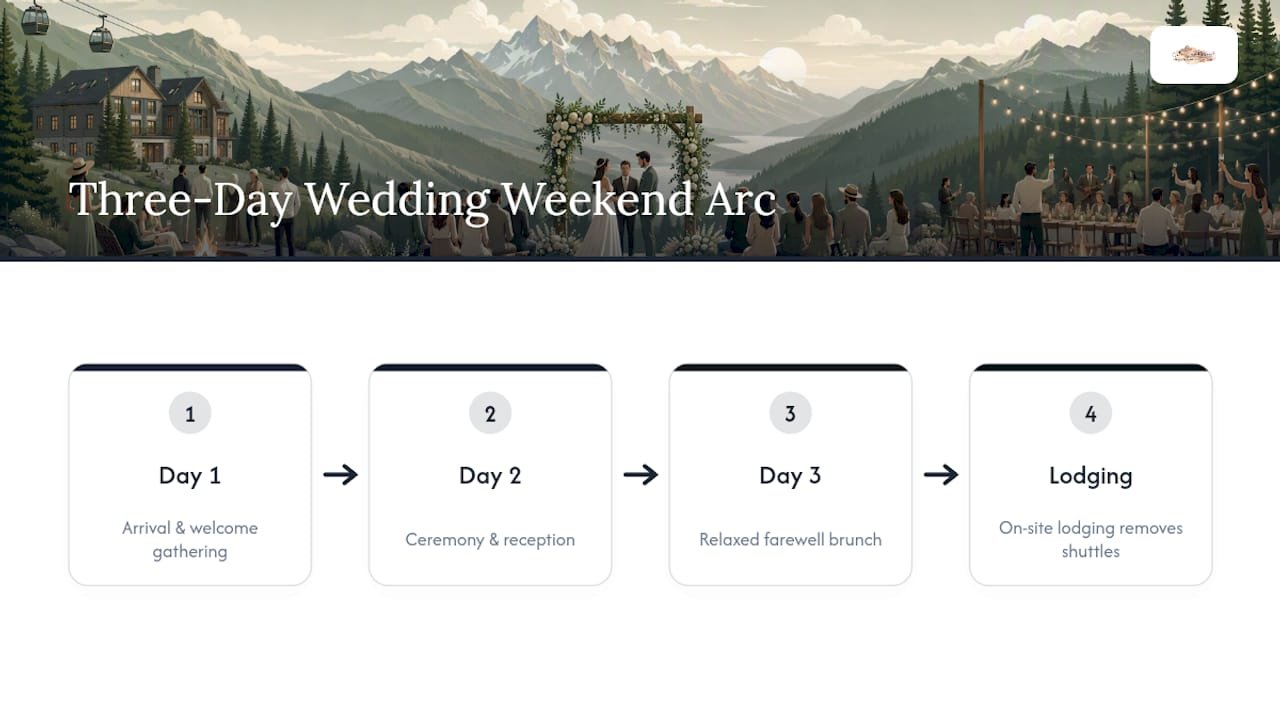
A simple three-day arc works well: arrival and welcome gathering on day one, ceremony and reception on day two, and a relaxed farewell brunch on day three before people head home. Keep guest activities low-lift: a short hike, a pool afternoon, or a fire pit evening rather than a packed itinerary. A single venue with on-site lodging removes the shuttle logistics entirely, since nobody has to drive anywhere once they’ve checked in.
What Luis Prioritizes When Walking a Mountain Venue
Guiding couples through venue walkthroughs and weekend planning has shaped a clear priority list: permanent indoor backup first, bundled lodging second, vendors with real mountain experience third. On a site visit, test the access road yourself, ask to see the generator setup, and get exclusivity terms in writing before you fall for the view.
— Luis
Why an All-In-One Mountain Weekend Venue Simplifies Everything
Most of the risk in mountain wedding planning comes from coordination: separate lodging, separate transport, separate backup plans that don’t talk to each other. Cherrywood Ranch removes that friction by combining the ceremony site, reception space, and luxury lodging for up to 16 guests on one property in the North Georgia mountains, so your wedding party wakes up where the ceremony happens instead of caravanning in from a hotel forty minutes away.

The venue offers elopement packages and full wedding packages, along with a three-day wedding weekend rental that includes on-site lodging, a pool, and a hot tub for families staying together instead of scattering across town. Guest counts beyond ten carry a modest per-guest fee, listed directly on the services page, so there are no surprise minimums buried in fine print. If your plan involves a weekend rather than a single afternoon, check available dates and book your stay to see what’s open for your season.
Sources
- 7 tips for planning a mountain destination wedding – Limelight Hotels
- Getting married in the mountains: A guide – Julien Kibler
- Ultimate checklist for mountain weddings – Ronja Weddings
- Rustic mountain wedding guide – The Knot
FAQ
What Is the Biggest Mistake Couples Make in Mountain Wedding Planning?
Choosing a date before confirming elevation and access is the most common error. A gorgeous September date can still mean early snow at high elevation, so match your season to your specific site’s elevation first.
How Far in Advance Should You Book Mountain Wedding Lodging?
Book lodging the same week you confirm your date, since small mountain towns have limited inventory that fills quickly during peak season. Venues with on-site lodging, like Cherrywood Ranch, remove this scramble by holding your rooms as part of the venue booking.
Do You Need a Permit for a Mountain Elopement on Public Land?
Many public lands require a special-use permit for ceremonies, especially with photographers or more than a handful of guests. Requirements vary by land management agency and site, so confirm directly with the local ranger district or land office before finalizing your spot.
What Does Cherrywood Ranch Charge for a Wedding Weekend?
Cherrywood Ranch’s elopement package, full wedding package, and three-day wedding weekend rental don’t have published flat rates; couples get pricing through the services page. Day sessions and hourly bookings are listed at 1950 $ per day and 350 $ per hour on the booking page.
How Do You Handle Cell Service Gaps at a Remote Mountain Venue?
Confirm cell coverage during your venue walkthrough and ask what backup communication the venue uses for vendor coordination, whether that’s a landline, radio, or reliable Wi-Fi calling. Share a printed timeline with your wedding party as a backup, since a plan that only lives in a group text fails the moment service drops.