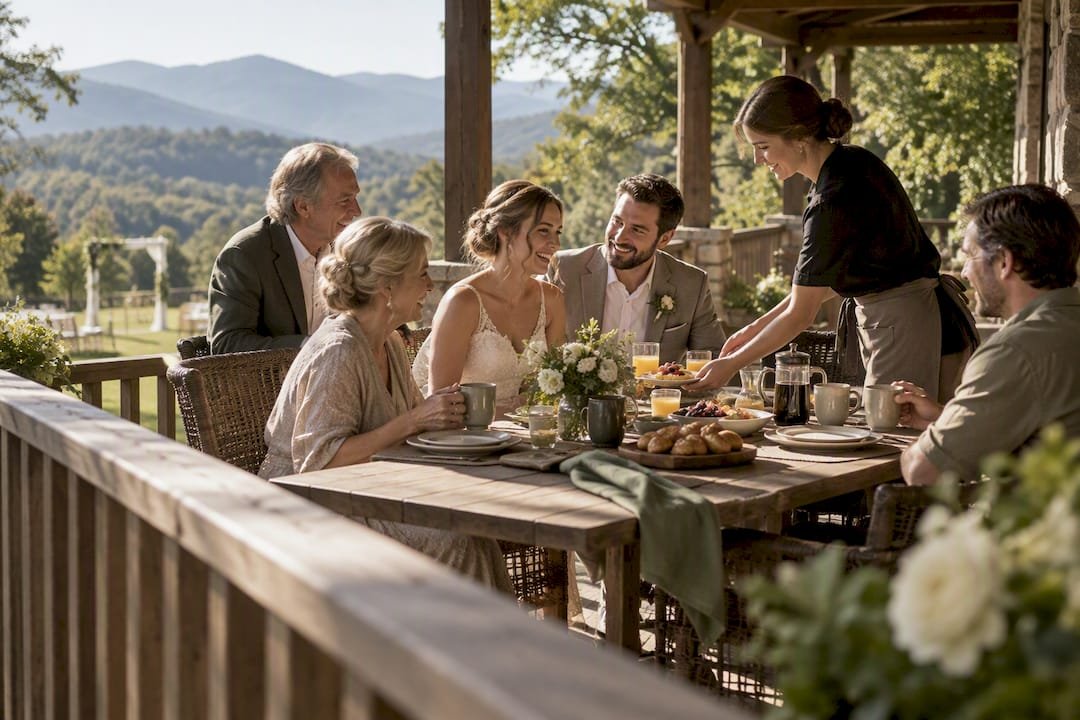
Yes, North Georgia works beautifully for an intimate destination wedding, provided you pick a venue built for the whole weekend rather than just the ceremony hour. All-in-one properties like Cherrywood Ranch pair a mountain ceremony setting with onsite lodging, so your guest list stays together instead of scattering across hotels. Start by checking a venue’s guest capacity and open dates before you book anything else.
TL;DR:
- All-in-one North Georgia venues are best suited for small guest lists up to 16 people, with capacity matching the number of guests staying on site.
- Booking six to twelve months in advance is recommended to secure peak season dates, especially for spring and fall weekends.
- Couples should plan for additional costs such as group transportation, extra lodging, and vendor bookings early in the planning process.
- A three-day wedding weekend structure includes arrival, rehearsal, wedding ceremony at golden hour, and a farewell brunch, but only if all events stay on the same property.
- Georgia marriage licenses are valid statewide, must be applied for in person within one month of the wedding, and require calling ahead for county-specific procedures.
Table of Contents
- What Makes a North Georgia Destination Wedding Venue Work
- Why Couples Pick North Georgia Over Farther Destinations
- How to Plan a Multi-Day Wedding Weekend, Step by Step
- A Sample Three-Day Wedding Weekend Timeline
- Marriage License and Legal Steps to Handle Early in Georgia
- Cherrywood Ranch as a Working Example of the All-in-One Model
- Deciding If This Model Fits Your Priorities
- Ready to Check Dates at Cherrywood Ranch
- Sources
- FAQ
What Makes a North Georgia Destination Wedding Venue Work
The best North Georgia wedding locations share one trait: they let a small guest list live somewhere beautiful for two or three days without ever driving between the hotel and the ceremony site. That’s the model that separates a true destination-wedding venue from a rental hall that happens to have a nice backdrop.
The region’s outdoor settings range widely. You’ll find mountain overlooks with long valley views, private estates tucked into hardwood forest, waterfall backdrops near Toccoa Falls, and cultivated garden spaces built specifically for ceremonies. Lodging formats vary just as much, from single farmhouses that sleep a dozen people to larger vacation homes designed for wedding parties of 16 or more.
What actually matters when you’re comparing venues:
- Onsite lodging capacity that matches your guest list, not one built for a much bigger crowd
- Multiple usable spaces for ceremony, reception, and casual gathering, so weather or mood can shift the plan
- A working kitchen and common areas that support a relaxed, home-base feel between events
- Resort-style amenities like a pool or hot tub that give guests something to do beyond the wedding itself
- One point of coordination instead of separate contracts for the venue, the rental house, and a shuttle company
An all-in-one venue collapses vendor logistics into a single relationship. Planners at The Knot note that combining lodging, dining, and ceremony space in one location reduces the coordination load on both the couple and their guests, which matters more over a three-day weekend than a single afternoon.
Why Couples Pick North Georgia Over Farther Destinations
North Georgia solves a problem that beach and international destination weddings create: getting people there. Most guests coming from Atlanta, Charlotte, Nashville, or Chattanooga can drive in under three hours, and flights from farther out land at Hartsfield-Jackson with a manageable drive north. That accessibility tends to translate into a lower overall cost per guest compared to flying a wedding party to the Caribbean or Europe.
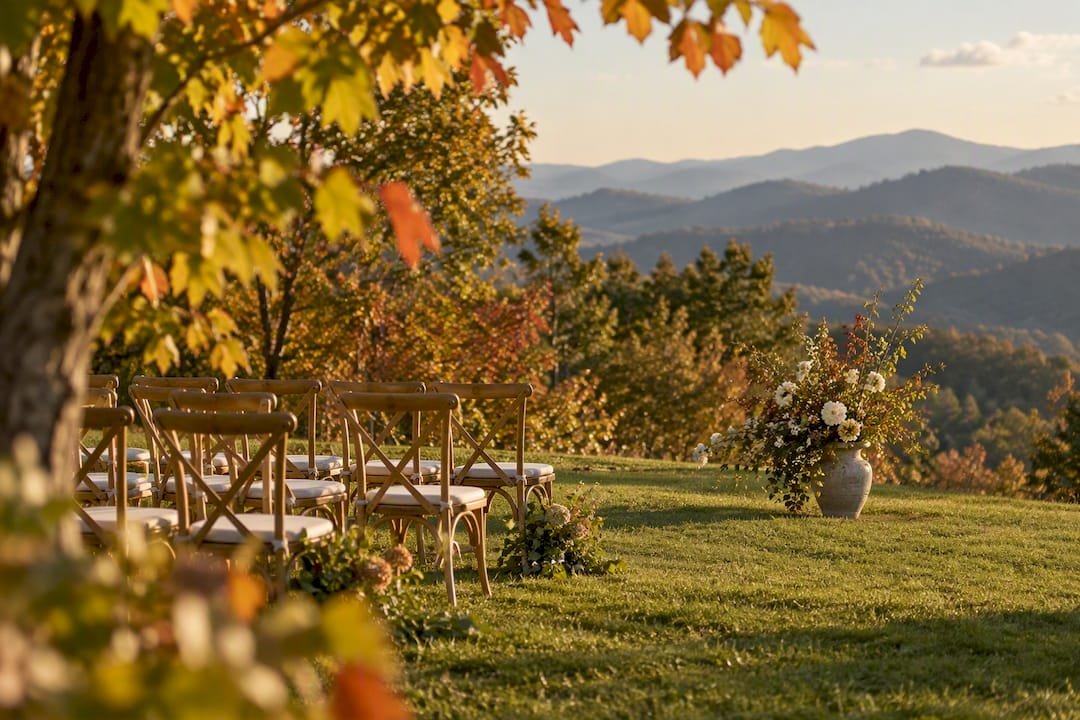
Guides to Georgia weddings consistently point to spring (April and May) and fall (late September through October) as the strongest windows, when mountain temperatures sit comfortably in the 60s and 70s and the foliage or blooms do the decorating for you. Summer works too, but afternoon humidity and pop-up storms push most couples toward morning or early-evening ceremony times.
The connectedness factor gets less attention than scenery, but planners rank it just as high. Brides advises couples to prioritize spatial flow and guest experience over chasing a trending aesthetic, and a venue where nobody has to drive anywhere for three days delivers exactly that.
How to Plan a Multi-Day Wedding Weekend, Step by Step
A weekend wedding has more moving parts than a single-day event, but the sequence is manageable if you tackle it in order.
- Lock the venue and date first. Confirm the property’s lodging capacity actually fits your guest list before you build anything else around it.
- Build a rooming plan. Decide who sleeps where on the property and communicate it early so nobody’s guessing at arrival.
- Book your core vendors early. A coordinator, photographer, caterer, and officiant should all be under contract months out, especially during peak spring and fall dates.
- Send travel logistics separately from your invitation. Guests need driving directions, nearest airports, and any group transport plan well before RSVPs are due.
- Confirm any site permits and set a weather backup. If your ceremony space is outdoors, know exactly where the plan moves if it rains.
- Budget for weekend-specific costs. Multi-day accommodations, vendor travel fees, and extra catering for welcome dinners or farewell brunches add up fast if they’re not planned for from the start.
Pro Tip: Send a one-page logistics sheet with the rooming plan, a loose schedule, and transportation details two to three weeks before the wedding. Guests relax more when they know what’s coming next, and you’ll field fewer last-minute texts.
A Sample Three-Day Wedding Weekend Timeline
Spacing events out over three days keeps everyone from arriving exhausted and leaving relieved. Here’s a framework that adapts to most North Georgia venues.
- Day 0 (Arrival): Guests trickle in throughout the afternoon. Keep the welcome low-key: a casual dinner or cocktail hour on the porch works better than a formal event.
- Day 1 (Rehearsal): Run the ceremony walk-through in the morning while vendors have full access to set up reception spaces. Keep the evening open for a smaller rehearsal dinner or free time by the pool.
- Day 2 (The Wedding): Time the ceremony for golden hour light if photos matter to you, usually 90 minutes before sunset. Cocktail hour and reception follow, with a lower-key late-night gathering back at the lodging for whoever wants to keep the night going.
- Day 3 (Farewell): A brunch or slow morning gives guests one more shared moment before checkout, rather than everyone scattering the night before.
This structure only works when lodging and event space sit on the same property. Add a 20 to 30-minute drive between the rental house and the ceremony site, and the whole rhythm falls apart.
Marriage License and Legal Steps to Handle Early in Georgia
Georgia requires both parties to apply for a marriage license in person at a probate court, and the license is valid statewide regardless of which county issued it. Because procedures and required documentation can differ slightly by county probate office, it pays to call ahead rather than assume the process matches what you’ve read online.
A few essentials to confirm well before the wedding date:
- Georgia does not require witnesses at the courthouse when applying, but check current officiant and witness requirements for the ceremony itself.
- If any part of your ceremony happens on state park land, a waterfall access point, or other public property, permits often need to be requested weeks or months ahead.
- Plan parking, shuttle routes, or valet service for guests, especially on properties with limited road access or a gravel driveway.
Pro Tip: Apply for your marriage license no more than a month before the wedding. Georgia licenses expire after that window, and a same-week trip to the courthouse is one errand nobody wants on their to-do list.
Cherrywood Ranch as a Working Example of the All-in-One Model
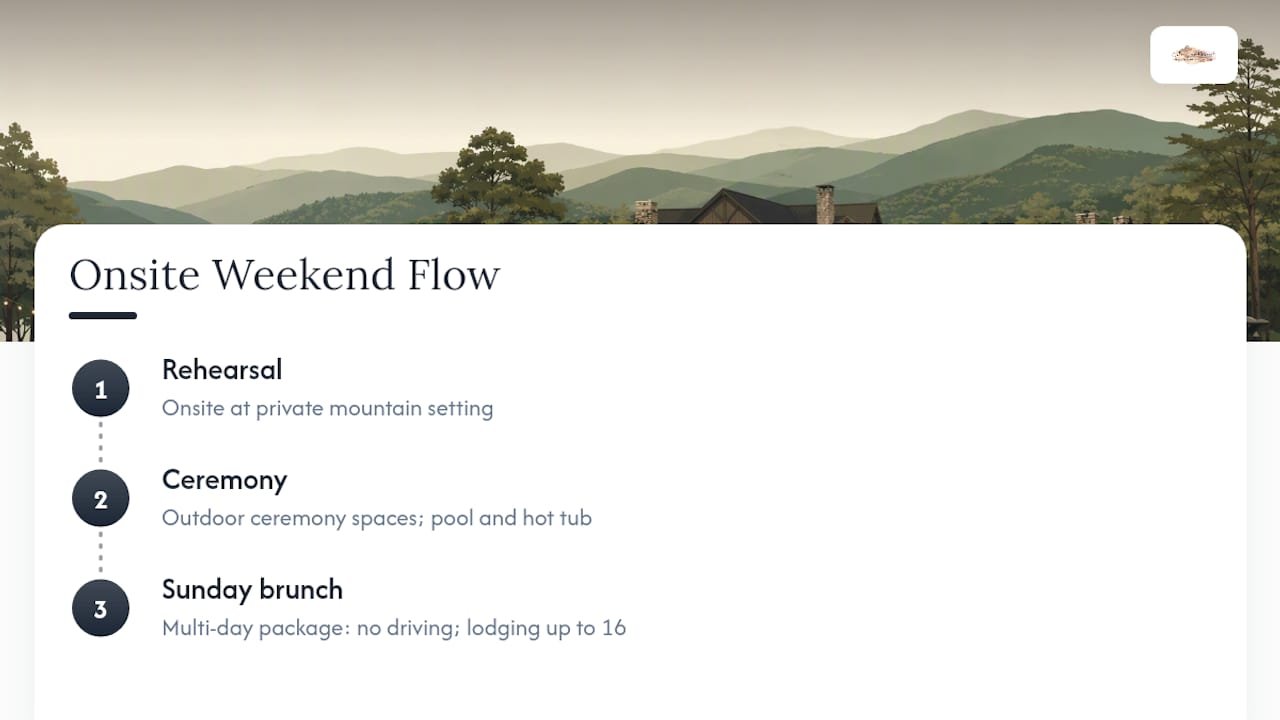
Cherrywood Ranch puts the model into practice: a private mountain setting, onsite lodging for up to 16 guests, multiple outdoor ceremony spaces, and resort touches like a pool and hot tub. Multi-day packages mean the wedding party isn’t driving anywhere between the rehearsal, the ceremony, and Sunday brunch.
That structure removes the biggest source of weekend-wedding stress: coordinating separate contracts for a venue, a rental house, and guest transportation. Everything, and everyone, stays in one place.
Deciding If This Model Fits Your Priorities
Ask yourself one question: do you value guests spending real time together over squeezing every dollar out of a single-day event? If yes, an all-in-one mountain venue fits. If your guest list tops 75 or your budget can’t stretch to multi-day lodging, a single-day venue might serve you better. Either way, request package details before you decide.
— Luis
Ready to Check Dates at Cherrywood Ranch
Cherrywood Ranch works specifically for couples who want a small guest list, real outdoor scenery, and everyone under one roof for the weekend instead of a scattered hotel block. The venue offers packages for elopements and multi-day weddings, with lodging and amenities such as a pool and hot tub included in the stay.

Larger groups may be subject to additional per-guest fees beyond the basic package pricing. Ready to see what’s included? Browse the elopement and wedding packages or check available stay dates directly. For guest shuttle planning once your date is locked, clear shuttle communication keeps everyone on schedule without a group text chain spiraling out of control.
Sources
- Destination wedding planning tips | The Knot
- Destination wedding planning tips from planners | Brides
- Georgia destination wedding guide | WedBuddy
FAQ
How Far in Advance Should We Book a North Georgia Venue?
Book six to twelve months ahead for peak spring and fall dates, since the best weekend slots at all-in-one venues fill quickly. Off-peak winter dates sometimes open up with just a few months’ notice.
What’s the Best Season for an Outdoor North Georgia Wedding?
Spring (April and May) and fall (late September through October) offer the most comfortable temperatures and the best scenery, according to Georgia wedding planning guides. Summer is workable if you plan around afternoon storms and humidity.
Do We Need a Marriage License Before Arriving in Georgia?
No, both parties must apply in person at a Georgia probate court, and the license is valid statewide once issued. Apply within a month of the wedding date, since Georgia licenses expire after that window.
How Many Guests Can Cherrywood Ranch Accommodate for Lodging?
Cherrywood Ranch’s onsite lodging holds up to 16 guests comfortably, making it suited to intimate weekend weddings rather than large receptions. Larger events are still possible with a bigger overall guest list, though a $10 per-guest fee applies for groups over 10 and again over 75.
What Does an All-in-One Venue Include Compared to a Standard Wedding Venue?
An all-in-one venue combines the ceremony site, reception space, and guest lodging on one property, which reduces the logistics and travel guests deal with over a multi-day weekend. A standard venue typically covers only the event space, leaving lodging and transportation for the couple to arrange separately.