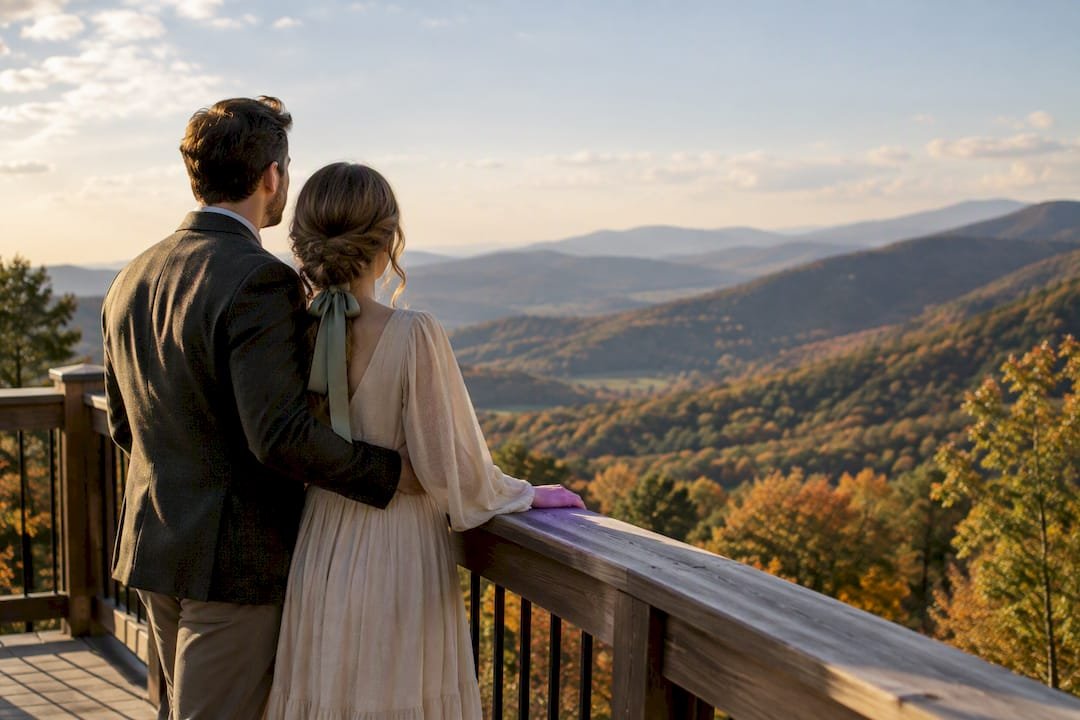
Fall and late spring give most couples the best mix of comfortable temperatures, dependable scenery, and manageable rain risk. However, fall books up faster and costs more at popular venues. Winter and summer both work well for specific priorities: winter for smaller, quieter gatherings, summer for long daylight hours despite the heat. A venue with onsite lodging built into the weekend can soften the trade-offs of any season by keeping guests on one property regardless of weather.
TL;DR:
- Fall and late spring dates at popular venues require booking 12 to 18 months in advance due to high demand and peak foliage timing.
- Summer weddings benefit from long daylight hours and warm nights but need preparations for afternoon storms and sun exposure.
- Winter and early spring offer better availability and lower costs, with a focus on indoor backups and smaller, intimate gatherings.
- Mountain-specific logistics, such as road access, limited cell service, and weather contingencies, significantly influence planning and timing.
- Choosing a season with stable, dry weather reduces insect activity, with fall and winter being preferable for fewer bugs and wildlife issues.
Table of Contents
- Season-by-season pros and cons for a North Georgia mountain wedding
- Monthly weather averages and how elevation shifts foliage timing
- When to book your venue, vendors, and lodging by season
- Logistics unique to a mountain venue and day-of setup
- How seasonal bugs and wildlife affect an outdoor mountain wedding
- Local festivals and events that can affect your wedding date
- What each season means for your wedding photos and lighting
- How Cherrywood Ranch thinks about seasonal weddings
- How to check availability and book your season at Cherrywood Ranch
- Sources
- FAQ
Season-by-season pros and cons for a North Georgia mountain wedding
Each season in the North Georgia mountains offers a different trade between scenery, comfort, and competition for dates. Matching the season to what matters most to you (photos, budget, or guest ease) makes the decision easier than chasing a single “best” month.
Spring (March through May) brings dogwoods, azaleas, and mild evenings, making it a strong choice for garden-style ceremonies. Late April through mid-May is commonly the peak bloom window in the region, though March is typically the wettest month, so outdoor ceremonies need a covered backup plan. Spring dates at popular venues fill quickly, and a cold snap can still arrive even after blooms open.
Summer (June through August) offers the longest days of the year, which means more usable daylight for both the ceremony and evening photos. Warm nights suit an outdoor reception, but afternoon thunderstorms are common in the mountains during these months, and guest comfort in full sun requires planning for shade, water, and lighter fabrics.
Fall (September through November) is the region’s signature wedding season because of foliage, and it draws the heaviest demand. Peak color timing varies by elevation, higher ridges can turn as early as September while valley areas often peak in October, so couples chasing specific foliage should track leaf reports six to eight weeks out. September and October are also among the driest months in the region, which is part of why fall dates disappear first.
Winter (December through February) is the quietest season for bookings, which often means more availability and lower costs. Higher elevations can see occasional freezes or light snow, so indoor ceremony space and reception backups matter more than in any other season. Winter also suits couples who want a smaller, more intimate gathering rather than a large outdoor production.
- Spring: best for blooms and mild evenings, but rain risk is highest.
- Summer: best for long daylight and warm nights, but afternoon storms and heat are common.
- Fall: best for foliage and dry weather, but the most competitive and expensive season.
- Winter: best for availability and intimacy, but requires a solid indoor backup plan.
Pro Tip: If foliage color matters more than the calendar date, hold your final ceremony-time decision until two to three weeks out and lean on your venue’s covered spaces as a fallback.
Monthly weather averages and how elevation shifts foliage timing
Weather in the North Georgia mountains follows four distinct seasons, but elevation changes the timeline. Regional climatology from the National Weather Service notes that the wettest month on average is March, while September and October are typically the driest, and that higher elevations see earlier freezes and colder temperatures than the surrounding lowlands. First freeze dates average in October at higher elevations, with last freeze often landing in April.
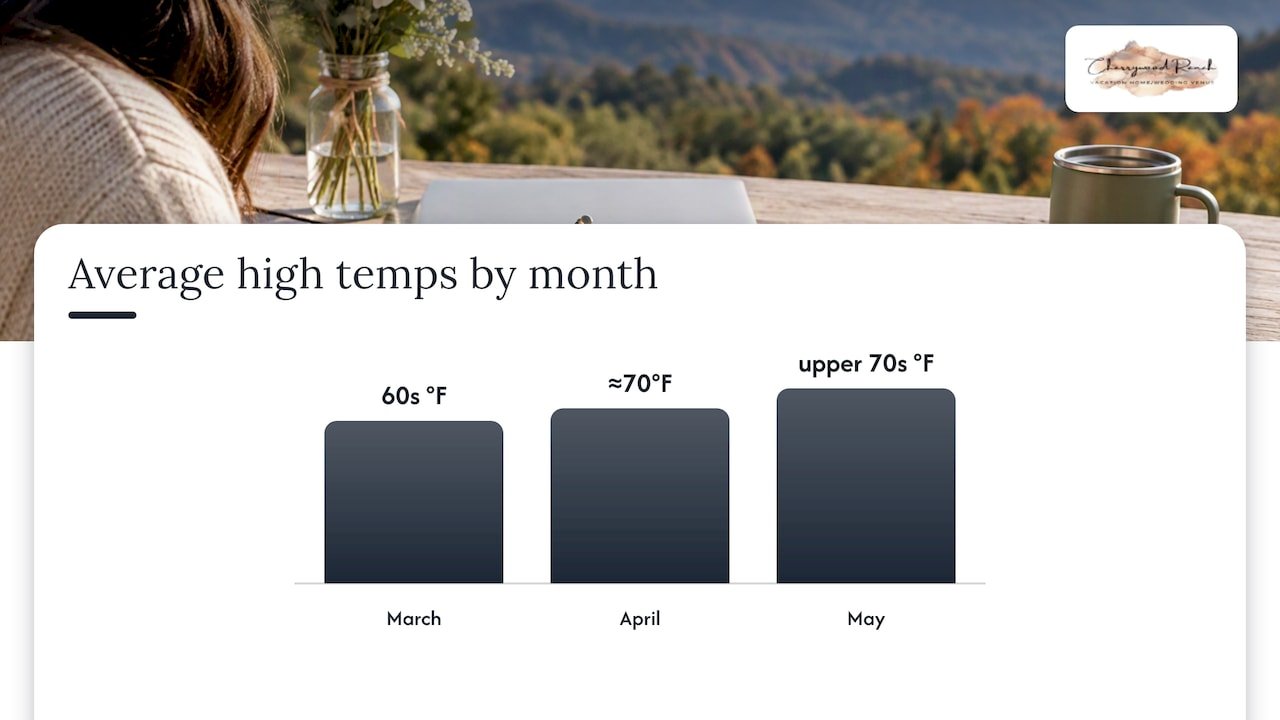
Dahlonega’s own monthly climate averages show highs warming from the 60s in March to the upper 70s by May, with October settling into milder, drier conditions well suited to outdoor ceremonies. Foliage tends to progress downhill through the fall: higher ridges can peak as early September, while valley floors often wait until October.
September and October are generally among the driest months of the year in North Georgia, according to NOAA’s regional summary, which is a major reason fall dates are booked first at mountain venues.
| Month | Avg. High | Avg. Low | Typical Rainfall Pattern |
|---|---|---|---|
| March | Around 60°F | Cool, variable | Wettest month of the year |
| April | Around 70°F | Mild | Moderate rain, spring blooms |
| May | Upper 70s | Mild to warm | Lower than March, still variable |
| October | Milder, drier | Cool evenings | Among the driest months |
When to book your venue, vendors, and lodging by season
Lead time depends heavily on which season you want. Fall and late spring dates at popular North Georgia venues often need to be locked in 12 to 18 months ahead, since these are the highest-demand windows. Summer dates typically need 9 to 12 months of lead time, and winter dates can often be secured with 6 to 9 months’ notice given lower overall demand.
Choosing a weekday or an off-peak date within your preferred season, a Friday in October instead of a Saturday, for instance, can meaningfully reduce competition for both the venue and vendors.
- Secure the venue deposit as soon as you settle on a season and rough date range.
- Block lodging for out-of-town guests before local rooms sell out around your date.
- Place holds with photographers, florists, and caterers, since the best vendors book alongside venues.
- Confirm final headcounts and payments 30 to 60 days before the wedding.
Pro Tip: If you want a fall date at a popular venue, start venue and vendor conversations at the same time rather than sequentially, since both calendars fill in the same window.
Logistics unique to a mountain venue and day-of setup
Mountain properties come with a few practical wrinkles that flat-ground venues do not. Confirming these details before you commit to a date matters as much as picking the right season.
- Ask about road access for delivery trucks and vendor vehicles, since steep or unpaved driveways can limit what large trucks can navigate.
- Expect limited cell service in some mountain areas, and plan backup communication like radios or a scheduled check-in system for your coordinator and vendors.
- Factor in how close guest lodging is to the ceremony site, since multi-day mountain weekends work best when guests are not driving between locations.
- Build a weather contingency into your ceremony and reception flow regardless of season, since mountain weather can shift faster than in the valley below.
Venues built around onsite lodging, such as the outdoor ceremony spaces at Cherrywood Ranch, remove much of this friction because guests never have to leave the property between events.
How seasonal bugs and wildlife affect an outdoor mountain wedding
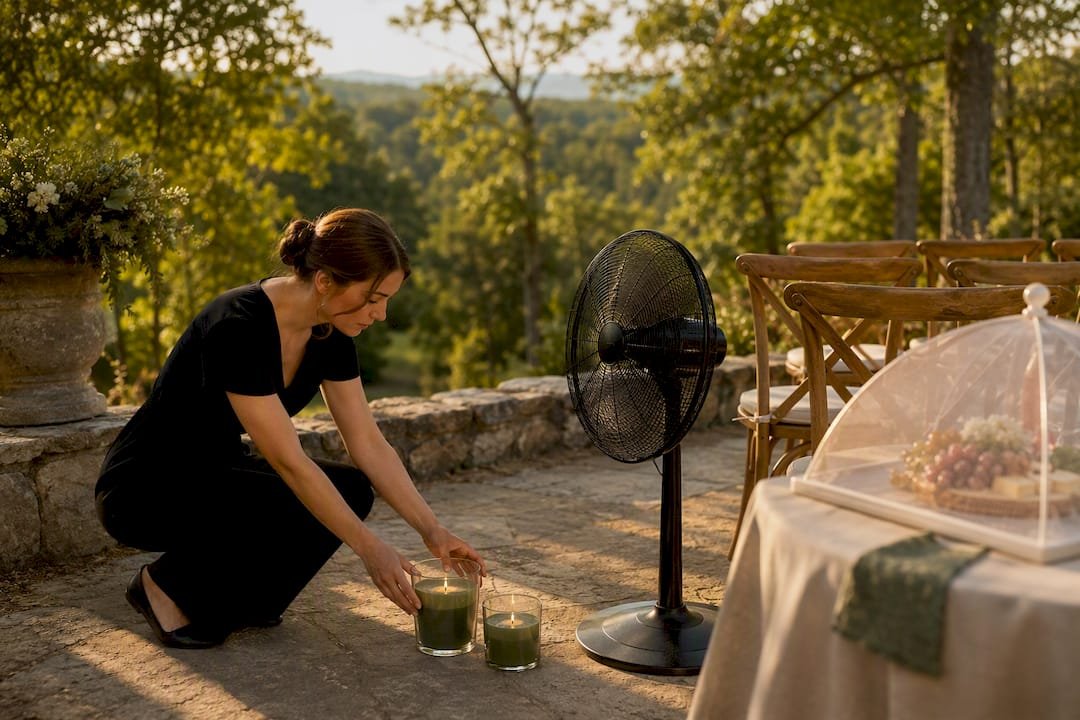
Warm-weather months bring more insect activity to the mountains, and this is worth planning around rather than ignoring. Late spring and summer ceremonies, especially near dusk, tend to draw mosquitoes and other biting insects, so citronella candles, standing fans, or a light bug spray station near the guest area can head off complaints before they start. Wildlife sightings, deer, wild turkeys, occasionally something larger, are part of the charm of a mountain setting, but caterers and coordinators should keep food covered and trash sealed during outdoor receptions to avoid unwanted visitors.
Fall and winter carry far less insect pressure, which is one more reason those seasons suit guests who are sensitive to bug bites or prefer not to think about it at all. If you do choose a summer date, consider timing your outdoor portions for late morning or early evening rather than full dusk, when insect activity tends to peak. None of this should discourage an outdoor summer wedding, it simply means a small amount of preparation goes a long way toward keeping guests comfortable through dinner and dancing.
Local festivals and events that can affect your wedding date
North Georgia’s mountain towns run a full calendar of seasonal festivals, and these can work for or against your wedding weekend depending on how you plan around them. Dahlonega promotes itself heavily as a wedding and tourism destination, which means local lodging, restaurants, and vendors are used to hosting wedding guests, but it also means popular festival weekends can fill hotel rooms fast and push up local rates.
Fall in particular overlaps with harvest festivals and foliage-driven tourism traffic throughout the region, so a fall wedding weekend benefits from booking guest lodging early, before leaf-peeping tourists claim the same rooms. Checking a town’s event calendar before finalizing your date can help you avoid double-booked lodging or unexpectedly heavy weekend traffic on mountain roads. On the upside, choosing a date that lines up with a local festival can give out-of-town guests something extra to enjoy if they arrive a day or two early for your wedding weekend.
What each season means for your wedding photos and lighting
Light quality in the mountains changes noticeably across the year, and it is worth factoring into your ceremony timing. Spring and fall offer some of the most flattering natural light, softer and more golden in the late afternoon, along with the added backdrop of blooms or foliage color. Summer’s long days give photographers more flexibility for an evening reception, but the strong midday sun can wash out photos and cause harsh shadows, so many couples schedule ceremonies for late afternoon instead.
Winter offers a different kind of light: shorter days mean the golden hour arrives earlier, and a clear winter sky over the mountains can produce sharp, dramatic photos, though shorter daylight also means a tighter photography window for outdoor portraits. Whatever season you choose, building 20 to 30 minutes of flexibility into the ceremony start time gives your photographer room to work with whatever light shows up that day.
How Cherrywood Ranch thinks about seasonal weddings
Every season brings its own logistics, and a venue built for weekend-long weddings absorbs most of them. An all-inclusive model with onsite lodging can keep families together regardless of whether a date calls for rain contingencies, extra warmth, or longer daylight for photos.
— Luis
How to check availability and book your season at Cherrywood Ranch
Picking your season is only half the decision. The other half is knowing your wedding weekend will not depend on shuttling guests between a ceremony site, a reception hall, and separate hotel rooms.

Cherrywood Ranch keeps everyone on one property for the whole weekend, which matters most in seasons with unpredictable weather or limited daylight. Whether you are drawn to a fall foliage weekend, a quiet winter elopement, or a long summer evening reception, the 3-day wedding package and luxury vacation home give your group a private base to work from. Couples looking for something smaller can also ask about the elopement package.
- Request a date hold for your preferred season before it fills.
- Schedule a tour to see how the property handles your season’s specific logistics.
- Review the available packages to compare lodging and event options.
If your guest list is out-of-town heavy, pairing your stay with a Dahlonega hotel with a jacuzzi for overflow lodging or a chauffeured car service for guest transport can round out a cooler-season weekend nicely.
Sources
This guide draws on regional weather data and local tourism resources for accuracy.
- What’s Typical in North and Central Georgia? — NOAA / National Weather Service
- Weddings | Discover Dahlonega
- Usclimatedata
FAQ
What is the 50/20/30 rule for weddings?
This is a budgeting guideline some planners use to split wedding costs across categories, though the exact percentages and category names vary by source. It is not a figure tied to Georgia mountain weddings specifically, so couples should treat it as a general budgeting starting point rather than a fixed rule.
What is the rarest month to get married?
Wedding date popularity varies by region and is not something North Georgia climate or tourism sources track directly. In the mountains, winter months tend to see the fewest bookings simply because of colder weather and shorter days, making them the least common choice locally.
What are some good mountain wedding venues in Georgia?
North Georgia has a range of mountain venues, from working farms to resort-style properties. Cherrywood Ranch Wedding Venue & Vacation Home is one option built around an all-inclusive weekend format with onsite lodging, which suits couples who want their whole group staying together.
What are the lucky months to get married in 2026?
There is no official or widely recognized list of “lucky” wedding months for upcoming years tied to Georgia weather or tourism data. Couples who want a mix of good weather and manageable rain risk in the North Georgia mountains generally do best targeting late April through mid-May or September through October.