
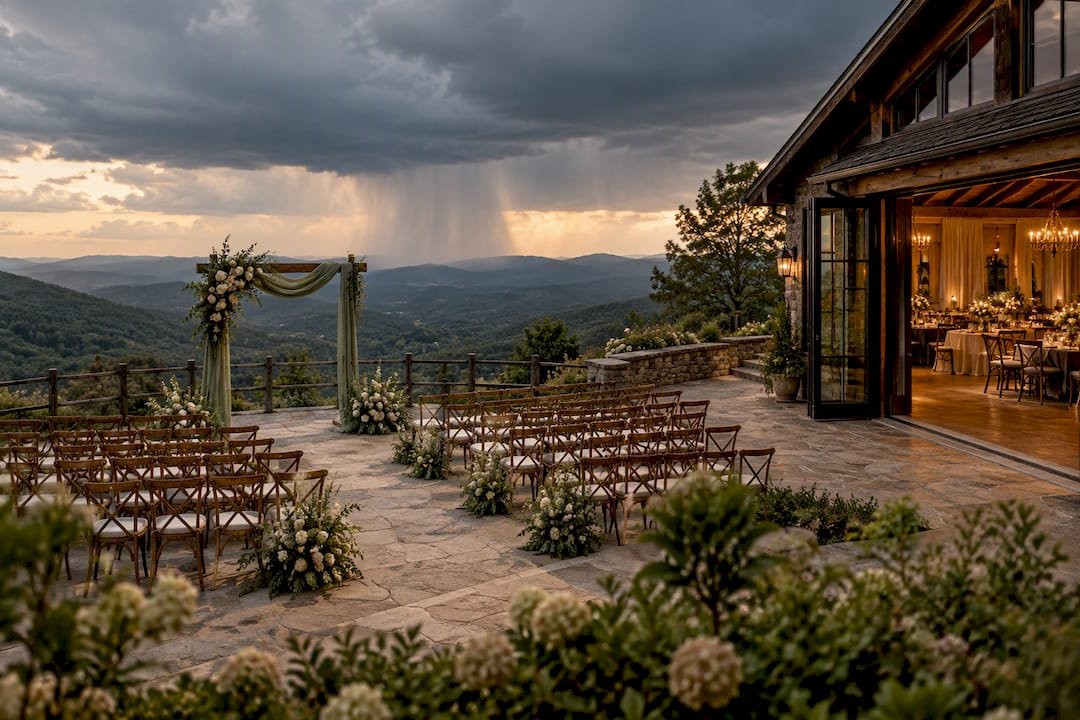
Late September through October gives North Georgia couples the most reliable stretch of mild days and fall color, though March typically brings the region’s heaviest rain and mountain weather can shift fast in any season. Whatever month you choose, the single most important step is building a real rain plan, covered space, a briefed vendor team, and a fixed decision time, since afternoon storms are common enough that “hoping for sun” is not a strategy. Venues that bundle lodging and covered areas, such as Cherrywood Ranch, make that backup plan far easier to execute.
TL;DR:
- The months of late September and October offer the best chance for mild weather and fall foliage, but rain can still occur and should be planned for.
- Building a rain plan before the wedding week and securing indoor or covered spaces is essential, especially in spring and summer when storms are most common.
- Opting for a venue like Cherrywood Ranch that includes onsite lodging and bundled outdoor and indoors spaces simplifies weather-related adjustments.
- Monitoring mountain forecasts closely from seven days out to morning of the event is vital, with a fixed decision time in vendor contracts to avoid last-minute scrambling.
- Choosing a wedding date that aligns with seasonal normal weather patterns and having a solid backup plan enhances the chances of a smooth outdoor ceremony.
Table of Contents
- Seasonal weather patterns for North Georgia weddings
- Building a vendor-ready rain plan and booking checklist
- Day-of scheduling and guest comfort tactics
- When to watch the forecast and when to call your backup plan
- How Cherrywood Ranch builds weather readiness into every wedding
- What actually matters when you plan around North Georgia weather
- Plan your weather-ready wedding weekend at Cherrywood Ranch
- Weather resources worth checking before your wedding
- Sources
- FAQ
Seasonal weather patterns for North Georgia weddings
Each season in North Georgia carries its own tradeoffs for outdoor ceremonies, and knowing them ahead of time changes how you schedule, dress, and stage your wedding day.
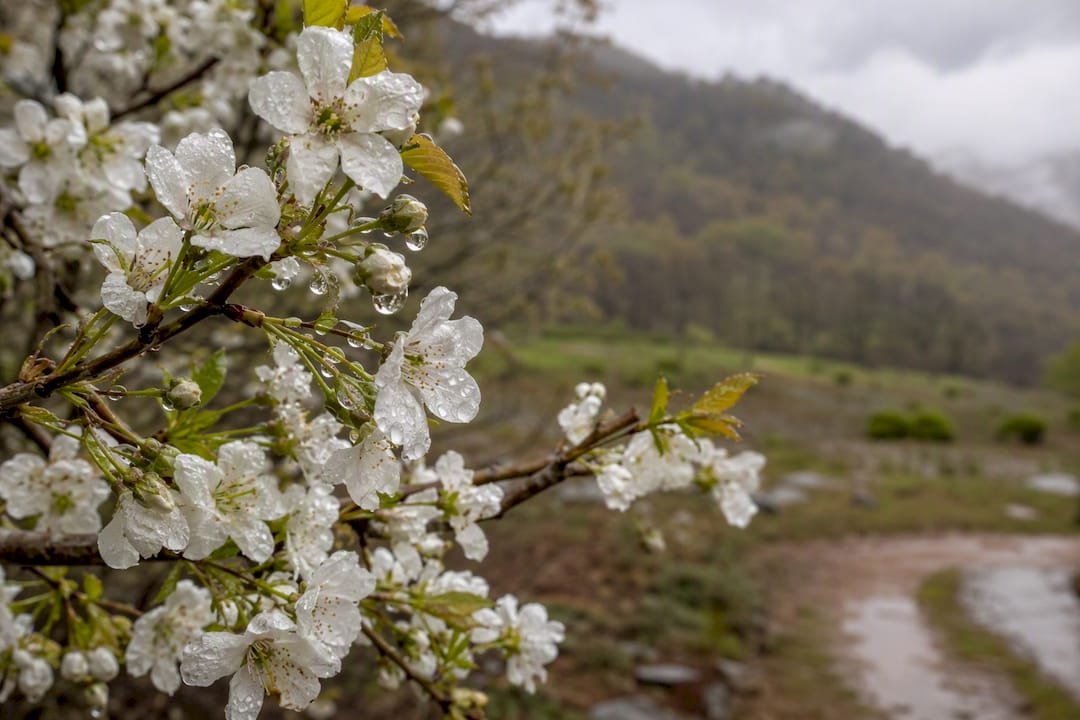
Spring brings the most unpredictable stretch of the year. Temperatures swing widely between a chilly morning and a warm afternoon, late freezes are possible into early spring, and sudden showers are common. March is typically the wettest month across North and Central Georgia, which makes it a riskier pick for an uncovered ceremony despite its appeal for early blooms.
Summer trades rain risk for heat and humidity. Afternoon thunderstorms build reliably in the warmer months, which is why planners generally push ceremonies to the morning or the later part of the afternoon rather than the traditional midday slot. Heat itself is a separate concern from rain: NWS HeatRisk guidance uses a five-category scale that accounts for how unusual the heat is for the time of year, not just the raw temperature, and it is a useful check before locking in a start time for a summer ceremony.
Fall is the season most couples chase, and for good reason. Days are milder, humidity drops, and the mountains deliver the foliage that photographers build entire shot lists around. The tradeoff is a wider gap between daytime warmth and evening chill once the sun drops behind the ridgeline, so a reception that starts warm can turn cold within an hour. Rain is less frequent than spring but not absent, and a stray front can still move through on an otherwise clear week.
Winter is the quietest and coldest option. Occasional snow and ice are possible, particularly at higher elevations, and access roads in the mountains can become a real concern rather than a hypothetical one. Couples drawn to a winter date generally plan their ceremony indoors or under full cover from the start rather than treating it as a backup.
- Spring: variable temperatures, frequent short showers, and the year’s highest chance of a wet ceremony day.
- Summer: hot, humid afternoons with a strong pattern of thunderstorms between roughly 2 and 5 p.m.
- Fall: the most requested season, with mild days, sharp evening cooldowns, and occasional passing rain.
- Winter: cold temperatures, possible snow, and road access as a planning factor at higher elevations.
North and Central Georgia typically see measurable rain on many days each year, with March standing out as the wettest month and September and October as the historically driest, a pattern worth building your calendar around before you build anything else.
Building a vendor-ready rain plan and booking checklist
A rain plan only works if it is decided before the week of the wedding, not during it. Coordinators consistently point to a defined decision time and early equipment bookings as the two things that separate a smooth Plan B from a scrambled one.
- Confirm your venue’s covered spaces, tent partners, and indoor capacity before you sign a contract, and ask specifically what happens if rain arrives during the ceremony rather than before it.
- Book tents, heaters, and sidewalls months in advance. Wedding coordinators note that tent rentals require significant lead time and are not something you can arrange the week of the event.
- Set a written vendor notification order: photographer and officiant first, then caterer and transport, so everyone moves on the same signal instead of hearing about a change secondhand.
- Add a weather note to your wedding website or invitations and stage practical items onsite: blankets and water for a fall evening, or fans and shade for a summer afternoon.
Pro Tip: Put your final rain-plan decision time in writing in your vendor contracts, not just in a group text, so nobody is guessing on the morning of the wedding.
Day-of scheduling and guest comfort tactics
Timing your ceremony around the season’s weather pattern matters more than picking a “safe” date. In summer, avoid the 2 to 5 p.m. window when storms are most likely to build, and favor a morning or early-evening start instead. In spring and fall, a late-afternoon ceremony can capture soft light without the midday heat or the sharpest evening chill.
Photographers plan around weather too. Ask yours how they handle a post-rain sky or morning fog, since both often create dramatic, usable light rather than a lost shot. Staging choices matter just as much: tent flooring and sidewalls handle wind and mud, portable heaters or fans smooth out temperature swings, and a shaded hydration station keeps guests comfortable through a summer reception.
- Ask guests to plan for mountain terrain with flat, sturdy shoes rather than heels.
- Suggest a light layer or wrap for fall and winter evenings once the sun sets.
- Note that summer humidity can outlast the daytime heat well into the reception.
When to watch the forecast and when to call your backup plan
Mountain forecasts are reliable a few days out but shift quickly closer to the date, which is why checking the point forecast for your venue’s exact zip code matters more than checking the nearest city’s regional outlook. A practical monitoring schedule:
- Seven days out: start watching the trend, not the daily detail.
- Three days out: check in with vendors and confirm everyone still has the rain-plan contact list.
- 24 to 48 hours out: make a tentative call on Plan A or Plan B.
- Morning of: use radar and short-range models for the final decision.
Point forecasts for mountain towns like Dahlonega show wide swings between highs and lows and gusty winds on some days, which is exactly why a same-day check matters even after a calm week. Coordinators recommend setting a fixed final decision time in the vendor contract itself so nobody is negotiating the call under pressure.
How Cherrywood Ranch builds weather readiness into every wedding
An all-inclusive North Georgia venue removes much of the weather guesswork simply by bundling the pieces a rain plan depends on. The venue pairs its outdoor ceremony and reception spaces with onsite lodging, so a shift to covered space does not mean moving vendors, guests, or décor across town.
- Covered outdoor areas sit alongside the main ceremony space, giving couples a built-in alternative rather than a rented one.
- Onsite lodging means guests are already on the property when a schedule shifts for weather.
- Vendor coordination is handled as part of the wedding weekend package, which simplifies the notification chain described earlier in this guide.
That kind of bundled setup is the practical version of the checklist above: fewer moving pieces to relocate when a forecast changes.
What actually matters when you plan around North Georgia weather
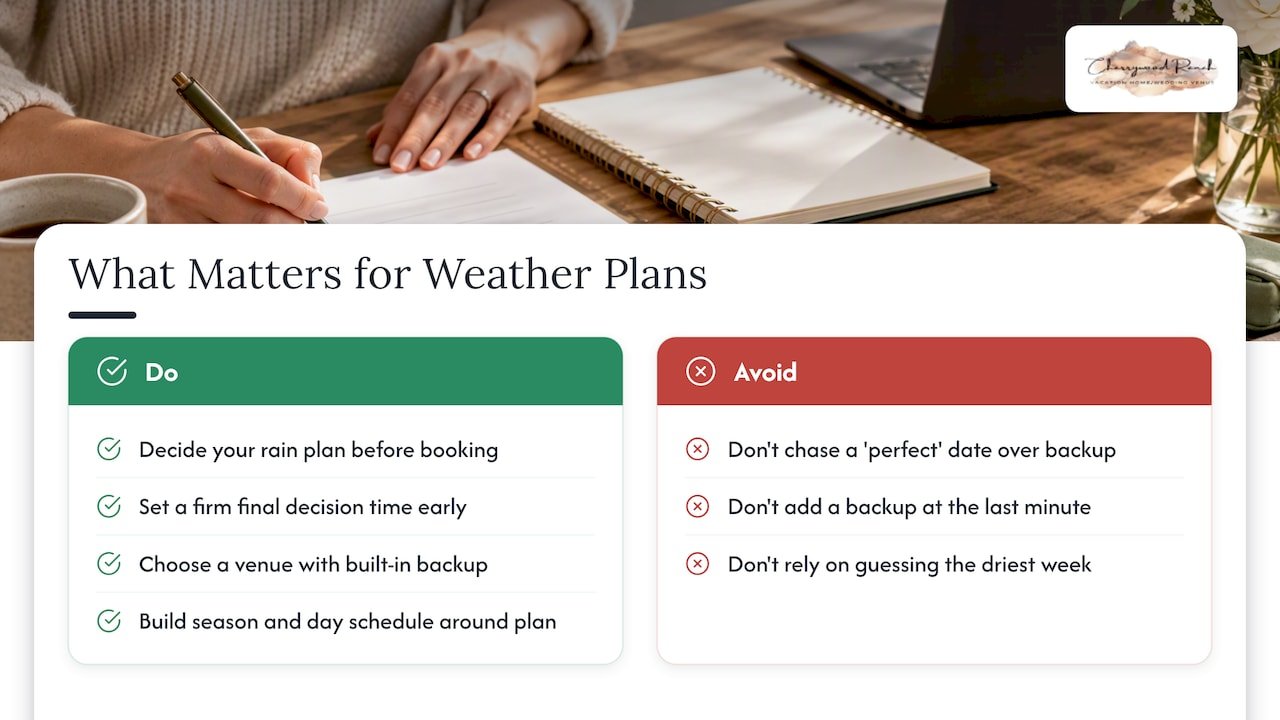
The advice couples hear most often, “just pick a sunny-sounding month,” misses the point. Fall’s reputation for good weather is earned, but it is a probability, not a promise, and a beautiful October can still deliver a fast-moving front. The couples who handle weather well are not the ones who guessed the driest week. They are the ones who treated the rain plan as part of the wedding design from the start, not as an afterthought bolted on two weeks before the event.
The overrated move is chasing a “perfect” date at the expense of a workable backup. The underrated move is picking a venue where the backup is already built in, so the transition from ceremony to shelter takes minutes, not a frantic call to three different rental companies. If you take one thing from this guide, make it this: decide your rain plan and your final decision time before you book anything else, then build your season and your day-of schedule around it.
— Luis
Plan your weather-ready wedding weekend at Cherrywood Ranch
The venue bundles parts of a North Georgia wedding that weather usually complicates: covered outdoor space, onsite lodging, and vendor coordination handled as part of your package, so your rain plan does not depend on relocating your whole event across town.

Explore the elopement and multi-day wedding packages to see what is included, or check dates directly on the booking page for your preferred season. Ask about vendor coordination and onsite backup spaces when you reach out, and we will walk you through how a wedding weekend here is built around North Georgia’s weather from the start.
Weather resources worth checking before your wedding
Check the National Weather Service climatology for North and Central Georgia for seasonal norms, and use HeatRisk and WBGT guidance if your date falls in the hotter months. Always pull the forecast for your venue’s specific zip code rather than the nearest city, since mountain conditions can differ sharply within a few miles.
Sources
- What’s Typical in North and Central Georgia? — National Weather Service (NWS) FFC
- Dahlonega, GA point forecast — National Weather Service
- Rain plan for outdoor weddings — Ever Weddings
FAQ
What is the best month to get married in Georgia?
Late September and October are generally considered the best months, offering milder temperatures, fall foliage, and the lowest typical rain chances of the year. NWS climatology lists these months among the driest for North and Central Georgia, though a rain plan is still worth having regardless of date.
What is the climate like in North Georgia?
North Georgia has a humid climate with hot, humid summers, mild falls, cool wet springs, and cold winters that can bring occasional snow at higher elevations. March is typically the wettest month in the region, while mountain terrain adds sudden fog, wind, and temperature swings that flatter regional forecasts do not always capture.
What is the rarest month to get married?
Winter months, particularly January and February, see the fewest weddings in North Georgia due to cold temperatures and the chance of snow or icy roads at higher elevations. Couples who do choose winter typically plan the entire event indoors or under full cover rather than treating it as a backup option.
What should you wear to a wedding in Georgia?
Dress for the season and the terrain: lightweight, breathable fabrics for summer heat and humidity, and a layer or wrap for fall and spring evenings once temperatures drop after sunset. Sturdy, flat shoes are worth choosing over heels for any ceremony held on grass, gravel, or mountain ground.