
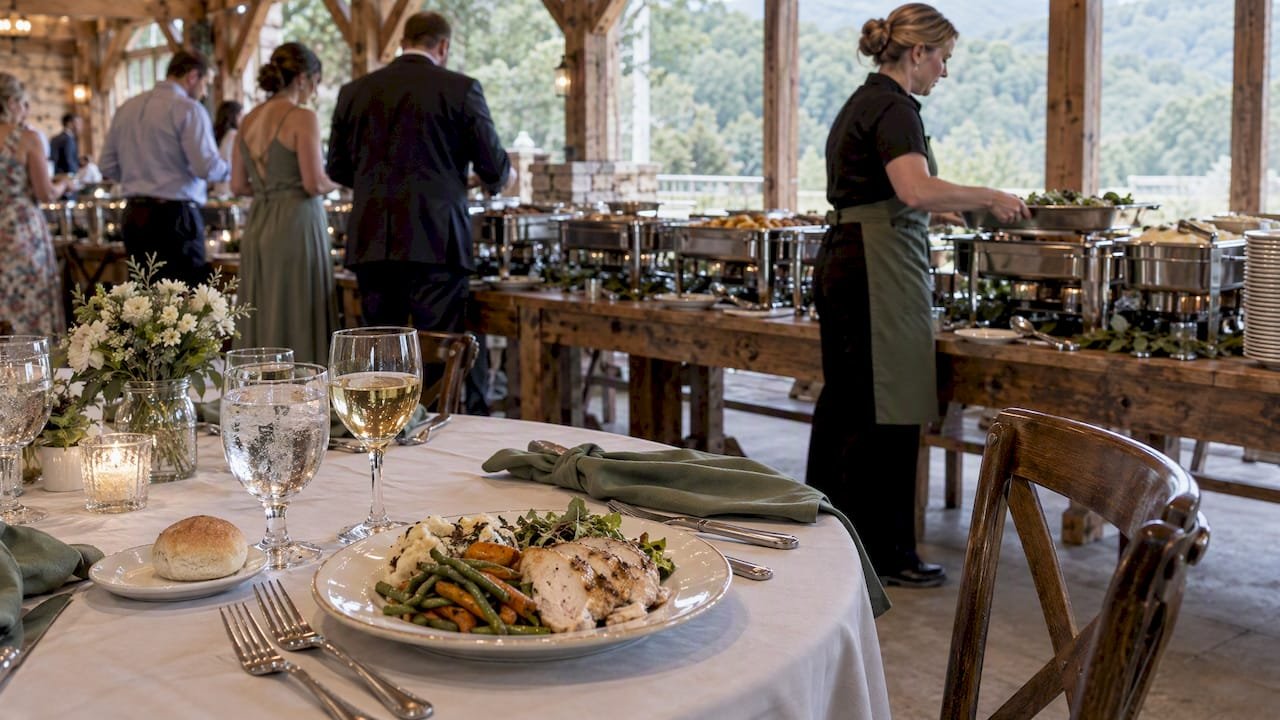
Choose plated if you want a formal, synchronized meal with controlled portions and course-by-course pacing. Choose buffet if you want variety, a relaxed atmosphere, and flexibility for different diets, and you are comfortable planning lines and replenishment. The right pick depends on your budget, your venue’s layout, and your timeline, so treat any cost figure as a starting point until your caterer gives you an all-in quote.
TL;DR:
- Zola estimates plated meals at $65 to $85 per person, buffet service at $40 to $65, and family style at $50 to $70, excluding extras.
- Buffets may save server labor, but caterers often prepare about 20% more food than for plated meals, so food costs can narrow the apparent savings.
- Neither format guarantees faster service; ask caterers to model timing against your guest count, room layout, buffet lines, staffing, and kitchen plating capacity.
- Compare itemized quotes that include food, labor, rentals, overtime, tax, gratuity, and leftovers, then confirm dietary and allergy procedures before booking.
Table of Contents
- Buffet vs Plated at a Glance: Quick Comparison
- Cost: How Pricing Actually Compares
- Guest Experience and Formality: Setting the Vibe
- Timing and Flow: Keeping Your Reception on Schedule
- Staffing, Equipment, and Venue Layout Needs
- Dietary Handling, Portion Control, and Food Safety
- Decision Checklist: Questions to Ask Your Caterer and Venue
- Sample Budgets: Intimate, Mid-Size, and Weekend Scenarios
- A Venue’s View on Planning Meal Service for a Weekend Wedding
- Planning Your Weekend Wedding Menu With Cherrywood Ranch
- FAQ
- Sources
Buffet vs Plated at a Glance: Quick Comparison
Before you call vendors, it helps to see the tradeoffs side by side. Cost, formality, timing, and staffing all move together, so a change in one usually shifts the others.
| Dimension | Plated | Buffet |
|---|---|---|
| Typical cost per person | $65 to $85 (Zola) | $40 to $65 (Zola) |
| Formality & guest experience | Formal, course-driven, seated service | Casual, self-serve, more mingling |
| Typical service time | Synchronized courses, paced by kitchen | Depends on line count and attendants |
| Portion control & waste | Tighter portions when counts are accurate | Caterers often prepare about 20% more food (The Knot) |
| Staffing & equipment | More servers, back-of-house plating capacity | Attendants, chafers, heated holding, line space |
| Venue & layout needs | Staging area, clear paths to tables | Room for lines and replenishment access |
| Best for | Formal receptions, tight timelines | Varied menus, relaxed pacing, mixed diets |
A few pairings tend to hold true across most weddings:
- Formal, timeline-driven receptions with a single seating tend to favor plated service.
- Large guest lists with varied dietary needs often do better with buffet or stations.
- Couples who want speed without a formal feel sometimes land on family-style instead.
Whatever you lean toward, ask every caterer for a like-for-like, all-in quote before comparing numbers. A buffet that looks cheaper on paper can close the gap once food quantities and equipment rentals are added in.
Cost: How Pricing Actually Compares
The sticker price on a menu rarely tells the whole story. Plated service usually carries higher labor costs because it needs more servers working in sync, but it allows tighter control over how much food gets cooked. Buffets can reduce the server count, but caterers typically prepare roughly 20% more food than they would for a plated meal, since they need to avoid running out mid-line, according to expert guidance cited by The Knot. That extra volume can offset the labor savings, which is why buffet is not automatically the cheaper option.
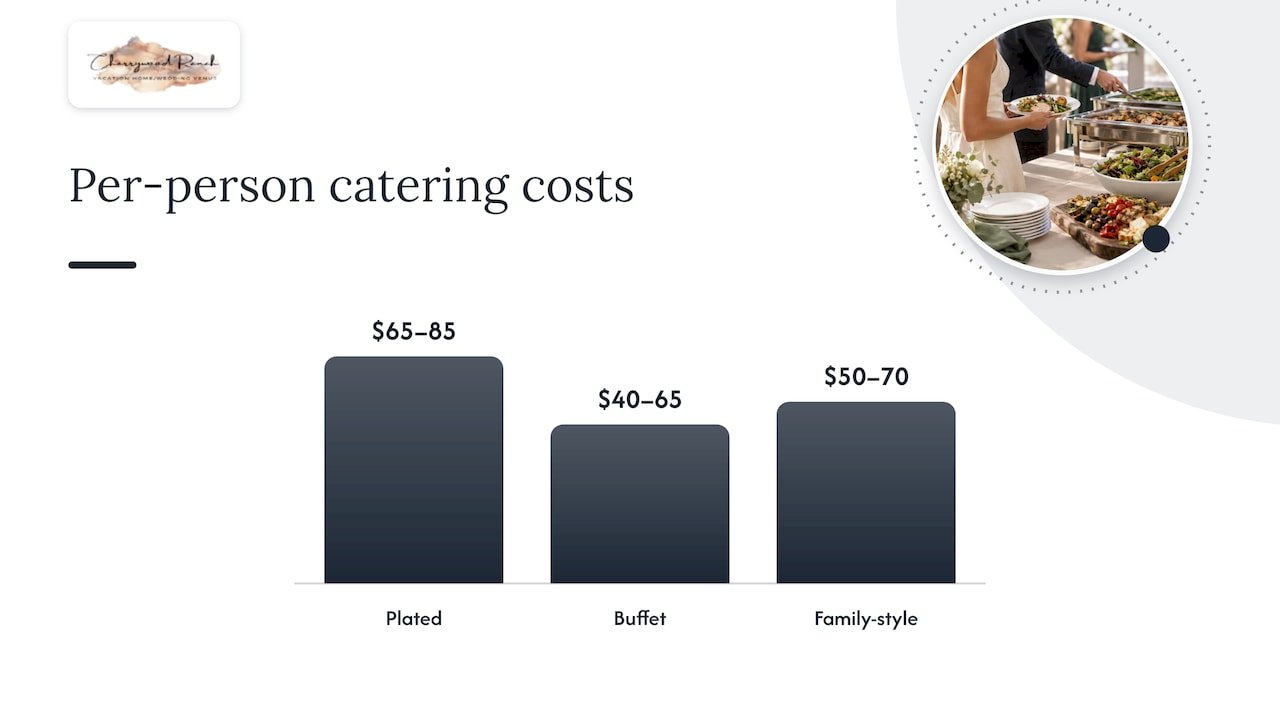
Buffets often cost less in service labor, but caterers prepare about 20% more food to avoid running short, according to The Knot. That tradeoff is one reason buffet and plated prices may end up closer than couples expect.
Industry guidance from Zola puts plated dinners around $65 to $85 per person, buffet service around $40 to $65 per person, and family-style around $50 to $70 per person. These are starting ranges, not quotes, since menu choice, region, and guest count all move the final number.
When you’re comparing proposals, ask each caterer to itemize:
- Labor counts and whether overtime applies past a set hour.
- Equipment costs: chafers, heated holding units, serving stations, and rentals.
- Gratuity and tax, since these are sometimes quoted separately.
- Leftover policy, including whether extra food goes home with you or gets donated.
Line up these items side by side rather than comparing a single per-person number, since two quotes with the same headline price can differ once labor and rentals are factored in.
Guest Experience and Formality: Setting the Vibe
Plated service creates a formal atmosphere. Guests stay seated while servers deliver synchronized courses, which keeps the room calm and makes portioning predictable when your RSVP counts are accurate (The Knot; Zola). It suits couples who want a choreographed reception with a clear start and end to the meal.
Buffet service trades some of that polish for choice. Guests move through a line, pick what they want, and can return for seconds, which tends to loosen up the room and encourage mingling. The tradeoff is possible queuing and uneven attention if lines aren’t planned well, so a buffet needs attendants and a clear layout to feel as smooth as plated service (Cater Directly; Zola).
A few guest-experience notes worth weighing:
- Plated service suits couples prioritizing presentation and a formal pace.
- Buffet suits couples who want menu variety and a more social, self-directed meal.
- Family-style and stations split the difference, keeping guests seated while adding variety, which changes both the seating plan and the pace of the meal.
Pro Tip: If you want buffet variety without the line logistics, ask your caterer whether dual-sided stations could help lines move more smoothly.
Timing and Flow: Keeping Your Reception on Schedule
Neither format is automatically faster. What actually decides your timeline is kitchen plating capacity, the number of buffet lines, attendant staffing, and how well your venue’s layout supports movement, so ask your caterer to model service time for your specific guest count and room (theknot.com).
A few steps make this easier to plan around:
- Ask your caterer for a modeled service time based on your exact guest count and venue layout, not a generic estimate.
- Build buffer time around toasts, speeches, and the first dance so the meal doesn’t compete with other reception moments.
- For buffets, request a staggered table release so every table isn’t lining up at once.
- For plated service, confirm back-of-house plating capacity matches your guest count so courses come out without long gaps.
- Walk the room with your caterer to mirror stations or lines on both sides of the space when guest counts are large.
Getting this right matters more for weekend weddings, where a slow dinner service can eat into time planned for other gatherings. A detailed wedding planning timeline helps you see where meal service fits against speeches, dances, and other scheduled moments.
Staffing, Equipment, and Venue Layout Needs
Plated service leans on people: it typically needs more servers working in sync, plus enough back-of-house space to plate dozens of meals in a tight window. Buffet service leans more on space and equipment: attendants to keep lines moving, chafers and heated holding units to keep food safe, sneeze guards, and extra tables for staging. A clear breakdown of catering staffing roles, ratios, and timing is worth reviewing before you compare quotes, since staffing counts drive much of the labor cost on either side.
Venue layout can make or break either format:
- Buffets need enough floor space for lines without blocking guest circulation.
- Plated service needs a staging area and clear, short paths from kitchen to tables.
- Consider accessible paths for guests using mobility aids, and check applicable accessibility requirements for your venue.
- Power and water access matter more for buffets, since heated holding equipment often needs it.
Walking your venue with your caterer before booking either style helps catch layout problems early.
Dietary Handling, Portion Control, and Food Safety
Buffets generally give you more flexibility for mixed diets since guests choose their own portions and skip what doesn’t work for them. That flexibility comes with a tradeoff: caterers typically prepare about 20% more food for buffet service than for plated meals to avoid running short mid-event (The Knot).
Caterers often build in roughly 20% extra food for buffets, according to The Knot, which is a planning detail worth asking about directly when you compare buffet and plated quotes.
A few practices help manage diets and reduce waste on either style:
- Label every dish clearly, including common allergens, so guests can self-select with confidence.
- For severe allergies, ask attendants to plate from behind the buffet line rather than letting guests serve themselves near shared utensils.
- Confirm your RSVP cutoff date with the caterer so final counts, not early guesses, drive the food order.
- Ask about a leftover policy, whether food gets packed for you, donated, or composted.
Decision Checklist: Questions to Ask Your Caterer and Venue
Walking into a tasting or vendor call with the right questions keeps every quote comparable. Work through these in order:
- Ask, “Can you model service time for our guest count at this specific venue?”
- Request an itemized quote covering food, labor, rentals, chafers or plating equipment, attendants, overtime, tax, and gratuity.
- Ask what their portioning and allergy-labeling procedures look like for your chosen style.
- Confirm the guest-count cutoff for final numbers and whether overtime kicks in past a set hour.
- Ask to see their execution plan: table-release order, staffing counts, and a back-of-house map showing how food moves from kitchen to tables.
A caterer who can answer all five clearly and in detail is usually the one with a reliable execution plan, which matters more than the headline price on their menu.
Sample Budgets: Intimate, Mid-Size, and Weekend Scenarios
Using the ranges from Zola, an intimate dinner for 25 guests at $65 to $85 per person for plated service runs roughly $1,625 to $2,125 in food and base service costs, before rentals or staffing extras. A mid-size buffet for 75 guests at $40 to $65 per person runs roughly $3,000 to $4,875. A 50-guest wedding sits comfortably between these two examples and is a useful anchor point for budgeting.
A few scenario notes:
- Onsite lodging and a multi-day schedule often shift couples toward a casual welcome dinner with stations or buffet, saving plated formality for the main event.
- Family-style, at $50 to $70 per person (Zola), works well when you want variety without full buffet logistics; see our guide to family-style wedding dinners for how it compares.
- For a full weekend celebration, mapping these per-guest ranges against a wedding weekend budget makes it easier to see where a buffet welcome dinner and a plated main event both fit.
A Venue’s View on Planning Meal Service for a Weekend Wedding
When a wedding stretches across a full weekend with onsite lodging, the meal-service decision stops being just about one dinner. It touches welcome gatherings, a main event, and sometimes a farewell brunch, all within the same outdoor spaces and layout.
Venues with flexible outdoor areas and onsite lodging make it easier to pair a relaxed buffet or stations welcome dinner with a more formal plated main event, since guests aren’t traveling between locations for each meal. Whatever style you choose, ask your caterer to model service time against the actual layout you’ll be using.
— Luis
Planning Your Weekend Wedding Menu With Cherrywood Ranch
Choosing between buffet and plated gets easier when your venue can flex around either plan. At Cherrywood Ranch Wedding Venue, our outdoor ceremony and reception spaces in the North Georgia mountains work with both formal plated dinners and relaxed buffet or stations setups, and our onsite lodging means your wedding weekend can include a casual welcome dinner and a formal plated meal, all without anyone leaving the property.
We recommend requesting an all-in quote and a modeled service timeline from your caterer early, so your meal service fits cleanly into your weekend schedule. Explore our wedding and elopement packages to start planning your own weekend celebration.
FAQ
How much does a buffet cost per person for a wedding?
Industry guidance puts buffet service at roughly $40 to $65 per person, according to Zola. The final number depends heavily on menu choice, region, and the equipment and staffing your caterer includes in the quote.
What is plated service in the context of dining?
Plated service means each guest receives an individually portioned meal delivered to their seat, typically in a synchronized sequence of courses. It generally requires advance entrée selections and accurate guest counts so the kitchen can plate efficiently (The Knot).
What are the three types of banquets?
Wedding receptions commonly use plated, buffet, or family-style service, each with different staffing, cost, and pacing. Stations are sometimes treated as a fourth hybrid option that blends buffet variety with a more structured layout.
Is $5,000 a good budget for a wedding?
Whether your budget works depends entirely on guest count and service style, since per-person catering costs alone can range from about $40 to $85 depending on format, according to Zola. A small guest list paired with buffet or family-style service stretches a tighter budget further than plated service for a large group.