
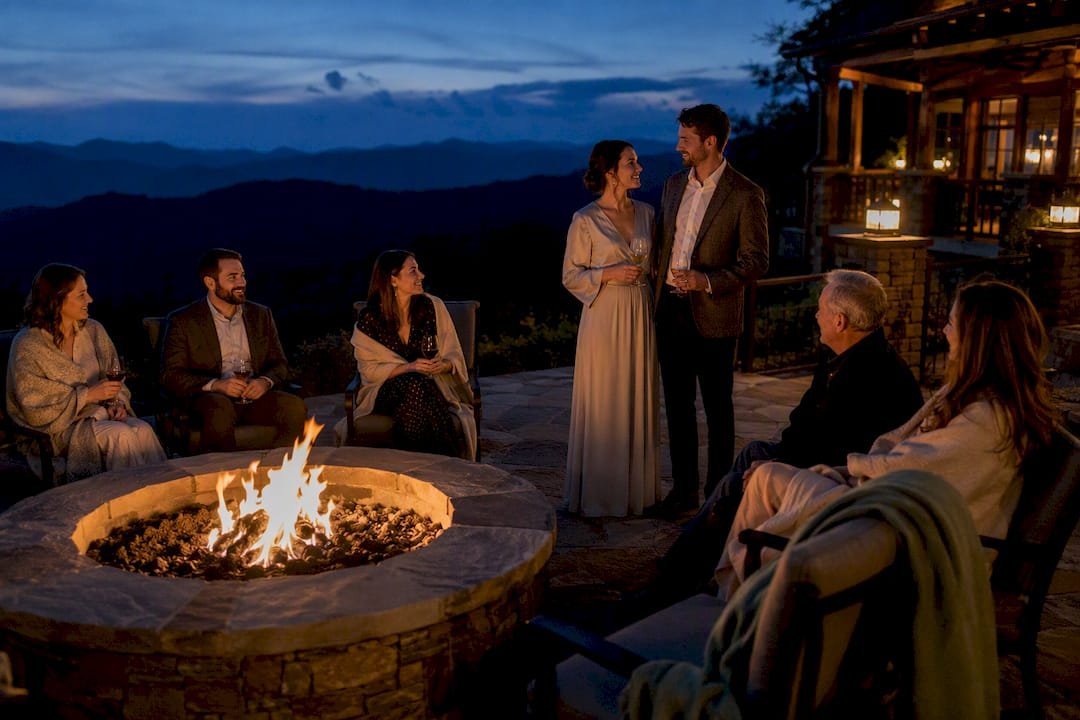
North Georgia earns its reputation as a destination-wedding weekend, not just a ceremony spot. Lock your season and venue first, reserve lodging or room blocks second, and hire a local coordinator third. Peak fall and late-spring dates often require booking well in advance, so the couples who move the fastest on these three decisions end up with the widest choice of vendors and the least travel stress for their guests.
TL;DR:
- Booking your North Georgia wedding venue and accommodations at least 9 to 12 months in advance is crucial for peak fall and late-spring dates due to high demand.
- Confirm rain plans in writing, including indoor alternatives, weather-related stay-in decisions, capacity changes, and potential costs, to avoid last-minute chaos.
- Hiring a local wedding coordinator within a year provides essential on-the-ground support for vendor load-in, transportation, and troubleshooting.
- For out-of-state couples, booking a venue with onsite lodging can simplify logistics by combining ceremony, reception, and accommodation into one site, reducing shuttle costs.
- Planning transportation with printed sheets, advance shuttle arrangements, and early booking of rental cars ensures smooth guest movement amid spotty cell service and remote mountain roads.
Table of Contents
- What Are the Main North Georgia Wedding Venue Styles?
- How Far Is North Georgia From Atlanta for a Wedding?
- How Should Guest Lodging and Shuttles Be Organized?
- What Is a Realistic 12-Month Wedding Planning Timeline?
- How Do You Get a Reliable Rain Plan From a Venue?
- Do You Need a Local Wedding Coordinator?
- How Does Onsite Lodging Change Wedding Planning?
- When Is the Best Time of Year for a North Georgia Wedding?
- What Marriage License Rules Apply in North Georgia?
- Which Local Vendors Should You Book for a North Georgia Wedding?
- What Can Wedding Guests Do in North Georgia During the Weekend?
- What Are the Transportation Options for Wedding Guests?
- What Weather Should Couples Plan Around by Season?
- Are There Regional Wedding Traditions Unique to North Georgia?
- A Planner’s Take on Remote Wedding Logistics
- Book a Weekend at Cherrywood Ranch Wedding Venue
- Where to Find More North Georgia Wedding Planning Resources
- Sources
- FAQ
What Are the Main North Georgia Wedding Venue Styles?
North Georgia’s venue scene breaks into four recognizable lanes, and picking one early narrows almost every other decision you’ll make.
Vineyard venues deliver rolling hills, tasting rooms, and golden-hour photos, but ceremonies are usually outdoors with a tented backup. Mountain overlook venues give you the postcard view, often with a shorter drivable window before sunset changes the light. Barn and farm venues lean rustic, tend to run larger guest counts, and frequently include string lights and reception space under one roof. Luxury estate venues, including properties with onsite lodging, combine ceremony space, reception space, and housing for the wedding party in a single booking.
Capacities and inclusions vary widely by property, and venue roundups consistently advise confirming these details directly with the venue rather than relying on secondhand lists, since published capacities and rain plans are the venue’s own responsibility to disclose.
Before you sign anything, ask on your tour:
- What’s the written backup plan if it rains, and who decides when to use it?
- Is catering in-house, or do we need an outside vendor?
- What are the load-in hours and vendor restrictions?
- Is onsite lodging included, or do guests need offsite rooms?
How Far Is North Georgia From Atlanta for a Wedding?
Hartsfield-Jackson Atlanta International Airport is the gateway almost every out-of-state guest will fly into, and it puts you within a reasonable drive of the whole North Georgia wedding corridor. Chattanooga’s airport is a workable secondary option for guests coming from the north or west.
Drive times run roughly:
- Dahlonega: about 1 to 1.25 hours from Atlanta
- Blue Ridge: about 1 to 1.5 hours
- Ellijay: about 1.25 to 1.5 hours
Those numbers assume clear roads. Fall foliage weekends and winding mountain routes routinely add 30 to 60 minutes beyond what GPS predicts, so build that buffer into every guest communication.
Rideshare coverage thins out fast once you leave main highways, and parking at rural venues is often limited to a gravel lot with no attendant. Cell service gets spotty in the mountains, which is exactly why printed directions and a designated meeting point matter more here than at a city venue. If guests are flying in on tight connections, a service like flight-tracking car service coordination can smooth pickups when arrival times shift.
How Should Guest Lodging and Shuttles Be Organized?
Room blocks need to go in the calendar as soon as your date is set, ideally the same week you sign the venue contract. Hotels near popular wedding corridors sell out fast on peak weekends, and a block held too late leaves guests scattered across three towns.
A simple planning approach:
- Estimate rooms at roughly one room per two guests, then adjust for families and couples traveling together.
- Reserve the block 9 to 12 months out for fall or late-spring weddings.
- Decide shuttle versus carpool early based on how spread out your lodging ends up.
Venues with onsite lodging solve a big piece of this puzzle by putting the wedding party under one roof, which cuts shuttle costs and removes the risk of guests driving unfamiliar mountain roads at night. A single shuttle running a loop between one hotel and the venue is almost always cheaper and simpler than coordinating a fleet of rideshares in an area where rideshare drivers may not even be available.
Pro Tip: If more than half your guest list is staying at one hotel, one shuttle running a tight loop beats three drivers coordinating pickup times over text.
What Is a Realistic 12-Month Wedding Planning Timeline?
Out-of-state couples do best with a timeline built around three checkpoints rather than a month-by-month grind.
- 9 to 12+ months out: Book the venue and date, hire your photographer and a local coordinator, and reserve lodging blocks. This is the window where a single focused in-person visit pays off most, since you’re evaluating load-in routes and cell coverage, not just the view.
- 6 to 9 months out: Lock the caterer, florist, and entertainment. Estimate shuttle needs based on your room block numbers and finalize vendor contracts.
- 3 months to 2 weeks out: Confirm guest transport details, finalize the day-of timeline with your coordinator, and run final vendor checks. A second visit here, even a short one, catches problems a phone call won’t.
Skipping the in-person visit is the single most common regret among remote couples, mostly because photos of a venue rarely show what the parking situation, the walk from ceremony to reception, or the cell signal actually feel like in person.
How Do You Get a Reliable Rain Plan From a Venue?
North Georgia’s seasons each carry a trade-off. Fall brings peak foliage and the heaviest demand. Late spring offers comfortable temperatures with slightly less competition for dates. Summer brings heat and humidity that outdoor ceremonies need to plan around. Winter is quieter and often cheaper, with a real chance of dramatic mountain scenery if there’s any snow.
Whatever season you pick, get the rain plan in writing before you sign. A solid one specifies:
- Exactly where the ceremony moves if it rains
- Who makes that call, and by what time on the wedding day
- Whether moving indoors changes your guest capacity
- Any added cost for using the backup space
Vague verbal promises about “we’ll figure it out” are the number one source of day-of panic at mountain venues, according to editorial guidance on mountain wedding planning.
Pro Tip: Pack layered clothing and closed-toe shoes for guests regardless of season. Mountain evenings drop fast, and gravel paths are unkind to heels.
Do You Need a Local Wedding Coordinator?
A local coordinator functions as your on-the-ground problem solver in a region where you can’t drive over and check something yourself. The core team worth hiring locally includes a day-of coordinator, photographer, caterer, an AV or sound provider, and, if your guest list is large, a shuttle company.
Look for these trust signals before you sign anyone:
- A written contract with cancellation terms spelled out
- Proof of liability insurance
- References from the specific venue you’ve booked, not just general reviews
- A sample day-of timeline they’ve run before
When you interview remotely, ask directly: Are you available on our exact date? What’s your backup plan if you get sick or double-booked? Have you worked this venue’s load-in before? How fast do you respond to texts during planning? Answers that are vague or slow are the answer.
How Does Onsite Lodging Change Wedding Planning?
Cherrywood Ranch Wedding Venue & Vacation Home is a private mountain venue built around a different premise: the ceremony space and the lodging are the same booking. The property houses up to 16 guests onsite, runs multi-day wedding weekend packages, and includes resort-style amenities like a pool and hot tub for the group staying there.
That model removes several planning headaches at once:
- No separate hotel room block to manage for the wedding party
- No shuttle coordination between a hotel and the ceremony site
- Vendor load-in happens at one address instead of two
Couples still need to handle transportation for guests staying offsite and confirm headcount early, since guest-over-10 and guest-over-75 fees apply once the group grows past those thresholds. It’s a structural shortcut for the logistics that usually eat the most planning time.
When Is the Best Time of Year for a North Georgia Wedding?
Fall dominates North Georgia wedding calendars for a reason. Peak foliage, usually mid to late October, turns the mountain backdrops into something photographers build entire portfolios around, and it’s exactly why fall dates require the earliest booking. Late spring, particularly April and May, runs a close second: dogwoods and wildflowers are out, humidity hasn’t set in yet, and temperatures sit comfortably in the 60s and 70s.
Summer weddings happen, but heat and humidity push most ceremonies toward evening timing, and afternoon thunderstorms are common enough that your rain plan isn’t optional decoration. Winter is the quiet season here. Demand drops, pricing often follows, and the mountains occasionally deliver a dusting of snow that makes for dramatic photos, though you’re gambling on weather that can turn genuinely cold.
If your guest list includes people traveling from warmer climates, spring and fall both offer an easier adjustment than a July wedding at midday. If you want the widest vendor selection and the most flexible pricing, winter and midweek summer dates open doors that a Saturday in October simply won’t. The trade-off is real: book fall or late spring and compete for dates 12 to 18 months ahead, or book off-season and gain negotiating room but lose some of the scenery that draws people to this region in the first place.
What Marriage License Rules Apply in North Georgia?
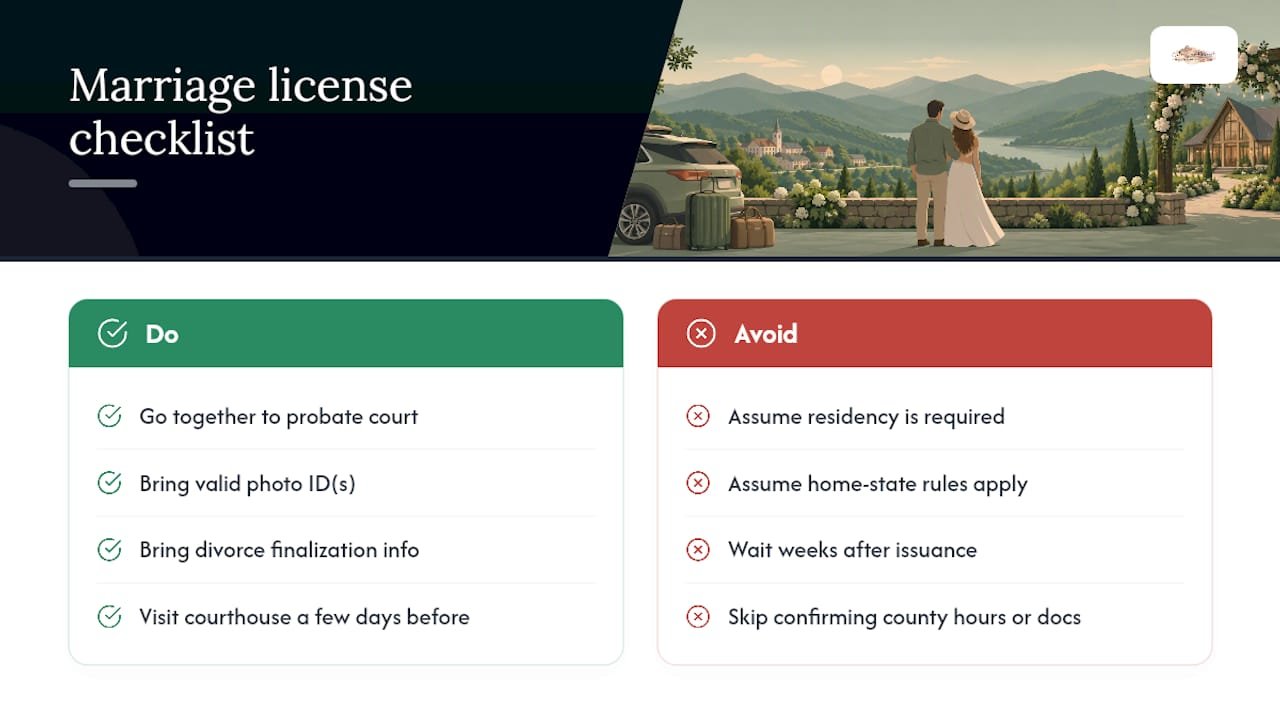
Georgia requires both parties to appear together in person at the probate court in the county where the license is issued, and there’s no residency requirement, so out-of-state couples can apply in the same county as their venue. Georgia does not mandate a waiting period between issuance and the ceremony, and the license is valid statewide once issued, not just in the county that issued it.
Both parties need a valid photo ID and, if either has been divorced, information about when and where that divorce was finalized. Georgia does not require blood tests. Licenses typically remain valid for a set window after issuance, so timing the trip to the courthouse a few days before the ceremony, rather than weeks ahead, avoids any expiration risk.
County probate court hours and exact documentation requirements can vary slightly, so confirm specifics with the probate court in the county where you’re getting married rather than assuming rules match a courthouse in a different county. This is also where local regulatory quirks show up: alcohol service rules and outdoor noise ordinances vary by county, and a policy that’s fine at one venue may need a permit at another just a few miles away. Confirm both with your venue directly rather than assuming your home state’s rules travel with you.
Your officiant needs to be registered to perform marriages in Georgia, and most local coordinators keep a short list of officiants who already know the region’s venues and courthouse procedures.
Which Local Vendors Should You Book for a North Georgia Wedding?
Catering in this region splits between venues with in-house kitchens and outside caterers who specialize in mountain and vineyard events, often with experience cooking for outdoor tents and limited kitchen access. Ask any prospective caterer directly whether they’ve worked your specific venue before. It saves you from discovering equipment gaps the week of the wedding.
North Georgia photographers who specialize in the region tend to know the light patterns at specific overlooks and vineyards, which sunset times work for which season, and where the best backup indoor shots are if weather turns. That local knowledge is worth more than a portfolio alone, since a photographer who’s shot your exact venue already knows its problem spots.
Florists serving this region typically source a mix of greenhouse flowers and, in season, local blooms like dogwood, hydrangea, and wildflowers, which keeps costs more reasonable in spring and fall than trying to import out-of-season stems. AV and sound vendors matter more here than in a hotel ballroom, since outdoor acoustics in a valley or on a mountainside behave unpredictably.
The fastest way to vet any of these vendors from out of state is asking your venue for a short list of who they’ve worked with repeatedly. A caterer or florist who shows up on multiple venues’ recommended lists has already proven they can execute in this terrain, which counts for more than star ratings on a generic listing site.
What Can Wedding Guests Do in North Georgia During the Weekend?
A North Georgia wedding weekend gives out-of-town guests something most single-day weddings can’t: actual time to explore. Wine tasting is the obvious anchor activity, with several vineyards in the Dahlonega and Ellijay areas open for casual visits the day before or after the wedding. Waterfall hikes are a close second. Short, family-friendly trails lead to falls that make for a memorable group outing without requiring serious hiking gear.
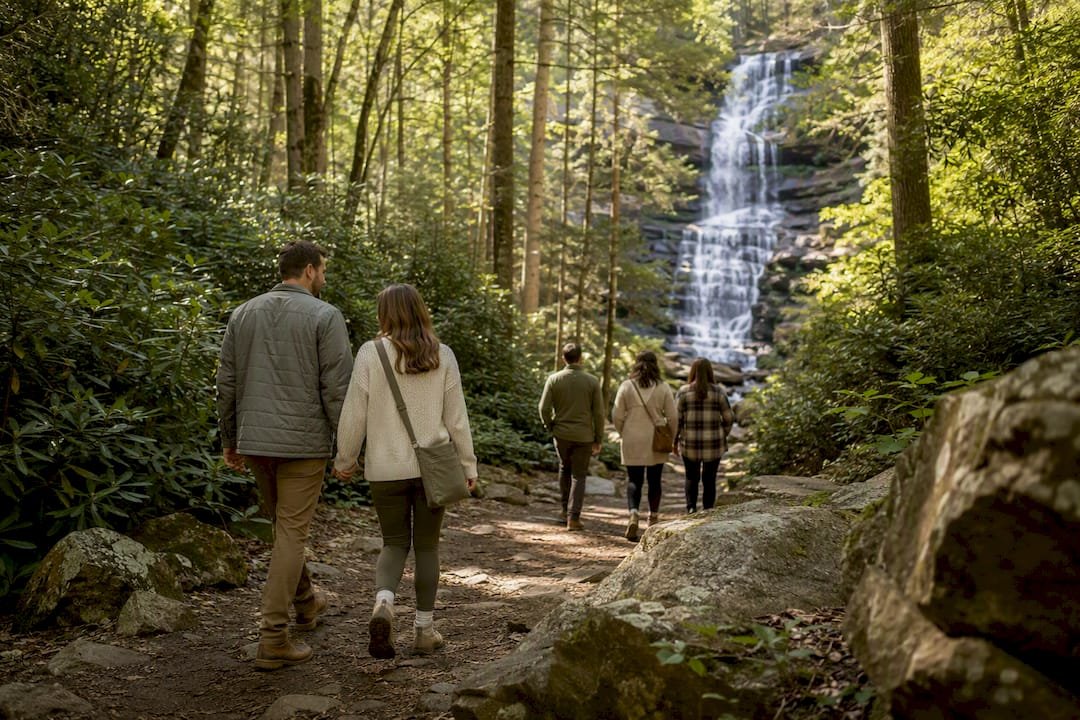
Small mountain towns like Blue Ridge and Dahlonega offer walkable downtowns with local shops, breweries, and casual restaurants, which work well for a rehearsal-dinner spillover or a Sunday brunch before guests head home. Guests staying at a property with onsite lodging can skip the logistics of coordinating a group outing entirely and just gather around a pool or fire pit instead, which is part of why more couples are leaning toward venues that combine both.
Give guests a simple printed list of two or three nearby options rather than assuming everyone will look things up on their phone. Cell service gaps in the mountains make that assumption riskier than it sounds, and a one-page sheet with a few recommended stops does more for guest experience than a group text thread that half the family never sees.
What Are the Transportation Options for Wedding Guests?
Renting a car at the airport is the most reliable option for guests who want flexibility, and it’s close to mandatory for anyone staying outside a shuttle route. Rideshare apps work fine in Atlanta but become unreliable fast once guests leave the interstate corridor, since driver availability in rural counties is thin and wait times can stretch well past what a city dweller expects.
For guests without a rental car, a group shuttle running a fixed loop between the hotel block and the venue is the most dependable option, especially for the wedding day itself when you don’t want guests navigating unfamiliar roads after dark. Some couples split the difference: rent a car for close family who arrive early, and run a shuttle for the wedding-day crowd who just need one round trip.
Whatever mix you choose, hand out a printed transportation sheet at check-in with pickup times, driver contact numbers, and a backup plan if someone misses a shuttle. It’s a small detail that prevents the most common day-of complaint at remote venues: guests standing in a parking lot with no signal, unsure where to go.
What Weather Should Couples Plan Around by Season?
Weather planning in North Georgia goes beyond picking a pretty season. Fall days can swing 30 degrees between morning and evening, so a ceremony that starts warm can end with guests reaching for jackets. Late spring brings occasional pop-up showers that pass quickly but arrive with little warning, which is exactly why a written rain plan matters even on a forecast that looks clear.
Summer heat and humidity change more than comfort. They affect flower freshness, makeup longevity, and how long guests can comfortably stand outside for a ceremony, which pushes many summer weddings toward late afternoon or evening start times. Winter’s cold is more predictable than it sounds. Daytime highs in the 40s and 50s are common, and the real risk is an isolated ice event on mountain roads rather than the temperature itself.
Across every season, the strategy is the same: get your written rain or heat contingency locked before the invitations go out, not the week of the wedding, and communicate the plan to guests so nobody’s caught off guard by a last-minute venue change.
Are There Regional Wedding Traditions Unique to North Georgia?
North Georgia weddings carry a distinct Appalachian and Southern character that shows up in small, specific ways. Rehearsal dinners here often lean toward casual, family-style gatherings, barbecue, or a low-country boil, rather than a formal seated dinner, especially at venues where the wedding party is already staying onsite together.
Bluegrass and string-band music make regular appearances, whether as full entertainment or just a cocktail-hour touch that fits the mountain setting. Local produce and honey show up in favors and catering menus more often here than in a city wedding, a nod to the region’s farming heritage. Some venues also lean into the area’s natural landmarks, waterfalls, overlooks, orchards, building a short guided walk or golden-hour photo stop into the wedding-weekend itinerary rather than treating the scenery as just a backdrop.
None of this is mandatory, but couples who lean into the region’s character, rather than importing a formula from a big-city wedding, tend to end up with a weekend that feels distinctly like North Georgia rather than a generic outdoor event that happened to be held in the mountains.
A Planner’s Take on Remote Wedding Logistics
The single highest-leverage move for an out-of-state couple isn’t the dress or the flowers. It’s booking one in-person venue visit early and hiring a local coordinator before you’ve locked every other vendor. That combination catches the problems photos never show, uneven parking, weak cell signal at the ceremony spot, a load-in path that’s steeper than it looks online, months before they can turn into day-of scrambles.
Before that visit, write down your actual deal-breakers: guest capacity, rain-plan clarity, lodging distance, noise restrictions. Walk the tour holding that list, not just your Pinterest board. It’s the difference between falling for a view and choosing a venue that will actually hold up on the day.
— Luis
Book a Weekend at Cherrywood Ranch Wedding Venue
If you’ve read this far, you’ve probably noticed how many logistics problems disappear when the venue and the lodging are the same address. Cherrywood Ranch Wedding Venue & Vacation Home was built around exactly that idea: a private North Georgia mountain property with onsite lodging for up to 16 guests, resort-style amenities including a pool and hot tub, and wedding weekend packages designed so your family can gather in one place for multiple days instead of shuttling between a ceremony site and three different hotels.

For couples weighing the region’s vineyards, barns, and mountain overlooks against something that folds lodging directly into the celebration, this is worth a direct look. Check available dates and explore weekend packages to see what’s included, or book a stay to start locking down your weekend before peak-season dates fill up.
Where to Find More North Georgia Wedding Planning Resources
For deeper venue lists, remote-planning checklists, and drive-time breakdowns, these guides go further than a single article can:
- Ever Weddings: planning from out of state
- Aisle Advisor: North Georgia venue roundup
- Ashly McCoy: North Georgia venue guide
For capacity, pricing, and booking availability, the venue’s own published pages remain the final word.
Sources
- Plan a North Georgia Wedding from Out of State | Ever Weddings
- Best North Georgia Wedding Venues: Vineyards & Barns | Aisle Advisor™
- North Georgia Wedding Venues: The Ultimate Guide to Your Dream Celebration – Ashly McCoy
FAQ
How Far in Advance Should We Book a North Georgia Venue?
Peak fall and late-spring dates commonly require booking well in advance, especially for venues with published capacity limits and in-house catering. Off-season dates in winter or midweek offer more flexibility and shorter lead times.
Is North Georgia a Good Destination Wedding Location for Out-of-State Guests?
Yes. The region sits within roughly 1 to 2 hours of Atlanta’s major airport, and venues offering onsite lodging let out-of-state couples consolidate their wedding party’s travel into one location instead of coordinating multiple hotels.
Do We Need a Local Wedding Coordinator If We Live Out of State?
A local coordinator is close to essential for remote couples, since they handle vendor load-in, day-of logistics, and problems that a phone call from another state can’t solve fast enough. Most couples hire one 9 to 12 months before the wedding, alongside their venue and photographer.
What Does Cherrywood Ranch Include in a Wedding Weekend Package?
Wedding weekend packages commonly combine a private mountain ceremony and reception space with onsite lodging and amenities such as a pool and hot tub. Pricing for the wedding and 3-day wedding packages is available directly through the venue’s services page.
What Should We Do If It Rains on Our North Georgia Wedding Day?
A solid venue contract specifies exactly where the ceremony moves, who makes that call, and by what time on the wedding day. Confirm this in writing before booking, since vague verbal rain plans are the leading cause of day-of confusion at mountain venues.