
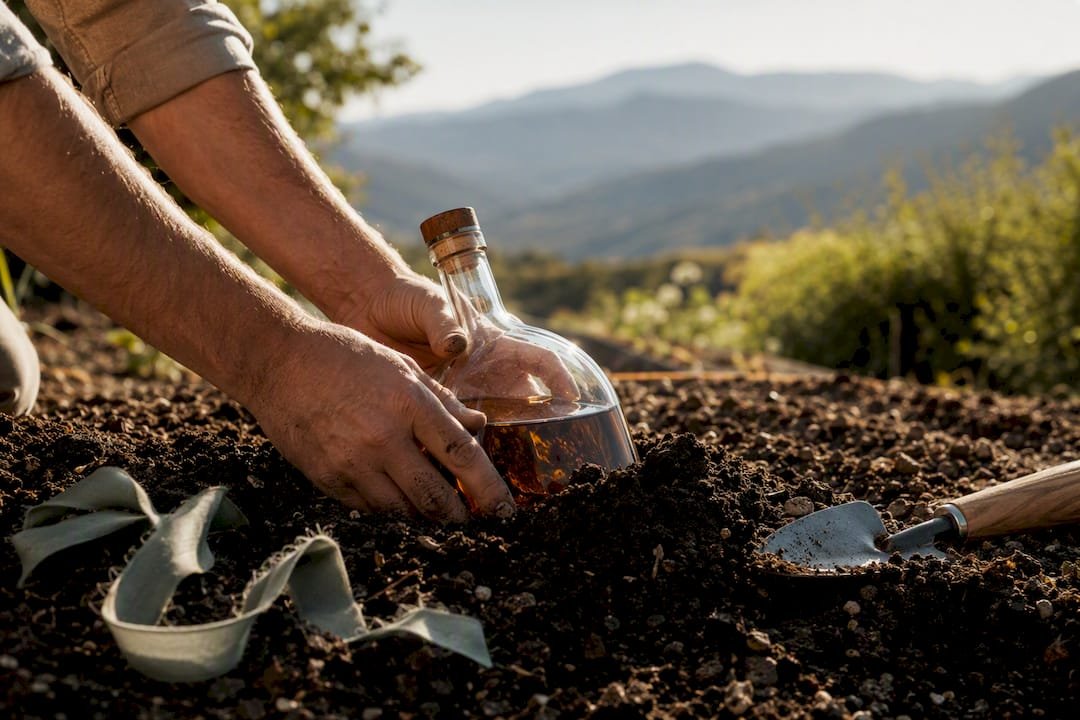
Southern wedding traditions are regional customs, like burying a bottle of bourbon, pulling charms from a cake, and marching in a second-line parade, that couples pick and adapt to bring warmth and local color to a modern celebration. The strongest approach isn’t trying to fit them all in. Choose three or four that mean something to you, execute them well, and let the rest of the day feel like yours.
TL;DR:
- The bourbon burial should be scheduled exactly 30 days before the wedding, with permissions confirmed and the location marked for easy retrieval.
- Cake pulls are now often replaced with ribbon pulls or charm bracelets to avoid safety issues while maintaining symbolic meaning during the reception.
- Second-line parades require permits and careful planning, especially outside New Orleans, to ensure proper coordination with local regulations and venues.
- The groom’s cake offers a personalized touch, often reflecting hobbies or interests, and is best served at the rehearsal dinner to simplify the main dessert table.
- Hosting multiple Southern customs over a weekend enhances their meaning, especially at venues with onsite lodging, making each tradition feel more relaxed and memorable.
Table of Contents
- What Is the Bury the Bourbon Tradition, and How Do You Do It Right?
- Cake Pulls: The Charm Tradition Behind the Southern Wedding Cake
- Second Line Parades: New Orleans Roots and What They Take to Plan
- Groom’s Cake and Big Wedding Parties: History Behind the Extras
- Bridal Luncheons, Portraits, and Heirlooms Worth Passing Down
- Southern Attire and Décor: Seersucker, Boots, and Mason Jars Done Right
- Southern Menus, Ring Warming, and Ceremony Readings That Fit
- Staging Southern Traditions at a Modern Venue: A Practical Checklist
- Where Southern Wedding Traditions Actually Come From
- How Southern Wedding Customs Differ Across the Region
- Church Traditions and Religious Customs at Southern Weddings
- Music and Dance Customs Southern Weddings Lean On
- Southern Wedding Etiquette Guests Are Expected to Follow
- Traditional Southern Wedding Favors and Parting Gifts
- Choosing Traditions That Actually Fit Your Wedding
- Hosting Southern Traditions Across a Full Wedding Weekend
- Sources
- FAQ
What Is the Bury the Bourbon Tradition, and How Do You Do It Right?
The custom calls for burying a full, unopened bottle of bourbon upside down at the ceremony site about a month before the wedding, then digging it up on the big day to share with guests. The upside-down position is said to keep rain away, a bit of folklore that Charleston’s tourism bureau documents as one of the region’s most requested rituals. The Knot confirms the timing and notes many couples keep the bottle afterward as a keepsake rather than drinking it on the spot.
Before you grab a shovel, check with your venue. Groundskeeping rules vary, and some properties restrict digging entirely.
- Get written permission and ask about approved burial spots
- Mark the exact location with a stake or GPS pin so you can find it a month later
- Assign someone (your planner or a groomsman) to handle the digging that morning
- Cue your photographer to capture the unearthing as a candid moment, not a posed shot
Pro Tip: If your venue has a no-dig policy, bury the bottle in a large planter or decorative urn instead. You get the same ritual without touching the ground.
Cake Pulls: The Charm Tradition Behind the Southern Wedding Cake
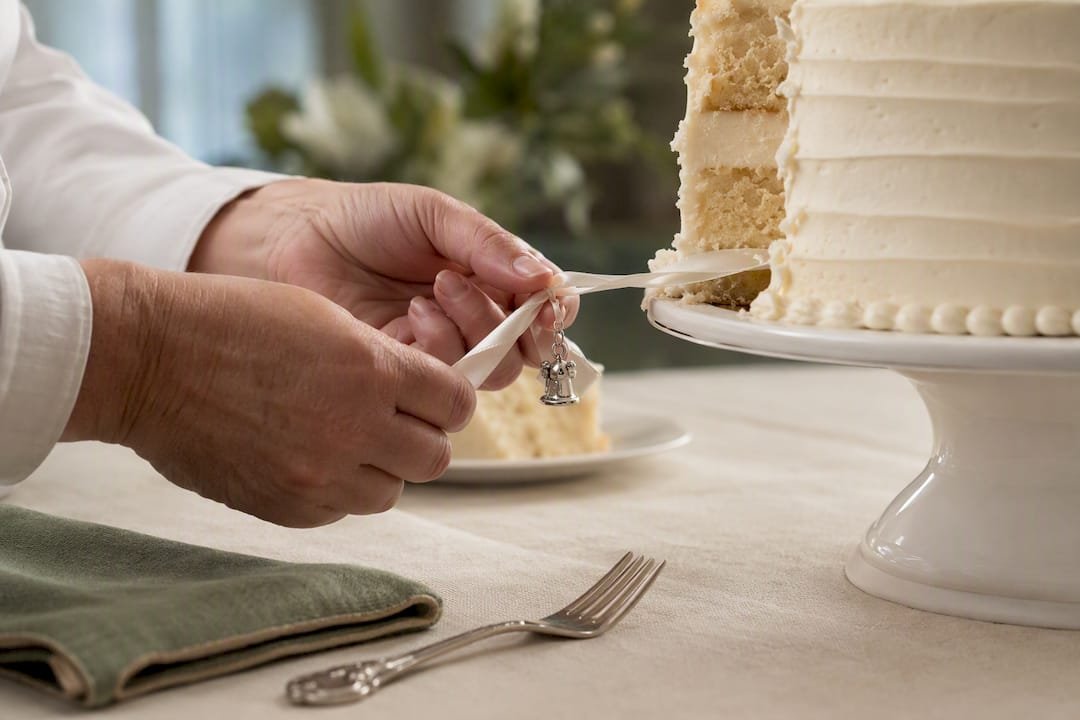
A cake pull embeds small silver charms into the cake batter, each tied to a ribbon that trails out from under the frosting. Guests, usually the bridal party, pull a ribbon before the cake is cut, and whatever charm comes out predicts their future: a ring for engagement, an anchor for stability, a wishbone for good luck.
Baking metal into food raises obvious safety questions, so most modern caterers skip the literal version and adapt the symbolism instead.
- Charm bracelets handed out at a bridal shower, each piece holding the same meaning as the old cake charms
- Ribbon pulls attached to a decorative side cake rather than the main dessert
- A charm-pull moment staged at the rehearsal dinner instead of the reception, keeping the wedding cake photo-ready
Southern Living notes that swapping baked-in trinkets for bracelets or ribbon pulls preserves the symbolism without the safety or service headaches a caterer would otherwise flag. Time it during a lull in the reception, right after toasts, so your photographer can catch reactions instead of competing with the cake-cutting shot.
Second Line Parades: New Orleans Roots and What They Take to Plan
A second line is a brass-band-led parade that walks the couple and their guests from ceremony to reception, handkerchiefs waving and parasols twirling overhead. The custom traces back to New Orleans jazz funeral processions, where a “second line” of onlookers would join the main procession behind the band, a tradition the Andrew Jackson Hotel’s blog traces to the city’s brass band culture.
In New Orleans proper, a second line often means a full city block and a professional brass band. At a private venue, you can scale the same energy down to a short walk from an outdoor ceremony site to your reception tent, band or no band.
- Confirm whether your city or venue requires a parade permit for the route you want.
- Hire a brass band or hi-hat drummer through a local booking agency, not a general wedding band.
- Walk the route in advance and flag any noise restrictions your venue enforces after certain hours.
- Hand out parasols or handkerchiefs to guests before the ceremony ends so nobody scrambles for a prop.
Outside New Orleans, treat it as a small procession that needs the same coordination as any other guest activity: permits, timing, and a vendor who knows the format, as etiquette guides for the tradition point out.
Groom’s Cake and Big Wedding Parties: History Behind the Extras
The groom’s cake dates to Victorian-era England, where a second cake, distinct from the bride’s, was baked and served alongside the main dessert. Wikipedia’s entry on the tradition notes it was originally denser and richer than the bride’s cake, often a fruitcake, and meant to reflect the groom’s personality.
That personalization is exactly what makes it fun today.
- Bake it in a shape tied to a hobby: a bourbon barrel, a hunting dog, a favorite sports team’s logo
- Contrast the flavor with your main cake. If the wedding cake is vanilla and buttercream, make the groom’s cake chocolate, red velvet, or something spiced
- Serve it at the rehearsal dinner if you want the wedding reception dessert table simpler
Southern weddings also lean into big wedding parties and the older “pounding party” custom, where neighbors once brought a pound of a staple food (sugar, flour, coffee) to help stock a new household. Modern versions show up as a bridal shower where guests bring pantry staples or kitchen tools instead of gifts, keeping the spirit of communal support without the formality.
Bridal Luncheons, Portraits, and Heirlooms Worth Passing Down
A bridal luncheon is a smaller, calmer gathering than a bachelorette party, usually held the week of the wedding for close family and the bridal party. Think a seated brunch with mimosas rather than a night out. It gives the bride a moment to thank the people closest to her before the wedding-day chaos starts.
Bridal portraits are a related custom: formal photos taken in the wedding gown before the ceremony, sometimes weeks in advance, then displayed at the reception or given to family as keepsakes. Southern Living lists both as staples of the region’s wedding calendar.
Heirlooms round out the pre-wedding customs, especially the “something old, something new, something borrowed, something blue” saying.
- Wear a grandmother’s brooch pinned inside the bouquet as your “something old”
- Borrow a mother’s veil or handkerchief rather than buying a new one
- Carry a blue ribbon stitched into the hem of your dress where no one but you knows it’s there
Southern Attire and Décor: Seersucker, Boots, and Mason Jars Done Right
Seersucker suits show up constantly at Southern weddings for one practical reason: the puckered cotton weave breathes in humid summer heat, which is why groomsmen and grandfathers alike reach for it. Cowboy boots under a wedding dress or peeking from beneath a groomsman’s cuff are common at ranch and farm venues, though most couples save the boots for the reception and wear dressier shoes for ceremony photos.
Décor follows the same relaxed, personal logic.
- Mason jars as centerpieces, lanterns, or drinkware for a rehearsal dinner
- Family monograms on cocktail napkins, welcome signs, or the dance floor itself
- Porch seating or rocking chairs set up for a “sit and visit” corner away from the dance floor
Hospitality drives the reception format, too. Family-style dinners and food stations let guests linger, refill their own plates, and talk longer than a plated dinner allows, which is the whole point of a family-style wedding dinner built for groups of 50 to 150. If your ceremony is outdoors, plan your attire and décor together. Boots and seersucker both hold up better outside than delicate fabrics do, a detail worth weighing when you’re mapping out outdoor ceremony logistics.
Southern Menus, Ring Warming, and Ceremony Readings That Fit
Southern reception menus lean into comfort food served family-style: fried chicken, shrimp and grits, barbecue plates, with pecan pie and peach cobbler rounding out the dessert table. Perfect Wedding Guide points to this hospitality-forward service style as one of the region’s defining reception traits, alongside sweet tea and bourbon-based cocktails as the signature drinks.
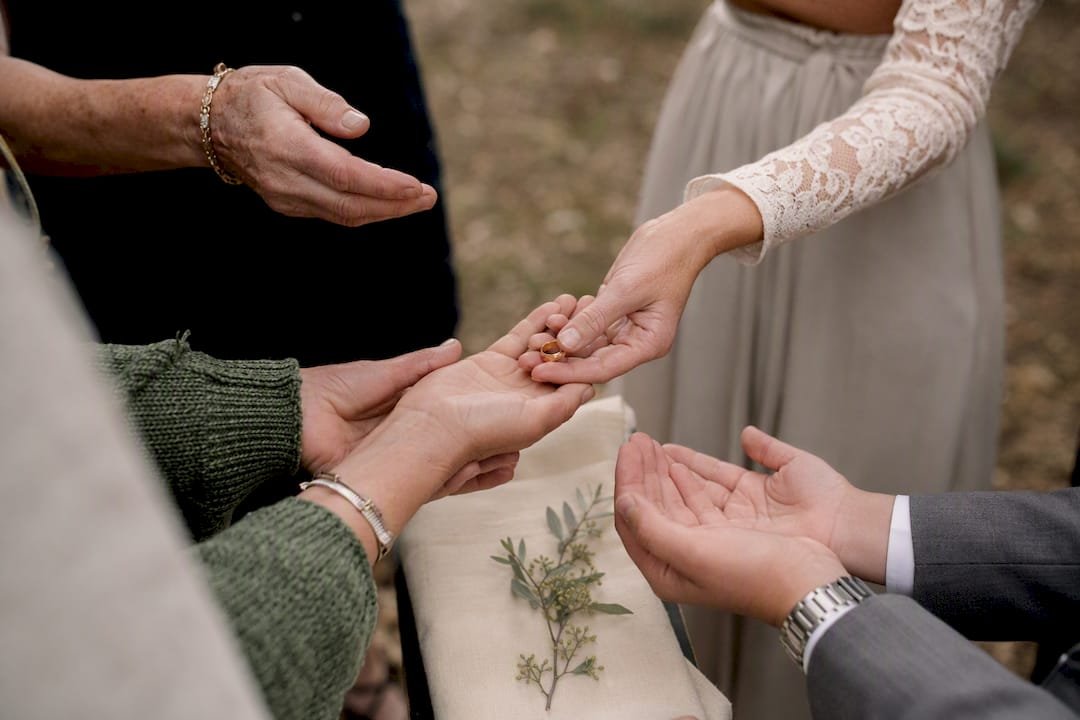
Ring warming is a quieter ritual, often worked into the ceremony itself. The rings pass hand to hand among seated guests before the vows, each person holding them for a second and silently offering a blessing, a practice detailed in ring-warming ceremony scripts officiants use to guide the moment. It takes two or three minutes and works especially well at smaller, seated ceremonies where guests are close enough to pass the rings without disrupting the flow.
- Add a reading about hospitality or family legacy, common choices at Southern ceremonies
- Ask your officiant to explain ring warming in one sentence before it starts, so guests know what’s happening
- Pair the dessert table with a “help yourself” sign instead of a formal cake-cutting only
Statistic Callout: Couples researching Southern weddings tend to favor a short list of signature touches over trying to include every custom, which lines up with what Perfect Wedding Guide’s coverage of the region recommends: pick a few meaningful details rather than overload the day.
Staging Southern Traditions at a Modern Venue: A Practical Checklist
Traditions like burying the bourbon work best when you treat them as a small project with its own timeline, not an afterthought squeezed in the week before.
- Call your venue coordinator a month out and confirm burial or decor permissions in writing.
- Pick your ceremony date and count backward exactly 30 days for the bourbon burial.
- Mark the spot, photograph it, and note it on your day-of timeline so someone remembers to dig it up.
- Build a rain plan for any outdoor ritual. Southern weather doesn’t always cooperate.
- For a smaller wedding, scale back a second line to a short walk with a Bluetooth speaker instead of a hired band. For a larger one, book the band early since good ones fill up fast in wedding season.
A wedding weekend with onsite lodging gives you room to spread these customs out instead of cramming them into one afternoon. Bury the bourbon during the rehearsal weekend, unearth it at the reception, and host a bridal luncheon the morning after the ceremony while guests are still on the property, an approach that works well at venues built around multi-day stays.
Pro Tip: Assign one person, not the couple, to be the “tradition keeper” for the weekend. They track the bourbon location, cue the ring warming, and make sure nothing gets forgotten in the excitement.
Where Southern Wedding Traditions Actually Come From
Most Southern wedding customs trace back to a blend of English, French, and African influences that shaped the American South differently than the rest of the country. Bridal luncheons and formal portraits echo Victorian English etiquette, the same source that gave the region its groom’s cake. Second-line parades come from New Orleans’s distinct Creole and jazz funeral culture, a tradition with no real equivalent anywhere else in the country.
Rural and agricultural life shaped other customs. The pounding party, where neighbors brought staple foods to help a new couple stock their pantry, reflects a farming economy where cash gifts were less practical than flour, sugar, or coffee. That same self-sufficient, neighbor-helping-neighbor spirit shows up in the region’s hospitality culture more broadly: big tables, plenty of food, and everyone welcome.
Bourbon’s role isn’t an accident either. Kentucky has been the center of American bourbon production since the late 1700s, and the drink became woven into Southern social life as wine did in parts of Europe. Burying a bottle before a wedding turned a regional product into a piece of ceremony.
None of these traditions stayed frozen in time. Cake pulls, second lines, and bourbon burials all show up in weddings today because they got adapted generation after generation, not preserved like museum pieces. A bride in the 1950s pulling a silver charm from a cake and a bride today swapping that for a charm bracelet are doing the same thing: taking a custom seriously enough to keep it, but loosely enough to make it fit her own wedding. That flexibility is arguably the most Southern part of the whole tradition.
How Southern Wedding Customs Differ Across the Region
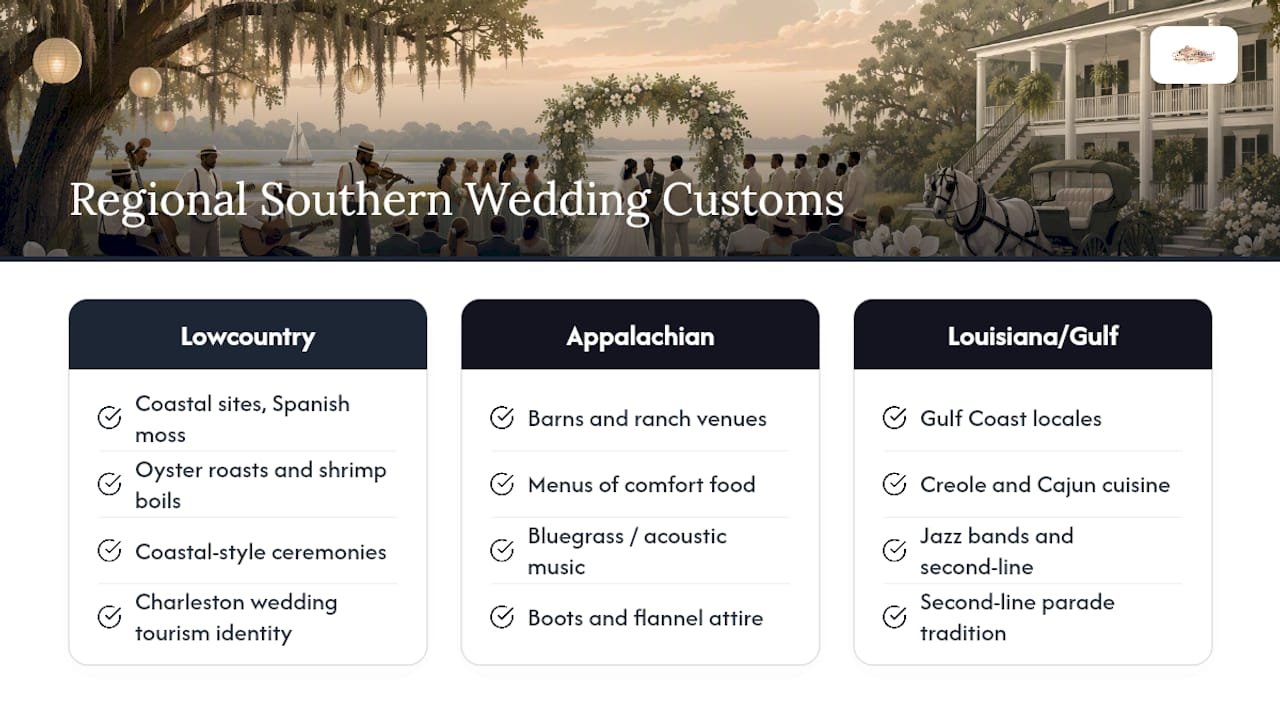
“The South” isn’t one wedding culture. Lowcountry weddings in coastal South Carolina and Georgia lean into oyster roasts, shrimp boils, and Spanish-moss-draped ceremony sites, a look and menu shaped by the coast itself. Charleston in particular has built an entire wedding tourism identity around this aesthetic, which is part of why the region’s tourism board actively documents its own wedding customs.
Appalachian and mountain weddings, common across North Georgia, western North Carolina, and East Tennessee, tend toward a more rustic register: barn or ranch venues, bluegrass or acoustic music, and menus built around comfort food rather than seafood. Boots and flannel show up more here than seersucker does.
Louisiana and the Gulf Coast bring the strongest Creole and Cajun influence, which is where second-line parades and jazz-band recessionals are most at home. A second line feels native in New Orleans in a way it doesn’t quite in, say, rural Virginia, where it would read as a borrowed custom rather than a local one.
The Deep South interior, Alabama, Mississippi, inland Georgia, holds onto formal church weddings and bridal luncheons more tightly than coastal or mountain regions do, often with stronger ties to a specific congregation or family church. None of these regional flavors are more “authentically Southern” than the others. They’re regional dialects of the same broader hospitality culture, and the right move is picking the one that matches your own roots or your venue’s setting rather than importing a custom that feels borrowed.
Church Traditions and Religious Customs at Southern Weddings
Church weddings remain far more common in the South than in many other parts of the country, and the ceremony itself often follows a specific denominational structure rather than a fully customized script. Baptist and Methodist ceremonies, the two largest Protestant traditions across the region, typically include a formal charge to the couple, scripture readings, and a pastoral blessing that a couple doesn’t write themselves.
Many Southern couples still hold their ceremony in the church where one of them grew up, sometimes the same building where their parents or grandparents married. That continuity matters more than venue aesthetics in a lot of Southern families, and it shapes decisions the wedding industry doesn’t always account for, like scheduling around a congregation’s regular service times or looping in a family pastor months before hiring any other vendor.
Even couples who marry at a non-religious venue often keep a religious thread running through the ceremony: a reading from Corinthians, a hymn during the processional, or a moment of prayer before the vows. Ring warming, discussed earlier, grew out of this same instinct. It’s a way to involve the whole congregation of loved ones in blessing the marriage, even outside a church building.
None of this means a modern or secular ceremony is somehow less Southern. Interfaith and non-religious Southern weddings have grown steadily more common, and they borrow the same hospitality-driven reception customs regardless of what happens during the ceremony itself. The thread that stays constant is treating the vows themselves, however they’re framed, as a serious, witnessed moment rather than a quick formality before the party starts.
Music and Dance Customs Southern Weddings Lean On
Live music carries more weight at Southern weddings than a DJ playlist alone typically does. Bluegrass and acoustic string bands are common at rustic or mountain venues, often playing during cocktail hour or the processional itself instead of recorded tracks. Brass bands, tied directly to the second-line tradition, dominate in Louisiana and along the Gulf Coast.
Beyond ceremony music, a handful of reception traditions repeat across the region. The anniversary dance, where every married couple in attendance joins the floor and gets eliminated by years married until only the longest-married pair remains, is a Southern reception staple that doubles as a sentimental crowd moment. Father-daughter and mother-son dances get treated with real ceremony, often set to a specific family song rather than a generic slow number.
Choosing the right reception songs matters enough that couples often bring in a specialist rather than leaving it to chance, and resources like DJ Phoenix’s guide to reception song selection walk through how to sequence a night from cocktail hour through the last dance. Getting that sequencing right, cocktail music, dinner background, then a shift into dancing, matters just as much as any individual song choice.
Southern Wedding Etiquette Guests Are Expected to Follow
Southern wedding etiquette leans formal in a few specific ways that trip up out-of-town guests. Handwritten thank-you notes remain a near-universal expectation, not an optional nice-to-do, and Southern hosts often send them within weeks rather than months. RSVP promptness matters more here too, since headcounts drive catering decisions for family-style meals in a way they don’t for a simple plated dinner.
Dress codes get taken seriously, especially for church ceremonies. Guests are generally expected to avoid white, dress modestly for any ceremony held in a sanctuary, and skip casual daytime wear even for an outdoor rustic wedding. Southern hosts also tend to expect a thank-you to be extended to the whole family, not just the couple, particularly when parents have hosted a shower or rehearsal dinner.
Hospitality runs both directions. Guests are expected to show up on time and stay through the toasts, but hosts are expected to make sure nobody goes hungry or sits without a chair, which is part of why family-style and station-based meals have become so popular. They keep food moving and guests comfortable for hours rather than one seated course.
Traditional Southern Wedding Favors and Parting Gifts
Southern wedding favors tend to be edible, practical, or both, a shift away from the trinket favors common elsewhere. Mini bottles of bourbon, small jars of local honey or jam, or pecan pralines wrapped in ribbon are common send-off gifts, tying the favor back to regional food and drink rather than a generic keepsake.
Monogrammed items carry real weight in Southern gift culture, whether that’s a set of engraved glasses, a personalized koozie for an outdoor reception, or embroidered handkerchiefs handed out for a tearful ceremony. Sweet tea packets or small bags of coffee blend the favor with the region’s signature drinks. Whatever you choose, a favor that guests can actually use or eat tends to land better than one that ends up in a junk drawer, which is part of why the edible, local option has stayed popular for so long.
Choosing Traditions That Actually Fit Your Wedding
Not every Southern custom deserves a spot in your wedding, and trying to force all of them in usually backfires. The ones worth keeping are the ones that mean something to you or your family, not the ones that photograph well on a wedding blog.
Pick two or three traditions and execute them properly rather than doing eight halfheartedly. A ring warming ceremony done with real intention beats a bourbon burial rushed through because you ran out of planning time. Guest comfort still comes first: a second-line parade in July heat needs shade and water stations, not just a brass band.
Whatever you choose, document it. Photograph the bourbon bottle going into the ground, keep the charm-pull ribbons, save the ring-warming card your officiant reads aloud. Those small objects end up mattering more than most of the day’s bigger decisions.
— Luis
Hosting Southern Traditions Across a Full Wedding Weekend
Most Southern customs, burying a bottle a month out, a bridal luncheon the morning after, a ring warming during a small ceremony, work best when they aren’t rushed into a single afternoon. That’s the real advantage of booking a venue built for a full weekend rather than a single-day rental: you get the time and the space to let each tradition breathe. A venue with an outdoor mountain ceremony site and onsite lodging can provide a setting where the bourbon burial can happen during your rehearsal stay, the bridal luncheon can happen the next morning on the same property, and nobody has to pack up and leave between events.

Amenities such as a pool, hot tub, and shared living spaces provide opportunities for adaptations of house-party or pounding-party traditions to actually happen, rather than existing only as an idea in a Pinterest board. If a multi-day celebration in the North Georgia mountains sounds like the setting your Southern-inspired wedding needs, take a look at the wedding weekend packages at Cherrywood Ranch and check dates for your season.
Sources
- 8 Southern wedding traditions
- Everything to know about burying the bourbon — The Knot
- What to know about Southern weddings — Southern Living
- Southern wedding traditions
FAQ
What Are Five Common Southern Wedding Traditions?
Burying the bourbon a month before the ceremony, cake pulls with charm ribbons, second-line parades, groom’s cakes, and ring warming during the ceremony are five of the most recognizable Southern customs.
What Are Five Common Wedding Superstitions?
Popular superstitions include not seeing the groom before the ceremony, wearing “something old, something new, something borrowed, something blue,” avoiding a rehearsal in the actual wedding dress, catching the bouquet for luck in marriage, and treating rain on the wedding day as a sign of good fortune.
What Is the Bury the Bourbon Tradition?
Couples bury a full, unopened bottle of bourbon upside down at the ceremony site exactly one month before the wedding, then dig it up on the wedding day to share, a custom rooted in Southern folklore about keeping rain away.
Do You Need a Permit for a Second-Line Parade?
Outside New Orleans, treat any second-line-style procession as a small parade that may need a permit or venue sign-off, especially if it moves through public streets or shared property.
What Is the Rarest Month to Get Married?
January and February see the lowest wedding volume nationally, making them the rarest months for a wedding date, largely due to cold weather and the post-holiday season.