
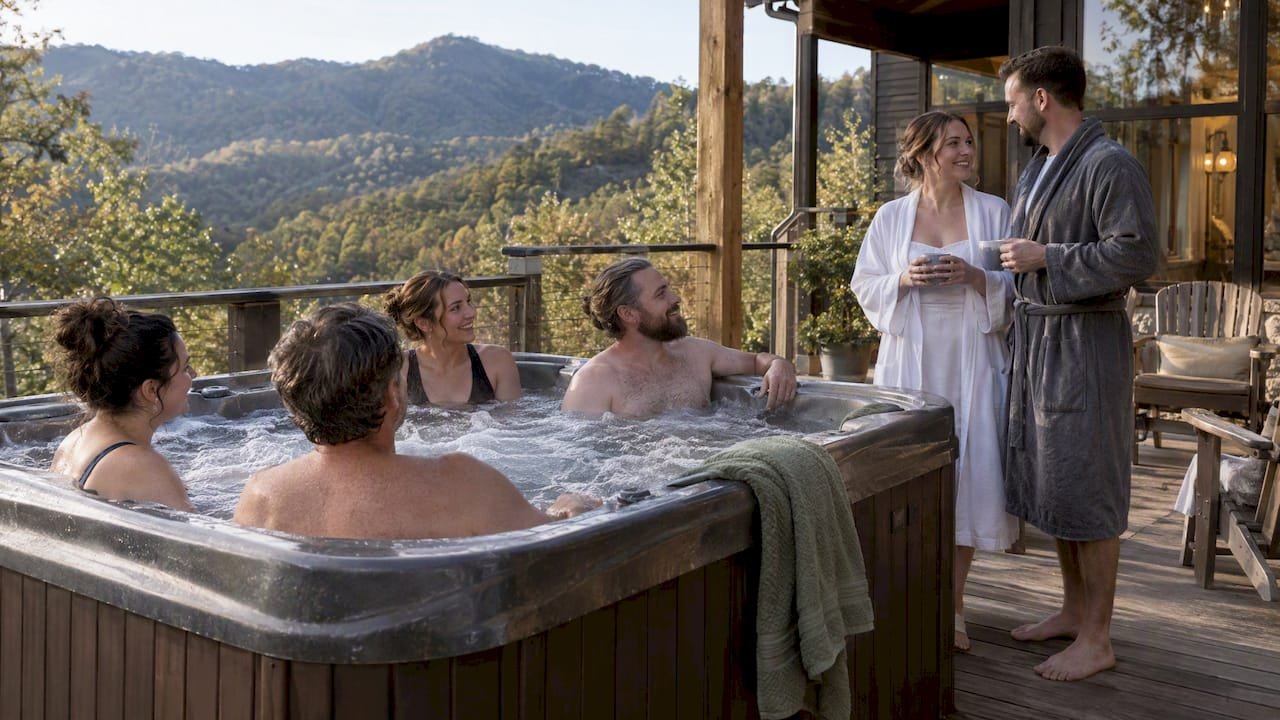
Yes, if you want a relaxed, intimate multi-day celebration: book a venue or vacation rental that pairs on-site lodging with a private, professionally maintained hot tub, and confirm the maintenance and safety policies before you sign anything. Cherrywood Ranch Wedding Venue & Vacation Home is one example of this all-in-one format. The rest of this guide covers the benefits, a vetting checklist, sample itineraries, safety rules, and what a realistic budget looks like.
TL;DR:
- Hot tubs should be professionally maintained and tested regularly, with water clarity and odor indicating whether they are safe to use.
- The hot tub’s capacity and scheduling must match guest numbers, especially for larger groups or those with children or pregnant guests.
- Exclusivity and clear policies on use, maintenance, and safety precautions are essential when choosing a venue or rental with a hot tub for a wedding weekend.
- Building a paced, multi-day itinerary with designated soak times prevents overcrowding and ensures guests enjoy hot tub access without conflicts.
- Coordinating vendors and guests around hot tub schedules and local regulations helps prevent safety issues and ensures a smooth celebration.
Table of Contents
- Why couples choose a hot tub wedding weekend
- What to look for in venues and vacation rentals
- Sample itineraries that balance hot tub time with everything else
- Hot tub safety, maintenance, and etiquette for wedding weekends
- Typical packages, pricing shapes, and budget considerations
- Local regulations or permits for hosting a hot tub wedding
- Coordinating vendors around hot tub logistics
- Accommodation and transportation for your guests
- Cherrywood Ranch as a working example
- Why Cherrywood Ranch fits this kind of weekend
- Sources
- FAQ
Why couples choose a hot tub wedding weekend
A hot tub gives guests a low-pressure place to actually talk to each other, which is harder to engineer at a single-day wedding packed with formal moments. Spread across a weekend, those soaks become the quiet connective tissue between the bigger events: the rehearsal dinner, the ceremony, the Sunday brunch everyone almost skips but is glad they didn’t.
On-site lodging compounds the benefit. Nobody drives home after the reception, so the night can stretch later, and the next morning starts with coffee and a soak rather than a commute. Planning guidance for multi-day celebrations consistently recommends keeping most events within a short radius of the main lodging to cut down on guest travel stress, and a shared hot tub does exactly that by giving people a reason to stay put.
This format is not right for every couple, though.
- Large guest lists strain a single tub’s capacity and turn soak time into a scheduling headache.
- Weekends with many young children need a second low-key activity, since hot tubs are an adult-paced amenity.
- Pregnant guests need advance notice and alternatives, which the safety section below covers in detail.
What to look for in venues and vacation rentals
Before you commit a deposit, work through a short list of questions that separates a well-run property from one that just looks good in photos.
- Confirm exclusive access. Ask whether the hot tub is private to your group for the whole weekend or shared with other renters on a reservation schedule.
- Ask for maintenance proof. Request the most recent professional service date and how often staff test disinfectant and pH, especially during back-to-back bookings.
- Check capacity against your guest list. A tub built for six does not work for a bridal party of twelve waiting their turn at midnight.
- Walk the amenities list. Towels, non-slip decking, a lockable cover, and a sheltered spot to change matter more than they sound.
- Read the policy fine print. Look for rules on alcohol near the tub, liability coverage, pregnancy guidance, and any cleaning or damage charges tied to hot-tub use.
Pro Tip: Ask the property directly how recently the tub was professionally serviced, not just how often it’s cleaned, since those are two different standards.
Sample itineraries that balance hot tub time with everything else
A good weekend schedule treats the hot tub as a recurring amenity, not a single event, and leaves enough open time that nobody feels rushed between soaks and ceremonies.
Two-night version:
- Friday evening: welcome gathering with an open hot-tub window before dinner.
- Saturday: ceremony and reception, with the tub closed to guests until the following morning.
- Sunday: recovery brunch, with a final relaxed soak before checkout.
Three-night version:
- Thursday: arrivals, a group dinner, and a short evening soak in small groups.
- Friday: rehearsal dinner, followed by a staggered sign-up sheet for hot-tub time so nobody monopolizes it.
- Saturday: ceremony, reception, and a bonfire, with the tub reopened late for anyone still awake.
- Sunday: a slow morning, a hike or pool time, and a closing lunch before guests head out.
Assign soak windows rather than leaving them open-ended. A sign-up sheet posted near the tub, or a designated host who keeps an eye on timing, prevents the awkward standoff of six people waiting outside in towels. For the itinerary itself, build in real stretches of nothing: a balanced multi-day wedding itinerary works best when at least a third of each day has no scheduled activity at all. Wedding-weekend planning guidance from Vogue backs this up, noting that the strongest weekends sequence a rehearsal dinner, welcome party, main event, and a closing gathering, with downtime protected between each one.
Hot tub safety, maintenance, and etiquette for wedding weekends
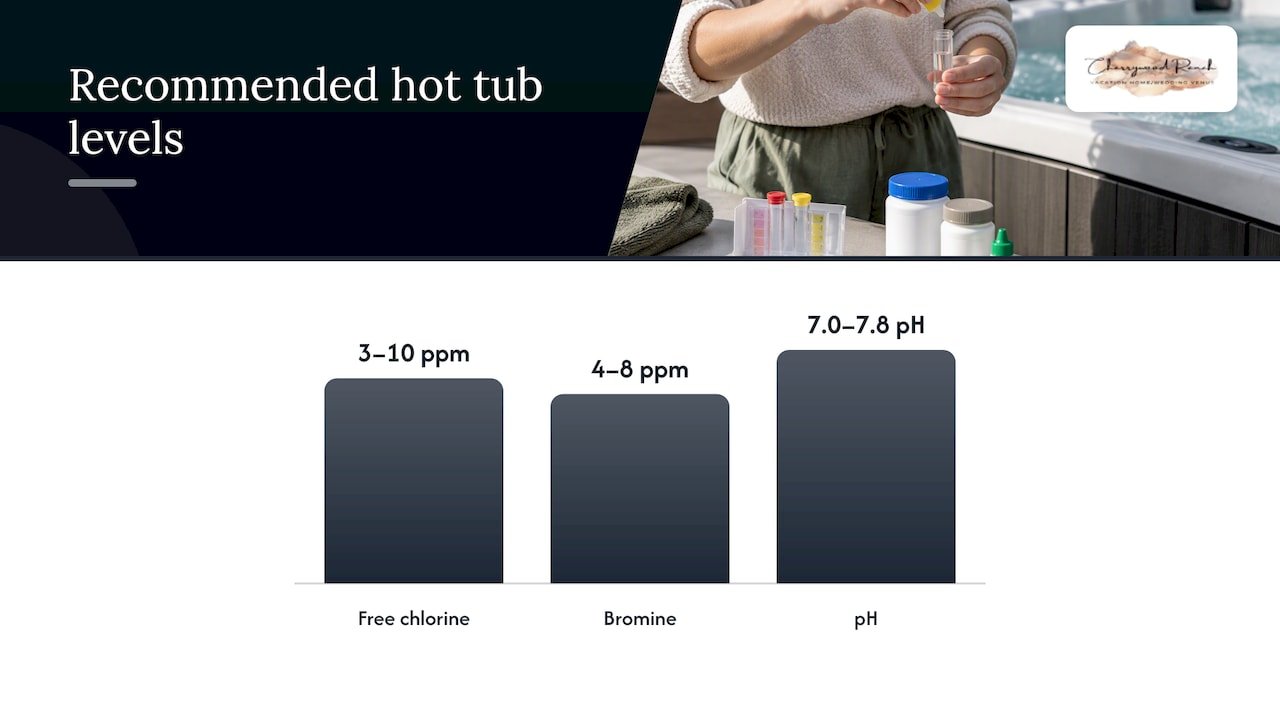
Hot tub water needs active management, not a one-time cleaning before guests arrive. The CDC recommends keeping free chlorine between 3 and 10 parts per million, or bromine between 4 and 8 parts per million, with pH held between 7.0 and 7.8, and testing those levels more frequently during heavy use, exactly the kind of use a wedding weekend creates.
A tub that looks cloudy, smells musty, or hasn’t been tested recently should be treated as unusable until a professional confirms it’s safe. A CDC outbreak report documented Legionnaires disease linked to a private vacation-rental hot tub, with remediation requiring the tub to be closed and professionally disinfected before it reopened. That is the standard to ask for in writing, not just a verbal assurance.
Pregnancy adds another layer of caution. Cleveland Clinic advises against hot tub use during pregnancy, particularly in the first trimester, since the heat raises core body temperature; a foot soak or a shorter, cooler bath is the safer substitute.
- Keep soak sessions to short durations per group.
- Shower before entering, and skip the tub until after any drinking, not before.
- Assign a host or monitor for busy stretches of the weekend, especially late at night.
Typical packages, pricing shapes, and budget considerations
Wedding-weekend packages generally bundle a few nights of lodging, the ceremony site, basic day-of coordination, cleaning, and limited staffing or vendor coordination into one price. Hot-tub servicing sometimes shows up as its own line item, particularly for a multi-day booking where the tub sees heavier use than a typical weekend rental.
A few variables move the total cost:
- Season and date, since peak wedding months carry higher rates than off-season weekends.
- Guest count, which can trigger per-person overage fees once you pass the venue’s included number.
- Whether you’re renting the whole property or just part of it.
- Vendor travel distance, which adds up fast for caterers, florists, and photographers coming from outside the area.
Before signing, ask directly about extra-guest charges, rates for extending your stay beyond the booked nights, and what insurance or liability coverage is actually included.
Local regulations or permits for hosting a hot tub wedding
Most private residential hot tubs used for a wedding weekend fall under the same local rules that apply to any short-term rental hosting an event: noise ordinances, occupancy limits, and sometimes a special-event or temporary-use permit if you’re bringing in outside vendors, a tent, or amplified music. Rules vary by county and even by municipality, so the property owner or venue coordinator is the right first call, not a general web search.
Ask specifically whether the property’s existing permits cover weddings, or whether you need to pull a separate event permit for the date. Some jurisdictions also require a separate inspection or certification for pools and hot tubs used by paying guests versus private family use, which matters if you’re renting rather than hosting at a dedicated wedding venue. A venue built specifically for weddings, rather than a general vacation rental, has typically already sorted out these approvals as part of its normal operation, which is one practical reason couples choose a dedicated venue over a short-term rental for a multi-day event with 25 or more guests.
Septic and water systems are worth a direct question too, since a property built for a handful of overnight guests can struggle under the water demand of a full wedding weekend with a hot tub running continuously. Ask how the system is rated and whether the owner has hosted a group your size before.
Coordinating vendors around hot tub logistics
A hot tub adds a layer of scheduling that your caterer, photographer, and DJ need to know about in advance, not discover on-site. Build the tub’s open hours into the master timeline you share with every vendor, so the photographer isn’t trying to shoot formal portraits while half the bridal party is still in swimsuits.
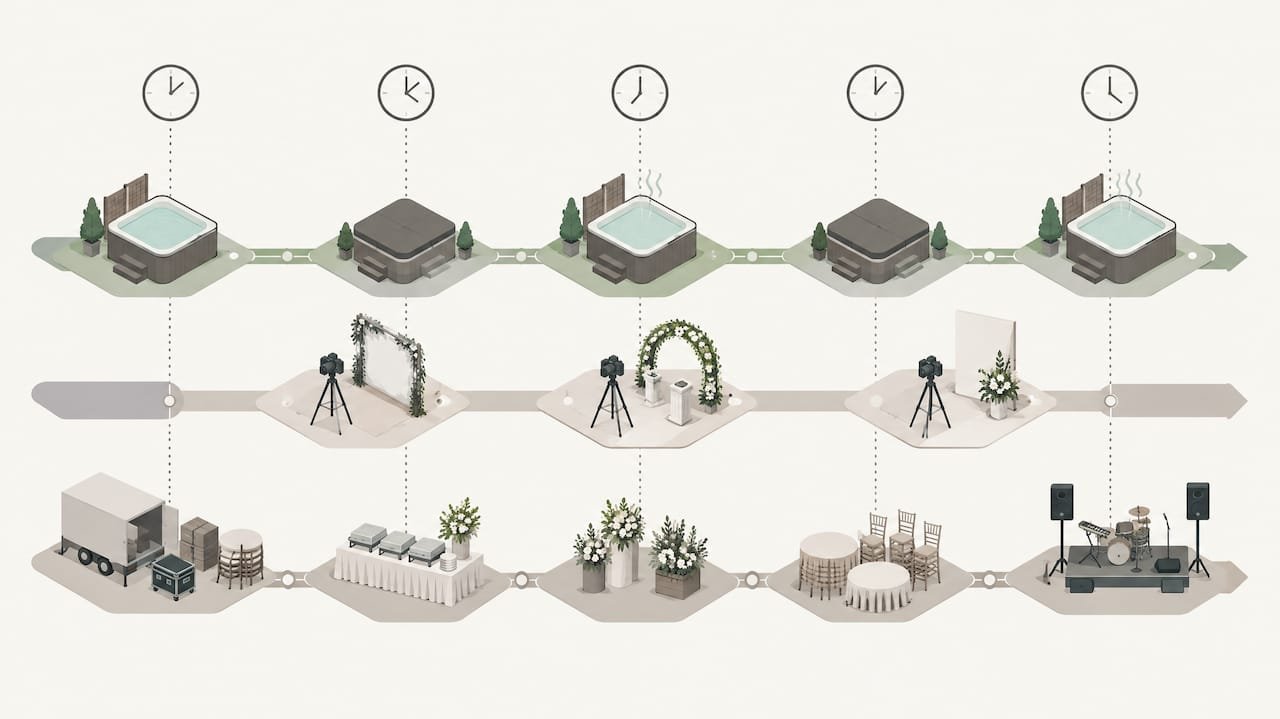
Flag the tub’s location to your florist and rental company too, since humidity and splash zones are not ideal for certain florals or rented furniture. If your caterer is setting up near the pool or tub deck, confirm there’s a dry, covered spot for food service that keeps it away from wet foot traffic.
Share the hot-tub schedule with your day-of coordinator specifically, since they’re the one who can quietly redirect a vendor or a guest if the timeline starts slipping. A short written schedule, even a single page, saves more confusion than a verbal briefing on the morning of the wedding.
Accommodation and transportation for your guests
Guests attending a hot tub wedding weekend fall into two groups: those staying on-site and those arriving from elsewhere each day. On-site lodging solves most transportation headaches outright, since nobody needs a car to get from the ceremony to the reception to bed. If the property only sleeps part of your guest list, book a block of rooms at a nearby hotel or a few additional short-term rentals within a short drive, and share that list early so guests aren’t scrambling the week before.
For anyone flying in, note the nearest airport and realistic drive time in your invitation suite or wedding website, since rural venues known for mountain views and privacy are often 45 minutes to an hour from the closest major airport. A shuttle or a simple carpool spreadsheet solves the last-mile problem for day-trip guests coming in just for the ceremony. If alcohol is part of the weekend, plan a safe ride option for anyone driving back to an off-site hotel after an evening near the hot tub, a detail worth confirming with your bar or liquor catering vendor as part of the contract.
Cherrywood Ranch as a working example
A wedding venue and vacation home illustrates how this format runs in practice: on-site lodging for a limited number of guests, a pool and hot tub, mountain views, and all-inclusive weekend packages that keep a group together for the whole celebration instead of scattering them across hotels. The venue’s own hot tub etiquette guidance lays out the 15 to 30 minute session rules and shared-use expectations covered earlier in this guide, and its weekend getaway planning page walks through building a paced, multi-day schedule rather than a single overloaded day.
Couples booking a weekend here can expect lodging, ceremony space, and coordination support bundled together, similar to the inclusions the budget section above describes in general terms. The services page lists the specific packages available for a closer look.
— Luis
Why Cherrywood Ranch fits this kind of weekend
If everything above sounds like a lot to coordinate between a venue, a rental company, and a handful of vendors, Cherrywood Ranch folds it into one booking instead. The venue combines private mountain scenery with on-site lodging and resort-style amenities, including a pool and hot tub, so your wedding party and family can stay in one place for the whole weekend rather than driving between a ceremony site and separate hotels.

That matters most for the exact reader this guide is written for: a couple who wants an intimate, multi-day celebration without juggling five separate vendors and two lodging bookings. The venue offers all-inclusive weekend packages built around that one idea, keeping everyone together from welcome night through Sunday brunch. If that fits the weekend you’re picturing, check availability and book your stay to see dates and start the conversation.
Sources
- What You Can Do to Stay Healthy in Hot Tubs | Healthy Swimming | CDC
- Hot Tub Safety During Pregnancy: What To Know | Cleveland Clinic Health Essentials
- The wedding weekend guide: how to plan a multi-day celebration | Vogue
FAQ
What is the rarest month to get married?
Wedding date popularity varies by region and season, and this article’s sources don’t track month-by-month rarity data. As a general rule, late fall and winter months outside the holidays tend to see fewer weddings than the traditional spring and summer peak.
What do weddings do on a hot summer day?
Most summer weddings schedule the ceremony for early morning or evening to avoid peak heat, and lean on shaded areas, fans, and plenty of water stations for guests. A hot tub wedding weekend can also shift pool and hot-tub time to cooler parts of the day, saving the tub itself for evening use once the heat breaks.
How hot is too hot to have a wedding outside?
There’s no single official cutoff, since comfort depends on humidity, shade, and how long guests are standing. Many planners start building in contingency plans once forecasts run well into the 90s Fahrenheit, with shaded seating, water, and a shorter ceremony as the main adjustments.
What is a wedding weekend?
A wedding weekend is a multi-day celebration that typically includes a rehearsal dinner or welcome party, the main ceremony and reception, and a closing gathering like a recovery brunch, according to Vogue’s wedding weekend guide. Keeping most events close to the main lodging, rather than spread across multiple venues, is the detail that makes the format work.