
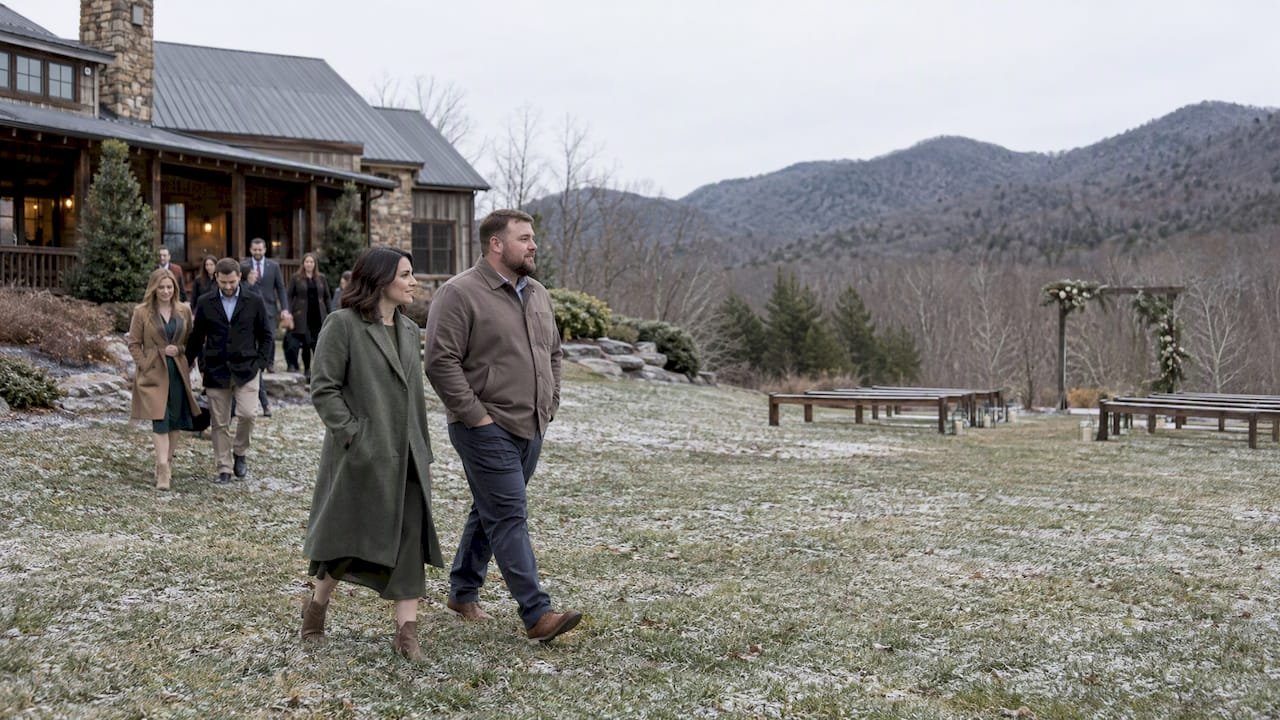
Yes, a winter mountain wedding is entirely doable, and the approach that works best is choosing a venue built for cold weather: plowed access, indoor backup, and a team that has actually run events in the snow. The riskiest choice is a remote, unmaintained site with no contingency space. Before booking anything, confirm road access and ask every vendor how many winter events they have handled.
TL;DR:
- Book venue and lodging 9 to 12 months ahead, book transportation 60 days ahead, and reconfirm vendors two to three weeks before the wedding.
- Check official state road reports instead of relying on GPS, since mountain shortcuts may be seasonally closed and forest roads may not be plowed.
- Treat ski season as peak pricing, and budget a 10% to 15% cushion for weather costs such as heating rentals and extra shuttle runs.
- Public land ceremonies generally require special use or event permits; confirm lead times, group limits, and winter closures, since approval does not ensure road access.
Table of Contents
- Which venue types reliably host winter mountain weddings
- A planning checklist and timeline for your winter wedding weekend
- Guest comfort and attire: what to tell guests and how the venue can help
- Logistics and travel safety: checking routes, vehicle prep, and vendor readiness
- Budget expectations: what typically drives costs for winter mountain weddings
- Design and styling ideas tailored to snowy mountain settings
- How an all-inclusive weekend venue cuts winter logistics
- Permits and legal considerations specific to winter mountain weddings
- Seasonal floral options and decor ideas suited for winter mountain settings
- Winter wedding photography tips including lighting and location considerations
- Seasonal menu and catering ideas appropriate for winter events
- Accommodation logistics for guests in winter conditions
- Transportation options and safety measures for guests during winter
- A straightforward take on planning in the snow
- Cherrywood Ranch: an all-inclusive winter wedding weekend
- FAQ
- Sources
Which venue types reliably host winter mountain weddings
Not every mountain venue is built for winter. Ski resorts and established mountain lodges tend to work best because they already staff for winter operations, including plowing and indoor transitions, long before your wedding date shows up on their calendar. That infrastructure is the difference between a smooth weekend and a scramble.
Private all-inclusive mountain rentals offer a different advantage: everything happens in one place, so you are not shuttling guests between a ceremony site, a reception hall, and separate lodging in icy conditions. Historic hotels and working ranches can also host beautifully, but only when they explicitly commit to winter service, snow removal, heated event spaces, and vendor lists for the season. A remote barn or scenic overlook with no winter maintenance plan is a gamble, no matter how good it looks in July photos.
Before you book, ask every venue:
- Who plows the access road, and how often during a storm?
- What indoor or heated backup space exists if the ceremony has to move?
- Can you provide vendors who have worked winter events here before?
- What happens to the schedule if a storm hits the morning of the wedding?
A planning checklist and timeline for your winter wedding weekend
Mountain venues book up early for winter dates, especially around holidays and ski season weekends, so timing matters as much as venue choice.
- Book your venue and lodging 9 to 12 months out, and expect a deposit at signing.
- Lock in your date by elevation and seasonal patterns rather than the calendar month alone, since a low-elevation venue in January can behave very differently from a high-elevation one.
- Confirm winter contingency language in every vendor and venue contract, including what happens if roads close.
- Schedule group transportation and shuttle logistics at least 60 days out.
- Send guests winter travel guidance (road conditions, footwear, arrival windows) as soon as invitations go out.
- Reconfirm vendor winter experience and backup plans two to three weeks before the wedding.
A detailed weekend planning guide can help you sequence these steps if you are coordinating a multi-day event rather than a single ceremony.
Guest comfort and attire: what to tell guests and how the venue can help
Comfortable guests stay for photos instead of ducking inside the moment the ceremony ends. Share these basics in your invitation suite or a wedding website:
- Layer with wool or fleece under formal wear rather than relying on a coat alone.
- Choose boots with real tread for ice and snow, not dress shoes or heels.
- Bring gloves that come off easily for ring exchanges and toasts.
- Pack hand warmers for extended outdoor segments like cocktail hour.
Ask your venue to stock shawls, blankets, and hand warmers for guests, along with a boot-check station near the entrance and fire pits or heated seating near the ceremony space. Small comfort touches like these matter for your ceremony flow too.
Pro Tip: Schedule outdoor portraits for the 20 minutes right after the ceremony, while makeup and energy are fresh, then move cocktail hour indoors.
Logistics and travel safety: checking routes, vehicle prep, and vendor readiness
Winter mountain roads behave differently than GPS apps assume. The U.S. Forest Service warns that many forest roads are not plowed for winter travel, and relying on a maintained route is safer than trusting a shortcut your map suggests.
Before the wedding weekend, check:
- Official state road reports or 511 services for current conditions, not just a weather app.
- Whether your access road is seasonally maintained or closes with snowfall.
- Vehicle readiness: winter tires or chains, a shovel, blankets, and a basic survival kit for guests driving in.
- Each vendor’s track record with winter events, including how they handle icy walkways and schedule shifts.
GPS alone can route you onto a seasonally closed road, so cross-check digital directions against official road status before guests start arriving.
Budget expectations: what typically drives costs for winter mountain weddings
Winter is not automatically the cheaper season at mountain venues. Ski season often counts as peak pricing rather than off-season savings, since resort venues stay busy with both weddings and vacationing guests.
Costs that tend to climb in winter include:
- Transport shuttles for guests who should not drive icy roads themselves.
- Heat rentals or side-walled, heated tents for outdoor space.
- Vendor travel and lodging if your photographer or florist is driving in from a lower elevation.
- Room-block minimums at nearby lodging, which some venues require upfront.
As a rule of thumb, expect your deposit and any room-block commitment at signing, then build a 10 to 15 percent cushion into your budget for weather-related add-ons like heaters or extra shuttle runs.
Design and styling ideas tailored to snowy mountain settings
Snow is a free backdrop, and the right styling choices make the most of it. Deep jewel tones, burgundy, emerald, and navy, contrast beautifully against white snow, while velvet and wool hold up better in the cold than silk or chiffon.
For warmth without losing the look, lean on:
- Warm-toned uplighting and candlelight to counter the cold blue of snow.
- Faux-fur wraps or tartan blankets styled as part of the decor, not an afterthought.
- Fire pits and a hot-drink bar (cider, cocoa, mulled wine) as a built-in guest experience.
- Short scenic excursions, like a sleigh ride or a walk to a lookout point, scheduled between ceremony and reception.
A seasonal color palette guide can help you match your florals and linens to the light at your specific venue, and reception layout ideas carry over well into winter with a few heat-conscious adjustments.
How an all-inclusive weekend venue cuts winter logistics
When lodging, ceremony space, and reception space sit on one property, winter stops being a scheduling problem. Guests are not driving between locations after dark, and staggered arrivals become manageable instead of chaotic.
At Cherrywood Ranch, onsite lodging for up to 16 guests, a pool and hot tub, and resort-style amenities mean your group can gather indoors between outdoor segments instead of dispersing to separate hotels. Coordinated guest messaging and weekend-long access also simplify the parts of winter weddings that tend to break down fastest.
- The venue team manages shuttle staging, guest communication, and basic contingency operations.
- Couples still own vendor selection, styling choices, and the final call on any weather-based schedule change.
| Who handles it | Task |
|---|---|
| Venue team | Onsite lodging coordination, guest messaging, contingency space |
| Couple | Vendor booking, styling and decor decisions, final weather calls |
A tented, heated setup can extend usable outdoor space without forcing guests to choose between the view and staying warm.
Permits and legal considerations specific to winter mountain weddings
Permit requirements depend heavily on where your ceremony actually happens. A private venue with its own land typically handles permitting internally as part of your contract, since the ceremony and reception sit on property the venue already manages. A ceremony on national forest land, a state park overlook, or other public land is a different situation entirely: those locations generally require a special-use or event permit, and Forest Service guidance notes that winter access to those sites can be unreliable even when a permit is approved, since roads may not be plowed.
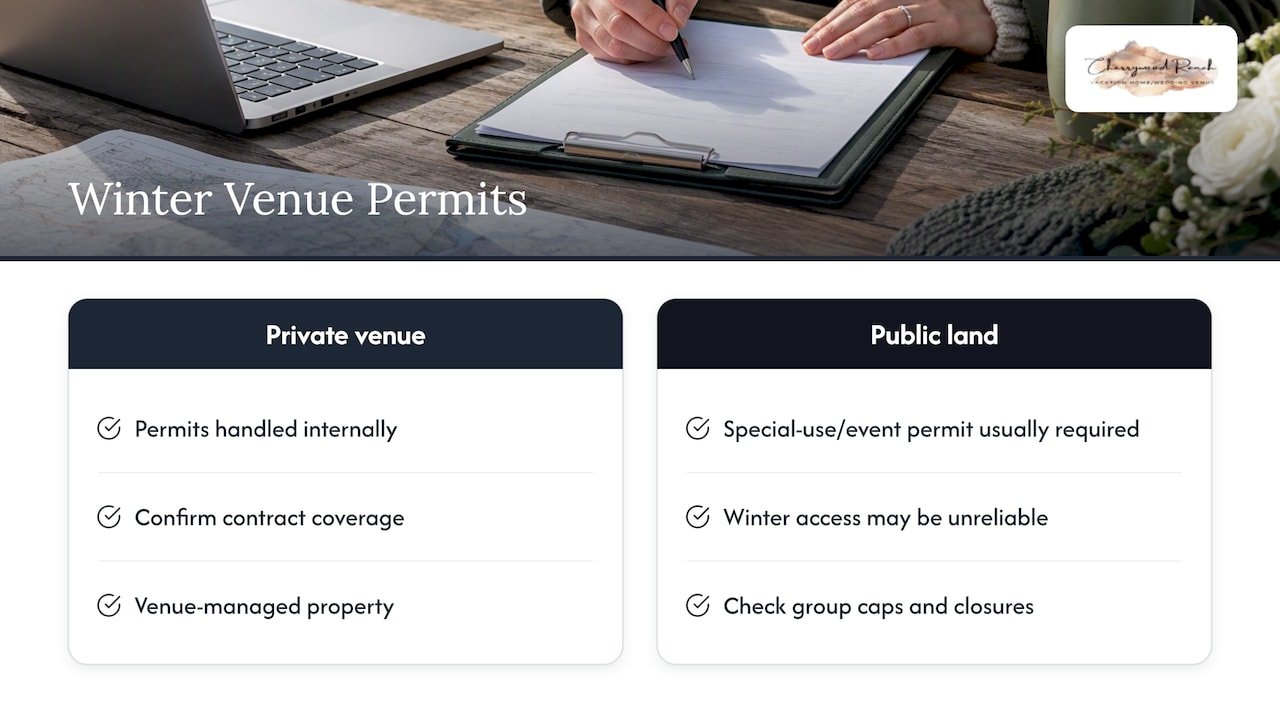
Ask any public-land site directly about permit lead times, group size caps, and whether winter closures could affect your specific date. For a private venue, confirm in writing what the venue’s agreement already covers, insurance, liability, and any local fire code requirements for open flame (candles, fire pits) outdoors in winter. Some municipalities also require a temporary event permit for amplified sound or large tents, regardless of season, so it is worth asking your venue coordinator early rather than assuming winter weddings are exempt from normal event rules.
If alcohol service is part of your reception, confirm whether the venue holds its own license or requires a licensed caterer or bartender service, since this varies by state and county. None of this should derail your planning, but it is far easier to resolve permit questions three months out than three weeks out, when winter road closures can also delay last-minute paperwork trips.
Seasonal floral options and decor ideas suited for winter mountain settings
Fresh flowers are more limited in winter, but the options that do thrive look striking against snow. Amaryllis, anemones, ranunculus, and winter greenery like cedar, eucalyptus, and pine hold up well in cold temperatures and pair naturally with a mountain setting. Deep burgundy and white combinations read as intentional rather than seasonal compromise, and adding dried elements like pampas grass or preserved leaves extends your options without relying entirely on imported blooms.
Texture does a lot of the work that color alone cannot. Velvet ribbon, wool table runners, and greenery garlands with pinecones tucked in bring warmth to a palette that could otherwise feel cold. Candlelight is one of the most reliable decor tools for a winter reception: taper candles, lanterns, and string lights all add warmth in both the literal and visual sense, and they photograph well against snow outside a window.
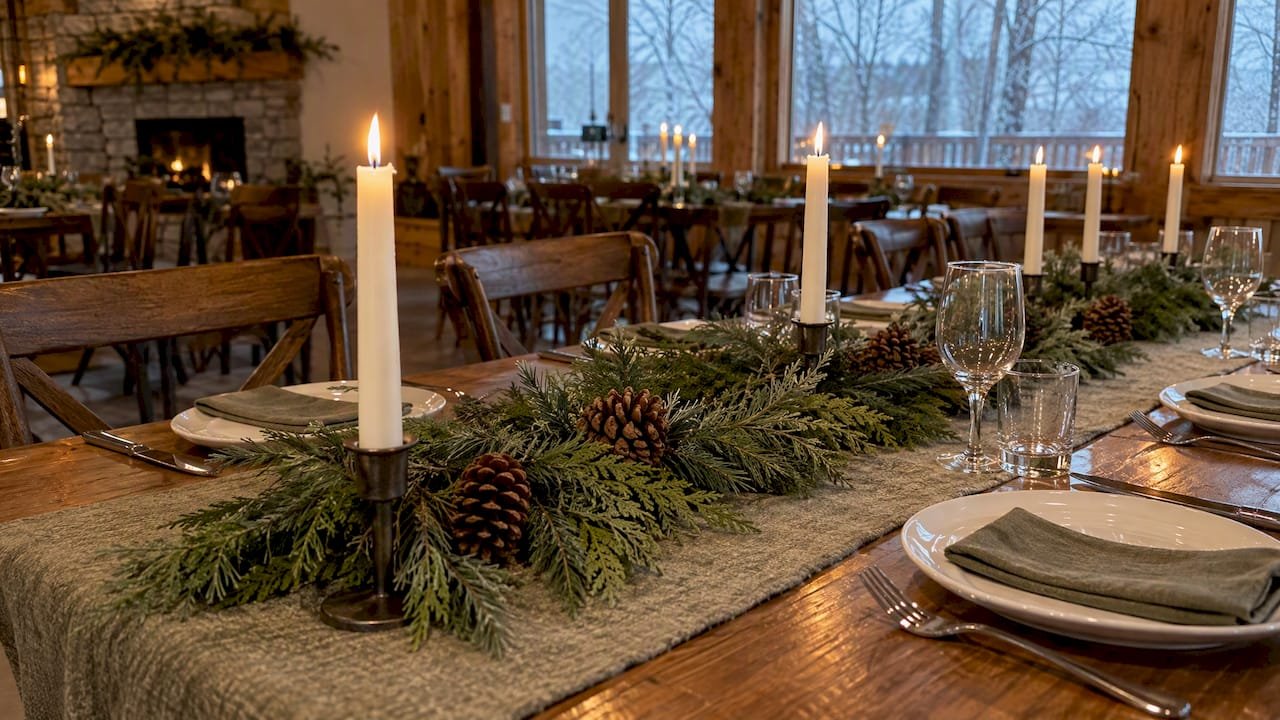
For outdoor ceremony space, consider a simple arch wrapped in greenery rather than an elaborate floral installation that has to survive wind and cold. Indoors, warm-toned uplighting against stone or wood walls makes a mountain lodge feel like an extension of the landscape instead of a plain backdrop. If your venue has a fireplace, building your head table or sweetheart table nearby turns a practical heat source into a focal point.
Winter wedding photography tips including lighting and location considerations
Winter light is softer and lower in the sky than summer light, which actually works in your favor for portraits. The hour right after a midday ceremony often gives flattering, even light without harsh shadows, and snow acts as a natural reflector that brightens faces from below.
Schedule outdoor portraits in short, focused windows rather than one long session. Fifteen to twenty minutes outside, right after the ceremony, captures the shots you want before guests start to feel the cold. Overcast winter skies are actually ideal for photography since the cloud cover diffuses light evenly, so do not wait for full sun.
Ask your photographer about their experience shooting in snow specifically. Cameras need to adjust exposure for bright white snow, or photos come out underexposed and gray, and lenses can fog when moving between cold outdoor air and a heated indoor space. A photographer who has shot winter weddings before will know to let equipment acclimate for a few minutes before shooting again.
Golden hour arrives earlier in winter, often by late afternoon, so build your timeline around sunset rather than assuming summer light will last. A short walk to a scenic overlook or tree line, even five minutes from the ceremony site, can produce the kind of snowy backdrop couples specifically book a mountain venue for.
Seasonal menu and catering ideas appropriate for winter events
Winter catering works best when it leans into the season instead of fighting it. Warm, hearty dishes feel intentional rather than like a fallback: braised short ribs, root vegetable gratins, roasted butternut squash soup served in small cups for cocktail hour, and warm grain salads all read as seasonal comfort food rather than compromise.
A hot-drink station does double duty as both catering and guest comfort. Spiked cider, mulled wine, and hot cocoa with a toppings bar give guests something to hold during outdoor segments, and they photograph well as part of your reception decor. If your venue allows a raw bar or oyster station, winter is actually a strong season for it, since oysters are traditionally at their best in colder months.
For dessert, consider a display built around texture rather than fragile buttercream that can suffer in a heated tent or near a fireplace. Spiced cakes, hot cider donuts, or a s’mores bar near a fire pit all hold up better than delicate frosting work in fluctuating temperatures.
Talk to your caterer early about kitchen access and heating needs if your reception space is a tent or a converted outdoor area, since winter catering sometimes requires additional equipment to keep hot food hot and cold food properly chilled.
Accommodation logistics for guests in winter conditions
Winter weddings put more pressure on lodging logistics than a summer event, since guests are less likely to want to drive back and forth in the dark or in snow. Booking a room block, or better, a venue with onsite lodging for your group, removes the riskiest part of a winter wedding weekend: late-night driving on unfamiliar mountain roads.
If your venue does not include lodging, confirm room-block minimums early, since many mountain properties require them for winter weekend dates. Share driving directions, parking details, and check-in windows with guests well before the wedding, and flag any sections of the route that close or ice over first during storms.
For guests traveling from warmer climates, a short note about expected overnight temperatures and road conditions goes a long way. Guests who are not used to winter driving benefit from clear guidance on when to arrive and whether four-wheel drive is recommended for the final stretch to the venue.
Transportation options and safety measures for guests during winter
The safest winter wedding transportation plan keeps guests out of the driver’s seat as much as possible. Shuttle service between lodging and the ceremony site removes the risk of an unfamiliar guest navigating icy, unlit mountain roads after dark, and it also solves parking at venues with limited winter-accessible lots.
Black ice risk rises sharply after sunset, so scheduling guest arrivals and departures before the coldest, darkest hours reduces risk meaningfully. If your reception runs late, consider a shuttle return schedule with multiple pickup windows rather than one mass departure, which tends to create traffic and delays on narrow mountain roads.
Before the weekend, confirm with your venue:
- Whether shuttle service is included or needs to be booked separately.
- What the parking situation looks like after snowfall, including whether lots are plowed.
- Whether there is a backup plan if a storm makes the access road temporarily unsafe.
Encourage out-of-town guests to check official road conditions themselves the morning of the wedding, since state transportation and weather resources update more frequently than a venue’s own website can.
A straightforward take on planning in the snow
If you take one thing from all of this, prioritize a venue with winter infrastructure and onsite lodging over one that merely looks good in photos. The date matters less than the elevation and the venue’s own winter track record, and a vendor who has never worked a snowy event is a bigger risk than the weather itself.
— Luis
Cherrywood Ranch: an all-inclusive winter wedding weekend
We built Cherrywood Ranch around one idea: your wedding weekend should not require juggling separate venues, hotels, and vendors in the cold. Our property combines outdoor ceremony and reception spaces with onsite lodging for groups, plus amenities like a pool and hot tub for guests to enjoy between events.

If a winter mountain wedding weekend sounds like what you are planning, check our seasonal wedding planning tips for every season to see what fits your guest count and dates.
FAQ
How much does a mountain wedding cost?
Mountain wedding costs vary widely based on guest count, lodging needs, and whether you book a ski-season peak date, with winter weddings sometimes costing more than off-season dates due to resort peak pricing. Transport, heat rentals, and vendor travel also tend to add to the total for winter events specifically.
Is $5,000 a reasonable budget for a wedding?
A budget can work for a small, intimate winter mountain wedding, especially an elopement-style ceremony with a short guest list and minimal add-ons like shuttles or tent heating. It becomes tighter once you add guest lodging, catering for a larger group, or ski-season venue pricing.
What is the rarest month to get married?
January is widely considered one of the least common wedding months, which can work in your favor for mountain venue availability outside of peak ski season dates. Choosing a date by elevation and local weather patterns matters more than the calendar month alone when planning a winter mountain wedding.
What is the 50/20/30 rule for weddings?
It is a starting framework rather than a fixed rule, and winter-specific costs like heating or shuttles may shift those proportions.
Sources
- Mountain wedding top spots — Carats & Cake
- What to wear to a winter wedding — The Knot
- Winter safety — USFS Ochoco
- Wyoming Winter Weather Awareness Day — Driving Safety — NWS