
You can beat the heat at a summer mountain wedding with four decisions: a late-afternoon ceremony, real shade, drinks that are always cold and within reach, and clothing and a cake chosen for warm weather. Add a simple plan for spotting heat illness, and a hot day becomes a comfortable one. This guide covers each decision in the order you will face it.
TL;DR
- Start the ceremony around 5:30 or 6:00 PM, depending on your sunset time, so the harshest sun has passed.
- Put shade and a cool indoor retreat in the plan, and set up a hydration station before guests need it.
- Choose light fabrics, block heels and layers for the wedding party and tell guests the dress code in your invitation.
- Pick a heat-stable cake finish and have the cake out for about an hour, not an afternoon.
- Learn the signs of heat exhaustion and heat stroke. Confusion or a stop in sweating means call 911.
Table of Contents
- Why mountain heat catches wedding parties off guard
- Time the ceremony around the sun
- Shade, cooling spots and a backup plan
- Build a hydration station guests will actually use
- What to wear in summer mountain heat
- Keep the cake safe in the heat
- Know the signs of heat illness
- Give guests time to settle in
- Our perspective on heat and mountain weddings
- Plan your wedding weekend with us
- FAQ
- Sources
Why mountain heat catches wedding parties off guard
A mountain setting sounds cool, but no date on the calendar guarantees mild weather. Summer sun, long ceremonies, formalwear and a day of standing outside add up quickly. Guests who drove in from Atlanta, Florida or the Carolinas are often in heavier clothes than the day calls for, and they are rarely thinking about water until they feel bad.
The good news is that heat is one of the most plannable parts of a wedding. Nearly every fix is a scheduling or setup choice you make months ahead. If you are still choosing a date, our guide to picking your mountain wedding date by elevation shows how to think about the calendar beyond the month.
Time the ceremony around the sun
The single most effective move is the start time. Photographers who shoot summer weddings point out that the harshest light usually falls between 11 AM and 3 PM, and they recommend a later-afternoon or near-sunset ceremony. Other planners suggest aiming for 5:30 or 6:00 PM is too specific for one source, so treat the window as a range: check your sunset time and work backward so the vows land in softer light.
A few timing habits help:
- Keep the ceremony short. Fifteen to twenty minutes in the open is easier on guests than a long service. Event planners suggest short ceremonies and cooler breaks during photos for the wedding party.
- Do portraits early or late. Take couple and family photos before the ceremony in morning light, or at golden hour, rather than in the middle of the afternoon.
- Move the cocktail hour into shade. Guests are standing and holding drinks, so the cocktail hour is when heat builds fastest.
For ceremony layouts that work outdoors, see our outdoor wedding ceremony ideas.
Shade, cooling spots and a backup plan
Shade is not decoration. Look for a ceremony location that is naturally shaded, or add tent coverage. Mountain wedding planners also recommend an indoor ceremony option and a shaded or indoor area where guests can take a break. That same guide notes that wind is often the bigger problem than rain in the mountains, and that summer afternoons can bring thunderstorms, especially from June through early August.
That makes a covered backup valuable twice over: it is your heat retreat and your storm plan. Photographers who work mountain summers likewise advise reserving tents ahead of time and keeping a covered backup ceremony option.
When you build the plan, think in three zones:
- The ceremony seating area. Shade first, then fans or parasols.
- The cooling zone. A place to sit down, out of the sun, with water. This is where someone who feels dizzy goes.
- The reception area. Tent, covered patio or tree cover, with the bar and dessert table out of direct sun.
If wind is part of your forecast, our guide to planning for a windy outdoor wedding covers gusts, and our page on a tented mountain wedding explains how a tent fits into a single-venue weekend. For the reception side, see outdoor reception ideas.
Build a hydration station guests will actually use
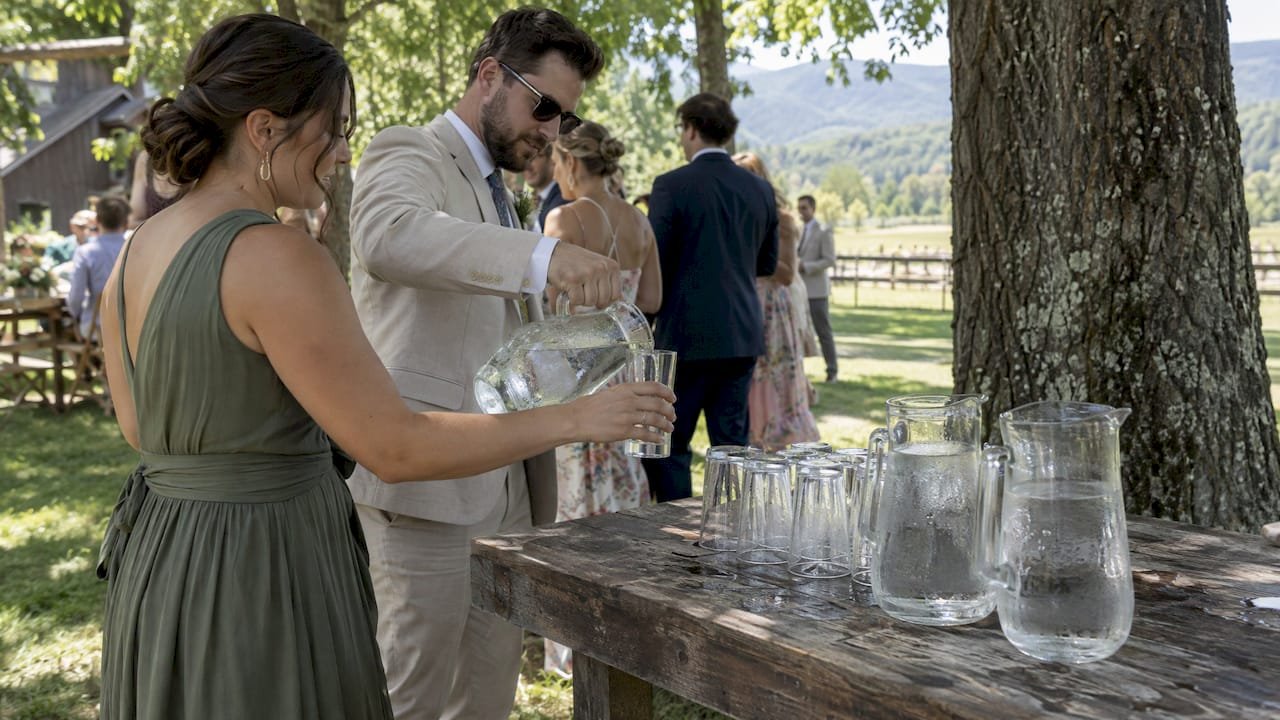
A hydration station is the easiest comfort upgrade, and guests notice it. Place it where people gather: near the ceremony entrance, the dance floor and the bars. According to Brides, a station can offer water, infused water or lemonade, with dispensers filled with ice and placed in a shady spot.
What to put on the table
- Ice water and one infused water (cucumber, citrus or berry)
- Lemonade or unsweetened iced tea
- Mini bottled waters for guests who want to carry one
- Hand fans, sunglasses and a basket of sunscreen
- Chilled towels, which a Utah catering team says can make a significant impact
Save full bar service for cocktail hour, and offer welcome drinks such as mocktails or electrolyte drinks at arrival so guests start hydrated.
How much water is enough
The National Weather Service says to drink plenty of water whether or not you feel thirsty. A Cleveland Clinic emergency physician suggests eight ounces every 15 to 20 minutes when working outside on a hot day, and says to avoid caffeine and alcohol, which can add to dehydration. Your guests are not working, but they are standing in the sun with a cocktail in hand, so it is a useful guide for how often to remind them. Have your emcee or DJ mention the water station once before the ceremony and again at cocktail hour.
Sun protection for the whole party
The National Weather Service recommends sunscreen of SPF 15 or higher applied 30 minutes before going out, plus light-colored, loose clothing and a wet towel or bandana on the back of the neck. For ideas on lightweight layers that also protect skin, these sun protection layers are a practical reference for covering up without overheating.
What to wear in summer mountain heat
The dress code is a heat plan too. Say it on the invitation or wedding website: “outdoor ceremony, dressy-casual, lightweight fabrics welcome.”
For the couple and wedding party
Wedding photographers who cover hot weddings suggest lighter fabrics, shorter bridesmaid dresses and linen suits, noting that formal black tuxedos and heavy gowns become uncomfortable quickly in peak summer temperatures. For grooms, one menswear retailer recommends linen, cotton or lightweight wool-blend suits in light shades like beige, pale olive or pastel blue, with crisp cotton or linen shirts.
Some practical additions:
- Choose breathable gown fabrics and consider a convertible or detachable layer you can shed after the ceremony.
- Skip long sleeves and vests for the groomsmen, or let them remove jackets after photos.
- Keep a small cooling kit with a fan, blotting papers and a hand towel near the wedding party.
For guests
A mountain venue means uneven ground. For summer mountain weddings, one attire guide recommends lightweight layers and avoiding stilettos in favor of block heels, wedges or dressy flats. Layers matter because mountain evenings can cool once the sun drops. Estes Park wedding professionals also advise bringing layers and wearing comfortable shoes. Their advice about sunscreen at high altitude applies most to very high Rocky Mountain venues, but the habit of layering is useful anywhere in the mountains.
Keep the cake safe in the heat
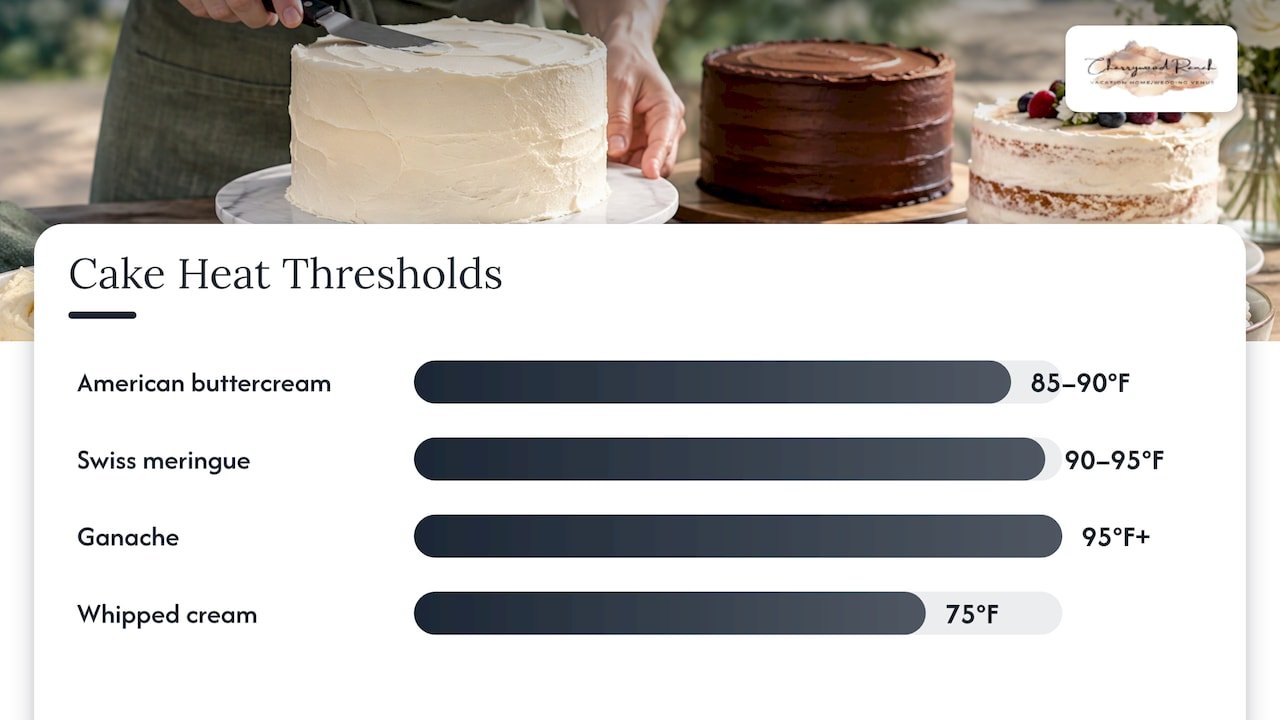
Cake is the first thing that shows heat damage. A Nashville wedding photographer who documents cakes in summer heat lists the melting points: American buttercream melts at 85 to 90°F, Swiss meringue buttercream holds to 90 to 95°F, and ganache is most stable at 95°F and above. She also notes that whipped cream melts at 75°F.
What to ask your baker:
- Which finish suits a summer outdoor event? Swiss meringue buttercream or ganache are the safer choices according to that same source. A baking-education company recommends Italian buttercream with added shortening for summer wedding cakes.
- Where will the cake sit? A Utah catering team says to display it indoors or at least out of direct sunlight and to cut it early in the evening. Frame it with fresh flowers beside it instead of on it, to reduce wilting.
- When does it arrive? The Nashville photographer suggests the cake arrive 30 to 60 minutes before cutting rather than three to four hours early.
A New York magazine tip about ants applies to the mountains too: set table legs in water-filled cups to keep insects off.
Food that holds up
Planners suggest skipping mayo-based salads, seafood sitting in the heat and deviled eggs and choosing fresh grilled foods, fruit bars, gelato carts, cold pasta salads and lighter appetizers. Ask your caterer how each dish will be held and for how long.
Know the signs of heat illness
This is the part of heat planning nobody wants to use, and the part that matters most. Share it with your wedding party, your coordinator and a couple of family members.
Heat exhaustion
Cleveland Clinic lists the symptoms as heavy sweating, cold clammy skin, muscle cramps, headache, dizziness, weakness, nausea, and a fast, weak pulse, with a body temperature typically between 101 and 104°F. Untreated, it can progress to heat stroke. Move the person to shade or a cool indoor space and give them water. OSHA says that if symptoms worsen or do not improve within 60 minutes, the person should go to a clinic or emergency room.
Heat stroke
Heat stroke is an emergency. OSHA explains that the body can no longer regulate its temperature, sweating stops, and signs include confusion, loss of consciousness and seizures. Cleveland Clinic adds persistent confusion, agitation or aggression and slurred speech, with a temperature typically above 104°F, and says to call 911 immediately if heat stroke is suspected. A Cleveland Clinic emergency physician also says that if someone stops sweating, they may be severely dehydrated, and that confusion or disorientation signals heat stroke.
Who to watch: older relatives, children, anyone drinking alcohol in the sun, and the couple and wedding party, who stand longest in direct sun and often skip meals and water. Name one person (a coordinator or trusted friend) as the heat contact so no one has to wonder who acts.
Give guests time to settle in
Guests who arrive the same day, tired from the road, feel heat faster. Colorado planners recommend that guests arrive 24 to 48 hours before the wedding so they can hydrate, rest and adjust. That advice is aimed at high-altitude venues, but a settling-in day helps anywhere, since people start hydrated and rested.
This is one reason we think a full weekend works so well. Our guest experience steps for a mountain wedding weekend show how to pace the days, and our guide to planning a mountain wedding weekend covers the rest.
Our perspective on heat and mountain weddings
At Cherrywood Ranch, we think heat is easiest to manage when your whole group is already in one place. Our North Georgia venue pairs the wedding spaces with onsite lodging for up to 16 guests, so the people closest to you can arrive early, rest and settle in instead of driving in on the day.
We also built the property for a full weekend, with a pool and hot tub that give your family and friends something to do other than stand in the sun. A weekend format lets you move the ceremony to the cooler end of the day, take photos when the light is soft, and leave the long, hot hours for the pool.
Our advice is simple: choose the late-afternoon start, plan your shade and your water before you plan your flowers, and let your guests know what to wear. A private venue means you decide the schedule, not a venue calendar.
Luis
Plan your wedding weekend with us
Cherrywood Ranch has an outdoor ceremony lawn and a covered reception pavilion. See our wedding packages and pricing and ask about the property’s shade and covered areas during your tour.

See the options and availability on our booking page, or explore the property gallery to picture your day.
FAQ
What time should I hold a summer mountain wedding ceremony?
Aim for late afternoon or early evening, such as 5:30 or 6:00 PM depending on your sunset time. Photographers note that the harshest sun falls between 11 AM and 3 PM, so avoid midday starts. A later ceremony also gives you golden-hour photos.
What should a hydration station include?
Water, infused water or lemonade, in dispensers filled with ice and placed in the shade. Add hand fans, sunglasses and sunscreen. Put one station near the ceremony entrance and another near the dance floor or bar.
What should guests wear to a hot summer mountain wedding?
Lightweight fabrics such as linen or cotton, light colors, and layers for the evening. Block heels, wedges or flats work better than stilettos on uneven ground. Put the dress code on your invitation or wedding website so guests can pack for it.
What cake works best in hot weather?
Ganache and Swiss meringue buttercream tolerate heat better than American buttercream or whipped cream, according to a Nashville cake-safety guide. Keep the cake out of direct sun and have it arrive shortly before cutting. Your baker can tell you what their recipes handle.
When should I call 911 for a guest?
Call 911 if someone is confused, agitated, slurring speech, has stopped sweating, loses consciousness or has a seizure. Those are signs of heat stroke, according to OSHA. For milder symptoms, move the person to shade, give water, and seek medical care if they do not improve.
Sources
- National Weather Service: Outdoor Activities, Heat Safety and Preparedness
- OSHA: Heat-related Illnesses and First Aid
- Cleveland Clinic: Heat Exhaustion, Symptoms and Treatment
- Cleveland Clinic Newsroom: Dangers of Dehydration
- Estes Park Wedding Association: High Altitude Tips
- Your Guide to a Mountain Wedding in Colorado
- Summer wedding tips for 2026
- Utah Summer Weddings: Tips from Industry Pros
- Preparing for Extreme Weather: Heat
- Brides: The Best Ways to Keep Guests Hydrated
- Summer Wedding | Charles Tyrwhitt US
- What to Wear to a Mountain Wedding
- How to Keep Wedding Cake Safe: Nashville Heat and Transport
- King Arthur Baking: The best cake frosting for hot weather
- How to Protect the Cake at an Outdoor Wedding
- Sun protection layers