
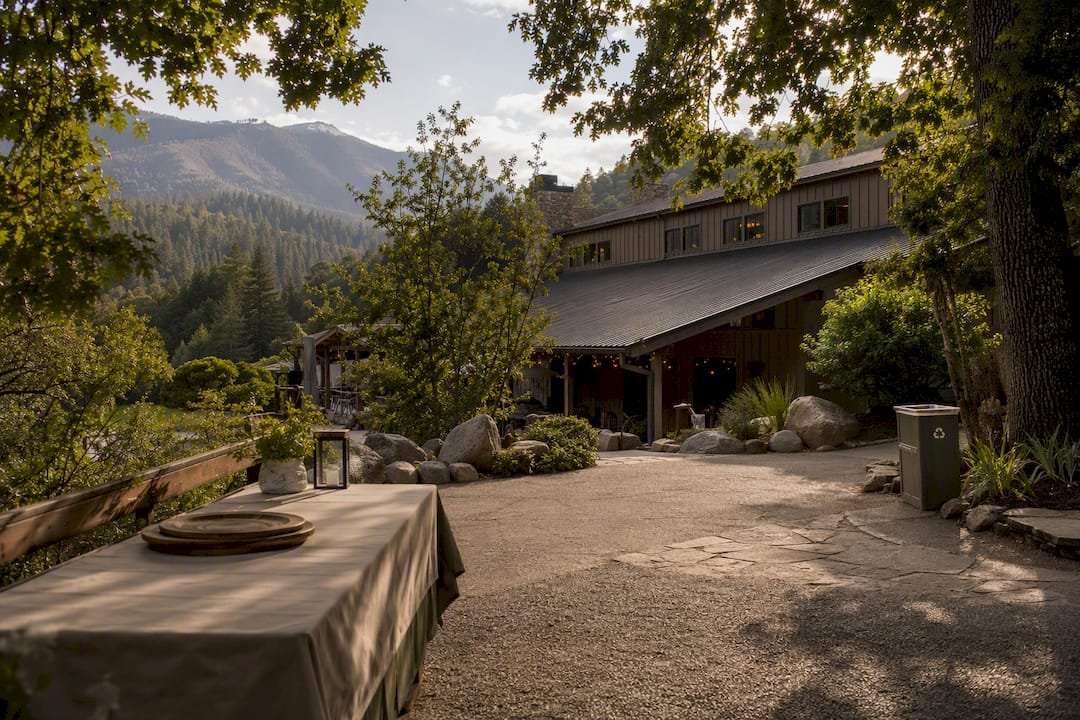
Yes, the fastest way to make a mountain wedding genuinely eco-friendly is to pick a single mountain site that offers on-site lodging, local catering, and a built-in waste plan. One venue means fewer cars on the road, less rented infrastructure duplicated across locations, and one point of accountability for every sustainability promise made to you.
Start with these five moves:
- Book a single-site weekend venue with on-site lodging so guests don’t drive between a ceremony spot, reception hall, and hotel.
- Hire a local, seasonal caterer instead of a chain that trucks in ingredients, such as those offering specialized catering services that focus on farm-to-table menus.
- Rent decor and dishware rather than buying anything single-use.
- Set up a composting and donation plan for leftover food and flowers before the wedding, not after.
- Arrange group transport (shuttles or organized carpools) for the ceremony and reception.
Pro Tip: Twenty-seven percent of couples now choose vintage or secondhand decor specifically to cut wedding waste. That single swap, covered later in this guide, tends to save money too.
Key Takeaways
An eco-friendly mountain wedding succeeds when a single lodging-equipped venue, local seasonal catering, and a written waste plan replace scattered venues and disposable defaults.
| Point | Details |
|---|---|
| Choose one site with lodging | On-site lodging for the wedding party eliminates repeat guest driving between events. |
| Put sustainability in the contract | Require caterers to confirm composting or donation partners, and rental companies to confirm reusable dishware. |
| Rent or thrift the decor | Secondhand and rented decor now guide 27% of couples’ waste-reduction choices. |
| Reduce before you offset | Cut travel and waste first, then add a tree-planting donation through a group like One Tree Planted. |
| Cherrywood Ranch bundles the hard parts | Onsite lodging for up to 16 guests, outdoor ceremony and reception space, and resort amenities cut travel and rental duplication in one booking. |
Table of Contents
- What Makes an Eco-Friendly Mountain Wedding Venue Actually Green?
- Your Sustainable Mountain Wedding Planning Timeline
- Low-Waste Florals, Decor, and Attire That Still Look Stunning
- How Do You Cut Travel Emissions for a Mountain Wedding?
- What Do Real Sustainable Mountain Weddings Look Like?
- Budgeting a Green Mountain Wedding Without Overspending
- Where Couples Get Sustainable Weddings Wrong
- Book a Mountain Wedding Venue Built for This From the Start
- Frequently Asked Questions
- Sources
What Makes an Eco-Friendly Mountain Wedding Venue Actually Green?
Not every venue with a mountain view earns the label. Some just have good marketing photos and a recycling bin nobody empties.
Private ranch venues with on-site lodging give you the most control. You set the catering rules, the waste plan, and the transportation logistics because everyone sleeps where the wedding happens. State parks and national forest sites often fund conservation directly through permit fees, though they usually require you to bring in every rental and remove every trace afterward. Mountain lodges run efficiently year-round with existing kitchens and staff, cutting the need for generators or temporary power. Eco-resorts and working farms tend to have the strongest built-in sustainability programs, but availability and guest capacity can be limited.
Look for these features when you tour a property:
- On-site lodging that eliminates guest driving between events
- Documented composting or food-donation partnerships
- Energy-efficient heating, cooling, and lighting rather than diesel generators
- A preferred-vendor list that already screens for local sourcing
- Water conservation practices, especially for pools or irrigated grounds
- A rain-plan that doesn’t default to disposable tenting or plastic sheeting
- Native landscaping instead of imported ornamental plants
- Transparent answers about waste hauling, not vague claims
Ask directly: “Can you show me your composting or donation partner?” A venue that answers with a name and a number is telling you something real.
Your Sustainable Mountain Wedding Planning Timeline
Sustainability falls apart when it’s an afterthought bolted onto a normal wedding checklist. It works when it’s built into the timeline from the first phone call.
When you’re choosing a venue (9 to 12 months out): Prioritize a site that bundles lodging with ceremony and reception space, and ask for sustainability commitments in writing. Request contract language stating the caterer will confirm a composting or food-donation partner, and the rental company will supply reusable dishware and linens rather than disposables.
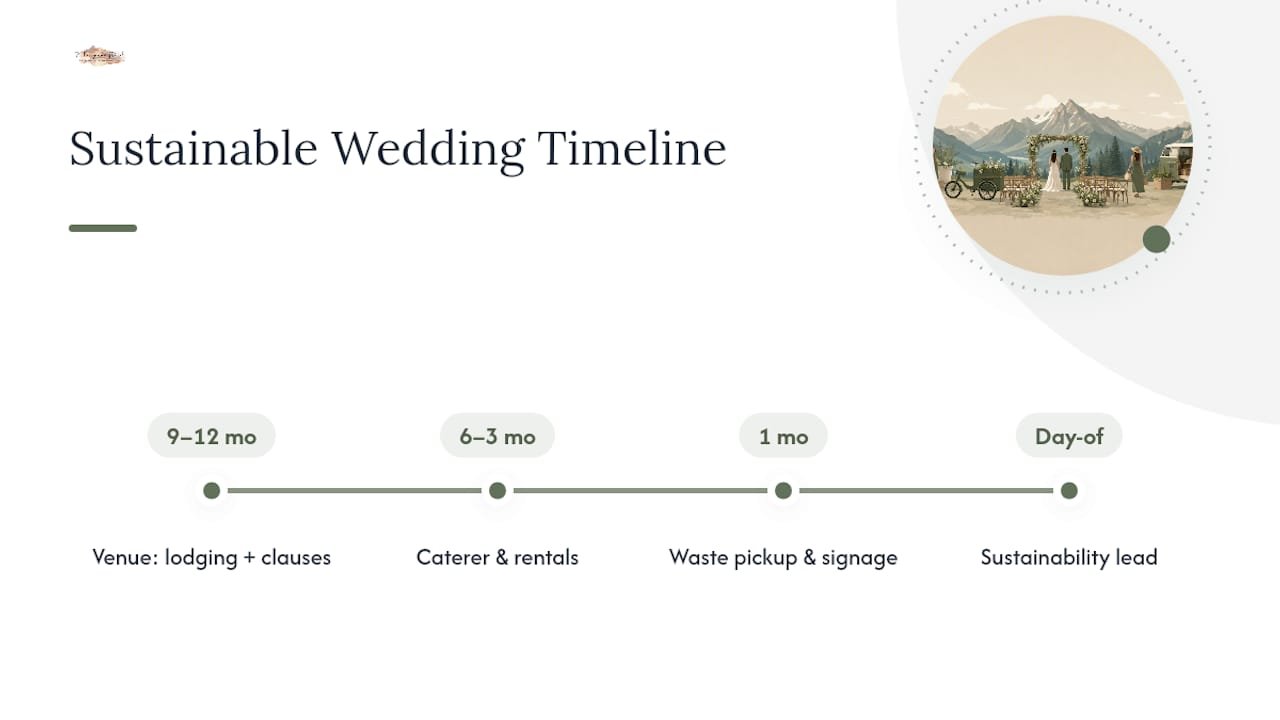
Six to three months out: Lock in a local, seasonal caterer. Book your decor and linen rentals instead of purchasing. Confirm a donation plan for leftover food (a local food rescue organization) and leftover flowers (senior centers or hospitals often accept them). Choose a menu built around what’s actually in season near the venue, which usually costs less and travels a shorter distance.
One month out: Confirm your waste hauler or composting service has an actual pickup scheduled, not a vague promise. Finalize signage that tells guests where recycling and compost bins are. Confirm shuttle schedules if you’re using them, and finalize a rain plan that doesn’t rely on plastic tarps or single-use ponchos.
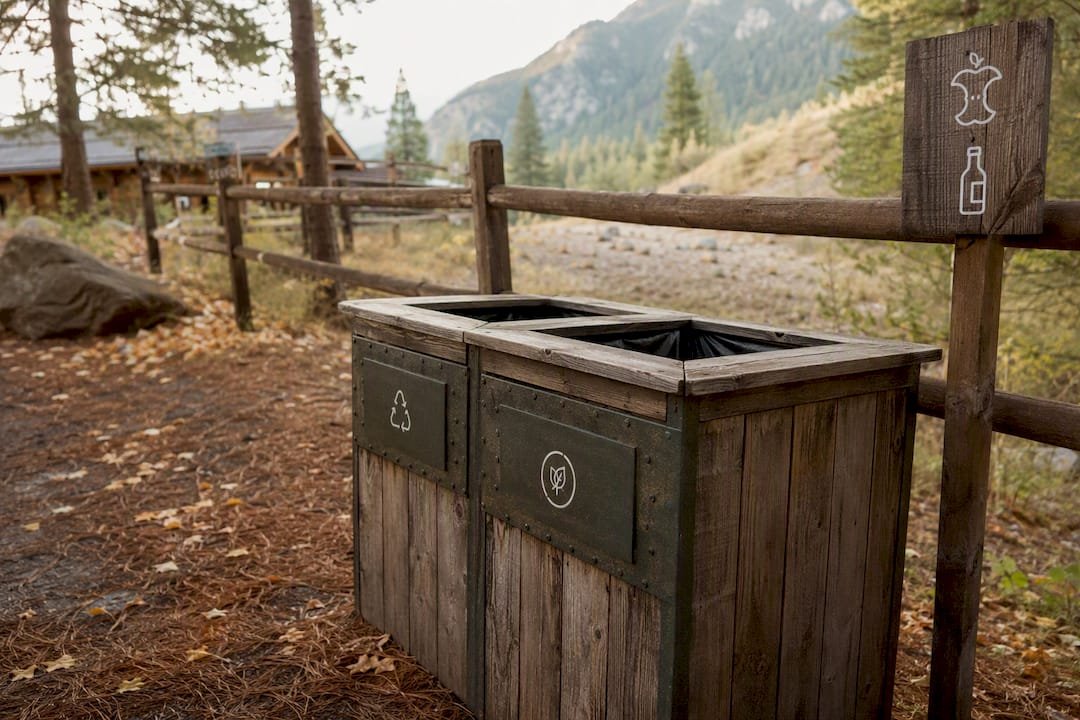
Day-of: Assign one person, whether that’s venue staff, a coordinator, or a trusted friend, as the sustainability point person. Someone needs to make sure the compost actually gets picked up and the donated flowers actually leave the building.
Pro Tip: Put the sustainability lead’s name and phone number on your day-of timeline sheet. Vendors will call that person instead of you when a compost bin overflows at 9 p.m.
Low-Waste Florals, Decor, and Attire That Still Look Stunning
Mountain settings already give you texture, color, and drama for free. The goal isn’t adding more; it’s editing.
Florals: Potted plants and dried arrangements outperform cut flowers on every sustainability metric, and they double as favors guests actually take home. Ask any florist whether they compost stem waste and whether they use foam-free mechanics, since floral foam is a plastic that never biodegrades. Rented greenery and repeat-use arbors cut costs further.
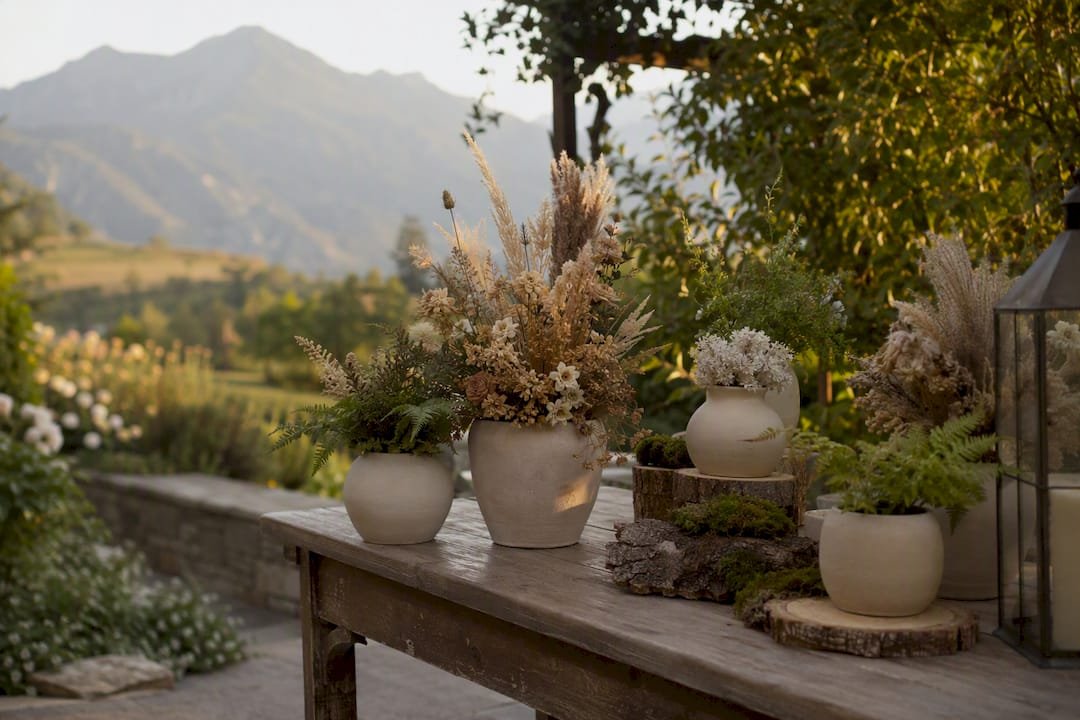
Decor: Lean on what the mountain already gives you. Weathered rock, tree lines, and natural light reduce how much you need to bring in at all. When you do add decor, rent or thrift it. That single habit is now common enough that 27% of couples cite vintage or secondhand decor as a primary sustainability strategy, and it usually costs less than buying new.
Catering: A farm-to-table caterer built around a seasonal, vegetarian-forward menu cuts transport emissions and food waste simultaneously. Plated service or a well-managed grazing table wastes far less than a sprawling buffet, and a clear donation partner should be lined up before the reception starts, not scrambled together at midnight.
Attire and jewelry: Sample gowns, rental suits, and secondhand dresses keep beautiful garments in circulation instead of landfills. For rings, lab-grown or vintage diamonds reduce mining impact while still delivering something meaningful to wear for decades.
How Do You Cut Travel Emissions for a Mountain Wedding?
Guest travel is usually the single largest environmental cost of any wedding, mountain or otherwise, and it’s the easiest one to underestimate.
On-site lodging solves most of this problem before it starts. When 25 to 75 guests sleep where the ceremony happens, you eliminate the daily round trips that a separate venue and hotel setup forces on everyone. Shuttles make sense once you’re coordinating more than a handful of cars from an off-site hotel block. Weigh the shuttle cost against simply reimbursing carpools. For smaller groups, organized carpooling is often cheaper and just as effective.
- Group your schedule into one tight weekend instead of scattering welcome dinners and brunches across separate days and locations.
- Offer a livestream or virtual option for guests who’d otherwise fly a long distance for a short ceremony.
- If you offer a carbon offset, be specific and transparent. A donation to a vetted group like One Tree Planted is a reasonable add-on, but pair it with real reductions in travel and waste rather than using it as a stand-in for them.
- Apply Leave No Trace principles to your ceremony site selection, especially if you’re using a trail, meadow, or overlook that sees regular foot traffic.
What Do Real Sustainable Mountain Weddings Look Like?
Real examples make this concrete. One documented mountain wedding at a Pennsylvania lodge property built its entire aesthetic around potted and dried florals, thrifted decor, and on-site lodging, proving that skipping cut flowers doesn’t mean skipping style. Other venues have built formal programs around planting a tree for every event booked and partnering with local reuse centers for leftover materials, the kind of documented on-site practice worth asking any venue to match.
At Cherrywood Ranch, the structure of the venue itself does a lot of this work automatically. On-site lodging for up to 16 guests means the wedding party and closest family sleep steps from the ceremony site, cutting out the shuttle logistics and multiple check-ins that a split venue and hotel setup requires. Outdoor ceremony and reception spaces sit on the same property as the pool and hot tub, so there’s no second location to rent, decorate, and tear down.
The couples who get the most out of a mountain weekend aren’t the ones who add the most eco-friendly extras. They’re the ones who picked a venue where sustainability was already built into the layout, then made a handful of smart swaps on top of it.
Practical swaps that show up again and again at these weekends: potted plants instead of cut bouquets, a standing donation partner for leftover food, and a local caterer who already knows the venue’s kitchen. When you write your vendor contracts, borrow this language directly: require the caterer to confirm a composting or food-donation partner in writing, and require the rental company to confirm reusable dishware and linens. You can find sample versions of both clauses in Cherrywood Ranch’s mountain wedding weekend planning guide.
Budgeting a Green Mountain Wedding Without Overspending
The 50/20/30 budgeting rule works well here: roughly 50% of your budget to venue and catering, 20% to attire and photography, and 30% to everything else, including decor, florals, and transportation. Sustainability choices shift money around inside those categories more than they change the total.
Renting decor and linens instead of buying typically lowers that 30% bucket. Composting services and organized shuttles usually raise it slightly. A seasonal, local menu often costs the same or less than an out-of-season one shipped in, since caterers pay less for ingredients already growing nearby.
For a smaller mountain wedding of 25 to 35 guests, expect venue and catering to dominate the budget, with decor rental and a modest shuttle or carpool stipend rounding things out. For a medium weekend of 50 to 75 guests, lodging becomes a bigger line item, but it usually replaces a separate hotel block cost you’d have paid anyway.
- Book the venue first, 9 to 12 months out, since it locks your date and guest cap.
- Book caterer and rental company next, 6 to 9 months out, once your guest count is firm.
- Book florist and shuttle service last, 2 to 3 months out, once your final headcount and layout are set.
Detailed line-item examples for weekend-format weddings are laid out in Cherrywood Ranch’s destination wedding budgeting guide.
Where Couples Get Sustainable Weddings Wrong
Most sustainability advice for weddings treats it like a checklist of add-ons: buy this eco favor, plant a tree, print on recycled paper. Those things aren’t wrong, but they’re the smallest levers on the whole board.
The biggest lever, by a wide margin, is venue structure. A single site that bundles lodging with ceremony and reception space eliminates more emissions and rental waste than any decor swap ever will, simply because it removes an entire category of car trips and duplicate infrastructure. Couples who obsess over compostable napkins while booking three separate locations across town are optimizing the wrong variable.
The second mistake is treating offsets as a substitute for reduction. Planting a tree feels good, and organizations like One Tree Planted do real work, but a tree doesn’t undo forty guests driving separately between a ceremony site and an off-site hotel. Offsets belong after you’ve cut what you can cut, not instead of cutting it.
The third mistake is assuming eco-friendly automatically means rustic and stripped-down. It doesn’t. A resort-style pool and hot tub, a fully catered weekend, and a genuinely low-impact footprint aren’t in tension with each other. They coexist easily when the venue’s own bones, its lodging, its acreage, its existing kitchen, are doing the sustainability work rather than a stack of add-on gestures.
Book a Mountain Wedding Venue Built for This From the Start
Cherrywood Ranch solves the biggest problem in this entire guide before you even book: it puts your ceremony, reception, and lodging for up to 16 guests on one property, so you’re not stitching together a venue, a hotel block, and a shuttle company to make a sustainable weekend work.

That structure is the difference between chasing eco-friendly extras and actually building a lower-impact wedding into the plan. Outdoor ceremony and reception spaces sit steps from the pool and hot tub, so your family and closest friends spend the weekend together instead of driving back and forth between locations. If you’ve been weighing a resort-style property against a stripped-down rustic one, this setup gives you both without the travel footprint of either extreme. Check available dates and see the full layout on the Georgia mountain wedding venue page, or go straight to the destination wedding venue page to start a booking inquiry.
Frequently Asked Questions
What makes a mountain wedding venue eco-friendly?
A genuinely eco-friendly mountain venue combines on-site lodging to cut guest travel, documented composting or donation partnerships, energy-efficient facilities, and a preferred-vendor list that already screens for local sourcing. Ask to see proof, not just a promise, before you book.
Is an eco-friendly mountain wedding more expensive?
Not necessarily. Renting decor instead of buying, sourcing a seasonal local menu, and bundling lodging with your venue often lowers costs compared to a traditional multi-location wedding. Costs can rise slightly for composting services or shuttles, but a single-site weekend usually offsets that by cutting hotel and transportation spending elsewhere.
How do I reduce guest travel emissions for a mountain wedding?
On-site lodging is the single biggest lever, since it removes daily round trips between a ceremony site and off-site hotel. Beyond that, group your events into one tight weekend, organize carpools or shuttles for anyone off-site, and offer a virtual option for guests who’d otherwise fly a long distance for a short ceremony.
What questions should I ask a venue about sustainability?
Ask for a named composting or donation partner, proof of energy-efficient systems, water conservation practices, a rain plan that avoids disposable materials, and a preferred-vendor list that already prioritizes local sourcing. Vague answers are a warning sign; specific names and numbers are a good one.
Should I use carbon offsets for my wedding?
Offsets like tree-planting donations through One Tree Planted are a reasonable addition, but they work best paired with real reductions in travel, catering distance, and waste. Treat offsets as a supplement to cutting your footprint, not a replacement for doing it.