
When a venue advertises “lodging for up to 16 guests,” it means the property has enough beds and bedroom space to sleep 16 people overnight on-site. That’s it. It’s not a fire-code occupancy limit, not the maximum headcount for your ceremony or reception, and not a short-term rental booking cap. It’s purely about who gets a bed under that roof for the night.
This distinction trips up a lot of couples early in venue shopping. A property can host 60 guests for a reception while only sleeping 16 of them. Those are two completely separate numbers, and confusing them leads to awkward surprises about who’s driving home at midnight versus who gets a room.
Before you go further with any venue, get clear on two things:
- A room-by-room list of what’s actually being counted toward that 16.
- The bed types in each room, since a “sleeps 16” number built on bunk beds looks nothing like one built on king suites.
Key Takeaways
Sixteen-guest lodging capacity refers strictly to on-site overnight sleeping space, and confirming its room-by-room composition matters more than the headline number itself.
| Point | Details |
|---|---|
| Know the real definition | “16-guest capacity” means overnight sleeping space, not event headcount or occupancy limits. |
| Composition beats the total | Eight couple suites and 16 single beds both hit “16 guests” but feel completely different. |
| Get it in writing | Request a room-by-room inventory, floor plan, and photos before signing a contract. |
| Allocate with priorities, not guesswork | Rank immediate family and mobility needs first, then bridal party, then distant guests. |
| Plan a fallback if you’re short | Nearby hotel blocks and staggered stays keep overflow guests connected to the weekend. |
| Choose a venue with clear lodging documentation | Cherrywood Ranch pairs a documented room inventory with resort-style amenities for a cohesive 16-guest weekend. |
Table of Contents
- What Does 16-Guest Lodging Capacity Mean Once You Look at the Rooms?
- What Should You Ask the Venue to Confirm Capacity?
- How Do You Fairly Allocate 16 Beds Among Family and Friends?
- What Do You Do When 16 Beds Aren’t Enough?
- What Actually Matters When You’re Comparing Lodging Numbers
- How Cherrywood Ranch Handles a 16-Guest Overnight Weekend
- Frequently Asked Questions
- Sources
What Does 16-Guest Lodging Capacity Mean Once You Look at the Rooms?
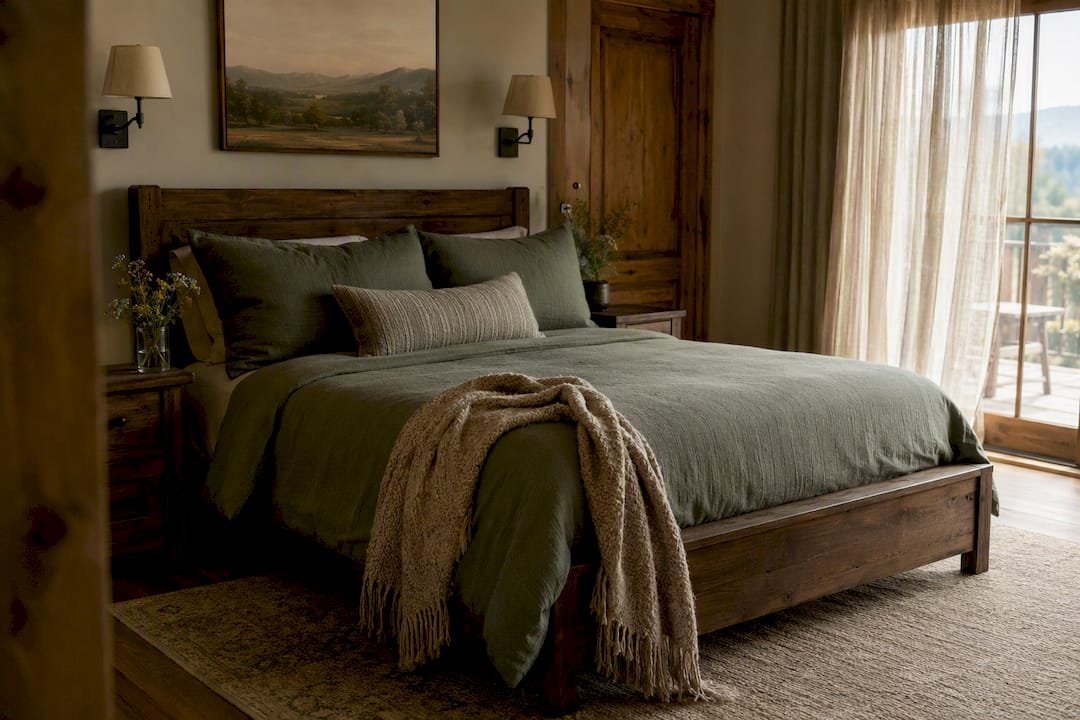
A headline number like 16 tells you almost nothing about comfort until you know how it’s built. Sixteen single beds crammed into shared dorm-style rooms is a wildly different experience than eight private suites that happen to sleep two apiece. Both technically hit “16-guest lodging capacity.” Only one of them makes for a relaxed wedding weekend.
Bed composition is where the real story lives. Research on French wedding venues found the median property in that market sleeps 33 guests across 13 rooms, and the analysis stressed that usable rooms, not raw bed totals, are what actually determines whether a weekend feels cohesive or crowded, according to French Wedding Style’s accommodation guide. The same logic applies at 16 guests as it does at 33.
Here’s how to think through the mix:
- Count usable sleeping units, not bodies. A king suite for a couple counts as one “unit” even though it houses two guests, and that changes how you allocate rooms across families versus pairs.
- Check whether pull-outs and Murphy beds are baked into the number. Some listings reach their stated capacity by combining permanent beds with fold-down or sofa options. One lodge property, for example, reaches its “up to 16 guests” figure using three queen beds plus two queen Murphy beds, according to its own property listing. That’s fine for a college roommate crashing for one night. It’s a rougher fit for grandparents.
- Map bathroom access room by room. En-suite bathrooms mean privacy; shared hallway bathrooms mean negotiating schedules with people you may only see twice a year.
Pro Tip: Ask specifically whether the quoted “16” includes any temporary beds. If it does, request the breakdown of permanent versus temporary sleeping spots before you fall in love with the number.
What Should You Ask the Venue to Confirm Capacity?
Get specifics in writing before you sign anything. A verbal “yes, it sleeps 16” from a venue coordinator isn’t the same as a documented breakdown you can hold everyone to, including yourself, six months later when the guest list shifts.
Request these items directly:
- A room-by-room inventory: room name or number, bed type, how many people it sleeps, and whether the bathroom is private or shared.
- A floor plan and recent photos showing the actual bed setups and common spaces, not stock photography from a listing site.
- Clarification on which sleeping arrangements are temporary, like sofa beds or rollaways, and whether those count toward the advertised 16.
- Written policy on extra-person fees, additional-night charges, and any accessibility features (ground-floor rooms, grab bars, elevator access) if you have guests who need them.
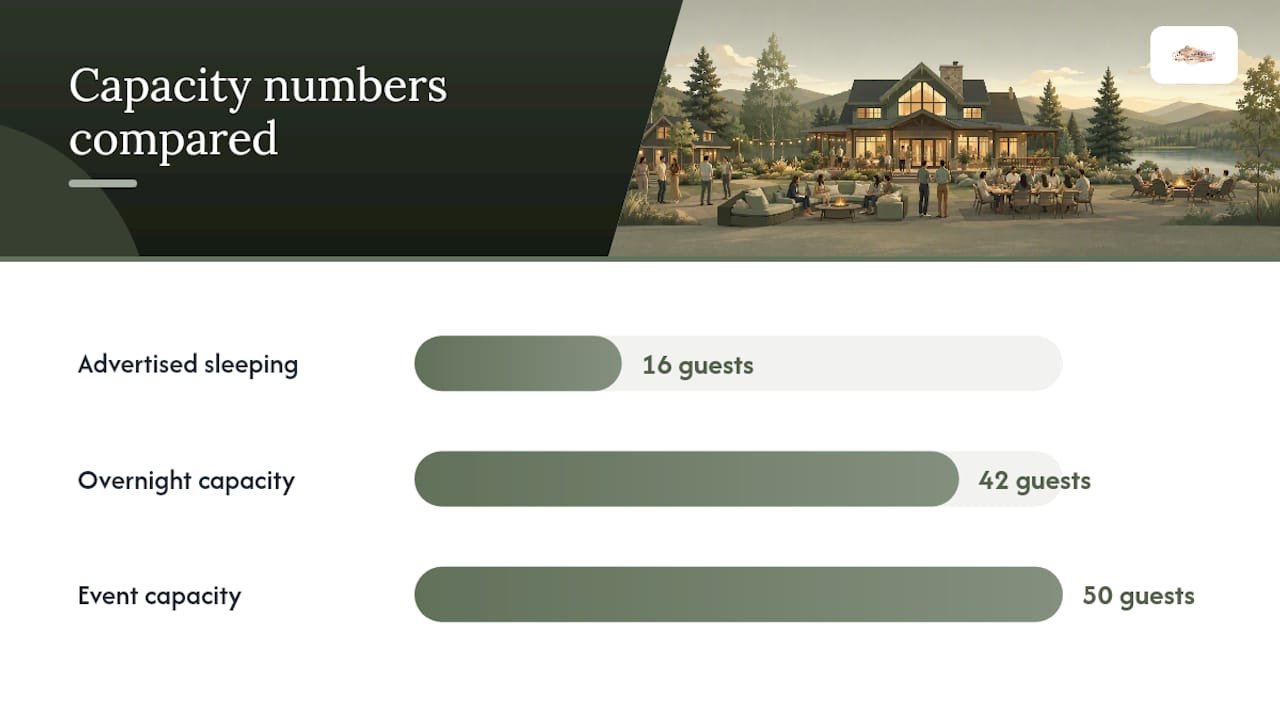
Photographic proof and an actual floor plan remain the most reliable ways to confirm that an advertised sleeping number matches real, usable rooms rather than an optimistic estimate. Multi-home wedding properties illustrate why this matters: one example property lists 16 bedrooms spread across several separate homes, and by grouping those structures together it reaches an overnight capacity of 42 guests with an event capacity of 50, according to the Sequoia Foothills Collection listing. Bedroom count and overnight capacity are not automatically the same figure, even within a single property.
Ask for these details as a signed addendum or lodging rider attached to your contract, not just a verbal assurance. It gives you something concrete to point back to if a room assignment gets disputed later, and it protects the venue too by setting expectations upfront.
How Do You Fairly Allocate 16 Beds Among Family and Friends?
Sixteen beds sound generous until you start assigning names to them. Parents, grandparents, the wedding party, out-of-town cousins, your college roommate flying in from three states away. Everyone has a reason to stay on-site, and you can’t fit them all.
Start with a clear priority order:
- Immediate family and anyone with mobility or travel limitations. Parents, grandparents, and guests who genuinely can’t manage a late-night drive back to a hotel come first.
- Bridal party members with wedding-day responsibilities. People who need to be on-site early for hair, makeup, or setup benefit most from sleeping steps away.
- Out-of-town guests with no easy commute option. Local friends can drive home; someone who flew in from across the country often can’t.
Once priorities are set, pick an allocation method and stick to it. Some couples reserve rooms directly and simply tell people where they’re staying. Others link lodging offers to RSVP responses, so guests confirm attendance and lodging interest in one step. Bridal-party blocks work well when the wedding party is large enough to fill a wing on its own. A first-come, first-served RSVP with an opt-in lodging request keeps things transparent, though it requires clear communication about deadlines.
In practice, this often looks like putting parents in the primary suites, giving families with kids a room with adjoining or nearby space, and being upfront about which rooms share a bathroom, since that detail changes who should be paired together. Practitioners who plan these weekends regularly point to bed composition and bedroom-to-bathroom ratio as the two factors that make or break guest comfort, more than the raw headline number ever does.
Pro Tip: Send a short lodging email with a simple room-assignment chart attached to your RSVP or welcome packet. It heads off the “wait, who’s staying where?” texts you don’t want to field during your final week of planning.
What Do You Do When 16 Beds Aren’t Enough?
Most guest lists run bigger than any single property’s overnight capacity, even generous ones. That’s normal, and it’s manageable with a little upfront planning rather than a scramble two weeks before the wedding.
Common fallback options include:
- Reserving a block of rooms at a nearby hotel for guests who don’t make the on-site cut.
- Booking a second vacation rental nearby to keep the overflow group close instead of scattered across town.
- Staggering stays, so some guests arrive Friday and leave Saturday while others check in Saturday for the main event.
- Being upfront on invitations and your wedding website about who gets on-site lodging and who’s directed to nearby accommodations.
Once you’ve settled the sleeping arrangements, the logistics around them matter just as much. Plan a shuttle schedule between the venue and any off-site hotel block, set a clear meeting point for group transport, and figure out where the group can store luggage if guests are checking out of hotels before the reception. A Sunday brunch or casual send-off gives the whole group, on-site and off-site alike, one more chance to reconnect before everyone scatters home.
There’s a real cost trade-off here too. Consolidating everyone in one property tends to lower the per-person cost of the weekend compared with splitting a group across a hotel block, since you’re not paying separate lodging markups for each family, though the math depends heavily on group size and location. Weigh that against the convenience guests get from a hotel’s amenities and flexibility, and be straightforward about the trade-off when you communicate lodging details.
What Actually Matters When You’re Comparing Lodging Numbers
Most engaged couples fixate on the number itself, and I get why. “Sleeps 16” sounds like a clean, comparable data point, the kind of thing you can drop into a spreadsheet next to three other venues. It isn’t. Two venues can both claim 16-guest capacity and deliver completely different weekends, one with private suites and generous bathroom access, the other with bunk rooms and a single shared hall bath serving eight people.
The conventional advice, “ask how many it sleeps,” stops one question too early. The better question is what those 16 spots are made of, because that’s what determines whether your in-laws feel welcomed or crammed in. A venue like Cherrywood Ranch, where lodging is baked into the property rather than tacked on, gives you a clearer picture upfront simply because there’s one room inventory to review instead of piecing together answers from a rental listing.
If I had one piece of advice for couples right now, it’s this: get the room-by-room breakdown before you get emotionally attached to a venue’s photos. The number on the website is a marketing figure. The floor plan is the truth.
How Cherrywood Ranch Handles a 16-Guest Overnight Weekend
Cherrywood Ranch was built around exactly this challenge: sleeping up to 16 guests on-site while keeping the whole wedding weekend, not just the ceremony, in one place. The property pairs its lodging with resort-style amenities like a pool and hot tub and multiple shared living spaces, so families aren’t just sleeping under one roof, they’re actually spending the weekend together instead of dispersing to separate hotels after the reception ends.
What sets the planning process apart is the detail couples get before they ever sign a contract. Cherrywood Ranch provides a real room-by-room inventory, not a vague “sleeps 16” claim, alongside personalized guidance drawn from resources like How to Plan a Large Family Overnight Venue Stay, which walks through allocating rooms across parents, wedding party members, and out-of-town family without the guesswork this article just covered. You also get support figuring out amenities like the family sleepover benefits of keeping everyone together rather than splitting the group between the venue and a hotel across town.
If you’re comparing venues right now and want the actual room breakdown, not just a headline capacity number, visit the Cherrywood Ranch lodging page and ask directly about room configurations, bed types, and availability for your date.
Frequently Asked Questions
Does “16-guest lodging capacity” include people attending the ceremony or reception?
No. It refers only to how many guests can sleep on-site overnight. Your ceremony and reception headcount is a separate figure entirely, and a venue can accommodate far more guests for the event itself than it can house overnight.
Are pull-out and Murphy beds usually counted in the advertised number?
Often, yes, which is exactly why you should ask. Some properties reach their stated capacity by blending permanent beds with fold-down or sofa options, so always request the specific breakdown before assuming every one of the 16 spots is a full-size permanent bed.
How many bedrooms does it typically take to sleep 16 guests comfortably?
It varies widely depending on bed type and whether rooms are designed for couples or groups. A property built around eight couple-friendly suites reaches 16 guests just as easily as one with 16 single beds, but the guest experience differs enormously between the two setups.
What should we do if our guest list exceeds the venue’s 16-guest lodging capacity?
Reserve a nearby hotel block for overflow guests, consider staggering who stays which nights, and communicate lodging expectations clearly on your invitations or wedding website so nobody is caught off guard.
Should we get the lodging details in writing before booking?
Yes, always. Ask for a signed addendum or lodging rider listing each room, its bed type, and bathroom access. It prevents disputes later and gives you a clear reference point when assigning rooms to guests.
Sources
- Guest Accommodation at French Wedding Venues | FWS
- Sequoia Foothills Collection: Three Rivers Wedding
- Perfectforweddings