

Use the timings, sample counts and suggested sequences in this guide as planning examples. Confirm the actual schedule, quotations and responsibilities with the venue and the suppliers you choose.
A wedding at a house gives you total control and no rental fee, but you also become the venue: you arrange power, restrooms, parking, tables and a rain plan. A traditional venue puts those things in place for you, in exchange for a fee, set hours and vendor rules. The right choice depends on your guest count, your budget for the extras, and how much planning you want to take on.
This guide walks through both options side by side. It also covers a middle path for couples who want a private, home-like setting without building a venue from scratch.
TL;DR
- A house or backyard wedding removes the venue fee but adds rentals, labor and logistics. Budget for them before you assume it is cheaper.
- A venue brings structure: staff, a set layout, restrooms and a weather plan. You pay for it, and contract rules on hours, vendors and decor apply.
- The biggest hidden jobs at home are power, restrooms, parking, accessibility and rain backup.
- A private estate with onsite lodging, like a vacation home built for weddings, can give you the privacy of a house and the infrastructure of a venue.
- Decide by guest count, season, and how many weeks you want to spend on logistics.
Table of Contents
- The core difference: who builds the event?
- Side-by-side comparison
- What a house wedding really costs
- The checklist a house wedding adds to your plate
- Space, parking and accessibility
- Ceremony seating in a circle
- How to decide
- A middle path: a private home made for weddings
- Planning at Cherrywood Ranch
The core difference: who builds the event?
At a venue, the basic building blocks already exist. At a house, you supply every one of them. One planner quoted by House Beautiful puts it as “you’re building a venue from the ground up,” and lists rented tables, chairs, restrooms, generators, lighting, catering tents and flooring as typical needs. The same piece points to security, narrow roads and parking as questions couples forget.
A venue is not free of limits, though. Its fee often covers only a window of hours. One wedding photographer notes that venue access may start at 10:00 am with teardown due by midnight, while a yard lets you spread setup and teardown over several days without overtime fees. Vendor lists, decor rules and noise cutoffs come from the contract.
So the real trade is simple: freedom and personal meaning at home, against convenience and predictability at a venue.
Side-by-side comparison
| Factor | House or backyard | Traditional venue |
|---|---|---|
| Rental fee | None for the property itself | Yes, plus possible service charges |
| Setup | You or your vendors arrange everything | Mostly in place |
| Hours | Flexible, within local noise rules | Fixed window in the contract |
| Vendors | Open choice, but caterers need prep space | Sometimes a required or preferred list |
| Restrooms and power | Rented and planned by you | Built in |
| Weather backup | You build one | Often indoor space or a standard plan |
| Accessibility | Depends on your home | Usually designed for it |
| Personal feel | Very high | Varies |
What a house wedding really costs
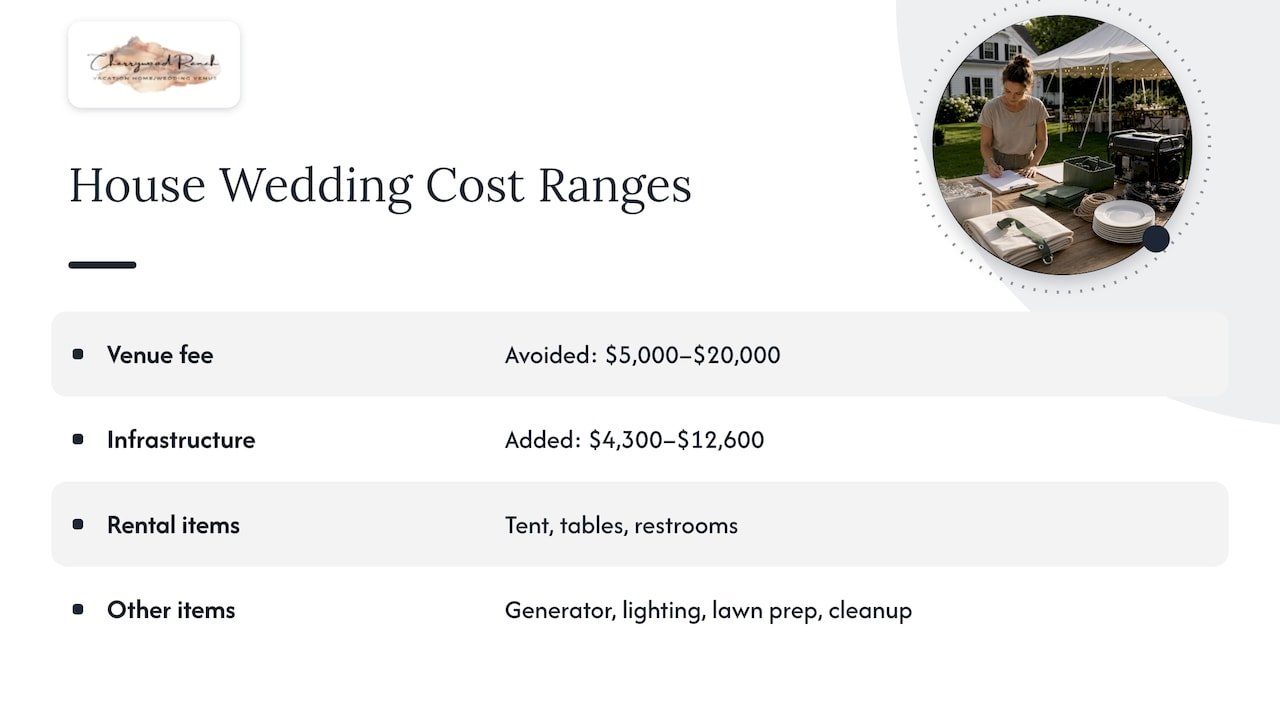
If you are weighing the budget at a larger scale, this breakdown of destination wedding budgets shows how totals shift once travel and lodging enter the picture. For our own take on a full weekend, see our wedding weekend budget plans.
The checklist a house wedding adds to your plate
These are the jobs a venue usually handles and a home does not.
Restrooms
Home plumbing is not built for dozens of guests over several hours. A planner’s rule of thumb is one portable unit per 50 guests for events under four hours and one per 35 for longer ones.
Catering space
Catering is often the most underestimated part. For a 125-guest backyard wedding, one planning company says staffing can range from 12 to 20 people, and every caterer needs different prep space, refrigeration and equipment. Ask yours what they need before you pick a spot.
Setup time
Plan on a long setup. One guide recommends 4 to 6 hours of vendor setup before guests arrive, with teardown planned separately.
Permits, insurance and neighbors
Confirm the requirements for the actual location, event and suppliers with the responsible authority or qualified provider. Ask who handles the approval, what documents are needed and which deadlines apply. A generic wedding guide does not establish permission, coverage or a safe equipment arrangement.
Space, parking and accessibility
Parking is the quiet deal-breaker. Planners warn that neighbors often care more about parking overflow and sound curfews than paperwork, and that even a big driveway should not be your plan. A shuttle from a nearby lot is a common fix.
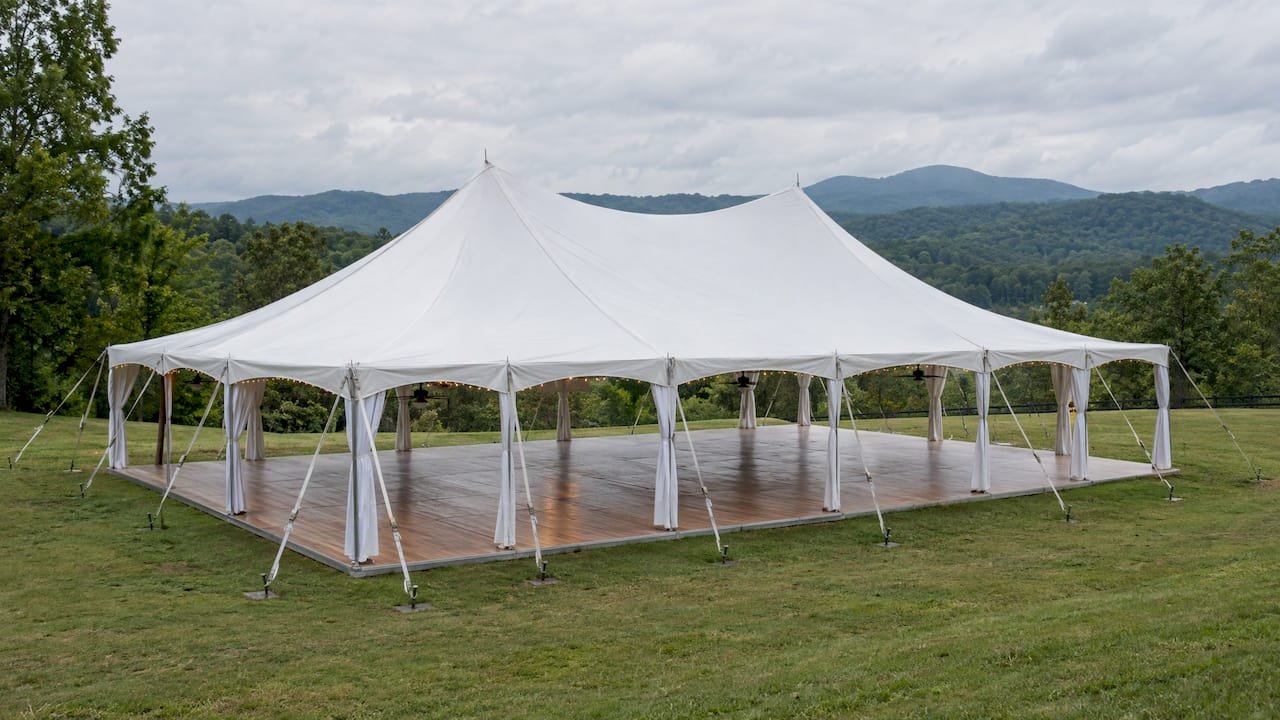
Can you get married in a tent?
Ceremony seating in a circle
Circle seating suits both homes and venues, especially for small guest lists. Seating guests all the way around the altar creates a more connected feeling where everyone gets a good view of the whole ceremony. The tradeoff is space: you need room for a large circle and enough chairs, and the same source suggests adding mini aisles inside the circle so guests can move easily.
In a yard, mark the circle on flat, stable ground and leave a clear path for wheelchairs. For more layouts, see our outdoor wedding ceremony ideas.
How to decide
Work through these questions in order.
- How many guests? Under 30 to 40, a home can feel warm and manageable. Past 75, logistics grow quickly.
- How many weeks can you give it? A house wedding is a project with a long task list. If you want to hand it off, lean toward a venue.
- What is your season? A rain, heat or cold plan costs money at home. Indoor-outdoor venues absorb it.
- Who needs to travel? If guests come from out of town, ask where they will sleep. A home rarely sleeps many people.
- Do you have a meaningful place? Family land with sentimental value may be worth the extra work.
A middle path: a private home made for weddings
Some couples love the house idea for its privacy and the family weekend feel, but not the rental list. A private estate that is both a vacation home and a wedding venue sits between the two options. You get the whole property for your group and lodging on site, with outdoor spaces already set up for ceremonies and receptions. Our page on what a luxury vacation home wedding is explains the idea, and our tented mountain wedding guide shows how one weekend can work without juggling vendors. If you want to see how a venue stacks up against a big resort, read why resort alternatives can save money.
Planning at Cherrywood Ranch
Confirm the spaces, guest list, access times and vendor responsibilities for the actual celebration you want to hold.
Cherrywood is an à la carte venue with wedding capacity up to 100. The six-bedroom house sleeps up to 16; these are separate limits. Catering, flowers, photography, entertainment, event coordination and bar service are arranged separately.
Check the current inclusions and published packages. Additional gatherings with non-overnight guests require prior approval and a fee. The rehearsal and rehearsal dinner allow up to 30 guests for three hours combined; the couple sets up the tables and chairs, and rehearsal linens are not included.
Do I need a permit for a wedding at home?
Confirm the requirements for the actual location, event and suppliers with the responsible authority or qualified provider. Ask who handles the approval, what documents are needed and which deadlines apply. A generic wedding guide does not establish permission, coverage or a safe equipment arrangement.
What guest count works best for a house wedding?
It depends on your space, not just chairs. Allow room for the ceremony, tented dining, restrooms, parking, vendors and a weather backup. Many couples find that smaller, intimate groups fit a home best.
Can a venue still feel personal?
Yes. A private, single-party venue with onsite lodging lets you gather family for a full weekend and shape the details yourself. Ask any venue about hours, vendor rules and decor limits before you sign.