
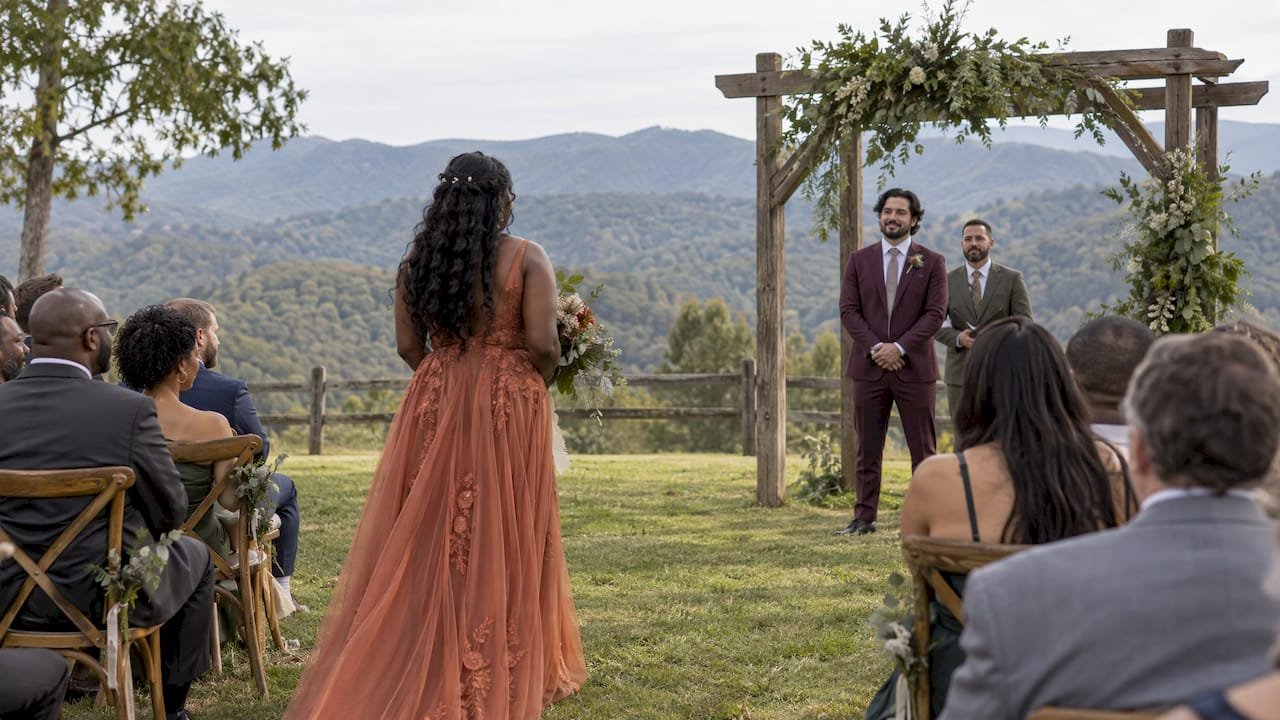
A wedding timeline without a first look works when you move about an hour of portrait time to after the ceremony and give the cocktail hour 75 to 90 minutes to hold it. Everything else, from hair and makeup to the grand entrance, is built around that one change. Below you will find sample schedules for 4:00, 5:30 and 6:00 PM ceremonies, how long each photo block really takes, and how to protect your time with guests.
TL;DR
- Without a first look, family, wedding party and couple portraits all happen after the ceremony, usually inside cocktail hour.
- Plan a 75 to 90 minute cocktail hour so you can finish photos and still join your guests.
- Budget roughly 30 to 60 minutes for family formals, 20 to 30 for the wedding party and 30 to 45 for the two of you.
- Add a 15 minute cushion after every major block, and work backward from sunset if golden hour portraits matter to you.
- Choose a ceremony time first, then build the rest of the day around it. Eight hours of photography coverage is the most common choice.
Table of Contents
- What changes when you skip the first look
- Sample timeline for a 4:00 PM ceremony
- Sample timeline for a 5:30 PM ceremony
- Sample timeline for a 6:00 PM ceremony
- How long each photo block takes
- Make cocktail hour carry the load
- Fit in sunset portraits
- How many hours of photography coverage you need
- Build in cushions and travel time
- Tips for making the day feel unhurried
- Our perspective: put it all in one place
- Plan your no-first-look wedding at Cherrywood Ranch
- FAQ
- Sources
What changes when you skip the first look
With a first look, couple portraits and often the wedding party photos happen before the ceremony. Without one, all portraits, including family, wedding party and couple photos, fall after the ceremony, typically within the cocktail hour block. Skipping it shifts roughly an hour of portrait time into that window, according to one photography hours guide.
That has three practical effects:
- Your cocktail hour gets longer or your photo list gets shorter. A standard 60 minute cocktail hour rarely fits everything.
- Your guests wait while you shoot. They need food, drinks and something to do.
- Daylight matters more. Every photo happens later in the day, so the ceremony start time decides how much light you have left.
Many couples choose this on purpose. Seeing each other for the first time at the end of the aisle is a moment worth protecting, and the timeline can fully support it. You are not choosing a worse day. You are choosing a different sequence.
It is also a common choice for the start time. Lulan Studio reports that about 40% of the ceremonies it photographs start between 3:00 and 5:00 PM, with 4:00 PM the most common, and that about 45% of the timelines it plans include a first look. So a majority of that studio’s timelines skip it, and you will have plenty of company.
Sample timeline for a 4:00 PM ceremony
The schedule below is our own working example, built from the block lengths the photographers and planners cited later in this article. Adjust the times to your own hair and makeup needs and your venue.
| Time | What happens |
|---|---|
| 1:00 PM | Photographer arrives, hair and makeup finishing, detail photos |
| 1:45 PM | Getting-ready photos, dressing, letters or gifts |
| 2:45 PM | Groom and groomsmen portraits, bridal party portraits separately |
| 3:30 PM | Everyone in place, guests seated |
| 3:45 PM | Final 15 minute cushion, music begins |
| 4:00 PM | Ceremony (about 30 minutes) |
| 4:30 PM | Family formals (30 to 45 minutes) |
| 5:15 PM | Wedding party photos (20 minutes) |
| 5:35 PM | Couple portraits (30 minutes) |
| 6:05 PM | Couple joins the end of cocktail hour |
| 6:15 PM | Grand entrance, dinner begins |
| 8:00 PM | Toasts, cake, dancing |
| 9:00 PM | Sunset or night portraits if wanted, send-off |
Two features make this work. The groups that can be photographed before the ceremony, such as each side separately and the wedding party individually, are handled early. Only the groups that need both partners together wait until after.
Photos by Annalee’s sample no-first-look schedule takes the same approach: getting-ready photos from 1:00 to 2:30 PM, then wedding party and separate family photos before a 4:30 PM ceremony, leaving only the combined groups for the cocktail hour.
Sample timeline for a 5:30 PM ceremony
The LXA publishes a traditional no-first-look sample for a 5:30 PM ceremony. It has the bride getting ready from 3:00 to 5:00 PM, the groom from 4:00 to 5:00 PM, the ceremony from 5:30 to 6:30 PM, and bridal party and family photos from 6:30 to 7:30 PM during cocktail hour. The reception then runs from 8:00 PM to midnight.
A later ceremony gives you a relaxed morning and afternoon. The tradeoff is less daylight for portraits in colder months, so check your sunset time before you commit. We cover that below.
Colara’s template for a 5:00 PM ceremony with 8 hours of coverage runs from 2:00 to 10:00 PM. Its 90 minute cocktail hour absorbs 30 minutes of family formals, 20 minutes of full wedding party photos and 40 minutes of couple portraits before a 7:00 PM entrance and dinner. That is a tidy model if you want everything done inside one block.
Sample timeline for a 6:00 PM ceremony
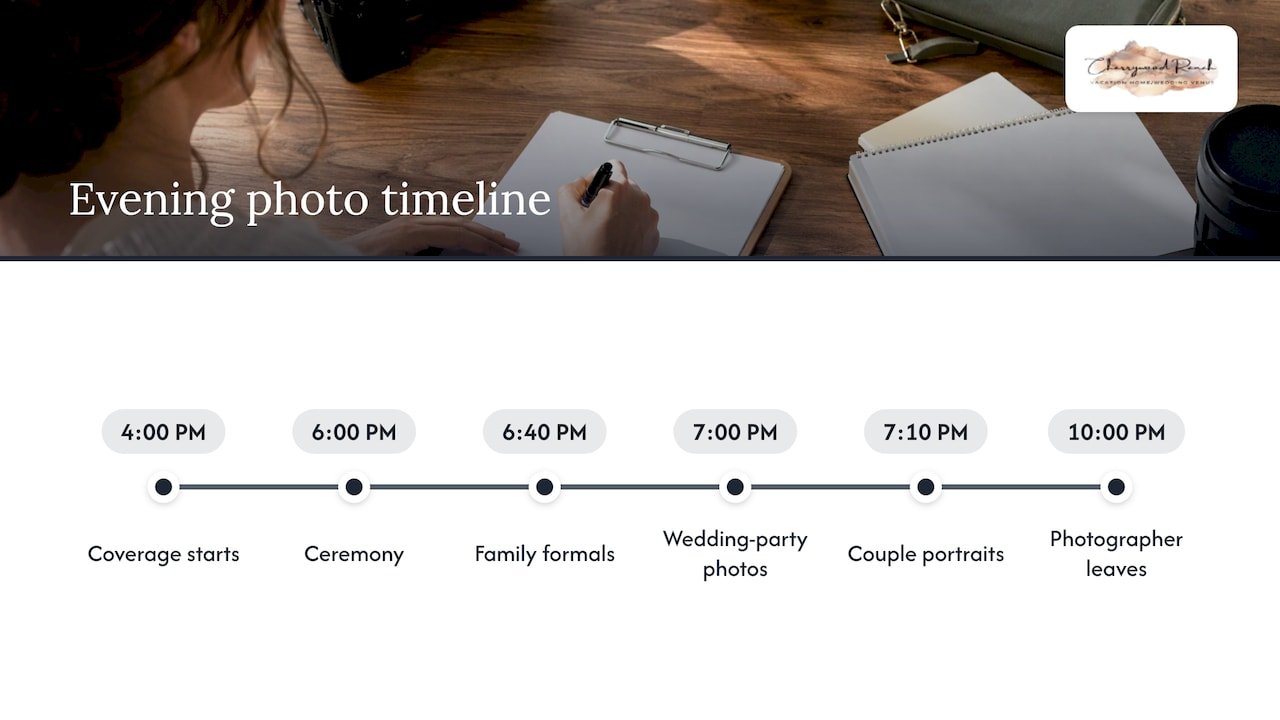
A 6:00 PM start compresses the evening, so the schedule needs to be tighter and the photographer’s list shorter. Bushel + Peck Photo’s 6 hour sample for a 6 PM ceremony starts at 4:00 PM with hair and makeup already done and ends with the photographer leaving at 10:00 PM. Its ceremony is at 6:00 PM, family formals at 6:40 PM, the full wedding party at 7:00 PM and couple portraits at 7:10 PM.
Another template for a 6 PM ceremony, from WeddingProsRated, assumes 10 family combinations, a 30 minute ceremony and a 60 minute cocktail hour. The couple completes 45 minutes of family photos plus 30 minutes of portraits between 6:30 and 8:00 PM, then joins cocktail hour for 30 minutes before the 8:00 PM reception.
If you pick a 6 PM start, keep the family list short and think hard about whether a 60 minute cocktail hour is enough. In our view it usually is not.
How long each photo block takes
The biggest timeline mistakes come from guessing how long group photos take. Use these ranges as starting points.
| Photo block | Typical time | Source |
|---|---|---|
| Getting-ready photos | 60 to 90 minutes | Denton Wedding |
| Family formals | 30 to 45 minutes (up to 60 for large families) | Denton Wedding, Paperlust |
| Wedding party portraits | 20 to 30 minutes | Denton Wedding |
| Couple portraits | 30 to 45 minutes | Paperlust |
Family formals should happen right after the ceremony, while everyone is still in one place. Each grouping takes about 2 to 3 minutes, so 15 groupings need 30 to 40 minutes. The honest way to shorten the block is to shorten the list. Decide in advance which combinations you truly want: both sets of parents, each side of the family, grandparents, siblings.
Appoint a family wrangler
Name a friend or relative who knows both sides of the family and ask them to gather people. Guidance on wedding portraits says a designated family wrangler can cut portrait time in half. Colara’s author adds that a printed list read aloud by a designated family member can turn a chaotic 50 minute block into 30 calm minutes.
Tell the wrangler where to stand, hand them the list and tell relatives the photo spot before the ceremony ends. Nothing slows a family photo block like guests wandering to the bar.
Make cocktail hour carry the load
The 90 minute cocktail hour is the heart of a no-first-look day. Colara’s author puts it plainly: 60 minutes is not enough for family formals, full party photos and couple portraits, while 90 minutes with good food and drinks feels generous to guests and unhurried to the couple.
Kelsey Travis Photography says the same: because wedding party, family and couple photos all happen during cocktail hour without a first look, she uses an extended 1 hour 30 minute cocktail hour.
Expect to miss most of it. Couples should be prepared to be absent for most of the cocktail hour. To make that feel good rather than frustrating:
- Schedule your photos in order of who is waiting. Family first, because relatives want to get to the bar. Wedding party second. Couple portraits last, so you can walk straight from them into the party.
- Give guests something to do. Lawn games, food stations, a signature drink and a seating area with shade or heaters keep the time from dragging.
- Arrange a private moment. Ask for a plate and a drink to be brought to you for five minutes. It is the only quiet time you may get before the reception.
- Join for the last 15 to 20 minutes. You will greet guests, then make the entrance together.
Our outdoor reception ideas cover ways to keep guests entertained outdoors while you are away.
Fit in sunset portraits
A no-first-look day pushes your portraits later, so light matters. Paperlust suggests golden hour portraits happen 45 to 60 minutes before sunset, with a 15 to 20 minute session during dinner, and it puts the ideal ceremony start at about 3.5 hours before sunset.
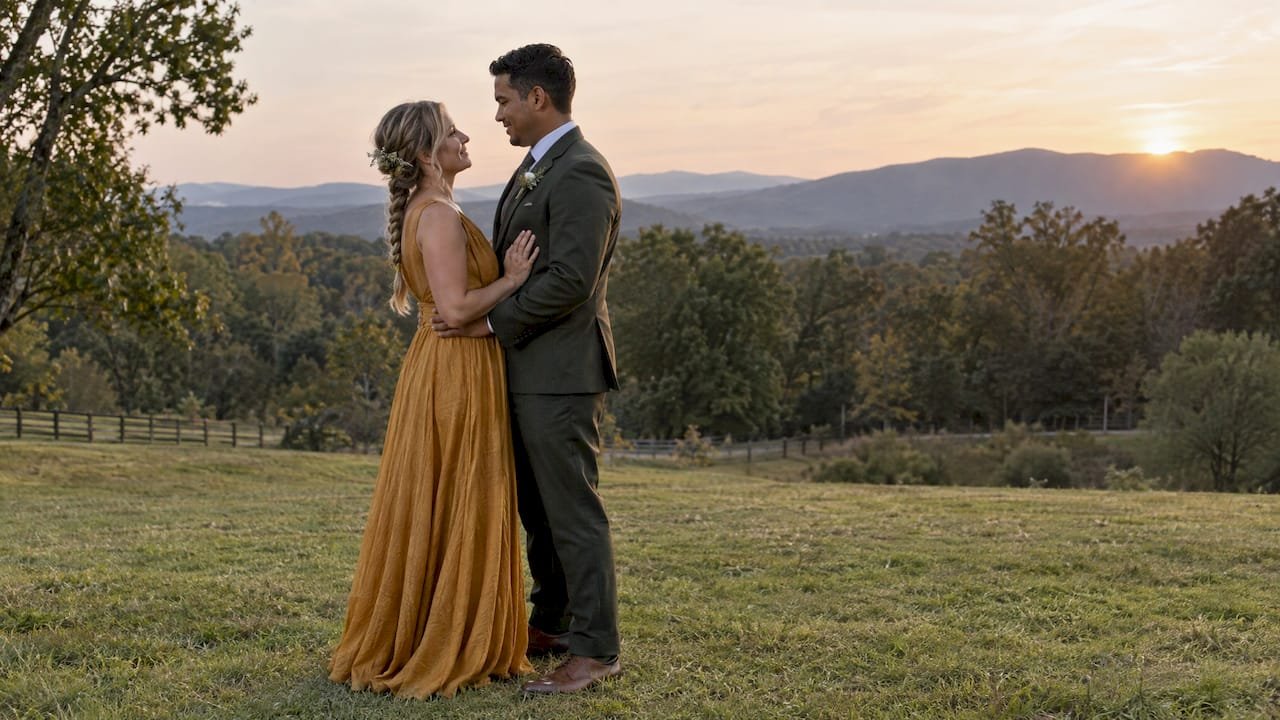
Sortra advises that the best light is usually 30 to 60 minutes before sunset and continues briefly after. It suggests reserving 20 to 45 minutes for sunset photos: 20 to 30 minutes for couple-only portraits, or 30 to 45 if the wedding party joins.
Here is how to apply that:
- Look up the sunset time for your date and location.
- Subtract about 3.5 hours for a rough ceremony start.
- Decide whether your main portraits happen in cocktail hour, at sunset, or both.
- Schedule a short second portrait session during dinner, so the couple has a breather and the photographer gets the best light.
In practice, the best of both worlds is to do essential portraits right after the ceremony, then slip out for a final golden hour set. We walk through this in detail in how to plan golden hour wedding photos and compare the light in golden hour vs. blue hour.
How many hours of photography coverage you need
No first look generally means more coverage after the ceremony. Eight hours is the usual answer. Denton Wedding says most weddings it sees need 8 hours of coverage to fit the day without rushing, and Kelsey Travis Photography notes that 8 hours is the most popular coverage length overall.
A 6 hour package can work, as the 6 PM sample above shows, but only if hair and makeup are finished when the photographer arrives and the family list is short. If you want getting-ready photos, a full portrait set, dinner moments and the first dances, eight hours leaves breathing room.
Build in cushions and travel time
Timelines slip in small ways: a late hair stylist, a missing boutonniere, a grandparent who needs a few extra minutes. Add 15 minutes of cushion after every major block and build travel into the schedule. When ceremony and photo locations are different, allow 20 to 40 minutes for transit with a buffer.
That is why venue layout matters so much on a no-first-look day. Before you sign, it helps to ask how far the ceremony space is from the best photo spots and from the reception area, and what the rules are for vendors and rain. A list of questions to ask an event venue before you book is a good place to start, and you can add your own timing questions to it.
If you want a full weekend rather than a single day, see how we lay out a wedding weekend photo timeline and our weekend wedding schedule templates.
Tips for making the day feel unhurried
- Do every pre-ceremony photo you can. Individual portraits, each side’s family, the wedding party without the couple, details and getting-ready shots all work before the ceremony.
- Keep the ceremony to 30 minutes or so. The planning templates above assume this length.
- Share the timeline with every vendor. The photographer, DJ, caterer and coordinator should all hold the same version.
- Tell your wedding party exactly where to be. A one-page schedule with times and places prevents a lot of wandering.
- Feed yourselves. Eat something before the ceremony and again at the first chance after.
- Plan the grand entrance for after cocktail hour, not during it, so everyone is seated and ready.
Our perspective: put it all in one place
We have watched a lot of wedding days go by in the North Georgia Mountains, and the no-first-look timeline works best when nobody has to travel. The sequence is simple on paper: ceremony, family formals, wedding party, couple portraits, cocktail hour. What drains the time is moving people between locations.
At Cherrywood Ranch, the ceremony space, reception space, mountain views and lodging for up to 16 guests are on the same property. That is the idea behind our all-inclusive wedding weekends. Your photographer can use the porch, the lawn and the views without a shuttle, and your closest family can be close by when the formals begin.
Because the venue is private and the guest list is intimate, the family photo list is also easier to manage. Smaller groups mean less herding, and you can spend your cocktail hour with the people who traveled to be there. Our pool and hot tub give guests something to enjoy at the weekend’s quieter moments.
If you want the surprise of seeing each other at the end of the aisle, we think you should have it, with a timeline that is built to protect your time.
Luis
Plan your no-first-look wedding at Cherrywood Ranch
At Cherrywood Ranch, the ceremony lawn and covered reception pavilion share one property, with lodging for up to 16 overnight guests on a three-night stay. See our wedding packages and pricing or review the sample wedding weekend itinerary.
Tell us your preferred ceremony time and guest count, and we will help you think through how a no-first-look day would flow on our property.
FAQ
Is a wedding timeline without a first look harder to plan?
It is not harder, only different. All of your portraits move after the ceremony, so you need a longer cocktail hour, a short family list and a realistic buffer. Once those three are set, the rest of the day falls into place.
How long should cocktail hour be with no first look?
Plan 75 to 90 minutes. Several photographers and planners use 90 minutes because family formals, wedding party photos and couple portraits together usually take more than an hour. A 60 minute block works only with a short family list and a quick, organized photographer.
What ceremony time works best without a first look?
That depends on your sunset time and your coverage. A ceremony around 3.5 hours before sunset gives you daylight for portraits afterward. Around 4:00 PM is the most common start in Lulan Studio’s data, but a 5:00 or 5:30 PM start works well in the schedules above.
How many hours of photography do we need?
Eight hours is the most common choice and is the length several photographers recommend for a no-first-look day. It gives you getting-ready photos, formals, portraits and the early reception without rushing. Shorter coverage can work if you keep the list tight.
Will we miss our own cocktail hour?
You will probably miss most of it, and it helps to plan for that. Schedule couple portraits last, arrange a snack and a private moment, and join your guests for the final 15 to 20 minutes before the entrance.
Sources
- Wedding Timeline Without a First Look: Sample Schedule
- Wedding Day Timeline Examples, Hour by Hour (Lulan Studio)
- Developing Your Wedding Timeline With or Without a First Look (The LXA)
- Wedding Timelines (Bushel + Peck Photo)
- Wedding Photography Hours Calculator
- Wedding Day Timeline for 2pm, 4pm and 6pm Ceremonies
- Wedding Day Timeline: The Complete Hour-by-Hour Schedule (Paperlust)
- Sample Timelines (Photos by Annalee)
- Family Photo Poses: The Complete Guide for Wedding Portraits
- No-First-Look Wedding Timeline: Free Template (Colara)
- Wedding Day Timeline Template: Hour-by-Hour Examples
- How to Schedule Sunset Wedding Photos
- How Long Does Each Part of a Wedding Photo Timeline Take? (Denton Wedding)
- How Many Hours of Wedding Photography Do I Need? (Kelsey Travis Photography)
- Wedding Photography 12-Hour Timeline (Tov Studio)
- Questions to Ask an Event Venue Before You Book