
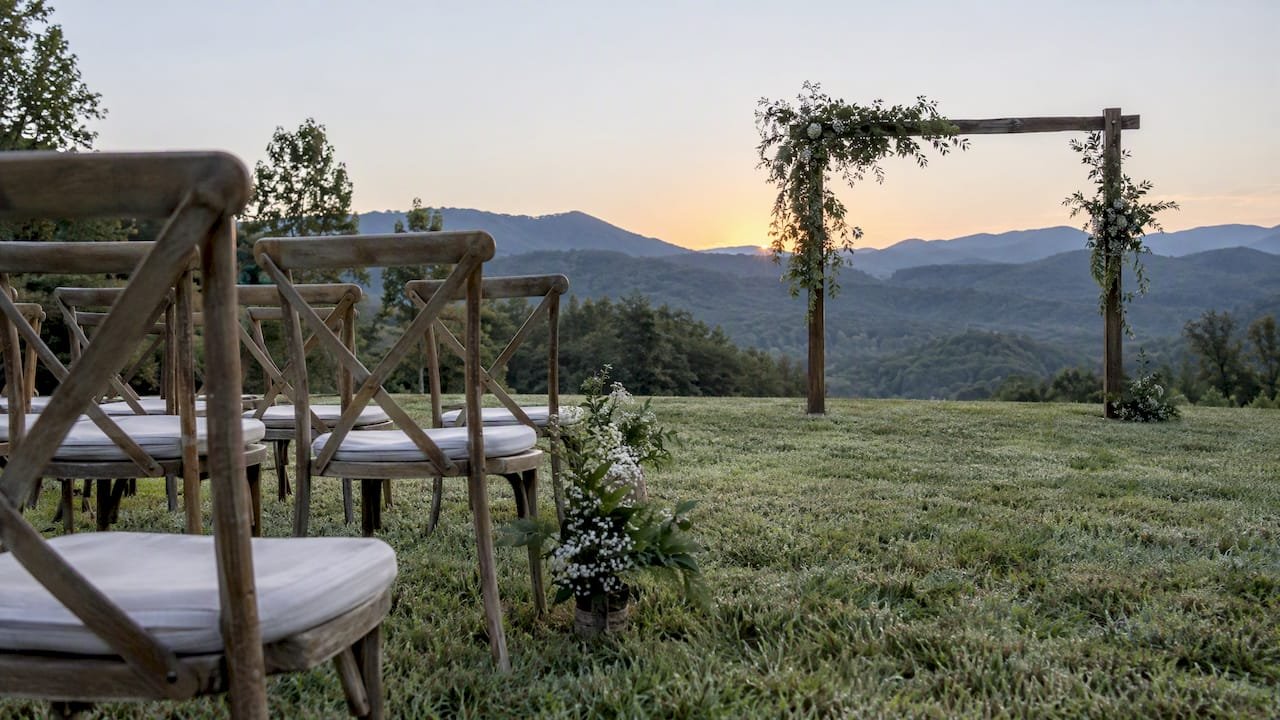
A sunrise wedding ceremony rewards couples who want intimacy, soft golden light, and a smaller guest list more than a packed reception timeline. It suits elopements, early risers, and anyone who wants dramatic photos without competing for a venue slot later in the day. The tradeoff is real: you need a firm grasp of permits, weather, and pre-dawn logistics before you commit to a start time.
TL;DR:
- Begin 10 to 15 minutes before the sun crests, arrive 45 to 60 minutes before sunrise, and allow a 15 minute setup buffer.
- Wake 2 to 3 hours before the ceremony, confirm vendor start times a week ahead, and stage rings and emergency kits the night before.
- National park ceremonies require permits with exact time windows; Yosemite charges a $150 application fee, and its permit does not guarantee exclusive site use.
- Monitor weather 3 to 4 days ahead, name one person to relay changes, and set a clear threshold for moving indoors or under cover.
- Give guests a firm arrival time and transport details, equip vendors with headlamps, and schedule blue hour shots before golden hour portraits.
Table of Contents
- When to time your ceremony around sunrise
- How to plan your wake-up and prep schedule
- What permits and setup rules apply on public land
- How to plan for weather, dew, and cold mornings
- How to manage guests and vendors for an early start
- What décor and photography choices work best at dawn
- How an all-inclusive venue weekend removes early-morning friction
- When a sunrise ceremony makes the most sense
- Plan a sunrise ceremony weekend at Cherrywood Ranch
- FAQ
- Sources
When to time your ceremony around sunrise
Three light phases matter here. Blue hour is the deep, cool-toned stretch before the sun crests the horizon, good for moody, cinematic portraits but dim enough to need supplemental lighting. The sunrise crest itself, when the sun first breaks the horizon, delivers a brief burst of warm color behind the couple. Golden hour, which lasts several tens of minutes after sunrise, gives the soft, flattering light most couples picture when they imagine a sunrise wedding.
For most couples, starting the ceremony 10 to 15 minutes before the sun crests the horizon works well: you get the dramatic sky as a backdrop and move straight into golden-hour portraits once vows are done. A sample timeline looks like this:
- Arrive on-site 45 to 60 minutes before sunrise to finish setup and lighting checks.
- Seat guests 15 to 20 minutes before sunrise.
- Begin the ceremony 10 to 15 minutes before the sun crests.
- Move directly into portraits during golden hour, before the light flattens out.
Build in a 15-minute buffer for guest arrival and vendor setup. Early mornings leave little room to recover from a late start.
How to plan your wake-up and prep schedule
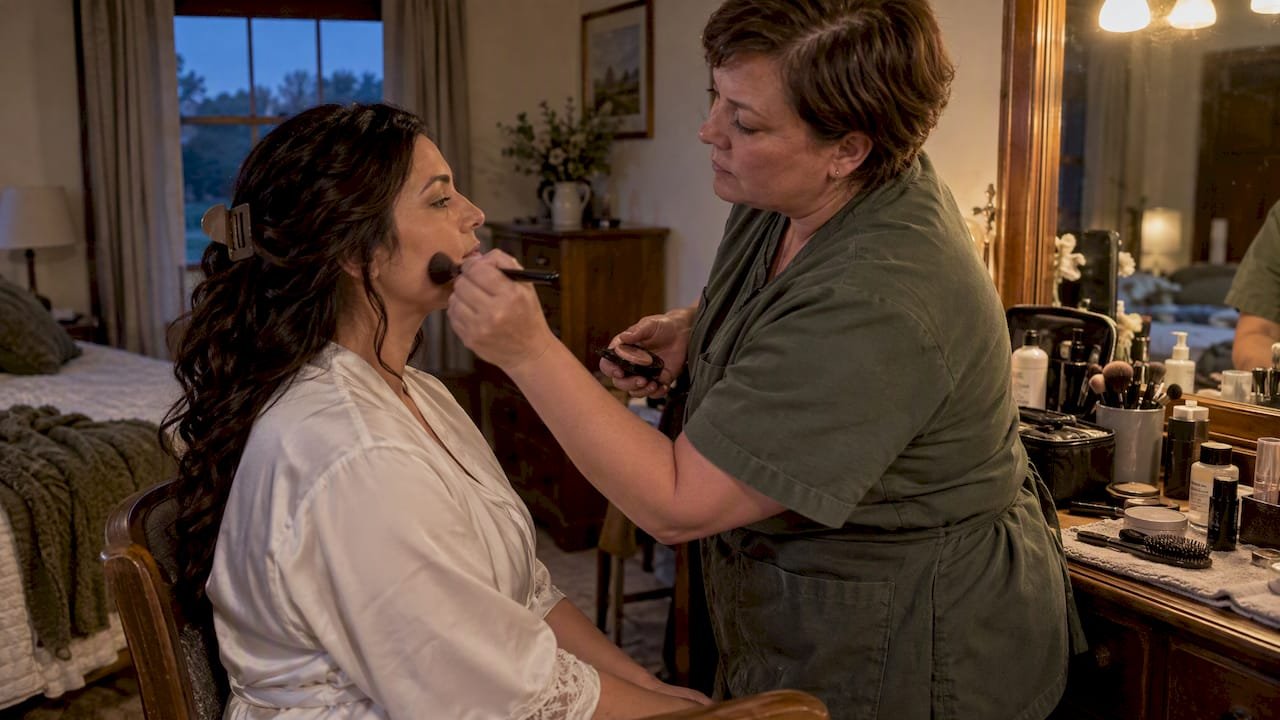
Waking 2 to 3 hours before the ceremony gives hair, makeup, and travel enough breathing room without rushing anyone. Photographers and planners generally recommend this window specifically because low light slows down every step, from pinning a veil to loading a car.
- Confirm hair and makeup start times with your vendors the week before, not the morning of.
- Ask your photographer about portable LED panels or off-camera flash for blue-hour prep shots, since natural light will not be usable yet.
- Stage outfits, rings, and emergency kits the night before so nothing gets searched for in the dark.
Staying in one location, or arranging a single coordinated shuttle, removes the biggest risk factor: multiple cars leaving from multiple addresses before sunrise. Our wedding transportation guide covers how to cut shuttle hours when guests stay together.
Pro Tip: Do a full hair and makeup trial at the same early hour you’ll actually be getting ready, not midday, since skin and energy look different before dawn.
What permits and setup rules apply on public land
Any wedding ceremony held inside a national park requires a Special Use Permit, and that permit comes with real constraints. Parks issue permits for specific two-hour blocks with exact start and end times, not a vague “sunrise” entry. Glacier National Park explicitly rejects applications that list “sunrise” or “various” as a time, requiring a precise window instead.
- Yosemite National Park charges a $150 application fee, plus monitoring fees of $50 per hour where required, and the permit does not guarantee exclusive use of the site.
- Grand Canyon National Park commonly limits ceremonies to two-hour blocks, though Shoshone Point allows up to six hours between an hour before sunrise and an hour after sunset, seasonally from May 15 through October 15.
- Catering is tightly restricted at most park sites, and visitors who are not part of your event may still be present nearby.
Given those limits, many couples choose a private venue with on-site lodging instead of chasing a narrow permit window, or they keep a park ceremony deliberately minimal: a small group, no catering, and a strict two-hour plan that matches what the permit allows.
How to plan for weather, dew, and cold mornings
Pre-dawn air brings dew, fog, and temperatures well below what guests expect later in the day. Pack blankets for seating areas, plan a quick-cover option for photography gear, and consider portable heaters if your ceremony falls outside the warmer months. Our rain plan guide walks through building a backup for outdoor ceremonies, and our North Georgia weather guide covers how elevation changes morning conditions.
The NWS Event Ready Guide recommends monitoring weather beginning 3 to 4 days before an outdoor event. For a sunrise ceremony, that lead time matters more than usual, since dawn fog can form even on a forecast-clear night.
- Designate one person as your Weather Liaison to track conditions and relay decisions.
- Set a clear threshold for when you’d move the ceremony indoors or under cover.
- Confirm vendor contact numbers the night before, in case plans shift at 5 a.m.
How to manage guests and vendors for an early start
Guests need more explicit instructions for a sunrise ceremony than for an afternoon one. State the exact call time, not just the ceremony time, and spell out parking and transport in the invitation itself.
- List a firm arrival time 20 to 30 minutes ahead of the ceremony, with transport or parking details included.
- Confirm each vendor’s setup window in writing, since staging gear in the dark takes longer than daylight setup.
- Equip your vendor team with headlamps or portable lighting so equipment and decor go up without delay.
- Flag restroom and accessibility points for guests who may be arriving before full daylight.
For larger groups, a shuttle service built around a strict pickup window avoids the chaos of guests driving separately before sunrise; a wedding shuttle timeline guide lays out a simple rule of thumb for scheduling those pickups.
What décor and photography choices work best at dawn
Simple decor photographs best in low light. Lanterns, a few stems rather than full arrangements, and natural textiles catch available light without needing extra fixtures.
- Choose lanterns or candles over elaborate floral walls, since they hold up visually in dim conditions.
- Keep the ceremony and officiant script short, since guests and vendors are working against a tight light window.
- Prioritize the processional and first-look shots during blue hour, then shift to portraits the moment golden hour begins.
Pro Tip: Ask your photographer for a shot list ordered by light phase, not by moment, so blue-hour and golden-hour windows are never wasted waiting on the wrong photo.
Our outdoor ceremony ideas guide has more low-setup options that suit a quick morning install.
How an all-inclusive venue weekend removes early-morning friction
Single-location lodging solves most of the sunrise-wedding headaches described above. When your wedding party sleeps on-site, there’s no pre-dawn drive, no separate shuttle coordination, and no guesswork about where vendors stage their gear.
- Onsite lodging for up to 16 guests means hair, makeup, and the ceremony site are steps apart, not a drive apart.
- A private outdoor ceremony space with mountain views removes the permit and exclusivity questions that come with public land.
- Having the wedding party under one roof simplifies the 2 to 3 hour pre-dawn prep window, since nobody is commuting in the dark.
When a sunrise ceremony makes the most sense
A sunrise ceremony works best for couples who value a quiet, small moment over a long guest list and a packed reception day. The light is the real draw, but the logistics only come together when travel and setup are kept simple. A short pre-dawn walk to a ceremony spot beats a 45-minute drive every time weather or timing gets tight.
— Luis
Plan a sunrise ceremony weekend at Cherrywood Ranch
We offer a private mountain setting built for exactly this kind of morning: no permits to navigate, no shuttle to time, and no separate lodging to book.

- Onsite lodging puts your wedding party minutes from the ceremony site, not a drive away.
- Our elopement and weekend packages suit couples who want a sunrise ceremony without the two-hour permit window of a public park.
- Amenities like a pool and hot tub give your family a full weekend together instead of a single rushed morning.
Reach out through our services page to talk through an early-morning timeline and weather backup plan, or check dates on our booking page.
FAQ
What time should you start a wedding ceremony?
For a sunrise ceremony, start 10 to 15 minutes before the sun crests the horizon to capture the dramatic sky and move straight into golden-hour portraits. For a standard afternoon or evening wedding, couples typically time the ceremony around 4 to 6 hours before sunset to leave room for photos and a reception.
Is a twilight wedding cheaper?
Pricing for evening or twilight ceremonies depends on the specific venue and season rather than a universal rule, so costs vary by location. Ask any venue you’re considering for its own seasonal and time-of-day pricing before assuming a twilight slot costs less.
What is the rarest month to get married?
Wedding frequency by month varies by region and is not something we can state as a fixed fact here. Check regional wedding industry reports or your local venues for the trends specific to your area.
What is the 50/20/30 rule for weddings?
There’s no single, widely recognized “50/20/30 rule” with a fixed definition in wedding planning. If you’ve seen it referenced as a budget split, treat it as one informal guideline among many rather than an industry standard, and confirm the source before applying it to your own budget.