Some wedding venues let you bring your own alcohol, some forbid it, and some allow it only under conditions such as a licensed bartender or an insurance certificate. Martha Stewart’s wedding guide says the same: policies differ from venue to venue, so the answer always lives in your contract. This guide covers the questions to ask before you sign, the Georgia rules that apply, how to estimate quantities, and when BYOB is the smarter route.
TL;DR
- BYO alcohol is a venue-by-venue policy. Get the answer in writing before you pay a deposit, not from a directory listing.
- In Georgia, a reception where guests drink with no expectation of payment needs no Special Event Permit, provided the host buys from a Georgia licensed retailer. A cash bar, entry fee or donation changes that.
- Plan roughly one drink per guest per hour, then add the real costs: a bartender, glassware, ice, mixers, insurance and cleanup.
- BYOB saves the most when you have the time to manage it. If you don’t, a venue-run bar can be the safer choice.
- At a private estate with onsite lodging, the bigger question is often what happens after the toast: who is driving, and where is everyone sleeping.
Table of Contents
- Can you bring your own alcohol to a wedding venue?
- Questions to ask every venue before you book
- What Georgia law says about hosting your own bar
- Liability and insurance: the part couples skip
- How much alcohol to buy
- What BYOB really costs
- BYOB versus a venue-provided bar
- Our perspective: alcohol is a weekend question, not a reception question
- Planning alcohol around a full wedding weekend
- Where our weekend packages fit
- A short checklist before you sign
- FAQ
- Sources
Can you bring your own alcohol to a wedding venue?
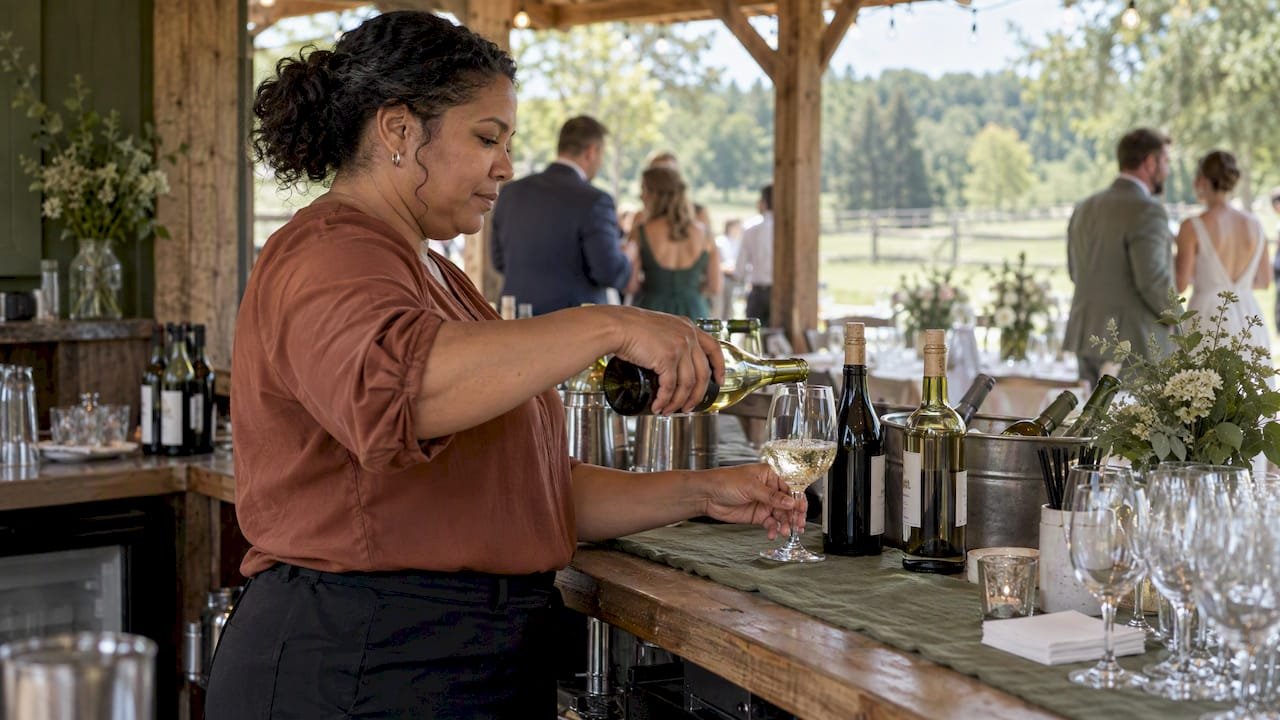
Often yes, but never assume it. Traditional banquet halls and hotels usually hold a liquor license and sell their own drinks, so they commonly prohibit outside alcohol. Barns, private estates, vacation homes and some event spaces without a license are more likely to let you supply your own, and some of them require a licensed bartender or caterer to pour it.
Three policies cover most venues:
- Full BYOB. You buy everything, and you or your hired bartender serves it.
- BYOB with conditions. You may bring alcohol, but the venue requires a professional bartender, proof of insurance, or limits on hard liquor.
- Venue-provided only. The venue supplies and serves all alcohol, usually at a per-person price.
Online directories of “BYOB venues” are a starting point, not proof. Rules change when ownership changes, and a listing from two years ago may be wrong. Ask the venue directly and ask for the policy in the rental agreement.
Questions to ask every venue before you book
A yes or no is not enough. These questions turn a vague “sure, you can bring drinks” into something you can plan around:
- Is outside alcohol allowed for the ceremony, the reception, the rehearsal dinner and the getting-ready hours, or only some of them?
- Can we bring beer, wine and liquor, or only beer and wine?
- Do we need a licensed bartender, or can a friend pour?
- Is there a corkage or service fee, and how is it charged?
- What insurance do you require, and must the venue be named as an additional insured?
- Who handles ice, glassware, bar setup, trash and cleanup?
- What are the ending times for service and for music?
- Can leftover alcohol stay on property overnight, and is there a secure place to store it before the event?
That last point matters more than people expect. If the bar is delivered the day before, someone has to be responsible for it.
Music rules are worth asking about in the same conversation. Noise limits and cutoff times often sit in the same paragraph of a contract as alcohol service, and venue music restrictions can shape your whole evening timeline.
What Georgia law says about hosting your own bar
If you are marrying in Georgia, the key distinction is whether anyone pays for alcohol at the event.
The Georgia Department of Revenue explains in its alcohol licensing guidance for events that a Special Event Permit is required when alcohol is tied to any exchange of money and the location has no state retail alcohol license. That covers a cash bar, an entry fee or donations. The same document says a wedding reception where alcohol is provided to guests with no expectation of payment does not need a Special Event Permit, and the host must obtain the alcohol from a Georgia licensed retailer.
In plain terms:
| Situation | Special Event Permit needed? |
|---|---|
| Hosted bar, guests pay nothing, host buys from a Georgia licensed retailer | No |
| Cash bar, tip-for-drinks setup, or entry fee tied to drinks | Yes, if the venue has no state retail alcohol license |
| Donations collected at an event where alcohol is served | Yes, under the same condition |
Two practical notes follow. First, buy locally in Georgia rather than hauling a trunk full of bottles from another state, since the guidance specifies a Georgia licensed retailer. Second, a guest-funded “bar fund” can look like a monetary exchange, so check with the Department of Revenue before you set one up.
Georgia also regulates who can pour. Under Georgia Code § 3-11-4, a licensed alcoholic beverage caterer may not employ anyone under 21 to dispense, serve, sell or handle alcoholic beverages. If you hire a bartender or catering company, confirm that everyone behind the bar meets that rule. A cousin who is 19 should be handing out napkins, not pouring.
Permits for the property itself are a separate question. Our 30-day checklist for North Georgia wedding permits on private estates walks through that side of the planning.
This is general information, not legal advice. If your plan involves ticketed events, a cash bar or anything unusual, call the Georgia Department of Revenue or a Georgia attorney before you commit.
Liability and insurance: the part couples skip
When the venue does not serve the alcohol, someone else carries the risk. That someone is often you.
Georgia’s social host rules are narrow, but they exist. According to Nolo’s summary of Ga. Code § 51-1-40, a party host can face liability for knowingly providing alcohol to someone underage, or to someone noticeably intoxicated, when the host knows that person will soon be driving. The takeaway is simple: a host who pours freely and watches nobody invites the worst outcome.
In practice, this is why venues and vendors ask for paperwork. Martha Stewart’s guide notes that vendors may ask for proof of insurance when you provide the alcohol, and that you may want extra liability coverage. Ask your insurance agent about a one-day event policy with host liquor liability, and read the exclusions closely. Policies frequently exclude certain incidents, and underage drinking is a common one.
A few habits reduce risk more than any policy does:
- Hire a professional bartender who is trained to cut people off.
- Stop service at least 30 to 45 minutes before the end of the night and switch to coffee, water and food.
- Assign one sober, firm person to check that no minors are served.
- Arrange safe rides in advance. If you need ideas for moving a group, this overview of wedding guest transportation explains when a shuttle makes sense.
How much alcohol to buy
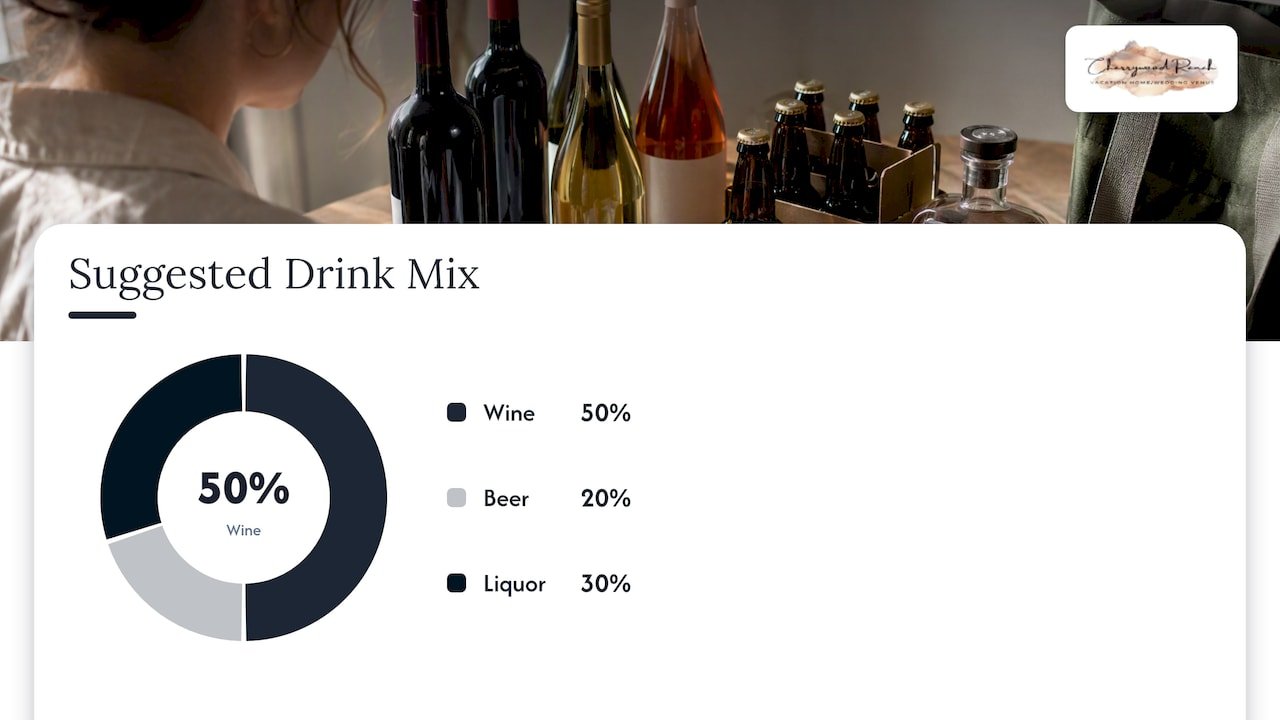
The standard planning rule, repeated by Martha Stewart’s guide, is one drink per guest per hour. For the mix, it suggests 50% wine, 20% beer and 30% liquor. Adjust that to your crowd: a group of wine lovers from Atlanta looks different from a group of college friends.
Here is a worked example for a 50-guest reception with a four-hour bar:
| Step | Math | Result |
|---|---|---|
| Total drinks | 50 guests × 4 hours × 1 drink | 200 drinks |
| Wine (50%) | 200 × 0.5 | 100 glasses |
| Beer (20%) | 200 × 0.2 | 40 beers |
| Liquor (30%) | 200 × 0.3 | 60 mixed drinks |
A 750 ml bottle of wine pours about five glasses, so 100 glasses is roughly 20 bottles. A 1-liter bottle of liquor typically makes around 20 to 22 drinks at 1.5 ounces each, so 60 mixed drinks is about three bottles spread across a few spirits. Add a cushion of 10 to 15 percent, since the first hour and the toast tend to run heavy.
Don’t forget the supplies that make drinks work: ice (far more than you think), mixers, citrus and garnishes, napkins, cups or glassware, and a trash plan. Martha Stewart’s guide also points out that some stores accept returns of unopened alcohol, so ask about buy-back policies before you buy in bulk. Buying a bit extra and returning it is easier than a last-minute run to the store.
If you are planning a toast, remember how little it takes. Sparkling wine for a toast is often a single pour per guest, so one bottle covers about five to six people.
What BYOB really costs
BYOB is cheaper than a per-person open bar package in most cases, but it is not free. Build the budget around these lines:
- The alcohol itself, bought from a Georgia licensed retailer.
- A bartender or bar service. Many couples hire one even when the venue does not require it.
- Glassware and bar equipment, rented or bought.
- Ice, mixers and garnishes.
- Event insurance with host liquor liability, if the venue or your bartender requires it.
- Any corkage or service fee the venue charges.
- Your time. Someone has to shop, transport, chill, stock and clear everything.
Price each line with real quotes from local vendors. Published “average savings” figures vary a lot depending on guest count and how generous the bar is, so your own numbers beat any rule of thumb. Tracking these costs as you go also helps if you are working with a photographer or videographer on the same budget; this piece on budgeting a BYOB wedding bar is one example of the kind of line-by-line thinking that keeps small expenses from piling up.
BYOB versus a venue-provided bar
BYOB makes sense when you want to avoid catering markups, your venue allows it, you can handle the logistics, and you have adequate liability coverage. It is a poor fit if nobody on your team has the capacity to manage the bar on the day, or if liability worries you more than the savings do.
| Factor | BYOB | Venue-provided bar |
|---|---|---|
| Cost control | Strong, you choose every bottle | Per-person pricing, less flexibility |
| Choice of drinks | Anything legal and available | Limited to the venue’s menu |
| Effort | You shop, store and organize | Handled for you |
| Liability | You carry more of it | Shifted largely to the venue’s license |
| Best for | Couples with time and a clear plan | Couples who want a hands-off day |
Neither is better in the abstract. A signature cocktail, a case of the local wine you love and a keg from a nearby brewery can make a reception feel like you. A hands-off bar can make it feel calm.
Our perspective: alcohol is a weekend question, not a reception question
At Cherrywood Ranch, we host intimate wedding weekends in the North Georgia Mountains. The property is a private vacation home with lodging for up to 16 guests, a pool, a hot tub and wide outdoor spaces, so couples are not planning a four-hour reception in a rented hall. They are planning a few days with their closest people under one roof.
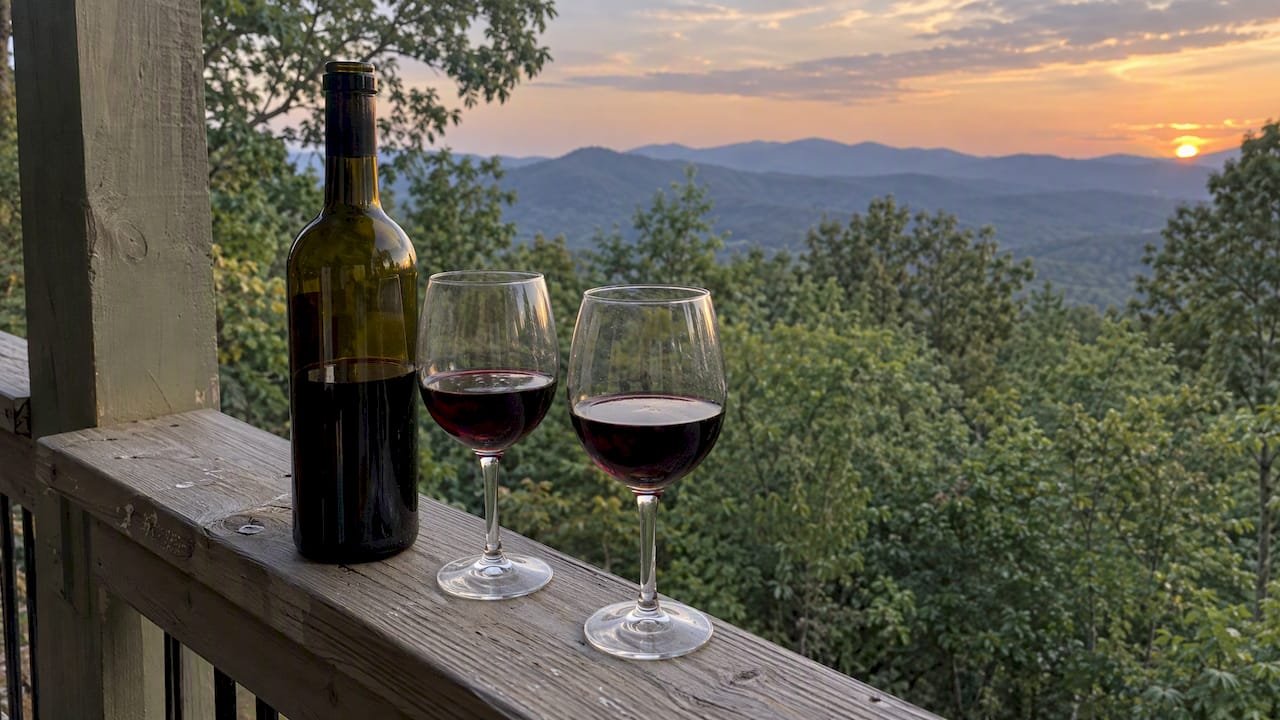
That changes how we think about alcohol. The bar is not just for the reception. It is the welcome toast on arrival day, the drinks at an at-home rehearsal dinner, the wine on the porch at sunset. When everyone sleeps on the property, nobody is driving winding mountain roads at midnight, which is the single biggest safety advantage of a stay-on-site wedding. We see it as a practical benefit, not a sales point.
Our advice is to settle alcohol terms early and in writing, whatever venue you choose. Ask what is allowed, who may serve it, and what insurance the contract requires. If you are considering our property, contact us through our services page and ask about alcohol and event terms directly, so you get the current policy rather than a guess. Pools, hot tubs and alcohol also deserve a plain conversation with your guests: plan quiet hours, remind people that swimming after heavy drinking is risky, and keep a sober adult on watch.
We would rather you plan a calm weekend than a perfect bar.
— Luis
Planning alcohol around a full wedding weekend
If your celebration runs longer than a day, split the bar into separate moments instead of buying one giant pile:
- Arrival evening. Light: beer, wine and a few mixers.
- Rehearsal dinner. Wine with dinner and one simple cocktail. Our at-home rehearsal dinner run sheet shows how a vacation-home dinner flows.
- Wedding day. The main bar, with the toast and the heaviest service.
- Morning after. Mimosa fixings, coffee and plenty of water.
This also spreads cost and storage. You can buy in stages, keep the cooler stocked and avoid a single huge delivery.
North Georgia has wine country right on your doorstep, too. If tasting and local bottles appeal to you, see our post on visiting Currahee Winery for your wedding weekend. Out-of-state guests will need travel planning as well, which our North Georgia wedding travel guide covers.
Where our weekend packages fit
If you want one place for the ceremony, reception, lodging and family time, our all-inclusive weekend venue rental is built for that. Published rates on our booking page include $175 for a mini session, $350 per hour and $1,950 for a day session. Our services page lists the guest overage fees: $10 per guest over 10 and $10 per guest over 75. Elopement, wedding and three-day wedding packages are quoted individually, so ask us about your guest count and dates.
A short checklist before you sign
- Alcohol policy written into the contract, including who may serve.
- Insurance requirements confirmed, with any additional-insured wording.
- A bartender hired, aged 21 or older, and given your service end time.
- Alcohol bought from a Georgia licensed retailer, with receipts kept for any returns.
- No money changing hands for drinks, or a call made to the Department of Revenue first.
- Quantities calculated per hour and per event, with a modest cushion.
- Ice, mixers, glassware and trash handled.
- Rides or lodging arranged so no one drives after drinking.
FAQ
Can you BYOB to a wedding venue?
Sometimes. Some venues allow outside beverages, some prohibit them, and some allow them only with conditions such as a licensed bartender or insurance. Ask for the policy in writing before you pay a deposit.
Can you bring your own alcohol to a wedding in Georgia?
Yes, if the venue allows it. Georgia’s Department of Revenue says a Special Event Permit is not required when guests are not charged and the host buys from a Georgia licensed retailer. If you run a cash bar or collect fees or donations tied to drinks, a permit may be required, so confirm with the state first.
How much alcohol do I need for a wedding?
Plan about one drink per guest per hour. A common split is 50% wine, 20% beer and 30% liquor, adjusted for your group. Add a small cushion, and ask retailers whether they accept returns on unopened bottles.
Are BYOB weddings worth it?
They can be, if you want to avoid markups and have the time and insurance to manage a bar. If you can’t handle day-of logistics or the liability worries you, a venue-provided bar is often the easier choice.
Sources
- Everything You Need to Know About Bringing Your Own Alcohol to Your Wedding, Martha Stewart
- Alcohol Licensing for Events, Georgia Department of Revenue
- Georgia Code § 3-11-4, FindLaw
- Georgia Dram Shop Laws and Social Host Liability, Nolo