

An intimate wedding guest list is usually somewhere between 10 and 50 people: your immediate family, your closest friends, and nobody you invite out of obligation. The hard part is not the number. It is choosing a rule for who counts as “closest” and applying it to everyone, including your own parents. This guide walks you through that, step by step.
TL;DR
- Pick the headcount first, then build the list to fit it. Your venue and budget set the number, not the other way around.
- Sort everyone into tiers, then cut from the outside in. Skip the B-list: guests often sense when they were a second choice.
- Use one objective rule (like “we only invite people we’ve seen in the past year”) and apply it to every family.
- Count yourselves, your officiant’s spouse and any children in the wedding party in your total.
- If the venue sleeps your whole list, the weekend feels like a house party, not a seating chart.
Table of Contents
- What counts as an intimate wedding?
- Start with the number, not the names
- Do you count yourselves in the guest count?
- Build the list in tiers
- How to cut a wedding guest list without starting a family feud
- A worked example: building a list of 24
- Why the venue changes the guest list
- Practical details that depend on your headcount
- Our perspective: the guest list is the whole design
- Planning an intimate weekend at Cherrywood Ranch
- A one-evening process to finish your list
- FAQ
- Sources
What counts as an intimate wedding?
The labels overlap, so decide which one you mean before you start counting. Industry guidance summarized by Brides puts a micro wedding at 50 guests or fewer (often 20 to 50) and a small wedding at 75 or fewer, with intimate weddings sitting in the 50 to 75 range and the tiniest celebrations under 15. Zola’s advice also calls 75 guests or fewer a small wedding. The Knot describes small and intimate weddings as roughly 10 to 40 people, typically parents, siblings, nieces and nephews, grandparents and very close friends.
For context, The Knot Real Weddings Study found the average US wedding in 2025 had 117 guests. So an intimate list is less than half of what most couples invite. That gap is exactly why the cuts feel personal.
In practice, here is how the ranges tend to feel:
| Guest count | What it feels like | Best for |
|---|---|---|
| Under 15 | Family dinner with vows | Elopements, tiny ceremonies |
| 15 to 30 | One long table, everyone talks to everyone | Immediate family plus best friends |
| 30 to 50 | Close circle plus a few extended relatives | Micro weddings |
| 50 to 75 | Intimate, but you will not talk at length with everyone | Small weddings with extended family |
Start with the number, not the names
Most couples do this backward. They write every name they love, see 140, and start deleting. Flip it.
- Set the headcount. Planners consistently say the venue’s capacity should drive the list. Forcing a big list into an intimate space, or a small group into a cavernous hall, undermines the atmosphere you wanted.
- Set the budget per guest. A useful gut check from CNBC’s guide to trimming a list: ask whether you would buy that person a $200 dinner. If the answer is no, that is useful information.
- Decide the feel. A quiet weekend with conversation, or a party with dancing? Beth Helmstetter of Beth Helmstetter Events told Brides that a smaller list is a tool for an elevated experience, with room for conversation and quiet moments that a 200-person celebration cannot offer.
Only then do you start naming people.
Do you count yourselves in the guest count?
Yes. Brides notes that couples often forget to include themselves in the total, which leads to wrong catering orders and seating problems. Also add the “package” guests who come with someone else: your officiant’s spouse, and any children of wedding party members. On a 20-person list, three or four of these people change your table size and your bed count.
Build the list in tiers
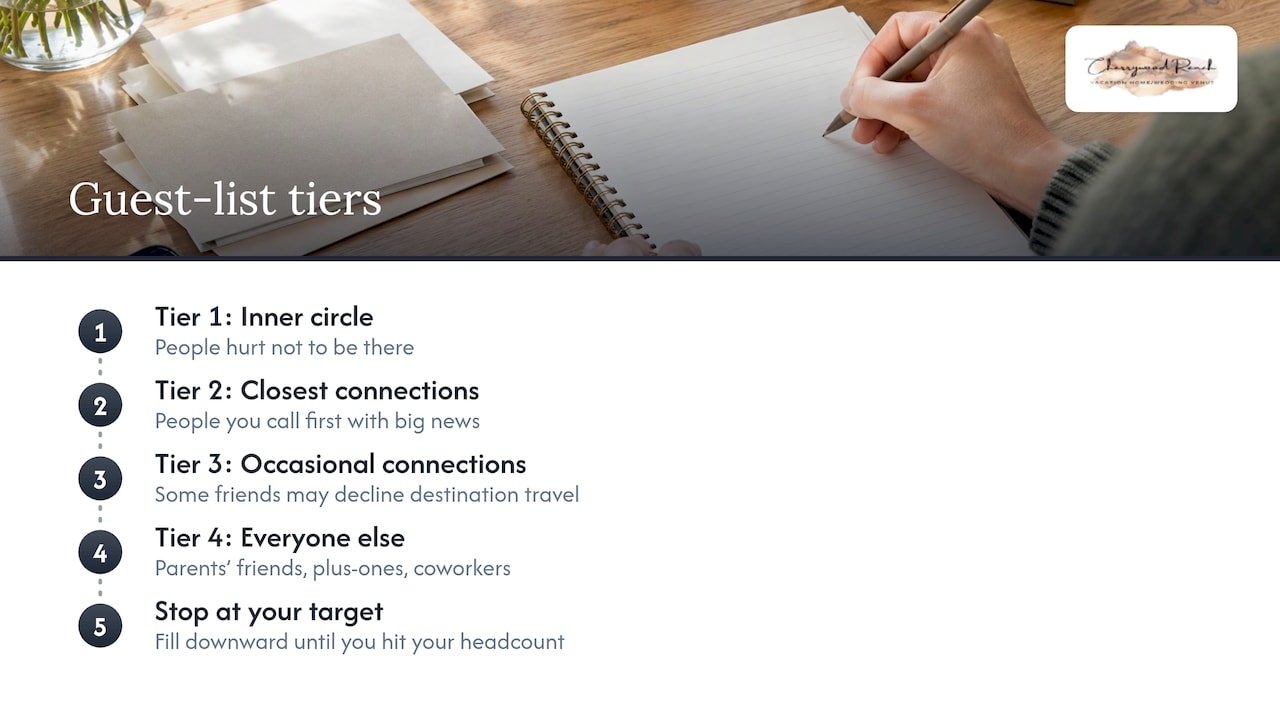
Tiers turn an emotional exercise into a sorting exercise. Write every name on a spreadsheet and assign one tier.
Tier 1: the people who would be hurt not to be there. Parents, stepparents, siblings and their partners, grandparents, and the one or two friends who feel like family. Most intimate lists are mostly this tier.
Tier 2: the people you would call first with big news. Closest friends, aunts and uncles you actually see, nieces and nephews you are close to.
Tier 3: the people you love but see occasionally. Cousins, college friends, longtime coworkers.
Tier 4: everyone else. Parents’ friends, plus-ones for people you barely know, coworkers you invited “just in case.”
With your headcount set, fill from Tier 1 down until you hit it. WedClarity recommends grouping people by relationship and likelihood of attending, then removing the outermost tier first and moving inward until you reach your target. Likelihood matters: for a destination wedding, a few Tier 3 friends will decline anyway because of travel, which leaves room for others.
Splitting the list with parents
If parents are contributing, expect them to want seats. One common approach from Brides is to divide the total among you and your partner, your parents and your future in-laws, either in equal thirds or with the couple holding a larger share. Decide the split before anyone writes a name, and tell each side their number, not just “keep it small.”
The groom’s mother often manages one side’s list and RSVPs. The Knot says she should ask the couple how many guests she may invite, then draw up her list within that number. Give her a clear figure and she will usually respect it.
How to cut a wedding guest list without starting a family feud
Cutting is where intimate weddings succeed or fail. A few principles hold up across the expert sources.
Use one rule, and apply it to everyone
WedClarity and Brides both advise against a B-list, since guests can often tell they were a second choice and that can strain the relationship. Use an objective rule instead, such as “no plus-ones for single guests” or “immediate family only.” A rule works because it is not about anyone in particular.
Another popular filter, described by The Parlour at Manns Chapel, is a time test: only invite people you have seen or spoken to in person within the last year, or the last three to four years for relatives. It is blunt, but it is fair, and you can say it out loud without insulting anyone.
Cut whole categories, not individuals
“We are not inviting coworkers” is easier to hear than “we picked three coworkers.” The same goes for children: if kids are not invited, say so for every family, including cousins’ children. Exceptions are where resentment grows.
Tell people early and kindly
The Parlour at Manns Chapel suggests breaking the news to parents gently and early, explaining that your style, budget and venue call for an intimate day. Lead with what you are doing (a small weekend with the people closest to you), not with who is missing. For extended friends, a simple message works: “We are keeping the wedding to immediate family. We would love to celebrate with you after.”
Give left-out people a second moment
The same source suggests using the day after, or a later date, for a relaxed brunch or picnic for friends and relatives who could not be part of the main event. Some couples hold a casual get-together back home a few weeks later. It costs far less than a second reception and soothes most hurt feelings.
A worked example: building a list of 24
Say you have settled on a weekend for about 24 people and a budget that supports it.
- You two: 2
- Parents and stepparents: 4 to 6
- Siblings and partners: 4
- Grandparents: 2
- Wedding party, if any, and partners: 4
- Officiant and spouse: 2
- Closest friends: 4 to 6
That already reaches the number, and aunts, uncles and cousins are not on it yet. This is the moment to apply your rule. If you saw your aunt last Thanksgiving, she may replace a friend you lost touch with. If you cannot choose, go back to the budget-per-guest question rather than negotiating name by name.
Why the venue changes the guest list
The right venue makes a short list feel like a choice, not a compromise. When your guests all stay on the property, nobody drives off after dinner, and the guest list becomes the whole weekend: breakfast, a pool afternoon, the ceremony, a late night by the fire.
That is the idea behind our place in the North Georgia mountains. Cherrywood Ranch is a private venue with an onsite luxury vacation home that lodges up to 16 guests, so your closest people can stay with you instead of scattering across hotels. If you want to see how lodging shapes the planning, our guide to small mountain wedding lodging, weather and safety covers a 16-person weekend in detail, and why intimate venues feel personalized explains the difference you notice on the day.
If your list lands above 16, that is fine. Many couples invite 25 to 75 and have the closest family stay onsite while others stay nearby. For a larger intimate count, our practical intimate reception ideas work for 10 to 80 guests, and the 50-guest wedding cost breakdown shows how headcount drives the budget.
Practical details that depend on your headcount
A small list does not remove logistics. It changes them.
Seating
Under 30 guests, one long table often beats rounds: everyone is part of the same conversation. We cover layouts and etiquette in long table seating for weddings.

Restrooms
At an outdoor venue, plan restrooms by the count of everyone present, including vendors and staff. The Knot’s guide to bathroom rentals quotes one stall per 25 guests as a guideline, and a stocked amenity basket (safety pins, hair ties, pain relievers, mouthwash and similar essentials) is a small gesture guests notice. If your venue lacks onsite facilities, specialty upscale restroom trailers are one option to look into. Our own bathroom basket checklist lists what to stock for a full weekend.
Bar and catering
A small list gives you choices a 150-person wedding would not allow, like a premium signature drink instead of a full open bar. If you are weighing a fully open bar against a hybrid, this open bar versus cash bar breakdown shows one way to compare. Whatever you choose, quote it per guest and recheck after your final count.
Lodging
Count beds before you finalize names. If 18 people want to stay but the property sleeps 16, you will make the same awkward decisions you just finished making on the list.
Our perspective: the guest list is the whole design
We host weddings at a home, not a hall, and the pattern is consistent: the weddings that feel best are the ones where the couple chose a number early and stuck to it. When everyone on the list is someone you would genuinely want at breakfast the next morning, the weekend takes care of itself. People talk. Kids swim. Grandparents sit on the porch watching the sun go down over the mountains.
My advice is simple. Do not defend the list name by name. Defend the rule. Pick the headcount, pick the principle (family and the friends who would stay over, say), and let the principle say no for you. And plan the weekend so the people you invited have somewhere to be together, not just a ceremony to attend.
— Luis
Planning an intimate weekend at Cherrywood Ranch
If your list lands between a handful of people and about 75, we can host the ceremony, reception and lodging in one private place. The booking page lists a mini session at $175, hourly rental at $350 per hour and a day session at $1,950 per day, and our services page covers elopement, wedding and 3-day wedding packages, plus the per-guest fees that apply as your count grows. Pricing for the packages is shared on request. Start on the booking page, or read how to lock the venue first before you finalize names.
Still deciding between a micro wedding and eloping? See our comparison of a micro wedding or elopement at Cherrywood.
A one-evening process to finish your list
- Agree on a headcount and a budget per guest.
- Each of you writes your Tier 1 names separately, then compare.
- Agree on one cutting rule and write it down.
- Tell parents their number and the rule, together, in person if you can.
- Count beds, plus-ones, children and package guests.
- Plan the follow-up celebration for anyone you could not fit.
- Send invitations early. Intimate guests often travel, and early notice lets them say yes.
FAQ
Do you count the bride and groom in the guest list?
Yes. Include both of you in the total, along with your officiant’s spouse and any children in the wedding party. Leaving yourselves out is a common mistake that throws off catering counts and seating.
What is a micro wedding guest count?
Industry guidance generally defines a micro wedding as 50 guests or fewer, often 20 to 50. Small weddings are typically described as 75 guests or fewer. Pick the range that matches your venue and budget.
Who should I invite to a micro wedding?
Start with parents, siblings, grandparents and the closest friends, then add aunts, uncles, cousins and friends only if the number allows. Use one consistent rule, such as people you have seen in the past year, so the decisions do not feel personal.
How do I cut my guest list without offending people?
Cut by category rather than by person, skip the B-list, and tell people early. Offer a casual brunch or a later get-together for those who could not be included. A shared rule applied to both families keeps the explanation short and fair.
Sources
- What Is a Micro Wedding? Everything You Need to Know, Brides
- The Complete Guide to Making Your Wedding Guest List, Brides
- Who Do You Invite to A Small Wedding?, Zola
- How to Make a Small Wedding Guest List Without Offending Anyone, The Knot
- The Average Wedding Guest List Size, The Knot
- The Mother of the Groom’s Responsibilities, The Knot
- Everything You Need to Know About Bathroom Rentals for Weddings, The Knot
- How to Cut Your Wedding Guest List, WedClarity
- How to cut down your wedding guest list to save money, CNBC
- How to Make a Wedding Guest List for an Intimate Affair, The Parlour at Manns Chapel