For a small mountain wedding, prioritize either an all-inclusive private venue weekend with lodging or a properly permitted small-site ceremony on public land. The right choice depends on three things: the venue type that matches your guest count, a season and time of day that dodges mountain weather hazards, and a lodging or weather backup plan locked in before you book anything else.
TL;DR:
- Choosing a private venue with onsite lodging reduces logistical complexity and provides a weekend experience, unlike public land sites that require permits and may have restrictions.
- Small guest counts allow for richer decor, personal touches, and simple logistics, but decor should be portable and windproof to withstand mountain conditions.
- Streamlined vendor management and accessible lodging options are critical for simplifying mountain wedding logistics, especially for guests with limited mobility.
- Permits for public land can require up to 12 months’ advance application and impose size, noise, and decoration restrictions to protect the site.
- Prioritizing venue, photography, and weather infrastructure can maximize budget effectiveness, as these mitigate the biggest risks in mountain wedding planning.
Table of Contents
- 1. Choosing a location and season that fit your guest list
- 2. Creative themes and decor ideas that scale for a small guest count
- 3. Ceremony and reception logistics for an intimate guest list
- 4. Safety, weather, and permit essentials for mountain ceremonies
- 5. Budget priorities for a small mountain wedding
- 6. Pre-wedding checklist and what to pack
- 7. Why a private weekend venue often wins for small weddings
- How Cherrywood Ranch supports an intimate mountain wedding weekend
- FAQ
- Sources
1. Choosing a location and season that fit your guest list
The first real decision is venue type, and it shapes everything downstream: permits, lodging, weather exposure, and how relaxed your day actually feels. A private mountain venue with onsite lodging lets you book exclusive use of the grounds, house your whole guest list in one place, and skip most of the paperwork that comes with public land. A permitted ceremony at a national park overlook or waterfall gives you a dramatic, free backdrop, but it comes with group-size caps, application deadlines, and zero exclusivity since other visitors can still be nearby. A mountaintop elopement with just the couple and an officiant sits at the opposite end: minimal logistics, maximum flexibility, but no room for guests at all.
Access and parking deserve attention before the view does. Mountain roads to overlooks and trailheads are often narrow, gravel, or closed seasonally, so check road conditions and whether a shuttle makes more sense than a line of guest cars creeping up a switchback. Several outdoor ceremony layouts work specifically because they account for where guests park and how far they walk in dress shoes or heels.
Season and time of day matter as much as the venue itself. Mountain weather follows a pattern: clear mornings, building clouds by midday, and a real chance of thunderstorms by early afternoon in summer. Scheduling a ceremony before 11 a.m. or after 5 p.m. during warm months reduces your exposure to that window. Higher elevations also run noticeably colder, and snow can linger into late spring in some ranges, so a June wedding at 8,000 feet may still need blankets and a heated tent.
A few practical checks before you commit to a site:
- Confirm the road is maintained and passable for the vehicles your guests will actually drive.
- Ask whether a shuttle or carpool plan is needed for a trailhead or overlook with limited parking.
- Check sunrise, sunset, and typical storm-build times for your date and elevation.
- Verify whether the site allows chairs, an arch, or amplified sound, since many public sites restrict all three.
A private venue tends to win for couples who want more than a ceremony: a rehearsal dinner the night before, a relaxed breakfast the morning after, and a reception that doesn’t require packing everyone back into cars at sunset. That multi-day rhythm is hard to replicate on a day-use permit.
2. Creative themes and decor ideas that scale for a small guest count
A tiny guest list is a decor advantage, not a limitation. You can afford richer textures and more personal touches per square foot than a 200-person wedding ever could. Group your ideas by mood and you will find it easier to commit to a cohesive look instead of pulling in ten unrelated Pinterest boards.
- Rustic and cozy: wood slab signage, wool blankets draped over every chair, and a fire pit as the visual anchor for the reception.
- Modern alpine: clean white linens, black metal accents, and a single oversized pampas arrangement instead of multiple floral clusters.
- Boho and natural: macramé ceremony backdrops, dried florals that survive wind and heat, and layered rugs for a lounge-style seating area.
- Adventure elopement: minimal decor, a handheld bouquet, and gear that doubles as props, think hiking boots styled with the dress for portraits.
- Waterfall or overlook ceremony: let the view do the work; add only a small arch or two flanking florals so nothing competes with the backdrop.
- Micro-lounge reception: swap long banquet tables for a cluster of low seating, string lights, and a single shared dessert table.
Scaling decor for a small group means thinking portable and windproof first, beautiful second. A transportable ceremony arch that breaks down into two pieces saves a mountain road trip from becoming a logistics problem. Potted greenery survives wind better than loose stems, battery lanterns outperform candles above tree line, and centerpieces weighted with stones or sand stay put when afternoon gusts pick up.
For food and drink, small groups open up formats that would be impossible at scale. A family-style dinner at one long table feels intimate rather than sparse. A chef’s-table setup lets your sixteen or twenty guests watch the meal come together. A cocktail-sip station with two or three curated drinks keeps bar costs down while still feeling special, and a fire-pit dessert course, think s’mores with a nicer name, gives guests something to do with their hands after dinner. For something warmer, a weatherproof coffee bar scaled down from larger event setups works well for a chilly mountain morning reception.
Pro Tip: Photograph your decor against the mountain view before the ceremony starts, once guests arrive, the light and angles change fast and you lose the clean shot.
If your ceremony sits on public land, sustainable decor isn’t optional, it’s often required. Skip confetti, rice, and anything that scatters into the landscape. Battery candles instead of open flame, reusable arch frames instead of single-use installations, and a pack-it-out mindset for every ribbon and pin keep your site in the condition you found it. For reception seating choices that work whether you’re on a trail overlook or a venue lawn, a set of venue-agnostic reception ideas covers formats built around smaller numbers. Color palettes also shift with the season: deep reds and golds photograph differently against October foliage than they do against a June green hillside, something worth checking in a mountain wedding color palette guide before you order linens.
3. Ceremony and reception logistics for an intimate guest list
Small guest counts let you simplify vendors instead of multiplying them. A photographer who also shoots video, or a day-of coordinator who doubles as your officiant’s point of contact, cuts down on the number of people you’re managing on the actual day. Fewer vendors also means fewer cars on a mountain road that may only have room for a handful.
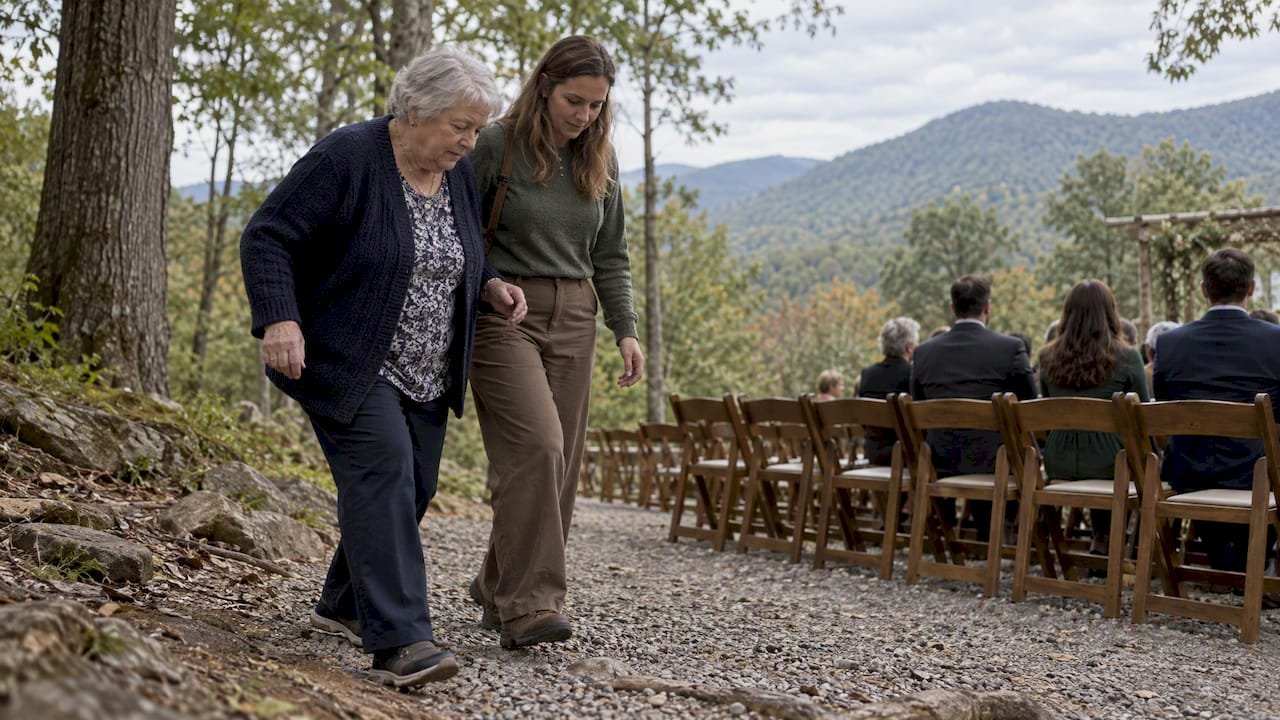
Seating and accessibility need a real plan if any guests are older or less mobile. Gravel paths and uneven ground are common at mountain sites, so a shorter walk from parking to ceremony seating matters more than a dramatic entrance. Sturdy chairs with backs, rather than bare benches, make a noticeable difference for guests sitting through a thirty-minute ceremony at altitude.
Lodging coordination is where a weekend wedding either comes together or falls apart. Block-booking rooms or renting one property that houses everyone removes the need to coordinate shuttles between a ceremony site, a hotel, and a reception venue. When the whole guest list sleeps under one roof, your “transportation plan” can be as simple as walking downstairs.
Sound amplification is worth checking early, since many public-land permits restrict or ban it outright, which affects everything from your officiant’s microphone to reception music. A private venue typically gives you more flexibility here, along with covered backup space. If you want a tented option that avoids juggling multiple weather contingencies, a tented wedding setup built for mountain conditions solves rain and wind in one move.
A few logistics worth locking down early:
- Choose vendors who can cover two roles (photo and video, or coordination and florals) to reduce the number of people on site.
- Pick chairs and walking surfaces that work for your least mobile guest, not your most adventurous one.
- Book lodging in one block or one property so guests aren’t driving between locations after dark.
- Confirm whether your site allows a microphone or speaker before you plan toasts or music.
Small guest lists also open room for guest-experience touches that get lost at larger weddings: a group hike the morning of, a shared welcome dinner the night before, or a handwritten note waiting in each guest’s room. These moments cost little and tend to be what guests remember longest.
4. Safety, weather, and permit essentials for mountain ceremonies
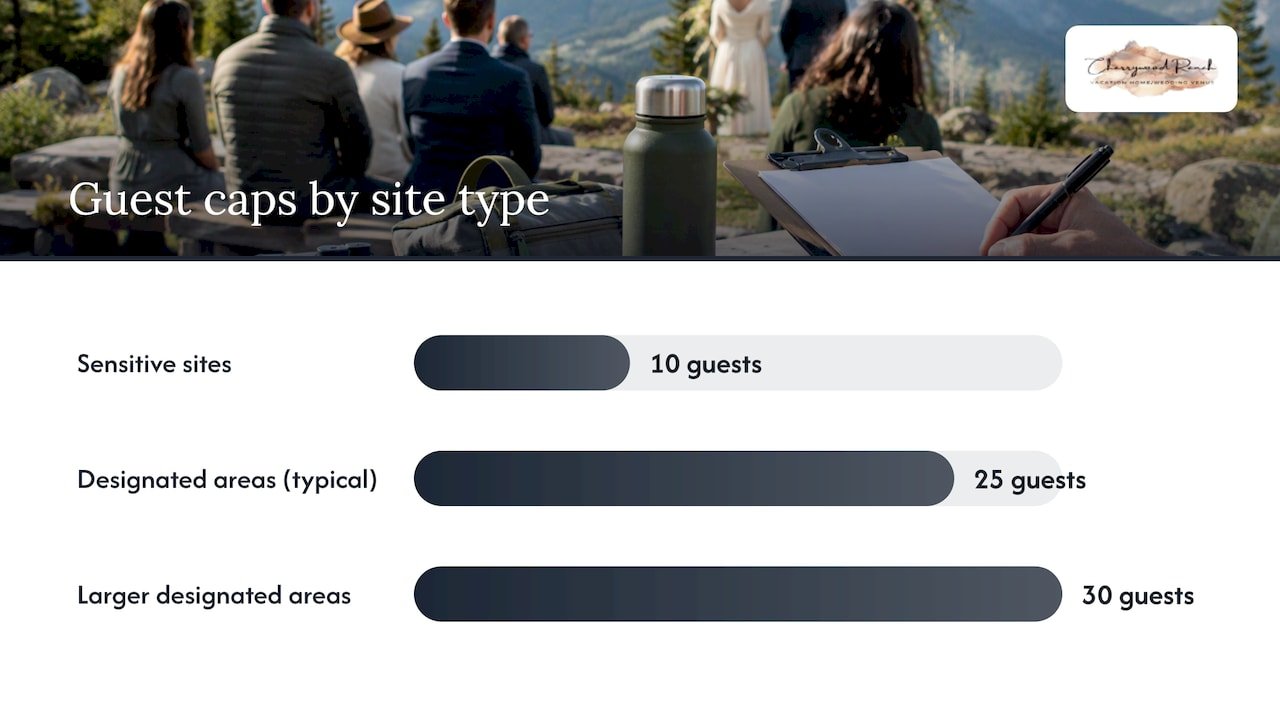
Public land comes with real rules, and skipping them risks a canceled ceremony on the day itself. Many national parks require a special-use permit for weddings, and guest caps commonly run from about 10 people at sensitive sites up to 25 or 30 at larger designated areas, according to permit guidance from Olympic National Park. Applications often need to be filed well ahead, sometimes up to 12 months before the date, and a permit does not guarantee exclusive use of the site.
Site-specific rules vary widely even within one park. Great Smoky Mountains National Park publishes group-size limits, vehicle limits, and application windows for each location, and many sites bar receptions, tents, generators, and elaborate decorations outright. The restrictions exist to protect the land and keep sites open to other visitors, not just your ceremony.
Mountain weather adds its own layer of risk. Thunderstorms commonly build through the late morning and peak in early afternoon, and lightning is a genuine hazard above tree line. NWS lightning safety guidance recommends designating a weather watcher, moving everyone into a substantial enclosed building the moment thunder is heard, and staying sheltered for a full 30 minutes after the last rumble, since early-day or late-afternoon ceremonies carry less thunderstorm risk than a midday slot.
NWS Event Ready resources recommend going further: set explicit weather thresholds before the day (such as thunder within ten miles), name one person with the authority to pause or relocate the ceremony, and identify shelter locations in your run sheet, not after the first raindrop falls.
A short action list for permits:
- Apply through the park or land agency’s official permit office, often 30 days to 12 months ahead.
- Include your expected guest count, vehicle count, and any equipment (chairs, arch, sound) in the application.
- Confirm whether the site allows amplified sound, decorations, or a reception immediately following the ceremony.
- Build a rain or storm contingency into the application itself where the process allows it.
5. Budget priorities for a small mountain wedding
A small guest list changes where your money works hardest. Spend more on a venue that bundles lodging and coordination into one price, since that single line item replaces a dozen smaller logistics costs. Spend more on your photographer too, since a mountain backdrop is the main visual payoff of the whole day, and spend on weather-ready infrastructure like heaters or a covered structure rather than hoping for a clear forecast.
Save on oversized floral installations that a sixteen-person wedding doesn’t need to fill visually, since the view does that work for you. Save on large rental fleets of chairs and tables when a smaller footprint covers your actual guest count, and skip elaborate favors that guests mostly leave behind anyway.
Watch travel and setup fees closely. Vendors charging a flat minimum regardless of guest count can quietly erase the savings a small wedding should produce, so ask directly whether a quote reflects your real headcount.
A rough priority split for a small mountain wedding:
- 40% venue, lodging, and coordination
- 20% photography and video
- 15% weather infrastructure and rentals
- 15% food and drink
- 10% decor, favors, and extras
6. Pre-wedding checklist and what to pack
A compressed timeline keeps a small wedding from feeling improvised.
- Three months out: finalize permits if using public land, book lodging blocks, sign vendor contracts, and consider event insurance.
- Thirty days out: reconfirm permits and weather contingencies, drive or review the actual access route, and lock the final guest list and transportation plan.
- Forty-eight hours out: check the forecast, assign your weather watcher, and pack permit copies alongside a basic emergency kit.
Pack in layers no matter the season, since mountain temperatures swing fast. Traction-ready shoes beat heels on gravel or wet rock, a printed permit copy avoids phone-signal problems at the trailhead, and a small first-aid kit and portable charger cover the gaps nobody plans for. A full weekend planning walkthrough covers each of these stages in more detail.
7. Why a private weekend venue often wins for small weddings
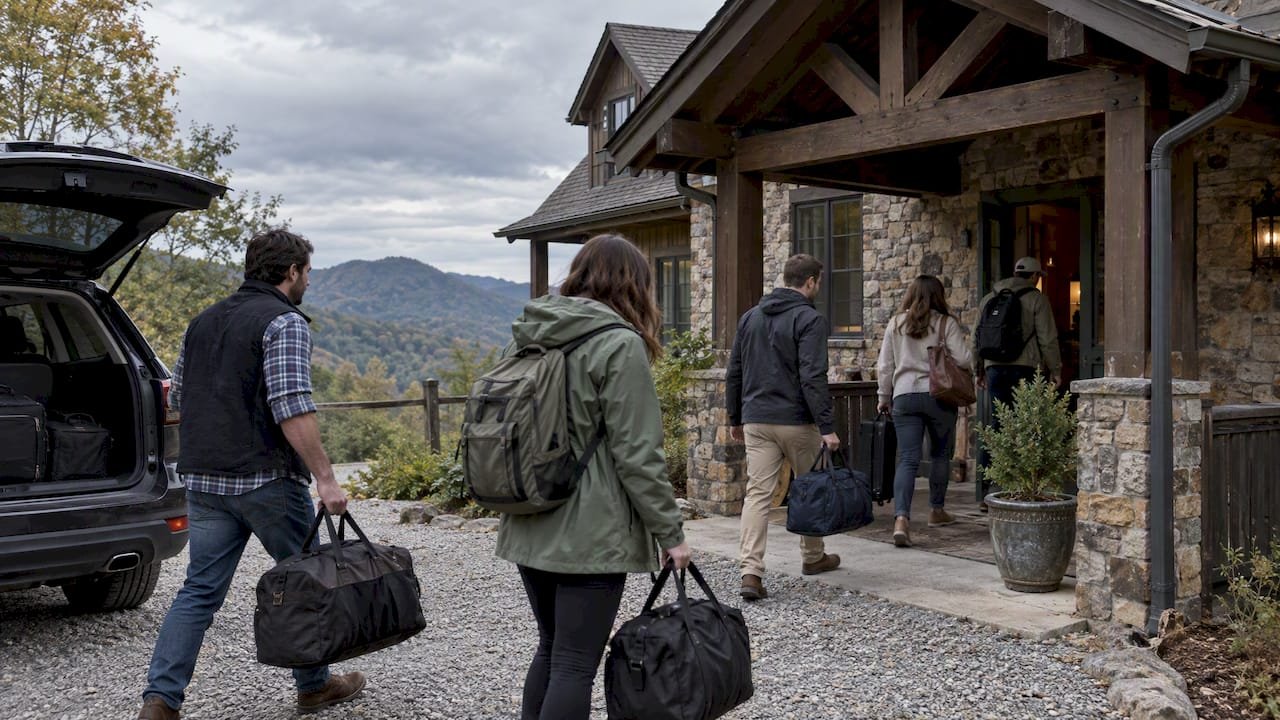
A private venue with onsite lodging removes the two biggest risks in mountain wedding planning: guest transport and weather exposure. When a property houses the full guest list, there is no shuttle schedule to manage and no last-mile drive after dark. A venue built for up to 16 guests, with a pool and hot tub on the property, turns the wedding into a full weekend rather than a single afternoon squeezed around a drive home.
A typical weekend might run: arrival and welcome dinner Friday, ceremony and reception Saturday, relaxed pool time and goodbyes Sunday, all without anyone leaving the property.
— Luis
How Cherrywood Ranch supports an intimate mountain wedding weekend

We built Cherrywood Ranch around the exact approach this article recommends: one private property, one weekend, no juggling between a ceremony site, a hotel, and a reception hall. Our venue sits in the North Georgia mountains with onsite lodging, so your wedding party and family can stay together from Friday arrival through Sunday departure. Outdoor ceremony and reception spaces take advantage of the mountain views directly on the property, and amenities like a pool and hot tub give guests a reason to linger instead of rushing off after the toasts.
If you’re drawn to the small, intimate format this guide covers, we offer a few ways to start:
- Book a mini session, hourly visit, or day session to see the property before committing.
- Review our elopement and wedding packages for pricing and what’s included.
- Check small wedding venue details sized for guest counts like yours.
FAQ
How much does a mountain wedding cost?
Costs vary widely based on venue type, guest count, and whether lodging is included, so there is no single reliable figure across the industry. At Cherrywood Ranch, elopement and wedding packages are quoted directly, and hourly or day-session bookings are listed at $350 per hour or $1,950 per day.
What is the 50/20/30 rule for weddings?
This is a popular budgeting shorthand some couples use informally to split spending between venue, vendors, and extras, but it isn’t an official or standardized wedding planning rule. A more reliable approach for a small mountain wedding is prioritizing venue and lodging first, then photography, then weather infrastructure, since those three cover the biggest risks specific to mountain settings.
What are some ideas for a very small wedding?
A mountaintop elopement with just the couple and an officiant, a waterfall or overlook ceremony with a handful of guests, or a private venue weekend with onsite lodging all work well for very small groups. The right pick depends on whether you want guests present at all and how much multi-day programming matters to you.
What are some good ideas for a mountain wedding theme?
Rustic and cozy, modern alpine, boho and natural, and adventure elopement are reliable theme directions that scale well for small guest counts. Each pairs easily with portable, windproof decor like potted greenery, wool blankets, and battery lanterns rather than fragile florals or open flame.
Sources
- Special uses and commercial permits — Olympic National Park (example NPS permit guidance)
- Lightning safety guidance — NWS Denver/Boulder (example)
- NWS Denver/Boulder Event Ready for Special Events