
The most reliable way to keep bugs from ruining an outdoor wedding combines four layers: thorough site prep that removes breeding habitat, EPA-registered personal repellents for guests, fans to disrupt insect flight near seating, and perimeter traps or professional treatment when the site demands it. Decorative citronella candles look charming but won’t protect a full guest list on their own.
TL;DR:
- Starting site preparation at least six weeks ahead ensures removal of breeding habitats like standing water and overgrown foliage near seating areas.
- Using perimeter traps, fans, and professional treatments effectively reduces insect presence, but must be combined with thorough environment cleanup.
- Guests should apply EPA-registered repellents containing DEET or picaridin, with long-lasting options up to 12 hours, and wear treated long sleeves for extra protection.
- Fans and multiple smaller traps placed strategically before guest arrival significantly disrupt mosquito flight and insect entry at outdoor venues.
- Final site checks early on the wedding day prevent rain or dew from undoing earlier pest control efforts.
Table of Contents
- Checklist for planners: what to arrange 1 to 6 weeks before the event
- Site and landscaping prep that reduces mosquito and gnat habitat
- Personal protection: what repellent and clothing actually work
- Event-scale devices: sizing, placing, and timing fans, zappers, and traps
- Professional spray, misting, and fogging: when it helps and when it doesn’t
- How weather shapes bug activity and your control plan
- Keeping guests comfortable without making bugs the main event
- Safety rules for devices and sprays around food and open flames
- What a venue team handles across a wedding weekend
- Let us handle the bug control logistics for your wedding weekend
- FAQ
- Sources
Checklist for planners: what to arrange 1 to 6 weeks before the event
Bug control works best as a sequence, not a last-minute scramble. Start weeks out, then tighten the plan as the date approaches.
- Six weeks out: walk the site and note standing water, overgrown brush, and anywhere mosquitoes could be breeding.
- Three to four weeks out: book a pest control professional if the venue needs treatment, and order repellents, fans, and traps.
- One week out: empty planters and saucers, mow the lawn, trim shrubs near seating, and clear gutters.
- Day before: test every fan and trap, confirm power sources, and stage extension cords away from walkways.
- Day of: run zappers and fans two to three hours before guests arrive, and set out repellent for anyone who wants it.
Supplies to buy or rent:
- EPA-registered repellent (spray or wipes) for a communal station
- Battery or plug-in fans for seating and tent openings
- Heavy-duty extension cords and a temporary power source if needed
- Perimeter insect traps or zappers
- BTI mosquito dunks for any nearby ponds or fountains
Site and landscaping prep that reduces mosquito and gnat habitat
Devices and repellents work far better once the breeding sources around the venue are gone. Mosquitoes need only a small amount of standing water to complete their life cycle, so the first pass is about elimination, not just treatment.
- Dump water from planters, plant saucers, buckets, and anything that collects rain after a storm.
- Clear clogged gutters and downspouts, which hold water for days without anyone noticing.
- Pull back tarps and covers that pool water, and flip over anything that doesn’t need to stay right side up.
- Mow the lawn a day or two before the event. Shorter grass gives mosquitoes fewer places to rest during the heat of the day.
- Prune shrubs and low branches near seating and the ceremony site. Opening up dense foliage improves airflow, which research on mosquito-smart landscaping ties directly to lower mosquito activity.
- Rake up leaf litter, which holds moisture and shelters gnats and other small flying insects.
For ponds, fountains, or low spots that can’t be drained, BTI dunks offer a larvicide option that targets mosquito larvae without harming pets, fish, or people. A little planning around water features near the ceremony site goes a long way toward avoiding a buggy backdrop in photos.
Pro Tip: Do your final mow and gutter check the morning of the event, not the week before. Overnight rain can undo days of prep in hours.
Personal protection: what repellent and clothing actually work
Site prep and devices handle the environment, but guests still need their own layer of protection, especially at dusk when mosquitoes are most active. The CDC recommends EPA-registered repellents containing DEET, picaridin, IR3535, oil of lemon eucalyptus (OLE/PMD), or 2-undecanone, and advises applying sunscreen first, then repellent on top.
- DEET remains the long-standing standard, with protection lasting roughly 2 to 12 hours depending on concentration.
- Picaridin performs comparably to 20% to 30% DEET in some tests, feels less greasy, and is gentler on synthetic fabrics and plastics.
- IR3535 and OLE/PMD offer plant-derived alternatives for guests who prefer to avoid synthetic ingredients.
- Reapply according to the product label, and wash repellent off with soap and water once the event winds down.
For clothing, lightweight long sleeves and pants treated with permethrin add another barrier, particularly useful for outdoor dinner service. Avoid DEET on infants younger than two months, and choose lower concentrations for children and anyone with sensitive skin.
One DEET-based repellent can protect against mosquitoes for up to 12 hours, which covers most ceremony-to-reception timelines in a single application. Source: EPA
Event-scale devices: sizing, placing, and timing fans, zappers, and traps
Fans do more than keep guests cool. Mosquitoes are weak fliers, and a steady breeze across a seating area or tent opening makes it hard for them to land. Position fans near dining tables, the dance floor, and any tent entrance where air tends to stagnate.
- Place oscillating fans at guest height, angled across tables rather than straight down a single aisle.
- Use multiple smaller fans around the perimeter of a tent instead of one large unit in the center.
- Hang zappers or traps 5 to 7 feet high along the tree line, fence, or any natural entry point, since perimeter placement intercepts insects before they reach guests.
- Stage units so their glow stays out of ceremony sightlines and photos.
- Run devices for two to three hours before guests arrive, then do a quiet walk-through 30 to 60 minutes before the ceremony starts to confirm everything is working.
Pro Tip: Use several smaller traps spaced around the property instead of one powerful unit in the middle. Overlapping zones catch more insects than a single hot spot ever will.
Professional spray, misting, and fogging: when it helps and when it doesn’t
Professional treatment makes sense for wooded sites, properties near standing water, or events with a history of heavy mosquito pressure. Short-term knockdown sprays reduce active insects fast but wear off within hours, while residual treatments applied to foliage and resting surfaces can last for a few weeks.
- Residual treatments work best when applied several days before the event, giving the chemical time to settle before guests and food arrive.
- Fogging close to the event requires coordination around re-entry times, ventilation, and food service, since label directions typically restrict spraying near open food and active guest areas.
- Always follow the product label for re-entry intervals and keep caterers informed of the schedule.
- Skip fogging and lean on fans, traps, and personal repellents when the site is small, open, and easy to manage with lighter tools.
How weather shapes bug activity and your control plan
Mosquitoes and gnats aren’t equally active in every condition, and the weather on the actual wedding date changes how hard the control plan has to work. Warm, still, humid evenings bring out the most activity, while a breeze above roughly 10 miles per hour keeps most mosquitoes grounded on its own.
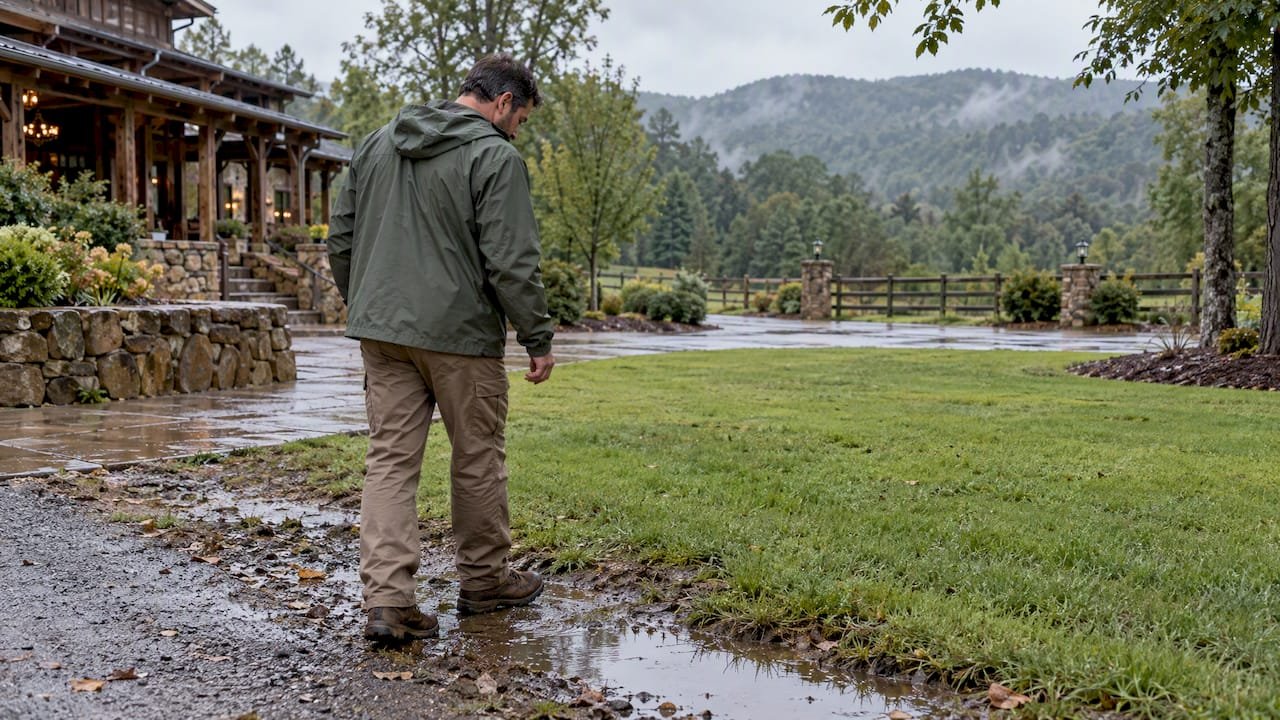
Recent rain is the biggest variable. A storm two or three days before the event can refill every puddle, saucer, and low spot that was emptied during prep, so a final site walk the morning of the wedding matters more than anything done a week earlier. Hot, dry stretches tend to concentrate mosquito activity around whatever water remains, which makes fountains, troughs, and shaded damp corners worth a second look.
Temperature also affects timing. Mosquitoes feed most aggressively at dawn and dusk, so a sunset ceremony needs devices running well before golden hour rather than switched on at the last minute. Overcast, humid days can extend that peak activity window later into the evening. Building a little flexibility into the schedule, running fans and traps earlier on still, humid days and trimming device time on breezy ones, keeps the plan responsive instead of rigid. A solid rain contingency plan also tends to double as a bug contingency plan, since both hinge on having a covered, well-ventilated backup space ready to go.
Keeping guests comfortable without making bugs the main event
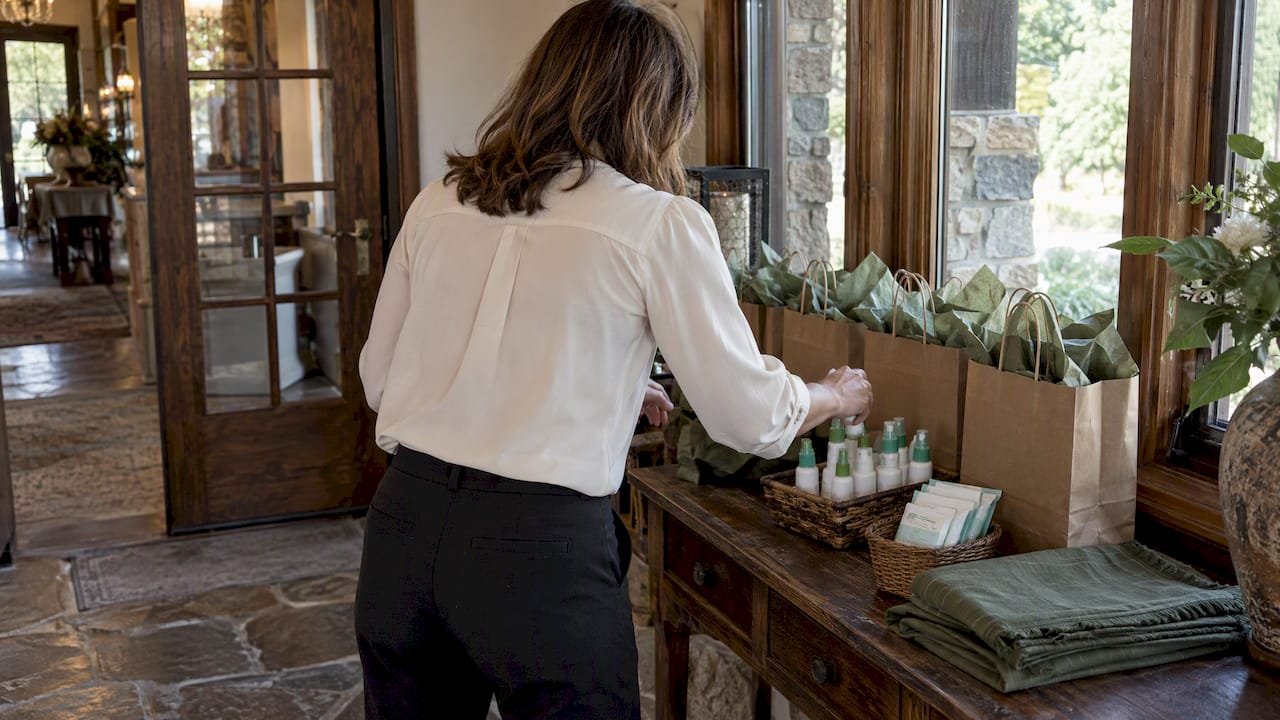
The best insect control is the kind guests barely notice. A small station near the entrance or guest book table with a few repellent options lets people apply what they need without turning it into an announcement. Travel-size sprays or wipes work well here, and including a sample in welcome bags gives guests a chance to apply it before they even leave their room.
Creating a few insect-light zones also helps, especially for dinner service. Seating areas positioned away from dense tree lines or standing water, combined with fans running across the tables, tend to stay noticeably more comfortable than spots tucked against the tree line. Pairing device placement with the overall reception layout means guests naturally gravitate toward the best-protected areas without being told where to sit.
A short, friendly note on the wedding website or welcome card, something like “we’ve treated the grounds and will have repellent on hand, but evenings in the mountains can bring a few bugs,” sets expectations without raising alarm. Guests who know what to expect tend to relax about it, and a few who bring their own preferred repellent or a light long-sleeve layer will thank the couple later.
Safety rules for devices and sprays around food and open flames
Bug control equipment and open flames or food service don’t always mix well, so a few precautions matter. Electrical traps and zappers should sit well away from bars, dessert tables, and any area with linens or paper decor that could brush against a hot surface. Keep cords off walkways and out of standing water, and use outdoor-rated, grounded extension cords for anything running overnight.
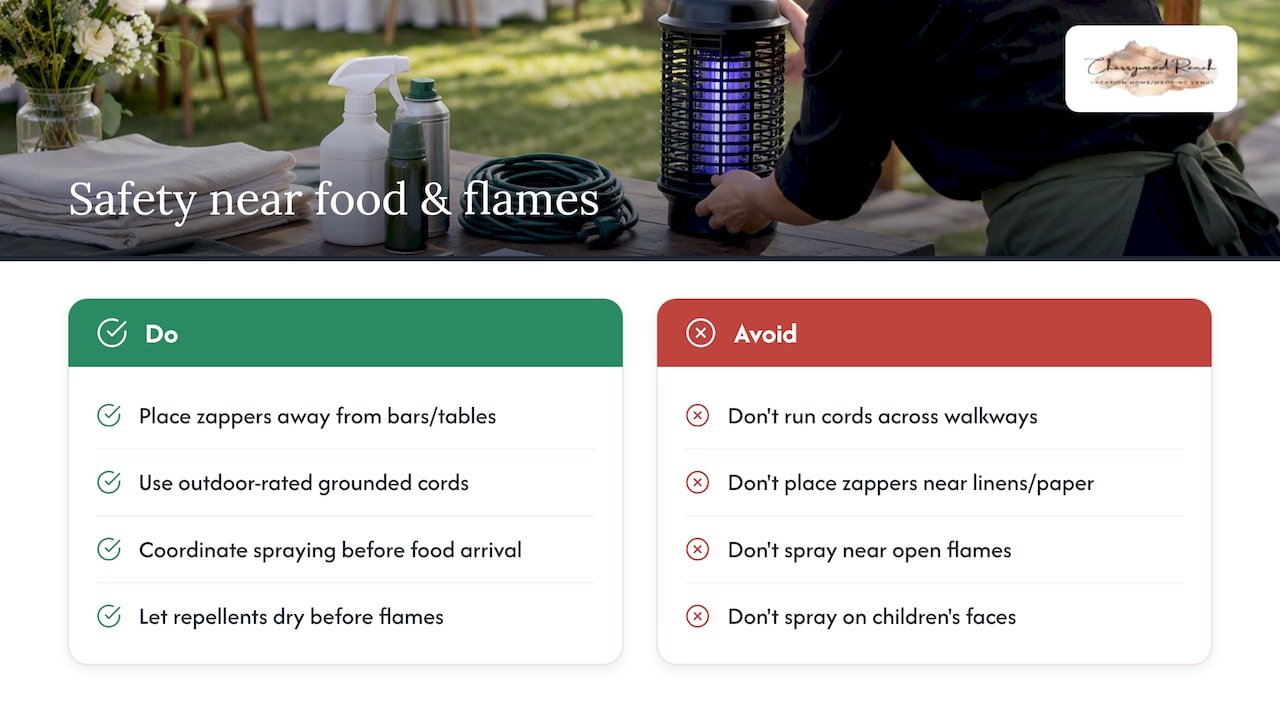
Chemical treatments carry their own rules. Label directions on professional-grade sprays specify re-entry times and distances from food prep areas, and those instructions exist for a reason: residues near an open bar or buffet line create real risk. Coordinate the treatment schedule with caterers so spraying happens well before food arrives on site, and confirm ventilation is adequate if any product is used near a tent; this is an important part of managing outdoor wedding bar essentials.
Open flames, candles, string lights, and sparklers all present a fire risk near repellent sprays, which are often alcohol-based and flammable until fully dry. Give personal repellent time to dry before guests get near a fire pit or lit centerpiece, and keep spray cans away from heat sources entirely. For anyone applying repellent to children, apply it to your own hands first rather than spraying directly on their face, and avoid the eyes, mouth, and any broken skin.
What a venue team handles across a wedding weekend
Across a multi-day wedding weekend, a lot of the bug control workload shifts from the couple to venue staff. Devices get staged and tested ahead of each event block, repellent samples make their way into welcome bags, and the catering timeline gets built around any treatment schedule from the start so nothing conflicts with food service.
— Luis
Let us handle the bug control logistics for your wedding weekend
Planning fans, traps, repellent stations, and treatment timing on top of everything else an outdoor wedding requires is a lot to carry alone. Our all-inclusive wedding weekends at Cherrywood Ranch build these logistics into the weekend itself, so couples aren’t coordinating pest control vendors on top of caterers, lodging, and the ceremony timeline.

- Private mountain venue with onsite lodging, so your wedding party stays together all weekend
- Outdoor ceremony and reception spaces planned with guest comfort and device placement in mind
- Multi-day packages that let your family settle in rather than rushing between hotel and venue
If a venue-managed weekend sounds easier than piecing it together yourself, take a look at our wedding and elopement packages or check availability for your date.
FAQ
What is the best mosquito repellent for an outdoor wedding?
The CDC and EPA recommend repellents containing DEET, picaridin, IR3535, or oil of lemon eucalyptus (OLE/PMD). DEET remains the longest-standing option, with protection lasting 2 to 12 hours depending on concentration, while picaridin offers comparable protection with a lighter feel on skin and fabric.
What is the best bug deterrent for an outdoor patio?
A combination of fans and perimeter traps works best for a patio setting, since increased airflow disrupts mosquitoes’ ability to fly and land. Citronella candles can help in a very small, enclosed seating area, but they lose effectiveness quickly outdoors with any breeze.
How do you keep guests cool at an outdoor wedding?
Fans placed near seating, the dance floor, and tent openings cool guests while also reducing mosquito activity in the same spaces. Shaded seating, a breezy site layout, and timing the ceremony outside peak afternoon heat all help guests stay comfortable through the event.
What is the best bug repellent for an outdoor party?
EPA-registered repellents with DEET or picaridin remain the most reliable choice for a general outdoor gathering. Setting out a small repellent station lets guests apply what they prefer without making it a focal point of the event.
How far in advance should bug control be arranged for a wedding?
Site prep like clearing standing water and mowing should start about a week before the event, with a final check the morning of. Professional treatment, when needed, is best booked two to four weeks ahead so residual products have time to settle before guests arrive.
Sources
- Mosquito prevention | CDC
- DEET | US EPA
- Mosquito-smart gardening for Minnesota | UMN Extension
- How to Keep Bugs Away at Outdoor Events and Weddings | Flowtron